By Zach Kram, 2026-06-14 19:55:00
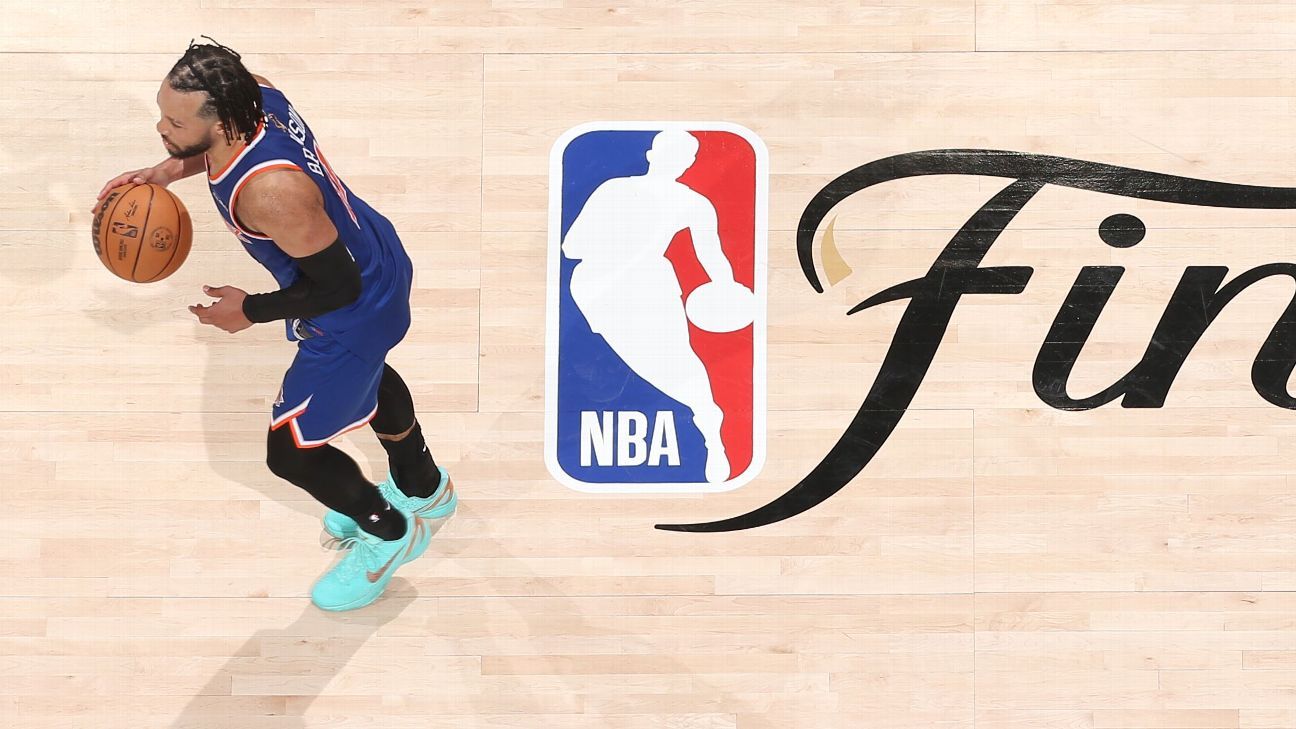
从一位纽约体育冠军到另一位:NBA总决赛的第五场对决仿佛让人再次看到了历史的重演。
在本系列赛中,圣安东尼奥马刺队第五次在首节就取得了两位数的领先优势。而在这五场比赛中,纽约尼克斯队第四次展现了他们的“大心脏”——他们对此毫不在意,反而在关键时刻屡屡打出制胜表现,再次完成了一场稳扎稳打的逆转。
在总决赛MVP杰伦·布伦森 (Jalen Brunson)狂砍45分的带领下,尼克斯队以94-90赢下了第五场,夺得了建队53年来的首个总冠军。而纽约的庆祝狂欢,可能还要再过53年才会停息。
在漫天的庆祝声中,让我们在这个季后赛的最后时刻,再次剖析尼克斯是如何重返NBA之巅的,以及这次总决赛的结果对尼克斯和马刺双方而言意味着什么。
快速链接:
每场战况评述: G4 | G3 | G2 | G1
看点总结 | 赛程 | 对阵图 | 季后赛专题
布伦森实至名归的MVP终章
在第五场比赛开始前,布伦森作为纽约队内系列赛MVP的地位还远未稳固。卡尔-安东尼·唐斯 (Karl-Anthony Towns)在尼克斯客场击败马刺的前两场胜利中表现出色。而OG·阿奴诺比 (OG Anunoby)则是第四场历史性大逆转中效率极高的功臣。
但这种不确定性在周六很快便烟消云散。唐斯和阿奴诺比深陷犯规麻烦,两人合计18投仅4中,只得到13分,这也是客队整体进攻挣扎的一个缩影。在比赛的前16分钟里,尼克斯全队仅命中5球,却被维克托·文班亚马 (Victor Wembanyama)盖帽5次,并出现了9次失误。
然而,有一位球员凭一己之力支撑起了尼克斯的进攻:布伦森。他以场均28.4分成为了今年整个季后赛的得分王。
他在第五场比赛中将最好的状态留到了最后,全场27投14中(罚球15中13)狂砍45分。在第四节初期马刺队取得10分领先之后,布伦森连得10分帮助纽约扳平比分。在马刺队命中一记跳投后,他又续上3分,并在比赛还剩1分06秒时,用一记11英尺的抛投打进了制胜一球。
— KramClips (@ KramClips) 2026年6月14日
据ESPN Research统计,布伦森在第五场比赛中包揽了纽约48%的得分,这在总决赛历史上的夺冠战中高居第二——仅次于迈克尔·乔丹 (Michael Jordan)在1998年总决赛“最后一舞”中的传奇表现。
总决赛夺冠战单场得分占比榜
| 球员 | 总决赛年份 | 得分 | 占全队得分比例 |
|---|---|---|---|
| 迈克尔·乔丹 | 1998 | 45 | 51.7% |
| 杰伦·布伦森 | 2026 | 45 | 47.9% |
| 扬尼斯·阿德托昆博 (Giannis Antetokounmpo) | 2021 | 50 | 47.6% |
| 鲍勃·佩蒂特 (Bob Pettit) | 1958 | 50 | 45.5% |
| 迈克尔·乔丹 | 1997 | 39 | 43.3% |
在这个双方进攻战术都运转不畅的夜晚,布伦森使出了浑身解数,在圣安东尼奥那群显然更偏向尼克斯的观众面前,上演了一场令人眼花缭乱的个人秀。
他迎着防守在外线拔起起射……
— KramClips (@ KramClips) 2026年6月14日
……在中距离也同样精准。
— KramClips (@ KramClips) 2026年6月14日
他用非运球手制造空间……
— KramClips (@ KramClips) 2026年6月14日
……并在下半场诱使三名不同的马刺球员在三分线外对他犯规。
— KramClips (@ KramClips) 2026年6月14日
尽管身材矮小,但他总能通过突破冲击篮筐找到机会,无论是向左路突破……
— KramClips (@ KramClips) 2026年6月14日
……还是向右路突破,迎着文班亚马将球打进。
— KramClips (@ KramClips) 2026年6月14日
随着总决赛的深入,布伦森的表现渐入佳境。他越来越游刃有余地撕扯着马刺队令人畏惧的防线,而这是今年季后赛中其他全明星级持球核心——无论是德尼·阿夫迪亚 (Deni Avdija)、饱受伤病困扰的安东尼·爱德华兹 (Anthony Edwards),还是蝉联MVP的谢伊·吉尔杰斯-亚历山大 (Shai Gilgeous-Alexander)——都没能做到的。布伦森的Game Score(衡量单场比赛表现的综合指标)在系列赛中每场递增,最终在夺冠之夜画上了载入史册的完美句号。
这一表现让这位曾经的高中州冠军和两届NCAA冠军如今也成为了NBA总冠军,并永远成为了纽约的传奇。
“这是我梦寐以求的一切,”布伦森赛后说道,“这也是我来到纽约的原因。”
冠军阵容是如何炼成的
尼克斯的凯旋夺冠将在整个NBA引起强烈共鸣,这不仅是因为该队庞大的球迷群体,或是他们长达53年的冠军荒(53年的夺冠间隔是联盟历史上最长的),更是因为他们看起来和大多数NBA冠军都不一样。
布伦森曾三次入选年度最佳阵容第二阵,但从未入选过第一阵。唐斯(三次入选第三阵)以及尼克斯的其他球员也是如此。因此,纽约成为了自1980年以来,第二支在没有年度最佳阵容第一阵球员的情况下夺冠的球队,加入了2003-04赛季底特律活塞队的行列——那同样是一支作风顽强、阵容均衡的队伍,他们凝聚在一起,发挥出了1+1>2的效果,并在五场比赛中爆冷击败了更被看好的西部对手。
此外,在一个充斥着“摆烂”讨论的赛季中,尼克斯并非依靠高顺位选秀权,而是由外而内地构建了他们的冠军阵容。在总决赛中得分的10名尼克斯球员中,没有一个是尼克斯通过首轮选秀权选中的。
当然,尼克斯夺冠的另一个奇迹在于,他们最好的球员身材相对矮小。在一个长期由7英尺中锋和6英尺8英寸侧翼主导的联盟中,身高6英尺2英寸的布伦森显得独树一帜。这既要归功于布伦森本人,也要归功于他身边相得益彰的阵容配置,这套阵容扬其所长,避其所短。
这支冠军之师是通过一系列充满风险的交易组建起来的——虽然冒险,但却必不可少,因为在一个拥有30支球队、竞争极其残酷的联盟中,构建一套冠军阵容绝非易事。
在任何特定年份,一支普通的NBA球队夺冠的概率只有3.3%(30分之一)。给这支普通球队五年时间,其夺冠概率也只有15.6%;给它十年,概率也仅仅升至28.8%。在如此渺茫的概率面前,管理层既需要运气,也需要实力,更需要承担一些风险。墨守成规是无法成功的。
尼克斯对这一哲学的践行可以追溯到2019年夏天,当时纽约遭遇了两次命运多舛的失败。第一件事超出了球队的控制:尽管他们打出了全联盟最差的17胜65负战绩,但最终只抽到了3号签,从而错失了蔡恩·威廉森 (Zion Williamson)和贾·莫兰特 (Ja Morant)这两位看似不容错过的超级新星。一个月后,两位超级自由球员又在他们的伤口上撒了盐——凯文·杜兰特 (Kevin Durant)和凯里·欧文 (Kyrie Irving)选择在同城的布鲁克林篮网队联手,而非加盟尼克斯。
在那个时候,尼克斯既没有运气,也没有实力,全联盟都心知肚明。于是,他们在2019-20赛季改变了航向,聘请经纪人莱昂·罗斯 (Leon Rose)担任新的篮球运营总裁。罗斯随后展开了一系列冒险举措,这五大险招最终全部收到了回报,并在为球队带回自1973年以来的首个总冠军的过程中发挥了关键作用:
1. 2022年7月,尼克斯在自由球员市场上以一份四年1.04亿美元的合同签下了布伦森。当时,许多分析师认为这份合同溢价了,因为他只是一名矮个后卫,在达拉斯担任卢卡·东契奇 (Luka Doncic)的副手时,单赛季场均得分从未超过16.3分。
2. 2023年12月,他们交易走了RJ·巴雷特 (RJ Barrett)和伊曼纽尔·奎克利 (Immanuel Quickley),换来了阿奴诺比。阿奴诺比是一名出色的角色球员,但他也是一个伤病缠身且从未入选过全明星的球员,并且几乎在加盟后立刻就索要了一份为期五年、金额巨大的顶薪续约合同。尼克斯本可以选择留下巴雷特和奎克利,他们是球队选秀历史上罕见的成功案例。在巴雷特(2019年紧随威廉森和莫兰特之后的3号秀)之前,尼克斯自1994年(四分之一个世纪前)选中查理·沃德 (Charlie Ward)以来,竟然没有给任何一个自己选中的首轮秀提供过续约合同,这在联盟中臭名昭著。
3. 2024年7月,他们送出五个首轮选秀权和一个选秀权互换权,交易得到了米卡尔·布里奇斯 (Mikal Bridges)。和阿奴诺比一样,布里奇斯也是一名优秀的超级蓝领,且从未入选过全明星。但与阿奴诺比不同的是,得到布里奇斯的风险要高得多,因为机会成本巨大:篮网队将他视作超级巨星,才愿意考虑将他送给同城死敌,而尼克斯也咬牙付出了这一高昂代价,尽管这笔交易让他们失去了未来用于阵容升级的任何有价值的选秀权。
4. 2024年10月,他们交易走了三届全明星朱利叶斯·兰德尔 (Julius Randle)和深受球迷喜爱的射手唐特·迪温琴佐 (Donte DiVincenzo)(维拉诺瓦大学帮成员),换来了唐斯。尽管唐斯薪水高昂,且外界普遍认为这位前状元秀球风偏软、防守薄弱,很难兑现自己的全部潜力,但尼克斯依然做出了这一决定。
5. 2025年夏天,他们用迈克·布朗 (Mike Brown)替代了主教练汤姆·锡伯杜 (Tom Thibodeau)。尽管锡伯杜的下限似乎比21世纪以来尼克斯历任主教练(而且人数众多)的上限还要高。在锡伯杜执教期间,尼克斯赢下了四个季后赛系列赛,而在他2020年受雇之前的20年里,纽约仅仅赢得过一次季后赛系列赛的胜利。但他们需要一个对季后赛临场应变有不同理解的新声音,因此他们冒了最后一个险,更换了主教练。
这五次运作的风险从温和到足以改变建队轨迹不等,但它们最终都取得了符合预期甚至超出预期的效果。同样重要的是管理层没有去冒的风险。如果尼克斯在2019年夏天运气爆棚,选中了威廉森或莫兰特,亦或是签下了杜兰特和欧文,结果会怎样?如果他们没有签下布伦森(或者在签下他的同时),而是将所有的选秀资产都用来交易多诺万·米切尔 (Donovan Mitchell),结果又会怎样?如果他们没有把选秀权花在布里奇斯身上,而是留着它们以期阿德托昆博进入交易市场,情况又会如何?
替代性的可能性是无穷无尽的,在平行宇宙的其他地方,尼克斯的冠军荒肯定还在延续。要打造一支冠军球队,需要太多事情都恰到好处地发生。
但在我们的宇宙中,对于这支经常命运多舛的球队来说,一切确实都顺理成章地成功了。尼克斯不仅赢得了总冠军,而且几乎是一路平趟,他们打出了16胜3负的季后赛战绩,并创下了+14.9的季后赛净胜分纪录,这一数据仅次于2016-17赛季的勇士队和2000-01赛季的湖人队,而这两支球队被公认为NBA历史上最伟大的球队。
将纽约尼克斯与这些史诗级强队相提并论可能有些微妙。一方面,季后赛的数据不会撒谎。但另一方面,他们是在面对实力较弱的对手时累积了这一历史性的净胜分,而在总决赛中,他们的净胜分仅为平庸的+2.4。此外,他们在常规赛中打出了扎实但并不惊艳的53胜29负战绩——尽管他们在NBA季中锦标赛(NBA Cup)中击败马刺夺冠——随后才在今年春天升华到了更高的境界。
但在这个时刻,尼克斯的球迷们并不想听那些关于历史地位的微妙讨论或横向对比。他们理所当然地想要沐浴在球队半个世纪以来首个总冠军的光辉中,并毫无保留地为所有带来这一荣誉的球员、教练和管理层人员欢呼。这是他们应得的权利。
马刺的欣喜与遗憾
马刺队的季后赛征程虽然以失败的苦涩收尾,但他们的这个赛季毫无疑问是一次甜蜜且绝对的成功。
在本赛季之前,马刺自2016-17赛季以来就从未赢得过季后赛系列赛,也从未单赛季赢下超过48场比赛——那是他们拥有健康科怀·伦纳德 (Kawhi Leonard)的最后一个赛季(直到他在那年的西部决赛中踩到了扎扎·帕楚里亚 (Zaza Pachulia)的脚上)。在21世纪20年代,他们曾连续六年无缘季后赛,并且在此期间他们的累计战绩在西部联盟中垫底。
但圣安东尼奥在本赛季常规赛中打出了62胜20负的战绩,随后一路高歌猛进杀入总决赛。斯蒂芬·卡斯尔 (Stephon Castle)在斩获最佳新秀的赛季基础上百尺竿头,成长为一名攻防兼备的双向球星。迪伦·哈珀 (Dylan Harper)在新秀赛季大放异彩,成为联盟中最耀眼的新星之一。朱利安·尚帕尼 (Julian Champagnie)作为射手迎来了爆发。凯尔登·约翰逊 (Keldon Johnson)荣膺年度最佳第六人。米奇·约翰逊 (Mitch Johnson)——尽管在总决赛中出现了一些战术上的瑕疵——也证明了自己的执教能力。
最重要的是,文班亚马完成了可以说是“文班亚马级”的巨大飞跃,迈入了超级巨星的行列。他成为了NBA历史上最年轻的最佳防守球员(DPOY)得主,也是首位全票当选该奖项的球员。他已经完全有资格被视作世界上最好的球员。而这一切,都是在他23岁生日之前完成的。
马刺是总决赛历史上第二年轻的球队(仅次于1976-77赛季的波特兰开拓者队)。尽管在面对尼克斯时,他们在比赛末段的战术选择和执行力上屡屡出现问题,但他们已经在西部决赛中充分证明了自己的韧性和精神力量——当时他们在2-3落后的情况下完成逆转,并在客场赢下抢七大战,淘汰了卫冕冠军。
然而,尽管本赛季展现出了诸多积极因素,但马刺在总决赛中的失利方式依然令人扼腕。在全部四场败仗中,他们都在最后两分钟处于领先或平局状态,并且以令人记忆犹新的灾难性方式输掉了两场比赛:第二场比赛最后时刻文班亚马的致命失误,以及第四场比赛中遭遇的总决赛历史上最大分差逆转。
根据ESPN Research的数据,在整个总决赛期间,圣安东尼奥马刺队领先了178分钟,而纽约尼克斯队仅领先了57分钟。这是三比一的领先时间优势,也是自1971年(有该项数据统计的最早年份)以来,总决赛失利方在系列赛中领先时间占比最高的一次。
马刺最终可能会为错失这次夺冠机会而感到遗憾,即使他们从名义上来说已经超前完成了重建目标。毕竟,即使对于一支拥有年轻活力和惊人天赋的球队来说,重返总决赛也绝非易事。2011年的雷霆队拥有三位未来的MVP,却遗憾地再也未能重返总决赛。(不过,圣安东尼奥绝不可能在今年休赛期交易走替补后卫哈珀,就像当年雷霆队交易走替补后卫詹姆斯·哈登 (James Harden)那样。)
勒布朗·詹姆斯 (LeBron James)和文班亚马一样,在22岁时就打进了总决赛,但他不得不又等待了四年——期间还更换了球队——才得以重返总决赛,而夺得首冠则又多花了一年时间。
近年来,扬尼斯·阿德托昆博和尼古拉·约基奇 (Nikola Jokic)似乎都准备长期统治各自的联盟。但这两位多次荣膺MVP of the Year的超级巨星现在肯定会感到庆幸,因为他们在有机会的时候就拿到了总冠军戒指——自2021年和2023年夺冠以来,这两位球员甚至都未能再重返分区决赛。
尽管目前来看这并非最可能发生的结果,但马刺确实有可能重蹈这些令人失望的覆辙。他们可能会在不合时宜的时候遭遇改变赛季走向的伤病,就像1977年夺冠后的开拓者队及其明星中锋比尔·沃顿 (Bill Walton)那样。他们也可能会在NBA惩罚性的“土豪线(apron)”限制下陷入令人窒息的财务困境——在经历了一次灾难性的(尽管是受到伤病影响的)总决赛表现后,达龙·福克斯 (De’Aaron Fox)那份四年2.218亿美元的提前续约合同正成为一个潜在的隐患。或者,他们可能只是在未来与俄克拉荷马雷霆队的季后赛强强对话中遗憾落败,因为后者同样年轻、同样充满天赋,并且同样对重返总决赛充满渴望。
尽管如此,这种悲观的预测远非文班亚马、卡斯尔和哈珀在未来几年最可能走向的道路。更有可能发生的是,马刺很快就会重返总决赛,去弥补2026年留下的遗憾。
他们拥有一套深度极佳且有巨大成长空间的阵容——乐透秀卡特·布莱恩特 (Carter Bryant)可能会变得尤为重要,如果他能迎来爆发,将为马刺提供一个可靠的大前锋——并且有三位年仅20出头、冉冉升起的年轻新星领衔。综合考虑当下的即战力、未来的潜力和薪资空间,圣安东尼奥拥有全联盟最令人羡慕的阵容配置。
尼克斯成为了过去八个赛季中的第八个不同的总冠军,延续了NBA的历史纪录。如果下赛季(2026-27赛季)又有一支新的球队夺冠,那么马刺显然将是延续这一纪录的热门人选。
由生成式 AI 翻译,译文内容可能不准确或不完整,以原文为准。
点击查看原文:How the Knicks won the NBA Finals over the Spurs: What we learned
How the Knicks won the NBA Finals over the Spurs: What we learned
From one New York sports champion to another: Game 5 of the NBA Finals was déjà vu all over again.
For the fifth time in this series, the San Antonio Spurs took a double-digit lead in the first quarter. And for the fourth time in five games, the New York Knicks didn’t care, instead making all the winning plays down the stretch to complete yet another methodical comeback.
Led by 45 points from Finals MVP Jalen Brunson, the Knicks won Game 5 94-90 to clinch the franchise’s first title in 53 years. It might take 53 more years for the partying in New York to stop.
Amid all the celebration, for one final time this postseason, let’s break down how the Knicks finally returned to the NBA mountaintop, and what the Finals outcome means for both the Knicks and Spurs.
Quick links:
Game-by-game reaction: 4 | 3 | 2 | 1
Takeaways | Schedule | Bracket | Playoffs
An MVP-worthy finale for Brunson
Entering Game 5, Brunson’s status as New York’s MVP in this series was far from assured. Karl-Anthony Towns excelled through the Knicks’ first two wins in San Antonio. And OG Anunoby was the hyperefficient hero in their historic comeback in Game 4.
But that uncertainty clarified quickly on Saturday. Towns and Anunoby dealt with foul trouble and combined for 13 points on 4-for-18 shooting, as part of broad offensive struggles for the visitors. Through the first 16 minutes of the game, the Knicks had five made shots, five shots blocked by Victor Wembanyama and nine turnovers.
One player kept the Knicks’ offense afloat, however: Brunson, who finished the postseason as the top scorer (28.4 points per game) in the whole playoff field.
He saved his best for last in Game 5, scoring 45 points on 14-for-27 shooting (and going 13-for-15 on free throws). After the Spurs went up by 10 points early in the fourth quarter, Brunson scored 10 points in a row to bring New York even. He added three more points following a Spurs jumper, then the game-winning bucket on an 11-foot floater with 1:06 left.
— KramClips (@ KramClips) June 14, 2026
In total, Brunson scored 48% of New York’s points in Game 5, which is the second-highest ratio for any player in a closeout game in Finals history, according to ESPN Research – behind only Michael Jordan’s legendary performance in the “Last Dance” 1998 Finals.
Highest scorers in Finals closeout games
| Player | Finals | Points | % of Team Points |
|---|---|---|---|
| Michael Jordan | 1998 | 45 | 51.7% |
| Jalen Brunson | 2026 | 45 | 47.9% |
| Giannis Antetokounmpo | 2021 | 50 | 47.6% |
| Bob Pettit | 1958 | 50 | 45.5% |
| Michael Jordan | 1997 | 39 | 43.3% |
On a night with little effective offensive process from either team, Brunson pulled out every trick in his bag to stage a dazzling display for a decidedly Knicks-friendly crowd in San Antonio.
He pulled up from distance …
— KramClips (@ KramClips) June 14, 2026
… and from the midrange.
— KramClips (@ KramClips) June 14, 2026
He created space with his off arm …
— KramClips (@ KramClips) June 14, 2026
… and baited three different Spurs into fouling him on 3-pointers in the second half.
— KramClips (@ KramClips) June 14, 2026
And despite his size, he consistently found openings by driving to the rim, both to his left …
— KramClips (@ KramClips) June 14, 2026
… and to his right, past Wembanyama.
— KramClips (@ KramClips) June 14, 2026
Brunson’s performance improved as the Finals went along, and he grew increasingly comfortable attacking the Spurs’ fearsome defense, in a way that no other All-Star creator – not Deni Avdija, nor an injury-addled Anthony Edwards, nor even back-to-back MVP Shai Gilgeous-Alexander – managed this postseason. Brunson’s game score (an all-in-one measure of single-game performance) increased in every successive game in the series, culminating in a closeout for the record books.
That performance made the high school state champion and two-time NCAA champion an NBA champion, as well, and a legend in New York forever.
“It’s everything I ever dreamed of,” Brunson said afterward. “It’s why I came to New York.”
How a title-winning roster came together
The Knicks’ triumphant title will resonate across the NBA not only because of the franchise’s sheer number or fans or the length of its championship drought – 53 years between titles is the longest gap in league history – but because they don’t look like most NBA champions.
Brunson has three All-NBA second-team honors to his name, but no first-team nods. Neither do Towns (three third-teams) or any other Knicks. Thus New York is only the second champion since 1980 without any All-NBA first-teamers, joining the 2003-04 Detroit Pistons – another scrappy, well-rounded bunch that coalesced into more than the sum of its parts and upset a favored Western Conference opponent in five games.
Moreover, in a season overwhelmed by tanking discourse, the Knicks built their championship roster from the outside in, rather than with top draft picks. Of the 10 Knicks who scored a point in the Finals, not one came to New York via a first-round pick.
And of course, the Knicks won a championship despite the relatively diminutive size of their best player. In a league long dominated by 7-foot centers and 6-foot-8 wings, the 6-foot-2 Brunson stands apart, which is a credit both to Brunson himself and to the complementary roster around him, which accentuates his strengths and compensates for his weaknesses.
That winning group came together via a series of risky transactions – risky, but necessary, for it’s not easy to build a championship roster in a hypercompetitive 30-team league.
The average NBA team has a 3.3% chance (1 in 30) to win a title in any given year. Give that average franchise five years, and it still has only a 15.6% chance to win a title; give it a decade, and it’s up to only a 28.8% probability. Against those long odds, a front office needs to be both lucky and good, and it needs to take some chances. Playing it safe won’t suffice.
The Knicks’ embrace of this philosophy traces back to the summer of 2019, which brought two fateful failures to New York. The first was outside the team’s control: Despite a league-worst 17-65 record, they landed the No. 3 pick in the draft, thereby missing out on seemingly can’t-miss prospects Zion Williamson and Ja Morant. And a month later, two superstar free agents added insult to injury, when Kevin Durant and Kyrie Irving chose to join forces with the crosstown Brooklyn Nets rather than the Knicks.
At that point, the Knicks weren’t lucky or good, and the whole league knew it. So they changed course during the 2019-20 season, hiring agent Leon Rose as their new president of basketball operations. Rose soon embarked on a series of five risky moves that all paid off and played a key role in delivering the franchise’s first title since 1973:
1. The Knicks signed Brunson to a four-year, $104 million contract in free agency in July 2022. At the time, many analysts viewed this deal as an overpay, as he was a small guard who had never averaged more than 16.3 PPG in a season while serving as Luka Doncic’s sidekick in Dallas.
2. They traded RJ Barrett and Immanuel Quickley for Anunoby in December 2023. Anunoby is an excellent role player, but he was also an injury-prone zero-time All-Star who almost immediately commanded a massive five-year extension. The Knicks could have instead held on to Barrett and Quickley, who were two rare draft success stories for the franchise. Before Barrett (the No. 3 pick in 2019, after Williamson and Morant), they had infamously failed to extend a single one of their first-round picks since Charlie Ward, who was selected a quarter-century earlier in 1994.
3. They traded five first-round picks and a swap for Mikal Bridges in July 2024. Like Anunoby, Bridges was another excellent role player and zero-time All-Star. Unlike Anunoby, Bridges’ acquisition was far riskier because of the opportunity cost: The Nets valued him like a superstar to even consider sending him to their rivals, and the Knicks paid up, despite the deal leaving them without a meaningful pick to use for future upgrades.
4. They traded three-time All-Star Julius Randle and beloved shooter Donte DiVincenzo – a member of the Villanova crew – for Towns in October 2024, despite Towns’ hefty salary and a general perception that the former No. 1 pick was too erratic and defensively vulnerable to live up to his potential.
5. They replaced coach Tom Thibodeau with Mike Brown in the summer of 2025, even though Thibodeau’s floor seemed higher than the ceiling of just about any other Knicks coach – and there were a bunch – in the 21st century. Thibodeau won four playoff series with the Knicks, while New York had just one playoff series victory in the previous 20 years leading up to his hire in 2020. But they needed a new voice with a different understanding of playoff adaptability, so they took one final risk and made a coaching change.
Those five moves ranged from moderate risks to potentially franchise-altering gambles, but they all worked out as well as, or better than, expected. Equally as important were the risks that the front office didn’t take. What if the Knicks had been ostensibly lucky in the summer of 2019 and drafted Williamson or Morant, or signed Durant and Irving? What if they’d traded all their draft capital for Donovan Mitchell instead of (or in addition to) signing Brunson? What if they’d held on to their picks in anticipation of Giannis Antetokounmpo being made available, instead of spending them on Bridges?
The alternate possibilities are endless, and elsewhere in the multiverse, the Knicks’ title drought surely remains unsated. So much has to go right to build a champion.
But in our universe, everything did go right for the frequently ill-fated franchise. The Knicks didn’t just win the title, but largely cruised to it, with a 16-3 playoff record and record-setting plus-14.9 postseason point differential, which ranks them just ahead of the 2016-17 Warriors and 2000-01 Lakers, widely considered among the best teams in NBA history.
Placing New York on those teams’ level is tricky. On the one hand, the playoff numbers don’t lie. But on the other hand, they built up their historic point differential against weaker opponents before finishing with a more mediocre plus-2.4 mark in the Finals, and they were a solid but unspectacular 53-29 in the regular season – albeit with another championship win over the Spurs in the NBA Cup – before ascending to a higher plane this spring.
But Knicks fans don’t want to hear about nuanced legacies or historical comparisons at this juncture. They rightfully want to bask in the glory of their team’s first title in half a century, and to celebrate all the players, coaches and executives who delivered that title without reservation. They’ve earned the right.
Delights and disappointments for the Spurs
The Spurs’ playoff run ended with the bitter taste of failure, but their season can’t be considered anything other than a sweet, unqualified success.
Before this season, the Spurs hadn’t won a playoff series or more than 48 games since 2016-17 – their last season with a healthy Kawhi Leonard (until he landed on Zaza Pachulia’s foot in those conference finals). They’d missed the playoffs six years in a row in the 2020s, and they had the worst cumulative record in the Western Conference in that span.
But San Antonio went 62-20 in this regular season, followed by a marauding run to the Finals. Stephon Castle built on his award-winning rookie season to emerge as a two-way star. Dylan Harper flourished as a rookie and stands as one of the brightest young talents in the league. Julian Champagnie broke out as a shooter. Keldon Johnson won Sixth Man of the Year. Mitch Johnson – despite some tactical foibles in the Finals – proved his coaching bona fides.
And most of all, Wembanyama took, well, a Wembanyama-sized leap into full-fledged superstardom. He became the youngest Defensive Player of the Year winner in NBA history, and the first player to win the award unanimously. He staked a legitimate claim as the best player in the world. And he did it all before his 23rd birthday.
The Spurs were the second-youngest team in Finals history (behind only the 1976-77 Portland Trail Blazers). And despite repeated issues with their late-game approach and execution against the Knicks, they more than proved their resilience and mental fortitude in the conference finals, when they overcame a 3-2 deficit and eliminated the defending champions in Game 7 on the road.
Yet despite all the positives to emerge from this season, the manner of the Spurs’ Finals loss can’t help but sting. They were either leading or tied in the last two minutes of all four losses, and they lost two games in memorably disastrous fashion: Wembanyama’s turnover at the end of Game 2, and the largest collapse in Finals history in Game 4.
Throughout the Finals, San Antonio led for 178 minutes, while New York led for just 57, according to ESPN Research. That’s a three-to-one advantage and by far the highest percentage of time leading the Finals by the series loser since at least 1971 (the earliest year with that data available).
The Spurs could end up regretting this missed opportunity to claim a title, even if they were nominally ahead of schedule. After all, a return trip to the Finals isn’t guaranteed, even for a team with its youth and tremendous talent. The 2011 Thunder, with three future MVPs on the roster, infamously never made it back to the Finals. (However, there is no chance San Antonio trades reserve guard Harper this offseason, like those Thunder did with reserve guard James Harden.)
LeBron James reached the Finals as a 22-year-old, like Wembanyama, but he needed to wait four more years – and change teams in the meantime – for another Finals trip, and another year after that to finally win one.
More recently, Giannis Antetokounmpo and Nikola Jokic both looked poised for long reigns atop their conferences. But both multitime MVPs must feel relieved that they won their rings when they had the chance, because neither player has even been back to the conference finals since the 2021 and 2023 Finals, respectively.
It’s not the most likely outcome at this point, but the Spurs could follow those anticlimactic paths. They could suffer season-altering injuries at inopportune times, which is what stymied the post-1977 Trail Blazers and their star center, Bill Walton. They could run into stifling financial troubles under the NBA’s punitive apron regime, with De’Aaron Fox’s four-year, $221.8 million extension a looming concern following a catastrophic – if injury-impaired – Finals showing. Or they could simply come up on the wrong end of future coin flip playoff clashes against the Oklahoma City Thunder, who are just as young, just as talented and just as hungry for another Finals chance.
Still, that pessimistic projection is far from the most probable path that Wembanyama, Castle and Harper can take in the years to come. It’s much more likely the Spurs are back in the Finals, and soon, for a chance to avenge their 2026 disappointment.
They have a loaded roster with ample room for further development – lottery pick Carter Bryant could be especially important, as he would give the Spurs a reliable power forward if he breaks out – and three budding stars all in their early 20s leading the way. Given the combination of its present ability, future potential and financial situation, San Antonio has the most enviable roster situation in the league.
The Knicks became the eighth different champion in the last eight seasons, extending an NBA record. The Spurs would be the clear and obvious choice to push that record even further next season, if yet another new team wins the 2026-27 title.
By Zach Kram, via ESPN