By Mike Finger / San Antonio Express-News, 2026-10-15 16:46:39
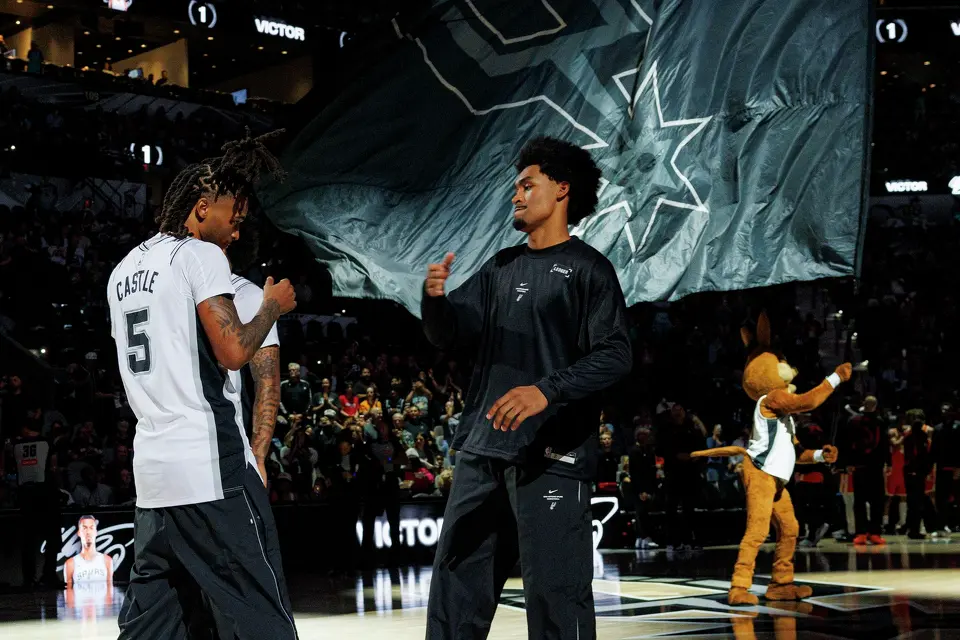
2026年10月8日星期四,圣安东尼奥马刺队后卫斯蒂芬·卡斯尔(左)与后卫迪伦·哈珀在 Frost Bank Center 迎战亚特兰大老鹰队的季前赛揭幕战前被介绍为首发球员。
本周,随着一个王朝走向明显的终结,街头巷尾却几乎无人哀悼。在连续夺得两座冠军、并凭借其挥霍无度的财富在十余年里让整个美国职业棒球大联盟的对手们自愧不如之后,洛杉矶道奇队并不会被人怀念。
至少现在还不会。
假设他们无法在周四晚之前扭转国联冠军系列赛0比3落后的局面,那么没有他们的世界大赛会更好看——但原因可能并非人们所想的那样。
尽管其他职业球队的老板们乐于把巨额利润装进自己口袋而不愿投入球队薪资,并让你相信他们的说辞,但像道奇队这样在投入上碾压竞争对手的球队,并不是“棒球的毒瘤”。
真正更糟糕的,当然是那些根本不想组建一支有竞争力的球队、事后却声称自己从一开始就没有机会的吝啬鬼。但如果像密尔沃基酿酒人、坦帕湾光芒或克利夫兰守护者这样精明的小市场球队,能够在没有工资帽的情况下找到赢球的办法呢?
或许,据报道即将迎来一个充满劳资纷争的丑陋休赛期的MLB,能从中吸取正确的教训。
或许其他联盟也能如此。
尽管像NBA总裁亚当·萧华这样的人可能想让你相信,群雄逐鹿才是联盟繁荣的标志,但这并不完全正确。
没错,职业篮球在过去八年产生了八支不同的冠军球队,期间甚至没有球队能连续两年打进NBA总决赛,这确实很酷。没错,这意味着更多城市的更多球迷有机会庆祝夺冠。
但这种现象反复出现的原因,恰恰也是这套体系的弊端之一。简而言之,日益严苛的工资帽规则让留住一支优秀球队变得几乎不可能。
作为一名普通球迷,你可能对所谓的奢侈税“第二土豪线”毫无兴趣。你也确实不必了解。但你大概知道,它和以下这些事脱不了干系:密尔沃基雄鹿为何与扬尼斯·阿德托昆博分道扬镳,波士顿凯尔特人为何送走杰伦·布朗,纽约尼克斯为何可能选择与卡尔-安东尼·唐斯分手。
这三位都是这十年间的总决赛标志性人物。但这并不意味着一个孩子买下他们的球衣后,还能确信这件球衣不会很快过时。
The Ringer 本周一篇关于这一现象的文章发问:“NBA失去了什么?”并以马刺为例,指出在现行体系下,一支潜在的王朝球队可能永远无法真正成为王朝。
没错,马刺已经制定了一套聪明且充满希望的长期计划。没错,维克托·文班亚马 (Victor Wembanyama) 已经在续约时接受了低于顶薪的合同,为球队大业让路。没错,他至少有机会与斯蒂芬·卡斯尔和迪伦·哈珀并肩作战,时长堪比蒂姆·邓肯与马努·吉诺比利、托尼·帕克的组合。
但这很难指望。
“除非土豪线规则有所改变,”The Ringer 的霍华德·贝克写道,“马刺的薪资空间最终爆掉几乎是必然的。”
这多少有些遗憾,而且不仅仅是对那些希望在未来十年再夺四五座冠军的马刺球迷而言。事实上,王朝对整个联盟来说并非坏事。
在湖人-凯尔特人争霸的1980年代,以及在公牛统治的1990年代,NBA迈出了多么巨大的一步?
无论你认为美国职业棒球大联盟的辉煌岁月是哪个年代,大概率都有一支像纽约扬基(或奥克兰运动家,或道奇)这样的超级强队在统治联盟。尽管本世纪大部分时间里人们都乐于为对抗比尔·贝利切克和汤姆·布雷迪而呐喊助威,但谁能一本正经地说,新英格兰爱国者让NFL变得不受欢迎了呢?
给所有人一个共同的敌人,未尝不是一件好事。正因如此,如果棒球老板们得偿所愿,最终建立起NBA式的“第二土豪线”体系,或许有一天他们会意识到,王朝其实并没有那么糟糕。
过去14年里,道奇队13次夺得分区冠军,5次打进世界大赛并3次捧杯。他们的成功部分源于用巨额合同签下一批超级巨星,并在其他球队负担不起时通过交易得到他们。
这显然不是最理想的模式。对于底特律、辛辛那提和巴尔的摩的球迷来说,这可能令人无比沮丧。
但如果解决方案是确保王朝永远不再出现呢?
总有一天,人们或许真的会怀念他们。
由生成式 AI 翻译,翻译内容可能不准确或不完整,以原文为准。
查看原文:In MLB and NBA, why the death of dynasty era has its downsides
In MLB and NBA, why the death of dynasty era has its downsides
San Antonio Spurs guard Stephon Castle, left, and guard Dylan Harper are announced as starters before taking on the Atlanta Hawks in the preseason opener at Frost Bank Center in San Antonio, Thursday, Oct. 8, 2026.
As a dynasty neared its apparent demise this week, there was little mourning in the streets. After two consecutive championships and more than a decade of rubbing the rest of Major League Baseball’s noses in their extravagant wealth, the Los Angeles Dodgers were not going to be missed.
Not yet, anyway.
The World Series will be better without them, assuming they don’t rally from the 3-0 National League championship series deficit they held heading into Thursday night, but not for the reasons one might guess.
Despite what you’ve heard from the owners of other professional franchises who prefer to pocket their considerable profits instead of reinvesting it in payroll, a team that outspends its competition the way the Dodgers do is not “bad for baseball.”
What is worse, of course, are the cheapskates who don’t even try to field a winning team, then claim that they never had a chance in the first place. But if a smart small-market franchise like the Milwaukee Brewers, or the Tampa Bay Rays, or the Cleveland Guardians can find a way to win without a salary cap?
Maybe MLB, reportedly heading for an ugly offseason of labor strife, will take the right lesson from that.
And maybe other leagues will, too.
As much as someone like NBA commissioner Adam Silver might want you to believe that parity is the sign of a thriving enterprise, that’s not entirely correct.
Yes, it’s cool that professional basketball has crowned eight different champions in the last eight years, and that no team has even made back-to-back NBA Finals during that span. And yes, that means more fans in more cities have been able to celebrate.
But the reason that keeps happening is also one of the system’s downsides. In short, increasingly restrictive salary-cap rules have made it all but impossible to keep good teams together.
As a casual fan, you probably have no interest in learning what the so-called “second apron” of the luxury tax is. Nor should you. But you probably know it has something to do with why the Milwaukee Bucks parted ways with Giannis Antetokounmpo, and why the Boston Celtics parted ways with Jaylen Brown, and why the New York Knicks might choose to part ways with Karl-Anthony Towns.
All three of those guys became Finals icons this decade. That doesn’t mean a kid can buy their jersey and feel confident it won’t soon become obsolete.
A story about this phenomenon this week in The Ringer asked “What Has the NBA Lost?,” and used the Spurs as an example of a possible dynasty that might never become, well, dynastic under the current system.
Yes, the Spurs have put together a smart, promising long-term plan. Yes, Victor Wembanyama already has taken less than the maximum on a contract extension to help the cause. And yes, there’s at least a chance he will play alongside Stephon Castle and Dylan Harper as long as Tim Duncan played with Manu Ginobili and Tony Parker.
But it’s hard to count on that.
“Barring a change to the apron rules,” Howard Beck of The Ringer wrote, “it’s almost inevitable that the Spurs’ cap will eventually burst.”
That’s sort of a shame, and not only for San Antonio fans hoping for four or five more championships over the next decade. The truth is, dynasties aren’t so bad for leagues as a whole.
How big of a step forward did the NBA make during the Lakers-Celtics 1980s, and during the Bulls 1990s?
No matter which era you might consider the glory days of Major League Baseball, chances are a superpower like the New York Yankees (or the Oakland A’s, or the Dodgers) were dominating it. And as much as people loved rooting against Bill Belichick and Tom Brady for much of this century, can anyone really say with a straight face that the NFL became less popular because of the New England Patriots?
Giving everyone a common enemy can be a good thing. That’s why, if the baseball owners get their way and wind up with an NBA-style “second apron” setup, there could come a time when they’ll realize that a dynasty wasn’t so bad after all.
Over the past 14 years, the Dodgers won 13 division titles. They went to five World Series, and won it three times. And they did it in part by signing a bunch of superstar players to huge contracts, and trading for others when they became too expensive for other teams.
That’s not optimal, obviously. And for fans in Detroit and Cincinnati and Baltimore, it can be incredibly frustrating.
But if the answer is making sure no dynasties can exist again?
Someday, people might mourn them after all.
By Mike Finger / San Antonio Express-News