By Jared Weiss | The Athletic, 2026-07-15 20:11:47
拉斯维加斯——第二土豪线迅速改变了NBA的格局。它迫使冠军球队在转瞬之间分崩离析,甚至说服了明星球员接受降薪留队。
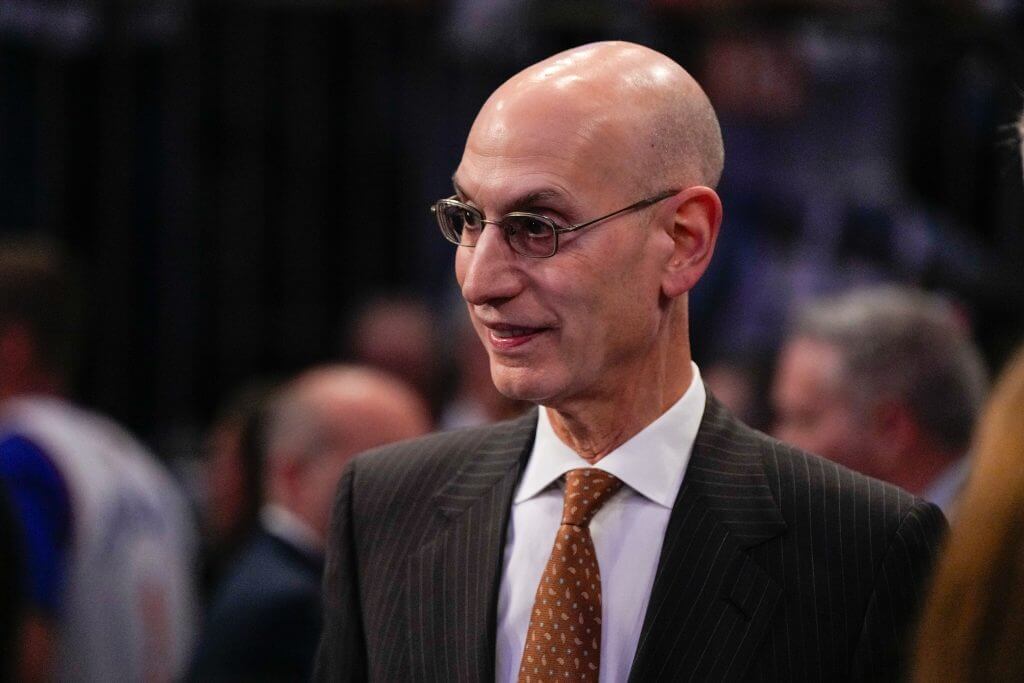
针对其影响,人们褒贬不一,有人认为它提升了联盟的竞争力,也有人认为它正在侵蚀NBA的核心根基。球员工会(NBPA)的新领导层表示,是时候做出改变了,哪怕只是微调。但联盟总裁亚当·萧华 (Adam Silver) 在周二予以了回击。
“在一个人眼里的微调,在另一个人眼里可能就是对体系的彻底颠覆,”萧华在拉斯维加斯举行的联盟董事会会议后的新闻发布会上表示。
在上周的就职新闻发布会上,球员工会执行董事戴维·凯利 (David Kelly) 满怀信心地开启了他的任期,为反对现行劳资协议(CBA)下的第二土豪线奠定了基础。
“我认为这个问题需要解决,”凯利在周五表示。“这取决于联盟是否也认为需要解决,以及他们是否感受到了像之前因为摆烂问题而在选秀方面感受到的那种解决压力。我们会提出我们的想法,而且通常会有中期谈判来对条款进行微调。如果我们能争取到一些微调,那就太棒了。”
但当他的对手被问及是否会在本期劳资协议期间就第二土豪线重回谈判桌时,萧华对此并不感兴趣。
“我认为,当我们坐下来谈判新的劳资协议时,球员们会有自己的诉求,像往常一样,球队也会有自己的诉求,”萧华说道。“我们将再次统筹考虑所有这些问题,看看什么才是最合理的。但是,正如我一贯所做的那样,我们将首先阐明我们的目标。我们的目标是建立一个在财务上对联盟可行、同时能公平回报球员的体系。”
萧华重申,设立第二土豪线是为了确保无论球队老板的氪金能力如何,竞争环境都是公平的。第二土豪线在2023年劳资协议中首次引入,是一个薪资总额门槛(本赛季约为2.22亿美元),并伴随着一系列严厉的短期和长期阵容构建限制。它取消了许多自由市场特例,限制了交易的灵活性,并锁死了未来的选秀权。它的设计初衷基本上是给球队两年的时间,允许其薪资总额冲入第二土豪线区域,之后必须采取行动摆脱这一境地。
这正迫使各支球队在做合同决策时更加谨慎,尤其是在谁能拿到顶薪的问题上。当指定新秀和老将超级顶薪续约合同首次引入时,其设计初衷是通过支付更多薪水,让球队在留住自家球员方面占得先机。但在一个全明星球员总是追求顶薪的联盟中,超级顶薪在某些情况下却起到了相反的效果。
第二土豪线正迫使球队在开出顶薪合同时更加审慎,尤其是随着联盟的建队思路已从追求“三巨头”转向围绕一名精英球员构建阵容深度。针对第二土豪线的一项潜在修正案是,让符合超级顶薪标准的顶薪球员在计入工资帽时仍只按标准顶薪计算(新秀续约合同为25%,老将续约合同为30%),凯利支持将此作为近期重新谈判的一项微调。但萧华并不愿意提前重新谈判。
“我们确实认为,在围绕第二土豪线的某些问题上,这(项微调)是合理的,无论是针对选秀球员,还是针对某些球员的鸟权特例,”凯利说道。“我认为,保持阵容稳定性的能力将有助于提高球迷的兴趣,同时仍允许球员流动,但能让球员自己决定留在他们想留的地方。”
在夏季联赛期间,有两名球员正影响着围绕第二土豪线的讨论。一方面,杰伦·布朗 (Jaylen Brown) 在有资格与波士顿凯尔特人队签下一份价值超过1.4亿美元的两年续约合同前几周,被交易到了费城76人队。凯尔特人队篮球运营总裁布拉德·史蒂文斯 (Brad Stevens) 表示,进行这笔交易的部分原因是他不想围绕两名占用70%工资帽空间的球员来构建波士顿的阵容。
“我认为我们必须针对第二土豪线谈判出更好的特例,并放宽该限制,以便允许球队在某些情况下为像杰伦·布朗这样的球员越过这条线,”凯利表示。
另一个例子是维克托·文班亚马 (Victor Wembanyama),他罕见地放弃了占工资帽30%的超级顶薪新秀续约合同,而只接受了常规的25%顶薪。这将有助于马刺队在未来几年为斯蒂芬·卡斯尔 (Stephon Castle) 和迪伦·哈珀 (Dylan Harper) 提供潜在的顶薪续约,同时又不损害他们的阵容深度。
“我们的立场是,该体系不应该要求球员承担所有这些负担,”凯利说道。“它不应该让球员处于为了保持阵容完整而不得不承担这一负担的境地。如果一个体系做到了这一点,那我们就有麻烦了。”
凯利明确表示,他认为第二土豪线导致像2024年夺冠的凯尔特人队这样的球队迅速解体是一个问题。尽管凯尔特人队的拆解似乎符合第二土豪线体系的预期——他们构建了一个明星云集的老将核心,并且必须在他们老去之前做出调整——但凯利希望在2028年10月15日跳出劳资协议的截止日期之前,看到该体系发生一些变化。
但萧华以此为例,说明了为什么他认为现行的劳资协议是公平的。
“这个体系并不完美,远非完美。双方总会有各自想要的东西,”萧华说道。“但我只是觉得,当我听到其中一些报道时的反应是,大家把一个狭隘的问题抛给我,然后说:‘我们能不能只改这一个问题?’经历过多次劳资协议谈判后,我知道这总是……一系列妥协的结果。
“如果有一方说‘我得到了我想要的一切’,那么这份协议可能就出问题了。从定义上讲,当你这一方说‘我希望你在这些问题上能做得更好’,而另一方也在说‘我们希望我们在那些问题上能做得更好’时,你几乎就可以确定你们做得很棒。”
NBA正经历着前所未有的年复一年的群雄并起局面。凯利指出,连续八个赛季产生不同冠军的纪录早在新劳资协议出台前就已开始。打法的演变、投篮的起伏以及伤病造成了如此大的更迭,以至于在这十年里,甚至没有一支球队能够连续打进总决赛。
第二土豪线正在产生实质性的影响,但它远非增强联盟均衡局面的唯一变量。凯利和新任球员工会主席、休斯敦火箭队后卫弗雷德·范弗利特 (Fred VanVleet) 周五花了很多时间阐明一个观点:他们认为布朗的交易就是一个例子,说明了这些限制同样在伤害球迷。
像布朗这样的球员在巅峰期被交易,因为他们的球队认为从长远来看无法承受其身价,这并非新鲜事。而对这份劳资协议的部分适应,将来自于明星球员们不得不接受这样一个现实:当他们步入30岁时,他们可能不再值顶薪了。
“抛开他们对这单一问题的失望不谈,如果你从整体上看这个体系,它正在为球员创造巨额的财富,并带来了真正的竞争,”萧华表示。“这种竞争水平是联盟历史上从未有过的,事实胜于雄辩。”
由生成式 AI 翻译,译文内容可能不准确或不完整,以原文为准。
查看原文:NBA commissioner Adam Silver defends second apron, says the system is fair
NBA commissioner Adam Silver defends second apron, says the system is fair
LAS VEGAS — The second apron has swiftly changed the shape of the NBA. It has forced champions to break up in the blink of an eye and even convinced stars to take hometown discounts.
Depending on who is asked, its impact ranges from improving the league to eroding the NBA at its core. The National Basketball Players Association’s new leadership says it’s time for a change, even if it’s just a small tweak. But commissioner Adam Silver pushed back Tuesday.
“One person’s tweak is another person’s overhaul to the system,” Silver said at a news conference following the league’s board of governors meeting in Las Vegas.
At his introductory news conference last week, NBPA executive director David Kelly kicked off his tenure with conviction, laying the groundwork for a campaign against the second apron as it was constructed under the current CBA.
“I think it needs to be addressed,” Kelly said Friday. “Depends on whether or not the league feels it needs to be addressed and they feel the same sort of pressure that it needs to be addressed that they felt around the draft because of the tanking issue. We will come with our ideas, and there often are midterm negotiations in which things get tweaked. If we can get some tweaks, that would be fantastic.”
But when his counterpart was asked about coming back to the negotiating table over the second apron during this CBA, Silver was not interested.
“I think at the time we sit down to negotiate the new collective bargaining agreement, there will be things that the players will want and, as usual, there will be things that the teams want,” Silver said. “And, once again, we’ll look at all those issues in totality and see what makes the most sense. But, as I always have, we’ll begin by stating our objectives. Our objective here is to have a system financially that makes sense for the league and fairly rewards the players.”
Silver reiterated that the second apron was put into place to ensure that the playing field was level regardless of ownership’s ability to spend big. Introduced in the 2023 CBA, it is a payroll threshold (about $222 million this season) that comes with a slew of drastic short- and long-term roster-building restrictions. It eliminates many free-agency exceptions, constrains trade flexibility and handcuffs draft picks far into the future. It is essentially designed to give teams two years to send the payroll high into the second apron territory before making moves to get out of it.
It is forcing teams to be more prudent with their contract decisions, especially with who gets max deals. When the designated rookie and veteran supermax extensions were first introduced, they were designed to give teams an advantage in retaining their players by paying them more. But in a league where All-Stars always push for the max, the supermax is having the opposite effect in some situations.
The second apron is forcing teams to be even more judicious with handing out max contracts, particularly as the league has shifted from hunting star trios to building depth around an elite player. One potential amendment to the second apron is to have max players who meet the supermax criteria still only count for the standard max (25 percent for rookie extensions, 30 percent for veteran extensions), which Kelly supported as a tweak to renegotiate in the near term. But Silver was not open to renegotiating early.
“We actually think that makes sense around certain issues around the second apron, whether it’s drafted players, whether it’s a Bird exception for certain players,” Kelly said. “The ability to keep teams together, I think, will help fan interest and will still allow for player movement, but allow players to have the decision of staying where they want to stay.”
Two players are shaping the discourse around the second apron during summer league. On one hand, Jaylen Brown was traded to the Philadelphia 76ers weeks before he became eligible to sign a two-year extension worth over $140 million with the Boston Celtics. Brad Stevens, the Celtics president of basketball operations, said the trade was made in part because he did not want to build Boston’s roster around two players making 70 percent of the cap.
“I think we have to negotiate better exceptions to that second apron and soften that apron that would allow teams to be able to dip over in certain circumstances for a player like Jaylen Brown,” Kelly said.
Then there is Victor Wembanyama, who took the rare step of passing on the supermax rookie extension at 30 percent of the cap for just the regular 25 percent max. That will help the Spurs give potential max extensions to Stephon Castle and Dylan Harper in the coming years without compromising their depth.
“Our position would be that the system should not require a player to carry all that burden,” Kelly said. “It should not put a player in a position where he has to carry the burden in order to keep a team together. A system that does that, we have a problem.”
Kelly made it clear he felt it was a problem that the second apron caused teams like the 2024 Celtics championship squad to be rapidly disassembled. Though the Celtics’ teardown seems to fall in line with the expectations of the second apron system — they built a star-studded, veteran core and had to move on before they aged out — Kelly would like to see some changes to the system well ahead of the Oct. 15, 2028, deadline to opt out of the CBA.
But Silver cited that as an example of why he feels the current CBA is fair.
“The system’s not perfect, far from it. There’s always things that both sides want,” Silver said. “But I just think my reaction when I hear some of these reports is to take one narrow issue to me and say, ‘Can we just change that one issue?’ Having lived through multiple collective bargaining agreements, it’s always … a series of compromises.
“There would probably be something wrong with the agreement if one side said, ‘I got everything I wanted.’ You almost know by definition you’ve done a good job when your side is saying, ‘I wish you could have done better on those issues.’ The other side is going, ‘We wish we had done better on those.’”
The NBA is experiencing unprecedented parity year-over-year. Kelly pointed out that the record streak of eight straight seasons with a new champion started well before the new CBA. Playstyle evolution, shooting volatility and injuries have created so much turnover that no team has even made consecutive NBA Finals in this decade.
The second apron is making a substantial impact, but it is far from the only variable strengthening parity. Kelly and the new NBPA president, Houston Rockets guard Fred VanVleet, spent plenty of time Friday making the point that they saw the Brown trade as an example of how these restrictions are hurting the fans as well.
Players like Brown getting moved in their primes because their teams didn’t think the price could work long-term is not novel, and part of the adjustment to this CBA will come from star players accepting they may not be worth quite the max in their 30s anymore.
“Putting aside their disappointment on that one issue, if you look at the system in totality, it’s generating an enormous amount of money for the players and creating true competition,” Silver said. “Competition at a level we’ve never had in the history of this league, and the proof is in the pudding.”
By Jared Weiss, via The Athletic