By Tim Bontemps | ESPN, 2025-08-08 20:00:00
由生成式 AI 翻译,译文内容可能不准确或不完整,以原文为准。
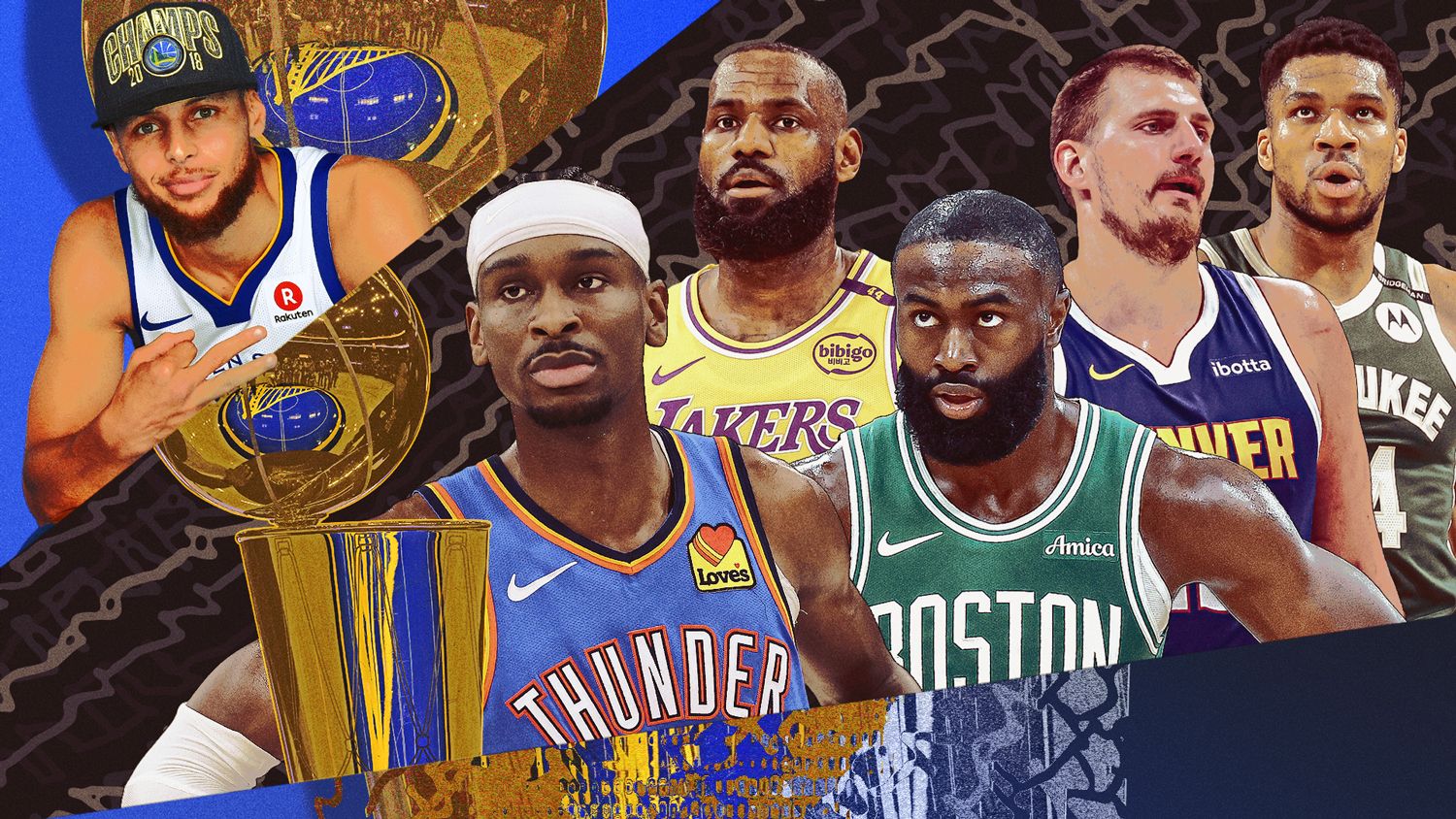
NBA是建立在王朝之上的联盟。至少,过去一直如此。
比尔·拉塞尔 (Bill Russell) 的波士顿凯尔特人队统治了20世纪60年代。拉里·伯德 (Larry Bird) 与“魔术师”约翰逊 (Magic Johnson) 的双雄争霸定义了80年代。芝加哥公牛、洛杉矶湖人和圣安东尼奥马刺则以各自的王朝统治,为90年代和21世纪初的篮球时代刻下烙印。
而近代,21世纪10年代则属于勒布朗·詹姆斯 (LeBron James)——以及他所效力的迈阿密热火和克利夫兰骑士——还有由斯蒂芬·库里 (Stephen Curry) 率领的金州勇士。
但自勇士在2017年和2018年夺得背靠背总冠军以来,NBA已见证了七支不同的冠军球队举起拉里·奥布莱恩杯,这是联盟历史上最长的均势时期。在此期间,总决赛出现了11支不同的球队,同样是联盟的一项纪录。并且在过去六个赛季的季后赛中,卫冕冠军均未能闯入分区决赛。NBA上一次出现类似的均势期是在20世纪70年代末,从1975年到1980年,联盟诞生了六支不同的冠军队伍,总决赛赛场上则出现了八支不同的面孔。
如今,联盟比以往任何时候都更接近这样一个局面:只要管理得当,全部30支球队都有机会争夺总冠军——这也是NBA总裁亚当·肖华 (Adam Silver) 在过去两次劳资协议谈判中反复强调的目标。
“我相信,机会均等对联盟有益,”肖华上个月告诉ESPN。“当更多球队有真正机会赢得总冠军时,场上的竞争会更加激烈,更多市场的球迷也会更有参与感。”
“我们的初衷并非每年都产生不同的冠军,而且我也不反对王朝,只要它们是在一个公平的体系内建立起来的。”
问题在于,这个新体系是否已从根本上改变了联盟及其球队的运作方式?在王朝统治这项运动数十年之后,新的劳资协议(CBA)是否已将其终结?或者,我们是否正站在下一个王朝诞生的前夜?
“原班人马”卷土重来,代价愈发高昂
今年六月,在俄克拉荷马城雷霆队夺得队史首个NBA总冠军后,雷霆总经理萨姆·普雷斯蒂 (Sam Presti) 被问及,联盟的工资帽“奢侈税线”(apron)是否会阻碍这支小市场球队成为常年的总冠军竞争者。
“各支球队在这些新规则下的经验还很有限,”普雷斯蒂说。“目前只有少数球队真正受到了(奢侈税线)的影响。”
“所以,我不会急于预判,‘哦,规则就是这样运作的。’”
然而,很多人并不同意普雷斯蒂的观点。因此,尽管雷霆队的争冠窗口看似一片光明,但联盟中的许多人相信,王朝可能将成为历史。
“我们的体系允许成功的球队保持阵容完整,”肖华说,“但这些球队将需要做出更艰难的抉择。”
限制性极强的“第一奢侈税线”和“第二奢侈税线”已经迫使高支出球队重新思考他们的发展蓝图。波士顿凯尔特人,这支曾一度面临成为NBA历史上首支薪资总额达5亿美元阵容的球队,在休赛期通过交易2024年夺冠功臣朱·霍勒迪 (Jrue Holiday) 和克里斯塔普斯·波尔津吉斯 (Kristaps Porzingis),并放任大个子球员艾尔·霍福德 (Al Horford) 和卢克·科内特 (Luke Kornet) 进入自由市场,从而为下赛季的工资单削减了数亿美元。
克利夫兰骑士——唯一一支超过第二档奢侈税线的球队——在自由市场失去了年度最佳第六人候选人泰·杰罗姆 (Ty Jerome),他最终加盟孟菲斯灰熊,原因同样是骑士队在支出方面受到了限制。
丹佛掘金则被迫送出他们唯一可交易的2032年无保护首轮签,以及小迈克尔·波特 (Michael Porter Jr.),以换回卡梅伦·约翰逊 (Cameron Johnson),同时为本赛季和下赛季节省了巨额开支。掘金利用这笔资金补强了板凳席,并计划在明年夏天为克里斯蒂安·布劳恩 (Christian Braun) 提供一份新的长期续约合同。
不过,这些正是肖华和联盟在制定当前规则时所期望看到的抉择。这样做使得每一个操作、每一分钱都变得至关重要。
阵容构建的失误,足以葬送王朝之路
一支球队要想逆流而上,成为潜在的王朝,仅仅收集天赋是不够的,这本身就已经非常困难。球队还需要避免签下负资产合同或溢价合同。
这个体系比以往任何时候都更强调灵活性。它会伤害那些不时刻专注于维持灵活性的球队,并惩罚那些为了一次冲冠而牺牲掉它的球队。
“你的每一个决定都必须是正确的,”一位西部球探说。“现在,你看问题不能只看一年,而要放眼三年。你真的不能出任何差错。这给管理层带来了压力,迫使他们以不同、更聪明的方式思考,以确保自己处于做出正确决策的最佳位置。”
去年夏天,洛杉矶快船没有续约保罗·乔治 (Paul George),让他成为自五年前快船签下科怀·伦纳德 (Kawhi Leonard) 以来,首位以非受限制自由球员身份更换球队的全明星球员。乔治与费城76人签下了一份为期四年、价值2.12亿美元的顶薪合同。
尽管快船当时此举受到质疑,但他们选择了灵活性,而非留住一位天赋异禀但年事已高的明星。仅仅一年多后,快船刚打出了一个50胜的赛季,今年夏天又增添了几位优质老将,并可以在2027年夏天重塑阵容。
与此同时,76人队从乔治那里仅得到了41场表现平平的比赛——他今年休赛期再次接受了膝盖手术——并且还面临着另一位顶薪球员,中锋乔尔·恩比德 (Joel Embiid) 的不确定性。由于每个赛季要在这两名球员身上投入超过1亿美元,他们成为冠军威胁者的机会被打上了严重的问号。
“我认为联盟的跟风模仿之风会让球队更注重深度、平衡以及‘下一个人顶上’的心态,”一位东部球探说。“从这个角度来看,这有一定道理,尤其是在当前这个有奢侈税线限制的薪资环境下……太难了。‘三巨头’模式,由于显而易见的原因,很难成功。”
“当你的薪资接近奢侈税线时,这几位球员占据了你工资帽的巨大比例,再加上这些限制,要打造一支伟大的球队真的非常困难。”
这也导致了其他球队优先考虑深度。纽约尼克斯通过自由市场、交易和一些精明的续约谈判,打造了由杰伦·布伦森 (Jalen Brunson)、约什·哈特 (Josh Hart)、米卡尔·布里奇斯 (Mikal Bridges)、OG·阿奴诺比 (OG Anunoby) 和卡尔-安东尼·唐斯 (Karl-Anthony Towns) 组成的先发五虎。这套阵容应能让他们在保持低于第二档奢侈税线的同时,拥有数年作为竞争者的实力。骑士队则希望他们由多诺万·米切尔 (Donovan Mitchell)、埃文·莫布里 (Evan Mobley)、达里厄斯·加兰 (Darius Garland) 和贾勒特·阿伦 (Jarrett Allen) 组成的四人核心——他们都未满30岁——能够保持完整。
与此同时,奥兰多魔术队则全力以赴,今年夏天从灰熊队得到了德斯蒙德·贝恩 (Desmond Bane),希望围绕贝恩、保罗·班凯罗 (Paolo Banchero)、弗朗茨·瓦格纳 (Franz Wagner) 和杰伦·萨格斯 (Jalen Suggs) 打造四人组。
“我们的目标不是赢得东部冠军,而是赢得总冠军,”魔术队篮球运营总裁杰夫·韦尔特曼 (Jeff Weltman) 在完成贝恩的交易后表示。“而实现这一目标的第一步,就是推动球队前进,让我们进入争冠行列的讨论中。我认为我们现在已经是一个不可忽视的因素了。”
没有哪支球队比卫冕冠军雷霆队更有能力应对联盟的财务格局。俄克拉荷马城今年夏天与他们的三位明星——谢伊·吉尔杰斯-亚历山大 (Shai Gilgeous-Alexander)、杰伦·威廉姆斯 (Jalen Williams) 和切特·霍姆格伦 (Chet Holmgren)——签下了巨额续约合同。但雷霆队也为他们配备了合同合理的角色球员和仍在享受新秀合同的年轻球员,再加上未来几年拥有的大量选秀权,这将使雷霆队能够在2020年代末之前都避免触发累积奢侈税。
“以赛亚·乔 (Isaiah Joe) 和杰林·威廉姆斯 (Jaylin Williams) 在(俄克拉荷马城)都无法获得稳定出场时间,这一事实恰恰说明了他们的阵容深度,”那位东部球探说。“这些球员在大多数球队都能打很长时间。”
联盟人才济济——且分布日益广泛
许多明星都希望在未来几年的季后赛中拥有自己的话语权。
休斯顿火箭队在上赛季出人意料地升至西部第二后,又引进了凯文·杜兰特 (Kevin Durant) 来提升他们的争冠机会。洛杉矶湖人相信他们在围绕卢卡·东契奇 (Luka Doncic) 和詹姆斯重塑阵容后也做到了同样的事情。金州勇士队在解决了乔纳森·库明加 (Jonathan Kuminga) 的受限制自由球员问题后,也将迎来库里、吉米·巴特勒三世 (Jimmy Butler III) 和德雷蒙德·格林 (Draymond Green) 完整搭档的赛季。快船队则通过在今夏得到约翰·科林斯 (John Collins)、布拉德利·比尔 (Bradley Beal) 和克里斯·保罗 (Chris Paul),进一步增加了阵容深度——尽管是以年长的球员为主。
所有这些都凸显了联盟中的人才储备,尤其是在西部,这只会增加卫冕的难度。
“通常情况下,球星的更迭会发生得更早,老一代球星状态下滑并退出舞台,然后新一批球星涌现,但球星的总数保持稳定,”一位东部高管说。“但老一辈的球星——勒布朗、斯蒂芬、KD、哈登——在他们三十多岁的年纪依然保持着高水平,所以现在的球星比我们以前见过的任何时候都多……”
“或许联盟扩军会稍微稀释一些人才,或许当斯蒂芬和勒布朗那些人最终老去时情况会有所改变,但只要趋势如此,球员们凭借健康保障措施等手段能更长时间地保持高水平,这可能就会成为新常态。”
上赛季入选NBA最佳阵容的15名球员中,有三位——詹姆斯、库里和詹姆斯·哈登 (James Harden)——年龄在35岁或以上,其中包括40岁的联盟最年长球员詹姆斯。而在另一端,三名球员——杰伦·威廉姆斯、凯德·坎宁安 (Cade Cunningham) 和莫布里——上赛季还拿着新秀合同,而安东尼·爱德华兹 (Anthony Edwards) 还未满25岁。东契奇和维克托·文班亚马 (Victor Wembanyama) 则因伤未能达到评奖所需的65场比赛门槛,这更凸显了人才库的深度。
“我总体上是支持均势的,”一位东部高管说。“我支持很多球队都有机会赢得总冠军。但我认为这不仅仅是劳资协议规则的作用。我认为联盟中有更多的人才,而且赢球真的太他妈难了。”
王朝能否再度崛起?
所有这一切给我们留下了两个问题:联盟会继续保持这种均势格局吗?如果会,这是件好事吗?
NBA的另一个均势时代,即20世纪70年代末,恰逢1976年的ABA-NBA合并,为联盟带来了四支新球队和大量新的人才。而过去几年则受到了新冠疫情的影响,导致工资帽连续三个赛季基本持平。与此同时,球员合同却每年以标准的5%到8%增长,给球队的财务状况带来了连锁反应。
“过去几年我们看到很多在财务上孤注一掷的球队难以取得成功,”一位东部球探说,“(但)我认为人们还没意识到未来工资帽上涨的速度有多快。这里不是没有工资帽的棒球联赛,但我们将回到那种有能力承担大额合同的状态,这是我们近几年没见过的。”
奢侈税线将与工资帽同比例增长,为球队提供更宽裕的操作空间。并且还有一些新的灵活工具,比如用中产特例通过交易获得球员。
尽管我们可能回不到夏季自由球员市场的疯狂时代,但联盟正在拥抱现有的球员流动。“现实是,一定程度的球员流动对于创建一个真正的30队联盟是健康的,”肖华说。
可以说,NBA最著名的王朝——90年代的芝加哥公牛——在那十年间的两个三连冠时期,迈克尔·乔丹 (Michael Jordan)、斯科蒂·皮蓬 (Scottie Pippen) 和教练菲尔·杰克逊 (Phil Jackson) 是三个不变的核心。但到1996年公牛再次夺冠时,1993年冠军队的所有其他球员都已被总经理杰里·克劳斯 (Jerry Krause) 更换。类似的故事在洛杉矶的科比·布莱恩特 (Kobe Bryant) 时代和21世纪初的圣安东尼奥马刺队身上也能找到。
“我确实认为人才分散是好事,”一位高管说。“如果一支球队拥有所有天才,那就没意思了。马刺队之间有一条贯穿始终的主线,他们有蒂姆(邓肯)、托尼(帕克)和马努(吉诺比利),但角色球员是不断更迭的。”
“所以对于雷霆来说,是的,切特、谢伊和杰伦可以一直在一起,但随着他们不断进步、合同变得昂贵,像阿隆·维金斯 (Aaron Wiggins)、吕冈茨·多尔特 (Lu Dort) 和亚历克斯·卡鲁索 (Alex Caruso) 这些人可能就得离开了。”
这正是联盟当前发展方向如此有趣的原因——也是为什么对于均势是否有益于商业存在不同看法的原因。
“如果你指的是,‘对30位老板,也就是亚当(肖华)的老板们有益吗?’那答案是肯定的,因为他们都有机会,每支球队都能获得真正的争冠机会,”一位高管说。
“但如果是问,‘这对联盟的收入有益吗?’我想,当有一位独一无二的伟大球员领导一支王朝球队时——伯德、魔术师、乔丹、科比、沙克、勒布朗、斯蒂芬——我猜那对商业更有利。”
但NBA冠军的均势可能会成为新常态。它也可能在雷霆队完成联盟下一个三连冠后,成为一个历史的注脚,就像70年代末在湖人和凯尔特人开始交替称霸之前的那个时期一样。
然而,不可否认的是,肖华的最终目标——争冠机会的均等——或许已经到来。
“现在做出任何断言还为时过早,”肖华说,“但过去七年我们将拥有七位不同的冠军这一事实,是一个很好的迹象,表明我们正朝着正确的方向前进。”
点击查看原文:It's never been tougher to build an NBA dynasty
It’s never been tougher to build an NBA dynasty
The NBA is built on dynasties. At least, it always has been.
Bill Russell’s Boston Celtics teams dominated the 1960s. The Larry Bird-Magic Johnson rivalry headlined the 1980s. The Chicago Bulls, Los Angeles Lakers and San Antonio Spurs followed with dynastic runs to define eras in the 1990s and 2000s.
And more recently, the 2010s belonged to LeBron James – both his Miami Heat and Cleveland Cavaliers teams – and the Stephen Curry-led Golden State Warriors.
But since the Warriors won back-to-back titles in 2017 and 2018, the NBA has seen seven different champions hoist the Larry O’Brien Trophy, the longest stretch of parity in league history. There have been 11 different finalists in that span, another league record. And in each of the past six postseasons, the defending champion has failed to reach the conference finals. The last time the NBA had a similar period of parity was in the late 1970s, when there were six different champions from 1975 to 1980 with eight different Finals teams.
Now, the league is closer than ever to a point where all 30 teams, if managed well, can compete for a championship, something NBA commissioner Adam Silver has repeatedly espoused as a goal during the past two collective bargaining agreements.
“I believe that parity of opportunity is good for the league,” Silver told ESPN last month. "When more teams have a genuine chance at winning a championship, the competition on the court is more compelling, and fans in more markets are engaged.
“We didn’t set out with the goal to have a different champion every year, and I’m not against dynasties so long as they are built within a fair system.”
The question is whether that new system has fundamentally altered how the league and its teams operate. After decades of dynasties ruling the sport, has the new CBA brought them to an end? Or, instead, are we sitting on the precipice of the next one?
Running it back is getting expensive
In June, after the Oklahoma City Thunder claimed their first NBA title, Thunder general manager Sam Presti was asked whether the league’s salary cap aprons would hinder the small-market franchise’s ability to be a perennial championship contender.
“There’s a limited amount of experience that teams have with these new rules,” Presti said. "We only have a few that have been in situations where [the aprons are] really impacting them.
“So, I wouldn’t be too quick to predetermine, ‘Oh, this is the way this works.’”
Plenty of people, however, don’t share Presti’s view. As a result, many across the league believe dynasties could become a thing of the past – despite the Thunder’s seemingly wide-open title window.
“Our system will allow successful teams to stay together,” Silver said, “but those teams will need to make harder choices.”
The restrictive first and second aprons have already forced higher-spending teams to rethink their roadmaps. The Boston Celtics, once in danger of becoming the first $500 million roster in NBA history – shaved hundreds of millions of dollars off next season’s payroll by trading Jrue Holiday and Kristaps Porzingis, key players in their 2024 title-winning roster, in the offseason, plus losing big men Al Horford and Luke Kornet in free agency.
The Cleveland Cavaliers – the lone team over the second apron – lost Ty Jerome, a finalist for Sixth Man of the Year, to the Memphis Grizzlies in free agency because Cleveland, too, had a limit on how much it could spend.
The Denver Nuggets were forced to trade an unprotected 2032 first-rounder, their only first-round pick available to move, along with Michael Porter Jr., to get back Cameron Johnson, along with massive savings this season and next. Denver used those funds to fortify its bench and plan a new long-term contract extension for Christian Braun that is expected next summer.
These, though, are the kinds of choices that Silver, and the league, intended when they crafted the current rules. Doing so has put a premium on every move – and every dollar.
Roster mistakes can doom a dynastic run
For a team to buck the current trend, and emerge as a potential dynasty, it’s not just about collecting talent, which is hard enough. A team also needs to avoid negative or overpriced contracts.
The system, more than ever, prioritizes flexibility. It hurts teams that aren’t constantly focusing on maintaining it and punishes franchises that sacrifice it to fuel a title run.
“You have to be right on every decision,” one Western Conference scout said. “Now, you have to look at things in not a one-year window, but a three-year window. You literally can’t mess anything up. It puts pressure on the organization to think differently and smartly to make sure you are best-positioned to make the right decisions.”
Last summer, the LA Clippers didn’t re-sign Paul George, allowing him to become the first All-Star to change teams as an unrestricted free agent since the Clippers signed Kawhi Leonard five years earlier. George signed a four-year, $212 million max contract with the Philadelphia 76ers.
Though the Clippers were questioned about the move at the time, they focused on flexibility over retaining an extremely talented but aging star. Just over a year into that deal, the Clippers are coming off a 50-win season, added several quality veterans this summer and can remake their roster in summer 2027.
The 76ers, meanwhile, got only 41 games of middling production from George – who underwent another knee surgery this offseason – and are also dealing with the uncertainty of another max-contract player, center Joel Embiid. It puts their chances of being a championship threat into serious doubt thanks to having more than $100 million invested in those two players each season.
“I think the copycat nature of the league will try to have teams focusing more on depth and having balance and a ‘next man up’ sort of mentality,” an Eastern Conference scout said. "From that perspective, there’s some validity to it, especially in this cap environment with the aprons … it’s so hard. The whole ‘Big 3’ thing is hard to pull off, for obvious reasons.
“Taking up such a big percentage of your cap with those limitations on top of it, when you get close to the aprons, it is just really difficult to build a great team.”
It has also led to other teams prioritizing depth. The New York Knicks have crafted a starting five of Jalen Brunson, Josh Hart, Mikal Bridges, OG Anunoby and Karl-Anthony Towns through free agency, trades and some savvy negotiation on contract extensions that should allow them to have a several-year run as a contender while still staying below the second apron. The Cavaliers hope their core four of Donovan Mitchell, Evan Mobley, Darius Garland and Jarrett Allen – all under 30 – can stay together.
The Orlando Magic, meanwhile, went all-in, getting Desmond Bane this summer from the Grizzlies in the hopes of creating a quartet of Bane, Paolo Banchero, Franz Wagner and Jalen Suggs.
“Our goal isn’t to win the East. The goal is to win a championship,” Magic team president Jeff Weltman said after the Bane deal. “And the first step in doing that is to move our team forward and get ourselves into that conversation. I look at it like we’re a factor now.”
No team is better positioned to navigate the league’s financial picture than the defending champion Thunder. Oklahoma City signed its three stars – Shai Gilgeous-Alexander, Jalen Williams and Chet Holmgren – to massive contract extensions this summer. But the Thunder also surrounded them with veterans on sensible contracts and players on rookie deals, which, along with having more draft picks in the years to come, will allow the Thunder to avoid the repeater tax until the end of the decade.
“The fact Isaiah Joe and Jaylin Williams can’t get on the floor [for Oklahoma City] speaks to just how deep they are,” the East scout said. “Those guys would play a ton for most teams.”
The league’s talent – and its dispersion – has never been greater
Many stars hope to have their say on how the next few playoff runs shake out.
The Houston Rockets, after a surprising rise to the second seed in the West last season, added Kevin Durant to burnish their title chances. The Lakers believe they have done the same after retooling their roster around Luka Doncic and James. The Warriors will, too, once they resolve Jonathan Kuminga’s restricted free agency, with a full season of Curry, Jimmy Butler III and Draymond Green playing together. The Clippers added even more depth – albeit in older players – by landing John Collins, Bradley Beal and Chris Paul this summer.
All of that highlights the talent around the league, particularly in the Western Conference, which only adds to the challenge of repeating.
“There is typically a changing of the stars that happens earlier, where the old guys have declined and they are out and there’s a new crop of them that has emerged, but the number of them stays consistent,” one East executive said. "But the older guys – LeBron, Steph, KD, Harden – are playing at a high level deep into their 30s, so there are more stars than we’ve ever seen before. …
“Maybe expansion will dilute that a little more, and maybe when Steph and LeBron and those guys finally age out, but as long as things are trending the way they are and guys are playing at a high level longer, with health protocols and stuff, it could be the new normal.”
Three of the 15 players selected to last season’s All-NBA teams – James, Curry and James Harden – are 35 or older, including James, who is the league’s oldest player at 40. Then, on the other end of the spectrum, three players – Jalen Williams, Cade Cunningham and Mobley – were on rookie-scale deals this past season, and Anthony Edwards is under 25. Doncic and Victor Wembanyama missed out because of injuries, leaving them short of the 65-game threshold for awards, highlighting the depth of the talent pool.
“I am generally pro-parity,” one East executive said. “I’m pro lots of teams having a chance to win championships. But I think that’s a few things beyond the CBA rules. I think there’s more talent around the league, and it’s really f—ing hard to win.”
Can a dynasty rise again?
All of this leaves us with two questions: Will the league remain in this state of parity? And, if it does, is that a good thing?
The NBA’s other era of parity, the late 1970s, coincided with the ABA-NBA merger in 1976 that introduced four new teams and lots of new talent to the league. The past few years have been impacted by the COVID-19 pandemic, which has contributed to the salary cap basically remaining flat for three seasons. Player contracts, meanwhile, continued to rise by their standard 5% to 8% each year, causing a cascading effect on teams’ financials.
“We’ve seen a lot of issues with financially all-in teams being able to pull things off the past few years,” one East scout said, “[but] I don’t think people have realized how quickly the cap is going to rise moving forward. It isn’t baseball where there’s no salary cap, but we’ll be back to where there’s going to be the ability to take on money that we just haven’t seen teams be able to.”
The tax aprons will grow at the same rate as the salary cap, allowing for a wider buffer for teams to operate in. And there are several new flexible tools, such as the midlevel exception to acquire players via trade.
Though we might not return to the days of the summer free agent frenzy, the league is embracing the player movement that currently exists. And if there is a choice between two, parity trumps a few teams sitting on top for years at a time. “The reality is that a certain level of player movement is healthy for creating a true 30-team league,” Silver said.
Arguably the NBA’s most famous dynasty, the 1990s Chicago Bulls had Michael Jordan, Scottie Pippen and coach Phil Jackson as the three constants of their two three-peat teams across that decade. But every other player on the roster from the 1993 title team had been replaced by general manager Jerry Krause by the time the Bulls won again in 1996. Similar stories can be found looking at the Kobe Bryant era in Los Angeles and the San Antonio Spurs teams in the 2000s.
“I do think talent dispersal is good,” one executive said. "It’s no fun if one team has all the talent. There’s a throughline between the Spurs teams, they had Tim [Duncan], Tony [Parker], and Manu [Ginobili], but the role players turn over.
“So OKC, yeah, Chet, Shai and Jalen can stay together, but Aaron Wiggins and Lu Dort and [Alex] Caruso and these other guys may have to go as those guys progress and get expensive.”
That’s what makes the current direction of the league so interesting – and why there are diverging opinions on whether parity is good for business.
“If you mean, ‘Good for the 30 owners, Adam’s bosses,’ then yes, because they all have a chance, and every team can get a true chance to win,” one executive said.
“If it’s, ‘Is it good for league revenues?’ I imagine it’s better when there is a singularly great player leading a dynastic team – Bird, Magic, Jordan, Kobe, Shaq, LeBron, Steph – I would imagine that’s better for business.”
But parity among NBA champions could become the new normal. It could also become a historical footnote when the Thunder rattle off the league’s next three-peat, like the run in the late 1970s before the Lakers and Celtics started trading banners.
What is undeniable, though, is that Silver’s ultimate goal – parity of championship opportunity – might have arrived.
“It’s too early to make any sort of proclamation,” Silver said, “but the fact that we will have had seven different champions over the past seven years is a good indication that we are headed in the right direction.”
By Tim Bontemps | ESPN, via ESPN