By Bobby Marks, 2026-08-03 19:00:00
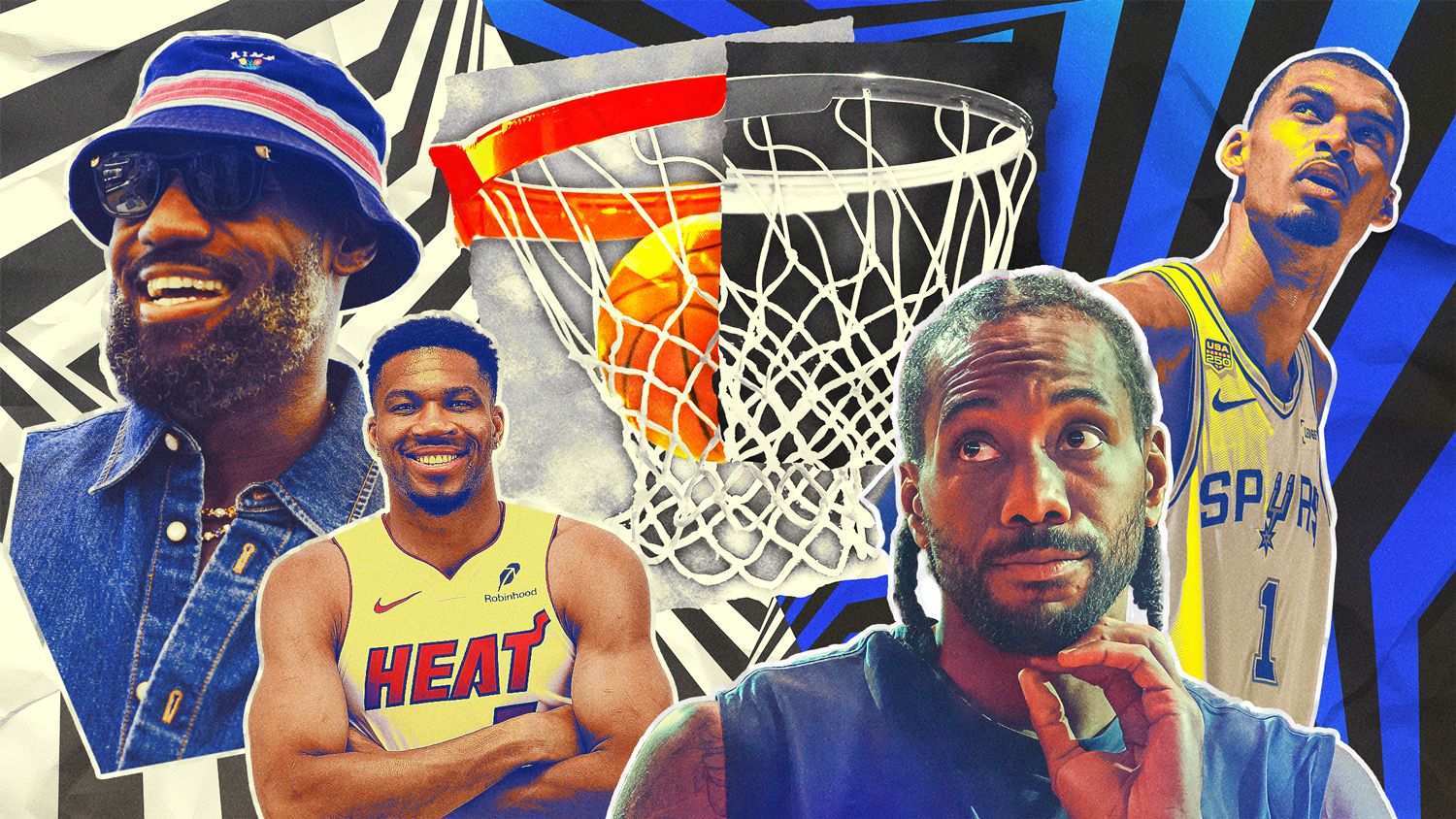
自由市场首个疯狂的月份让整个NBA世界为之沸腾。人们的注意力大多集中在各支球队如何应对休赛期,以及联盟未来的阵容构建趋势上。但在自由市场和交易季中,哪些趋势能够长久延续?
在经历了一个充斥着超级巨星交易、其中许多交易甚至可能决定2027年NBA总冠军归属的7月之后,让我们通过10个回合的“是真是假”来进行一番辨析。
1. 新劳资协议(CBA)限制了自由球员的流动
结论: 事实
单从今年夏天更换球队的2026年自由球员数量来看,答案显然是肯定的。只有35名自由球员签约了新东家,而75%的有合同在身的球员上赛季都在同一支球队的名单中。
这背后有两股力量在起作用:
在现行CBA下,提前续约球员的增加导致整个联盟缺乏薪金空间。今年夏天,只有布鲁克林篮网、芝加哥公牛和洛杉矶湖人拥有空间。
新秀和老将的续约规则——与进入自由市场相比,球员可以续约获得更多的金额和更长的年限——使得球员们优先考虑保障性资金。例如,多诺万·米切尔 (Donovan Mitchell) 选择与克利夫兰骑士签下一份4年2.72亿美元的提前续约合同,而不是等到明年夏天去争取一份5年3.53亿美元的合同。自2023年7月现行CBA生效以来,已有104名球员签署了总价值超过130亿美元的续约合同。而在上一版CBA(2017-2023年)期间,124名球员签署的续约合同总额还不足110亿美元。
球员流动的转变可能即将到来。在休赛期的第一个月里,总共只有5名球员签署了老将续约合同,且只有维克托·文班亚马 (Victor Wembanyama) 签署了新秀续约合同。虽然现在还为时尚早,但这些数字已经低于过去三个赛季签署续约合同的老将平均数(23.3人)和新秀平均数(11.3人)。
此外,预计将超过工资帽的球队采取了主动,在2月份的交易截止日之前交易得到了即将成为自由球员的人选。夏洛特黄蜂和明尼苏达森林狼在2月份分别得到了科比·怀特 (Coby White) 和阿约·多苏姆 (Ayo Dosunmu)。由于每位球员的伯德条款(Bird rights)在交易中随之转移,夏洛特和明尼苏达可以与他们签约并允许超出工资帽。多苏姆签下了一份5年1.12亿美元的合同;怀特则获得了一份3年7400万美元的合同。
“我们正试图给母队在选秀、培养和留住球员方面提供优势,”NBA总裁亚当·肖华 (Adam Silver) 在2025年夏季联赛期间表示,“这并不意味着没有自由市场,但在很多情况下,你会看到球员选择留在这些市场。所以我不一定认为这是一件坏事。”
虽然CBA影响了球队在自由市场上补强阵容,但它在球队寻求交易时给予了更大的灵活性。今年休赛期,扬尼斯·阿德托昆博 (Giannis Antetokounmpo)、拉梅洛·鲍尔 (LaMelo Ball)、杰伦·布朗 (Jaylen Brown)、保罗·乔治 (Paul George)、迈尔斯·布里奇斯 (Miles Bridges) 和贾·莫兰特 (Ja Morant) 都被交易了。(多伦多猛龙同意了关于科怀·莱昂纳德 (Kawhi Leonard) 的交易,但该交易目前处于搁置状态,直到联盟对洛杉矶快船可能存在的规避工资帽行为的调查得出结论。)
今年休赛期总共有41名球员被交易,比签约新球队的自由球员人数还多6人。
2. 土豪线(Apron)在2023年CBA之前就存在
结论: 事实
令许多人惊讶的是,第一土豪线(First Apron)在现行CBA之前确实存在,只是限制较少。
当时的起征点是奢侈税线以上700万美元,它阻止了球队通过先签后换引入球员、在总薪资超过第一土豪线的情况下使用超过纳税中产特例的金额,以及在交易特例中使用超过125%的额度。(在现行CBA下,这一比例被降至100%。)
由于限制较少,各支球队在2021-22赛季 and 2022-23赛季总共支付了11亿美元的奢侈税罚款——其中布鲁克林篮网、金州勇士和洛杉矶快船占了7.23亿美元。这种过度支出促成了极具惩罚性的第二土豪线(Second Apron)的诞生。
如果球队在交易中送出部分现金、使用了610万美元的纳税中产特例,以及最重要的一点——使用超过100%的交易球员特例(TPE)并打包合同,那么该球队将在第二土豪线处被硬工资帽限制。如果球队在赛季结束时超过第二土豪线,他们还将无法交易七年后的首轮选秀权。如果球队在四个赛季中有三个赛季超过第二土豪线,该选秀权还可能会被自动降至首轮末尾。
需要注意的是,球队被允许超过第二土豪线来留住自己的自由球员。然而,如果球队在赛季结束时仍超过该限制,他们将面临相同的阵容构建限制和选秀惩罚。
纽约如何处理米切尔·罗宾逊 (Mitchell Robinson) 的自由球员市场情况就是最新的例子之一。在以前的体系下,重新签下罗宾逊的唯一惩罚就是一笔巨额的奢侈税账单。但在现行CBA下,留住罗宾逊将导致总薪资超过第二土豪线,并触发进一步的阵容限制。
尽管有土豪线的限制,球员的总薪水依然稳步增长,从2024年休赛期的52亿美元增加到今年夏天迄今为止的58亿美元。随着几位知名球员仍未签约,一旦自由市场全部结束,这一数字可能会飙升至60亿美元。
然而,奢侈税罚款却有所下降。在2025-26赛季,七支球队总共支付了2.23亿美元——相比2022-23赛季(上一版CBA的最后一个赛季)下降了67%以上。
3. 第二土豪线正起到硬工资帽的作用
结论: 这取决于具体的球队
尽管纽约尼克斯拥有超过该门槛以留住自家自由球员的能力,但尼克斯老板詹姆斯·多兰 (James Dolan) 今年夏天仍将第二土豪线视作事实上的硬工资帽。“我们不能进入第二土豪线,”多兰在纽约WFAN电台节目中表示,“我们愿意倾尽全力,但在NBA中,有些事情你做了就等于自杀。”
尼克斯在自由市场上失去了罗宾逊,但重新签下了关键替补兰德里·沙梅特 (Landry Shamet)、何塞·阿尔瓦拉多 (Jose Alvarado)、穆罕默德·迪亚瓦拉 (Mohamed Diawara) 和乔丹·克拉克森 (Jordan Clarkson),并保持在第二土豪线以下。这四名球员在即将到来的赛季中总共将赚得1500万美元,相当于罗宾逊在波士顿第一年的薪水。
目前,已有22支球队——如果莱昂纳德的交易最终敲定,猛龙将成为第23支——在今年夏天进行了交易,以避免超过第一或第二土豪线。在过去的两个赛季中,凯尔特人、森林狼、菲尼克斯太阳和骑士在赛季结束时都超过了第二土豪线。其中没有球队触发超级奢侈税(即重复纳税球队)。丹佛掘金本赛季很可能成为第五支超过第二土豪线的球队。
与此同时,亚特兰大老鹰利用他们的财务灵活性,占了那些需要削减薪资的球队的便宜,交易得到了德文·卡特 (Devin Carter)(通过萨克拉门托国王)以及吕冈茨·多尔特 (Lu Dort) 和亚伦·维金斯 (Aaron Wiggins)(通过俄克拉荷马雷霆)。
活塞也从雷霆的财务危机中受益。在上赛季三分球命中率在东部垫底后,底特律交易得到了后卫以赛亚·乔 (Isaiah Joe),他上赛季的三分命中率达到了职业生涯新高的42.3%。
“该体系的目的归根结底是为了在整个联盟中创造竞争,从这个角度来看,我认为该体系运行得非常好,”肖华表示,“我们的目标不一定是每年都有不同的冠军,但我们在过去八年里确实诞生了八个不同的冠军。”
尽管肖华和联盟吹嘘土豪线对竞争平衡的影响,但球员工会今年休赛期却表达了不同的看法。
“我们本应该在抵制第二土豪线方面做得更好,”国家篮球球员工会(NBPA)执行董事大卫·凯利 (David Kelly)上个月在拉斯维加斯夏季联赛期间表示,“我们正看到[土豪线体系]摧毁球队,并迫使他们做出非篮球层面的决定。”
4. 保持阵容深度,而非规避第二土豪线,才是球队的首要任务
结论: 事实
俄克拉荷马雷霆在进入休赛期时,预计总薪资将超过第二土豪线,达到5.6亿美元。随后,他们通过三笔独立的交易送走了乔、维金斯和多尔特,同时获得了7个未来的次轮选秀权和3个巨额的交易特例。他们的总薪资已降至2.34亿美元,同时依然保留了谢伊·吉尔杰斯-亚历山大 (Shai Gilgeous-Alexander)、杰伦·威廉姆斯 (Jalen Williams)、切特·霍姆格伦 (Chet Holmgren)、以赛亚·哈尔滕施泰因 (Isaiah Hartenstein)、凯森·华莱士 (Cason Wallace)、贾里德·麦凯恩 (Jared McCain)、亚历克斯·卡鲁索 (Alex Caruso) 和杰林·威廉姆斯 (Jaylin Williams)。他们还在最近的选秀中选下了阿戴·马拉 (Aday Mara) 和贝内特·斯蒂尔茨 (Bennett Stirtz)。
“我们拥有一支具备竞争力的球队,”雷霆总经理萨姆·普雷斯蒂 (Sam Presti) 在多尔特被交易后告诉《俄克拉荷马人报》,“据我理解,今年夏天的决定在财务上为我们做好了准备,以维持这种水准的球队。”
多尔特的交易让俄克拉荷马城拥有了灵活性,最初得以向斯宾塞·琼斯 (Spencer Jones) 开出一份2年1200万美元的报价合同。(掘金匹配了这一报价。)而在未来,这一举措为球队提供了资源,以便在今年休赛期提前续约华莱士,并在2027年续约阿杰·米切尔 (Ajay Mitchell)。“当你拥有像我们这样的薪资体系时,每位总经理都需要做出结合篮球和商业的综合决定,”肖华在本月早些时候表示。
波士顿凯尔特人本赛季并不是土豪线球队,但仍然用最佳阵容侧翼布朗交易得到了乔治和未来的首轮选秀资产。两人的合同几乎完全相同,只是乔治的合同少了一年。
“从过去几届冠军身上可以明显看出……你必须在构建阵容深度方面做得非常出色,以期能够替代那些不可替代的个体,”凯尔特人总裁布拉德·史蒂文斯 (Brad Stevens) 在本月早些时候表示。
交易完成后,波士顿与中锋罗宾逊签下了一份3年4700万美元的合同,同时也提前续约了首发尼米亚斯·克塔 (Neemias Queta)(4年5600万美元)和乔丹·沃尔什 (Jordan Walsh)(3年1500万美元)。
算上乔治2027-28赛季的球员选项,波士顿目前有12名球员在合同期内,且低于第二土豪线1300万美元。如果他们选择留住布朗,本赛季和下赛季他们也本可以保持在第二土豪线以下。
“关于交易布朗,我可能是错的。我不会站在这里为此辩护,”史蒂文斯说,“但如果我们将70%的薪金空间和如此高比例的使用率绑定在布朗和杰森·塔图姆 (Jayson Tatum) 身上,未来的道路看起来会更具挑战性。”
5. 维克托·文班亚马刚刚为未来的提前续约树立了先例
结论: 因人而异
文班亚马今年夏天与圣安东尼奥马刺签下了一份5年2.52亿美元的新秀提前续约合同。
引人注目的是,文班亚马选择不在合同中加入30%的奖金激励条款,如果他在2026-27赛季入选最佳阵容、获得MVP或最佳防守球员,该条款本可以将合同金额提升至3.02亿美元。而文班亚马正是这三项荣誉的热门人选。
“我们认为球员应该自己做决定,我们不应该……盯着别人的钱包,”当被问及文班亚马的合同协议时,NBPA负责人凯利表示,“该体系不应该要求球员承担所有这些负担。我们不应该让球员处于为了让球队团结在一起而承担重担的境地。”
在文班亚马的整个合同期内,马刺预计每赛季将节省近1000万美元,从而创造出关键的薪金空间,有助于在明年休赛期提前续约斯蒂芬·卡斯尔 (Stephon Castle),以及在2028年夏天续约迪伦·哈珀 (Dylan Harper)。
这种牺牲为在2026年总决赛中击败圣安东尼奥的球队带来了回报。早在2024年休赛期,尼克斯后卫杰伦·布伦森 (Jalen Brunson) 同意签下一份4年1.565亿美元的提前续约合同——这比他在2025年有资格签下的合同少了1.13亿美元。
作为回报,纽约得以重新签下OG·阿奴诺比 (OG·Anunoby),交易得到米卡尔·布里奇斯 (Mikal Bridges) 和卡尔-安东尼·唐斯 (Karl-Anthony Towns),并赢得了自1973年以来的首个总冠军。现在的焦点转移到了唐斯身上。他今年夏天有资格签署提前续约合同,他的下一份合同可能会决定这套阵容能否负担得起继续留在一起的成本。
并非所有球员都在现行CBA下接受降薪:自2024年休赛期以来,米切尔(两次)、达龙·福克斯 (De’Aaron Fox)、卢卡·东契奇 (Luka Doncic)、德文·布克 (Devin Booker)、吉尔杰斯-亚历山大、布朗、塔图姆、乔尔·恩比德 (Joel Embiid)、贾马尔·穆雷 (Jamal Murray)、巴姆·阿德巴约 (Bam Adebayo)、吉米·巴特勒 (Jimmy Butler) 和斯蒂芬·库里 (Stephen Curry) 都签署了顶薪续约合同。
6. 土豪线规则将在现行CBA下得到修正
结论: 虚构
如果由球员工会决定,现行协议将被重新开启谈判,并将重点放在土豪线上。凯利表示,如果NBA和NBPA能够同意对土豪线体系进行“一些微调”,那将是“极好的”。几天后,肖华表示,任何修改都要等到2030-31赛季前的新一版CBA才会进行。
“这是他们的权利,球员有权提出他们想要的任何问题,”肖华说,“我相信我们这一方也会有想要讨论的问题。”
球员和联盟有权在2029年6月30日终止该协议。任何一方都需要在2028年10月15日或之前发出通知。
7. 球队在合同结构设计上采取了保守态度
结论: 事实
今年6月,NBA向各支球队发送了一份备忘录,其中包含2026-27赛季的工资帽数据。该备忘录还包括对2027-28赛季工资帽的预测。由于围绕区域体育网络的不确定性,联盟预计工资帽仅增长5.5%(最大增幅为10%)。
较低的预测增幅影响了今年休赛期合同的结构设计。
在签署非新秀合同的89名球员中,有48人的合同要么是到期合同、带有球队选项,要么是第二赛季没有薪资保障。约翰·科林斯 (John Collins)(底特律)、昆汀·波斯特 (Quinten Post)(孟菲斯)、克里斯·米德尔顿 (Khris Middleton)(华盛顿)、八村垒 (Rui Hachimura)(洛杉矶快船)和诺曼·鲍威尔 (Norman Powell)(芝加哥)都签署了第二年无保障的多年合同。
与此同时,湖人对奥斯汀·里夫斯 (Austin Reaves) 的4年1.8亿美元合同也采取了类似的做法。里夫斯的薪水从第一年到第二年并没有按照最高8%的幅度递增,而是仅增长了4.1%。洛杉矶还与桑德罗·马穆凯拉什维利 (Sandro Mamukelashvili) 签下了一份在第二赛季递减(从1300万美元降至1230万美元)的合同。
8. 雄鹿与小加里·特伦特存在规避工资帽的行为
结论: 待定
这些指控并不仅仅源于现年27岁的特伦特在今年夏天将连续两份底薪合同转化为一份新的4年6400万美元合同。相反,令人侧目的是,密尔沃基用今年夏天第10大自由球员合同签下了这位后卫,尽管他刚刚打出了自2018-19新秀赛季以来最低的场均得分和最差的三分球命中率。(密尔沃基利用特伦特的伯德条款重新签下了他,并给予了大幅加薪。)
在失去阿德托昆博后的雄鹿阵中,已经拥有了泰勒·希罗 (Tyler Herro)、莱恩·罗林斯 (Ryan Rollins)、卡里斯·勒韦尔 (Caris LeVert)、AJ·格林 (AJ Green)、布雷登·伯里斯 (Brayden Burries)、小凯文·波特 (Kevin Porter Jr.) 和卡斯帕拉斯·雅库乔尼斯 (Kasparas Jakucionis) 等有合同在身的后卫。
即使没有书面证据表明特伦特与雄鹿管理层之间存在事先协议,NBA也可以援引CBA第十三条第2d款。简而言之:如果有直接或间接的旁证,就可以认定违规。
9. 受限制自由球员继续处于劣势
结论: 介于两者之间
是的,底特律(杰伦·杜伦 (Jalen Duren))、丹佛(佩顿·沃森 (Peyton Watson))和洛杉矶快船(贝内迪克特·马瑟林 (Bennedict Mathurin))目前在受限制自由球员谈判中占据主动。
每支球队都可以匹配任何报价合同,但除布鲁克林外,没有哪家俱乐部的薪金空间超过1400万美元。而且,即使市场上资金充裕,自2022年以来也只有五名球员——德安德烈·艾顿 (Deandre Ayton)、马蒂斯·塞布尔 (Matisse Thybulle)、保罗·里德 (Paul Reed)、波斯特、穆萨·西塞 (Moussa Cisse) 和琼斯——签署了报价合同。(波斯特与孟菲斯的合同是自2020年博格丹·博格达诺维奇 (Bogdan Bogdanovic) 以来,第一份未被母队匹配的报价合同。)
掘金的财务状况影响了他们是与沃森签下一份丰厚的合同,还是寻求先签后换。为了留住沃森,算上奢侈税罚款,他们的总薪资可能会超过4亿美元。如果交易后的薪资使球队超过任何一条土豪线,丹佛就不被允许在先签后换中获得球员。
但受限制自由球员市场并不比以前的CBA更难应对。那些没有签署新秀续约合同的球员,已经在一代人的时间里摸索出了绕过这一严苛规则的方法,但前提是他们愿意在下一份合同上做出妥协,或者通过先签后换更换球队。
自2023年以来,有20名前首轮秀在收到资质报价后签署了合同。只有四名球员——泰雷斯·马克西 (Tyrese Maxey)、伊曼纽尔·奎克利 (Immanuel Quickley)、卡梅隆·约翰逊 (Cameron Johnson) 和乔纳森·库明加 (Jonathan Kuminga)——以超过2000万美元的起薪重新签约。沃克·凯斯勒 (Walker Kessler) 本可以成为第五人,但在他签下一份4年1.3亿美元的合同后,犹他爵士将这位中锋交易到了湖人。
对于杜伦、沃森和马瑟林来说,签署为期一年的资质报价是一个冒险但有效的杠杆。这样做将允许每位球员在2027年夏天成为完全自由球员。
10. NBA的东西部分区鸿沟已不复存在
结论: 事实
无意冒犯俄克拉荷马城的蝉联MVP,或是圣安东尼奥的现任最佳防守球员,但今年休赛期确实将联盟的势力天平向东部倾斜了一点:
- 阿德托昆博被交易到了迈阿密。
- 布朗和勒布朗·詹姆斯 (LeBron James) 加盟了费城。
- 在联盟的Aspiration调查解决后,莱昂纳德可能准备加盟猛龙。
- 尼克斯保留了其绝大部分的夺冠核心阵容。
如果你想要更多证据,2025年东部冠军步行者在交易截止日引进了伊维察·祖巴茨 (Ivica Zubac),而入选最佳阵容的后卫泰雷斯·哈利伯顿 (Tyrese Haliburton) 也已从总决赛中遭遇的跟腱断裂伤势中复出。奇才则引进了特雷·杨 (Trae Young)、安东尼·戴维斯 (Anthony Davis) 以及2026年状元秀AJ·迪班萨 (AJ Dybantsa)。
老鹰重新签下了CJ·麦科勒姆 (CJ McCollum),同时将多尔特、维金斯、莱恩·内姆哈德 (Ryan Nembhard) 和卡特加入到了联盟最优秀的年轻阵容之一中。别忘了去年在底特律拿到60胜的球队、克利夫兰的东部决赛球队,以及奥兰多的前六争夺者。新崛起的黄蜂虽然在今年夏天失去了鲍尔和布里奇斯,但应该也能保持竞争力。
由生成式 AI 翻译,译文内容可能不准确或不完整,以原文为准。
查看原文:NBA free agency 2026: Let's play fact vs. fiction after a wild month
NBA free agency 2026: Let’s play fact vs. fiction after a wild month
A blockbuster first month of free agency has the NBA world buzzing. Plenty of that attention has been focused on how teams are navigating the offseason and the future of roster building around the league. But which free agency and trade season trends have staying power?
Let’s play 10 rounds of fact vs. fiction after a July filled with superstar deals, many of which could help decide the 2027 NBA title.
1. The CBA has curbed free agent movement
Verdict: Fact
Based solely on the number of 2026 free agents that changed teams this summer, the answer is a resounding yes. Only 35 free agents have signed elsewhere, and 75% of players under contract were on the same roster last season.
There are two forces at play:
The increase of players signing extensions under the current CBA resulted in a lack of cap space around the league. Only the Brooklyn Nets, Chicago Bulls and Los Angeles Lakers had room this summer.
Rookie and veteran extensions rules – a player can extend for more money and more years compared to entering free agency – have players prioritizing guaranteed money. For example, Donovan Mitchell chose to sign a four-year, $272 million extension with the Cleveland Cavaliers over waiting until next summer for a five-year, $353 million deal. Since the current CBA began in July 2023, 104 players have already signed extensions worth more than $13 billion. Under the previous CBA (2017-2023) 124 players signed extensions totaling less than $11 billion.
A shift in player movement could be coming. Through the first month of the offseason, a total of five players have signed veteran extensions and only Victor Wembanyama has signed a rookie extension. While early, those numbers are down from the average of veterans (23.3) and rookies (11.3) that have signed extensions in the prior three seasons.
And teams projected to be over the salary cap were proactive, dealing for upcoming free agents before February’s trade deadline. The Charlotte Hornets and Minnesota Timberwolves acquired Coby White and Ayo Dosunmu, respectively, in February. Because each player’s Bird rights were transferred as part of the trade, Charlotte and Minnesota could sign each player and exceed the salary cap. Dosunmu signed for five years, $112 million; White fetched a three-year, $74 million contract.
“We are trying to give incumbent teams an advantage to draft, develop and keep players,” NBA commissioner Adam Silver said during summer league in 2025. “Doesn’t mean there’s no free agency, but in many cases, you have situations where players are electing to stay in those markets. So I don’t necessarily think that’s a bad thing.”
While the CBA has impacted teams from adding to their roster in free agency, it has given teams greater flexibility when pursuing trades. This offseason, Giannis Antetokounmpo, LaMelo Ball, Jaylen Brown, Paul George, Miles Bridges and Ja Morant were moved. (The Toronto Raptors agreed to a trade for Kawhi Leonard, but that deal is on hold until the league’s investigation of possible salary cap circumvention by the LA Clippers is resolved.)
In total, 41 players have been traded this offseason, six more than free agents signing with new teams.
2. The apron existed before the 2023 CBA
Verdict: Fact
To the surprise of many, the first apron did exist before the current CBA, but with fewer restrictions.
The threshold was $7 million above the luxury tax, and it prevented teams from acquiring a player in a sign-and-trade, from using more than the tax midlevel exception if that salary sent payroll over first apron and from using more than 125% of a trade exception. (Under the current CBA, that number was reduced to 100%.)
With fewer restrictions, teams combined to pay $1.1 billion in luxury tax penalties in 2021-22 and 2022-23 – the Brooklyn Nets, Golden State Warriors and LA Clippers accounted for $723 million. That excessive spending helped usher in the punitive second apron.
A team becomes hard-capped at the second apron if cash is sent in a trade, the $6.1 million tax midlevel exception is used and most importantly, use more than 100% of the Traded Player Exception and aggregate contracts. A team also has the inability to trade their first-round pick seven years out if it finishes the season over the second apron. That same draft pick could be moved to the end of the first round if a team finishes over the second apron in three of four seasons.
It is important to note that teams are allowed to exceed the second apron to retain their own free agents. However, a team faces the same roster-building restrictions and draft penalties if it finishes that season over.
How New York handled Mitchell Robinson’s free agency is one of the latest examples. Under the previous system, the only penalty for re-signing Robinson would have been a significant luxury tax bill. Under the current CBA, retaining Robinson would have exceeded the second apron and triggered further roster restrictions.
Despite the aprons, player salaries have steadily increased from $5.2 billion during the 2024 offseason to $5.8 billion so far this summer. With a handful of notable players still unsigned, that number could balloon to $6 billion once free agency is completed.
Luxury tax penalties, however, are down. In 2025-26, seven teams combined to pay $223 million – more than a 67% drop from the final season of the previous CBA in 2022-23.
3. The second apron is acting as a hard cap
Verdict: That depends on the franchise
Knicks owner James Dolan used the second apron as a de facto hard cap this summer despite having the ability to exceed the threshold to retain the team’s own free agents. “We cannot go into the second apron,” Dolan said on WFAN in New York. “We’re willing to stretch, but there’s certain things in the NBA that you’d have to be suicidal to do.”
The Knicks lost Robinson in free agency but re-signed key reserves Landry Shamet, Jose Alvarado, Mohamed Diawara, Jordan Clarkson and remained below the second apron. The four players will earn a combined $15 million this upcoming season, equal to Robinson’s first-year salary in Boston.
Currently, 22 teams – the Raptors will become the 23rd if the Kawhi Leonard trade is finalized – have made transactions this summer to avoid exceeding the first or second apron. In the prior two seasons, the Celtics, Timberwolves, Phoenix Suns and Cavaliers have finished over the second apron. None were repeater teams. The Denver Nuggets are likely to become the fifth second apron team this season.
The Atlanta Hawks, meanwhile, used their financial flexibility to take advantage of teams needing to shed salary, trading for Devin Carter (via the Sacramento Kings) and Lu Dort and Aaron Wiggins (via Oklahoma City).
The Pistons also benefited from the Thunder’s financial crunch. After ranking last in the Eastern Conference in 3-point shooting last season, Detroit acquired guard Isaiah Joe, who shot a career-high 42.3% from deep last season.
“The purpose of the system is ultimately to create competition throughout the league, and from that standpoint, I think the system is working incredibly well,” Silver said. “The goal isn’t necessarily to have a different champion every year, but we’ve had eight different champions over the last eight years.”
While Silver and the league boast the aprons’ impact on parity, the players’ union has shared a different take this offseason.
“We should have done a better job of fighting back against the second apron,” David Kelly, the National Basketball Players Association executive director, said last month during the Las Vegas Summer League. “We’re seeing [the apron system] decimate teams and force decisions to be made that are not basketball decisions.”
4. Maintaining depth, not avoiding the second apron, was the priority for teams
Verdict: Fact
The Oklahoma City Thunder entered the offseason projected to be over the second apron with a $560 million payroll. They would go on to trade Isaiah Joe, Aaron Wiggins and Lu Dort in three separate deals while acquiring seven future second-round picks and three sizable trade exceptions. Their payroll has decreased to $234 million while still retaining Shai Gilgeous-Alexander, Jalen Williams, Chet Holmgren, Isaiah Hartenstein, Cason Wallace, Jared McCain, Alex Caruso and Jaylin Williams. They also added Aday Mara and Bennett Stirtz in the recent draft.
“We have a team that is capable of contention,” Thunder general manager Sam Presti told the Oklahoman after Dort was traded. “And as I understand it, the decisions this summer have positioned us financially to maintain a team of this caliber.”
The Dort trade gave Oklahoma City the flexibility to originally sign Spencer Jones to a two-year, $12 million offer sheet. (The Nuggets matched it.) And in the future, the move gives the franchise the resources to extend Cason Wallace this offseason and Ajay Mitchell in 2027. “When you have a salary system in place as we do, every general manager is going to need to make mixed basketball and business decisions,” Silver said earlier this month.
The Boston Celtics were not an apron team this season but still traded All-NBA wing Jaylen Brown for Paul George and future first-round draft assets. The contracts are nearly identical but with George having one less season.
“You could see it obviously with the last couple of champions … you have to do a great job of building out depth that can hopefully replace the irreplaceable individual,” Celtics president Brad Stevens said earlier this month.
After the trade, Boston signed center Mitchell Robinson to a three-year, $47 million contract while also extending starter Neemias Queta (four years, $56 million) and Jordan Walsh (three years, $15 million).
Including George’s player option for 2027-28, Boston has 12 players under contract and is $13 million below the second apron. It would have remained below the second apron this season and next if it elected to retain Brown.
“I might be wrong [about trading Brown]. I’m not going to stand up here and be defensive about that,” Steven said. “But the path looked a little bit more challenging, with 70% of our cap and such a high percentage of our usage tied into [Brown and Jayson Tatum].”
5. Victor Wembanyama just set a precedent for future extensions
Verdict: Case-by-case
Wembanyama signed a five-year, $252 million rookie extension with San Antonio this summer.
What stood out was Wembanyama electing not to put a 30% escalator clause in the contract that could have increased to $302 million if he were named All-NBA, MVP, Defensive Player of the Year in 2026-27. Wembanyama is among the favorites for all three honors.
“We think the players should make decisions for themselves and we should not be … pocket-watching,” NBPA head Kelly said when asked about Wembanyama’s deal. “The system should not require a player to carry all of that burden. We should not put a player in the position to carry the burden of keeping a team together.”
The Spurs project to save nearly $10 million per season throughout Wembanyama’s contract, creating critical cap room to help in extending Stephon Castle next offseason and Dylan Harper in summer 2028.
That type of sacrifice paid off for the franchise that toppled San Antonio in the 2026 Finals. Back in the 2024 offseason, Knicks guard Jalen Brunson agreed to a four-year, $156.5 million contract extension – $113 million less than he was eligible to sign in 2025.
In turn, New York was able to re-sign OG Anunoby, trade for Mikal Bridges and Karl-Anthony Towns and win its first championship since 1973. The focus now shifts to Towns. Eligible to sign an extension this summer, his next contract could play a role in whether this roster can afford to stay together.
Not all players are taking discounts under the current CBA: Since the 2024 offseason, Donovan Mitchell (twice), De’Aaron Fox, Luka Doncic, Devin Booker, Shai Gilgeous-Alexander, Jaylen Brown, Jayson Tatum, Joel Embiid, Jamal Murray, Bam Adebayo, Jimmy Butler and Stephen Curry have signed maximum extensions.
6. Apron rules will get amended under the current CBA
Verdict: Fiction
If it were up to the players’ union, the current agreement would be reopened with a large focus on the aprons. Kelly said it would be “fantastic” if the NBA and the NBPA could agree to “some tweaks” to the apron system. Silver said days later that any amendments wouldn’t occur until the next CBA ahead of the 2030-31 season.
“It’s their right, the players’ right to raise any issues they want,” Silver said. “I’m sure there will be issues from our side of the table that we want to discuss as well.”
The players and the league have the option to terminate the agreement on June 30, 2029. Either side would need to give notice on or before Oct. 15, 2028.
7. Teams took a conservative approach to structuring contracts
Verdict: Fact
In June, the NBA sent a memo to teams with the 2026-27 salary cap numbers. That memo also included cap projections for 2027-28. And because of the uncertainty surrounding regional sports networks, the league is projecting only a 5.5% increase (the maximum is 10%).
The lower projection played a role in how contracts were structured this offseason.
Out of the 89 players that signed non-rookie contracts, 48 were either on an expiring, a team option or had no salary protection for a second season. John Collins (Detroit), Quinten Post (Memphis), Khris Middleton (Washington), Rui Hachimura (LA Clippers) and Norman Powell (Chicago) all signed multiyear contracts without a Year 2 guarantee.
The Lakers, meanwhile, took a similar approach to Austin Reaves’ four-year, $180 million contract. Instead of increasing the salary by the maximum 8% from Year 1 to 2, Reaves’ number increases by just 4.1%. Los Angeles also signed Sandro Mamukelashvili to a deal that declines from $13 million to $12.3 million in the second season.
8. The Bucks and Gary Trent Jr. committed salary cap circumvention
Verdict: TBD
The allegations don’t stem solely from Trent, 27, parlaying back-to-back minimum deals into a new four-year, $64 million contract this summer. Rather, eyebrows were raised when Milwaukee signed the guard to the 10th-biggest free agent contract of the summer despite coming off the fewest points per game and worst 3-point percentage since his rookie year in 2018-19. (Milwaukee used Trent’s Bird rights to re-sign him to a substantial raise.)
The post-Giannis Bucks already had guards Tyler Herro, Ryan Rollins, Caris LeVert, AJ Green, Brayden Burries, Kevin Porter Jr. and Kasparas Jakucionis under contract.
Even if there is no paper trail showing a prior agreement between Trent and the Bucks’ front office, the NBA can invoke Article XIII, section 2d of the CBA. To paraphrase: A violation can occur if there is direct or circumstantial evidence.
9. Restricted free agents continue to be at a disadvantage
Verdict: Somewhere in the middle
Yes, Detroit (Jalen Duren), Denver (Peyton Watson) and the LA Clippers (Bennedict Mathurin) currently have leverage in restricted free agency negotiations.
Each team can match any offer sheet, but no franchise outside of Brooklyn has more than $14 million in cap space. And even if the market was flush with money, only five players – Deandre Ayton, Matisse Thybulle, Paul Reed, Quinten Post, Moussa Cisse and Spencer Jones – have signed offer sheets since 2022. (The Post’s deal with Memphis was the first offer sheet to go unmatched since Bogdan Bogdanovic in 2020.)
The Nuggets’ finances play a role in the decision to sign Watson to a lucrative contract or to explore a sign-and-trade. To retain Watson, their payroll would likely exceed $400 million when accounting for luxury tax penalties. Denver is not allowed to acquire a player in a sign-and-trade if the post-transactional salary leaves the franchise over either apron.
But restricted free agency is no more difficult to navigate than in previous CBAs. Players who don’t sign rookie extensions have navigated around the stringent rule for a generation, but only if they were willing to compromise on their next contract or change teams via sign-and-trade.
Since 2023, 20 former first-round picks signed a contract after receiving a qualifying offer. Only four players – Tyrese Maxey, Immanuel Quickley, Cameron Johnson and Jonathan Kuminga – re-signed with a starting salary greater than $20 million. Walker Kessler would have been the fifth, but the Utah Jazz traded the center to the Lakers after he signed a four-year, $130 million contract.
For Duren, Watson and Mathurin, signing the one-year qualifying offer is a risky but effective bit of leverage. Doing so would allow each player to hit unrestricted free agency in the summer of 2027.
10. The NBA’s conference divide has vanished
Verdict: Fact
No disrespect to the back-to-back MVP in Oklahoma City or the reigning Defensive Player of the Year in San Antonio, but this offseason has shifted the league’s balance of power a bit to the East:
- Antetokounmpo was traded to Miami.
- Brown and LeBron James joined Philadelphia.
- Leonard could be set on joining the Raptors after the league’s Aspiration investigation is resolved.
- The Knicks return the vast majority of its championship core.
If you want more proof, the 2025 East champion Pacers added Ivica Zubac at the trade deadline, and All-NBA guard Tyrese Haliburton is back from the ruptured Achilles he suffered in the Finals. The Wizards added Trae Young, Anthony Davis and 2026 No. 1 pick AJ Dybantsa.
The Hawks re-signed CJ McCollum while also adding Lu Dort, Aaron Wiggins, Ryan Nembhard and Devin Carter to one of the best young lineups in the league. And don’t forget last year’s 60-win team in Detroit, a conference finalist in Cleveland and a top-six contender in Orlando. The upstart Hornets, despite losing LaMelo Ball and Miles Bridges this summer, should stay in the mix, too.
By Bobby Marks, via ESPN