By John Hollinger | The Athletic, 2026-05-21 13:45:06
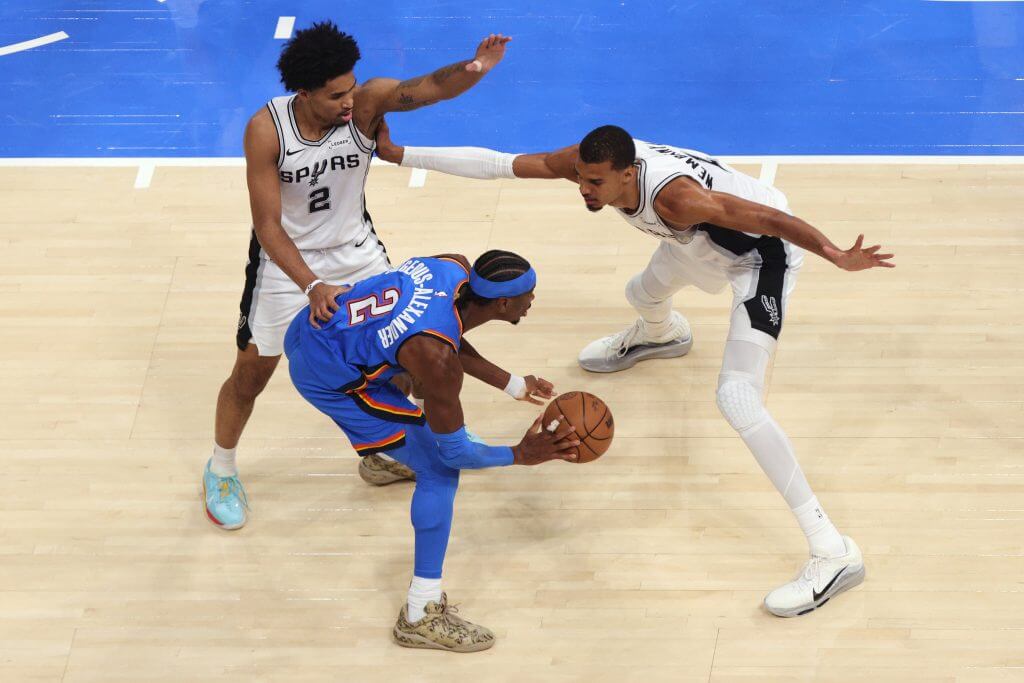
The Athletic 正在为您带来 雷霆对阵马刺 —— 2026年NBA西部决赛 第三场对决的现场直击。
俄克拉荷马城——如果你是本周在西部决赛中互飙重拳、打得难解难分的两大超级强权之一的球迷,我有一个好消息和一个坏消息。
好消息是:即使在如今这个有着土豪线限制、自由市场等各种规则的时代,你的球队架构也足以让他们在未来很长、很长一段时间内保持如此顶尖的竞争力。
坏消息是:你隔壁州的那位宿敌也是如此。
而如果你是除圣安东尼奥马刺或俄克拉荷马雷霆之外,其余13支西部球队中任何一队的球迷,那么……我有一个坏消息,和另一个坏消息。
坏消息是,马刺和雷霆似乎注定要在接下来的十年里,每年都拿到60场以上的胜利。另一个坏消息是,当联盟未来扩军时,这13支球队中只有一只能被划归到东部。
我不知道如果你现在是西部一支中游偏上、由老将领衔的季后赛球队该怎么办。如果你是,比方说,丹佛掘金、洛杉矶湖人或明尼苏达森林狼,你还可以自我安慰,觉得要是去了东部自己就能拿分区冠军。(呃,尤其是森林狼,考虑到他们的地理位置。现在到2028年了吗?)
但在西部,要和这两支球队硬碰硬?而且在未来五年的任何时候,你都必须连续击败他们两支球队?祝你好运吧。
这些西部的竞争者看起来就像是13个篮球版的安迪·罗迪克 (Andy Roddick),他们不仅需要创造击败拉斐尔·纳达尔 (Rafael Nadal) 或罗杰·费德勒 (Roger Federer) 的奇迹,还需要在夺冠之路上连续击败他们两位。(孩子们,从2005年初到2009年底,在18个大满贯网球赛事中,费德勒和纳达尔联手拿下了其中的17个。)
仔细分析一下,显而易见,雷霆和马刺已经具备了成为这一代湖人和波士顿凯尔特人的所有条件。他们就像两颗彗星,注定年复一年地在五月下旬迎头相撞。当然,伤病、内讧和管理层昏招这“邪恶三要素”可能会在半路作祟,但很难想象还有哪两支球队能比他们拥有更好的未来统治力。
仅就今年而言,两支在82场常规赛中输球不超过20场的球队在季后赛相遇,这在本世纪还是首次。而除了1990年代中期迈克尔·乔丹 (Michael Jordan) 带领芝加哥公牛连续三年打进总决赛之外,上一次有两支战绩如此出色的球队在季后赛相遇,还要追溯到……1985年的湖凯大战。
别急,这还只是个开始。雷霆和马刺究竟是如何构建起足以统治未来五年甚至更长时间的宏图的?让我们来一一盘点。
他们实力强劲
谢谢你,显而易见先生。雷霆和马刺的问题不仅在于他们赢了很多场比赛,更在于所有的底层高阶数据都表明,他们的实际战力可能比战绩所反映的还要可怕。俄克拉荷马城+11.1的净胜分是历史级别的表现之一,拥有这种净胜分的球队通常能赢下64场以上的常规赛。与此同时,圣安东尼奥拥有+8.3的强劲净胜分,而当出场时间受限的维克托·文班亚马 (Victor Wembanyama) 在场时,这一数字更是飙升至令人咋舌的+20.6。
两队还都克服了核心球员遭遇的严重伤病。最引人注目的是,文班亚马为马刺缺席了18场比赛;而MVP热门谢伊·吉尔杰斯-亚历山大 (Shai Gilgeous-Alexander) 为雷霆缺席了14场,全明星前锋杰伦·威廉姆斯 (Jalen Williams) 则因反复出现的腿筋问题被限制仅打了33场比赛。(唉,威廉姆斯在第二场比赛中因腿筋伤势复发再次退赛。)
他们还在变得更强
这两支球队在赛季末段都展现出了势不可挡的势头。在文班亚马出战的最后30场常规赛中,马刺取得了28胜2负的骄人战绩;而俄克拉荷马城则以19胜1负的狂飙战绩收官,随后又在季后赛中豪取八连胜。自全明星周末以来,雷霆总共只输了五场比赛,其中两场还是常规赛收官阶段无关痛痒的例行公事。
他们非常年轻
实力强是一回事,但通常最顶尖的球队都由老将坐镇。这两支球队却并非如此。他们不仅现在就极具统治力,而且年轻得让人羡慕,这意味着他们的核心球员未来大概率还会继续进化。
在本赛季雷霆队出场时间前十的球员中,最年长的是以赛亚·哈尔滕施泰因 (Isaiah Hartenstein)(前提是他在第二场比赛遭遇斯蒂芬·卡斯尔对他所做的那样之后还“安然无恙”),他在两周前刚满28岁。两届MVP得主吉尔杰斯-亚历山大只有27岁,全明星球员切特·霍姆格伦 (Chet Holmgren) 和威廉姆斯分别只有24岁和25岁,而凯森·华莱士 (Cason Wallace) 和贾里德·麦凯恩 (Jared McCain) 更是只有22岁。在《宋飞正传》大结局播出时,全队只有两名球员已经出生。(题外话:想到这,我只想找个地缝钻进去默默老去。)
至于圣安东尼奥,文班亚马显然是一个年仅22岁且仍在不断进化的绝世天才。此外,斯蒂芬·卡斯尔 (Stephon Castle) 只有21岁,迪伦·哈珀 (Dylan Harper) 和卡特·布莱恩特 (Carter Bryant) 只有20岁。这四人位置互补,注定将在未来很长一段时间内成为这支球队的绝对核心。在马刺队出场时间前九的球员中,26岁的凯尔登·约翰逊 (Keldon Johnson)、28岁的德阿隆·福克斯 (De’Aaron Fox) 以及30岁的“活化石”卢克·科内特 (Luke Kornet) 是仅有的三位不是在本世纪出生的球员。
他们的薪资结构非常健康
没错,好戏才刚刚开始。问题不仅在于这两支球队年轻且实力强劲,他们的薪资空间状况同样好得惊人。
这在马刺身上或许更容易看出来,因为他们甚至还没到必须给核心球员发大合同的时候。文班亚马显然将在今年夏天获得一份超级顶薪提前续约合同,并在2027-28赛季开始生效,而卡斯尔、哈珀和布莱恩特拿大合同的日子还很遥远。约翰逊——本赛季的最佳第六人得主——目前的合同仅为性价比极高的1700万美元;科内特和3D悍将德文·瓦塞尔 (Devin Vassell) 都还有三年合同在身,且价格非常合理;首发前锋朱利安·尚帕尼 (Julian Champagnie) 明年的合同仅为300万美元的球队选项,简直是白菜价。
算下来,马刺在明年奢侈税线以下拥有约4500万美元的操作空间,而一年后这个数字几乎会翻倍。这让他们有足够的空间拒绝尚帕尼的球队选项,并以更长、对球队更友好的条款重新签下他——这是雷霆近期的拿手好戏——同时续约约翰逊和文班亚马,并且仍有余力去补强阵容的其他部分。他们距离奢侈税线如此之远,以至于可以利用凯利·奥利尼克 (Kelly Olynyk) 或哈里森·巴恩斯 (Harrison Barnes) 的到期合同,通过先签后换并使用他们的伯德权,来玩一些薪资空间上的“骚操作”。
说到这里:马刺确实需要解决他们的深度问题,第二场比赛下半场下半场哈珀和福克斯的缺阵就凸显了这一点。在圣安东尼奥的15人名单中,有5个名额没有发挥作用,其中3个被根本不上场的全老将替补中锋所占据。(既然你已经有了奥利尼克和俾斯麦·比永博 (Bismack Biyombo),为什么不再加上梅森·普拉姆利 (Mason Plumlee) 呢?)利用他们的非税中产特例,在选秀中补充新鲜血液,并在底薪合同的签约上更加精明,可以让马刺在季后赛遭遇伤病袭来时,拥有比“呃,我想大概只能上乔丹·麦克劳林 (Jordan McLaughlin) 了吧?”更好的选择。
俄克拉荷马城则刚刚走到必须做出艰难决定的十字路口。如果雷霆明年保留同样的15人阵容,他们将超税5000万美元,这在财务上可能难以为继,而且对于一支在即将到来的选秀中拥有第12和第17号签的球队来说也毫无必要。拒绝执行极少出场的肯里奇·威廉姆斯 (Kenrich Williams) 700万美元的球队选项,并在得分后卫位置上精简人员——像卢·多特 (Lu Dort)、以赛亚·乔 (Isaiah Joe) 和阿隆·维金斯 (Aaron Wiggins) 这样的球员都拿着中产合同,但队内已经有替代者在跃跃欲试——这可能是短期的解决方案。
然而,从长远来看,这支球队依然处于极佳的境地。吉尔杰斯-亚历山大、威廉姆斯和霍姆格伦的合同都签到了2031年,亚历克斯·卡鲁索 (Alex Caruso) 的合同签到了2029年,而阿杰·米切尔 (Ajay Mitchell) 的合同签到了2028年,这堪称全联盟性价比最高的合同之一(未来两个赛季每年仅为285万美元,其中包括2027-28赛季的球队选项)。华莱士和哈尔滕施泰因面临提前续约,这会让雷霆在2027-28赛季的薪资变得昂贵。但这仍然给他们留出了两年的窗口期,之后保留所有人人才会变得棘手;即使到了那个时候,他们依然可以在前八人轮换中保持令人惊叹的天赋水平。
而且他们不需要溢价去签外部自由球员,因为……
他们手握大量选秀权
接下来我们要谈到真正荒谬的部分了。如果他们的任何一份合同变得沉重,或者他们想要将一个更昂贵的阵容名额“回收”成一份新秀合同(雷霆在麦凯恩的交易中差不多就是这么做的),马刺和雷霆手里都有足够多的选秀权来完成交易。
对于如此优秀的球队来说,关键在于拥有其他球队的首轮选秀权。鉴于马刺或雷霆自己的选秀权很可能会落在第29或第30顺位,没有人会想在交易中得到它们。
例如,俄克拉荷马城拥有丹佛在2027年和2029年的前五顺位保护签、马刺2027年的首轮签,以及2027年与洛杉矶快船、2028年与达拉斯独行侠的选秀权互换权,此外还有大量的未来次轮签和他们自己所有的未来首轮签。与此同时,圣安东尼奥拥有亚特兰大老鹰2027年的无保护首轮签,2030年与达拉斯、2031年与萨克拉门托国王的无保护选秀权互换权,以及2028年与波士顿的前一顺位保护选秀权互换权。和雷霆一样,他们自己的选秀权几乎没有外流(仅欠上述2027年的那一个),并且还拥有好几个来自其他球队的未来次轮签。
所有这些都让这两支球队能够以两种不同的方式延续他们的王朝——要么通过在交易中打包选秀权来调节薪资空间并引入强援,要么在球队阵容周期后期,用这些选秀权为逐渐老化且昂贵的阵容注入廉价的优质天赋。无论哪种方式,两队在资产储备方面都比近年来记忆中的几乎任何争冠球队处于更好的位置,因为大多数争冠球队在做好争冠准备时,手里的选秀权早就被挥霍一空了。
他们拥有超级巨星
这不仅仅是因为上述所有因素。还因为NBA总冠军历来极度青睐由超级巨星领衔的球队,而马刺和雷霆恰恰拥有全联盟最好的两位球员。
虽然我承认,我的这一说法可能会随着他们以及对手表现的变化而有所动摇——尤其是尼古拉·约基奇 (Nikola Jokić) 可能会对此持有异议——但就目前而言,吉尔杰斯-亚历山大和文班确实处于食物链的顶端。如果说有什么不同的话,那就是他们似乎正在扩大对其他人的领先优势。卢卡·东契奇 (Luka Dončić) 是仅有的另一位在个人表现和年龄段上都能与他们平起平坐的球员。
后面这一点可能是唯一能阻止马刺和雷霆垄断西部冠军的真正隐患。文班亚马或吉尔杰斯-亚历山大的伤病将瞬间改变局势;而他们个人表现的持续下滑,其影响甚至可能更为深远。
除此之外呢?这就带我们来到了最后一个问题。
他们几乎没有破绽
奇妙的是,雷霆和马刺有着共同的弱点——他们都没有一个真正的“阿奴诺比” (Anunoby):一个身高在2米03左右、身体强壮、能投篮且防守强硬的锋线悍将。布莱恩特最终可能会在圣安东尼奥扮演这个角色,但目前还没达到那个水平。而雷霆的整个阵容基本上只有“中锋”和“身高在1米98或以下的球员”,不过选秀可能会给他们两次寻找这类球员的机会。
除了针对一两个非常特定的对手外,这个弱点可能并不算什么大问题,但如果你非要当一个悲观主义者,脑海中还会浮现出其他几个隐患。
对于马刺来说,德阿隆·福克斯的合同提前续约——甚至还没有开始生效——是一个潜在的问题。福克斯今年入选了全明星,但如果他只是球队的第三后卫(考虑到哈珀和卡斯尔似乎誓要统治宇宙,这完全有可能),那么四年2.23亿美元的合同确实太贵了。
只要再过两三年,当哈珀和卡斯尔获得续约合同时,福克斯的合同也将成为马刺在锋线位置上引进或保留人才的主要障碍。哈珀可能也不会满足于永远打替补;在福克斯步入30岁之前,将他交易并换回一名大个侧翼,似乎是一个可行的退路。
至于俄克拉荷马城,它可能会面临所谓的“詹姆斯·哈登 (James Harden) 式难题”——无法留住每一个自己选中的早熟天才,尤其是如果他们想留住哈尔滕施泰因的话。雷霆过剩的后卫储备似乎很容易被竞争对手挖墙脚,尤其是米切尔。如果雷霆拒绝执行球队选项,试图用伯德权与他签下一份更长的合同,他将在2027年成为完全自由球员;而提前一年给他涨薪,也会让本已昂贵的2027-28赛季阵容薪资直接飙升至“鲍尔默区间”(极高奢侈税区间)。
尽管如此,对于一个拥有如此多优秀球员、尤其是还能继续通过选秀补充新鲜血液的阵容来说,“我们可能会在两年内失去阿杰·米切尔”已经是一个极其凡尔赛的烦恼了。(此外,两名雷霆最近的首轮秀尼古拉·托皮奇 (Nikola Topić) 和托马斯·索伯 (Thomas Sorber) 在本赛季遭遇伤病困扰后,应该也会在2026-27赛季加入轮换。)
当然,更离奇的事情也曾发生过。我们曾以为其他球队已经做好了统治世界的准备,结果随后的变故证明我们大错特错。例如,同样的雷霆队,在同样的老板和总经理治下,在2012年也曾处于几乎完全相同的境地。
但如果我们问自己,什么才是大概率会发生的……好吧,是的,实际上,这两支球队在未来许多年里统治西部,似乎确实是极大概率事件。
所以,如果你在本周观看比赛时,觉得雷霆与马刺之间的巅峰对决怎么看都看不够,那么请放心,你的这个愿望很快就会得到彻底的满足。
由生成式 AI 翻译,译文内容可能不准确或不完整,以原文为准。
点击查看原文:Thunder vs. Spurs looks set to be this generation’s Lakers vs. Celtics
Thunder vs. Spurs looks set to be this generation’s Lakers vs. Celtics
The Athletic has live coverage of Thunder vs. Spurs in Game 3 of the 2026 NBA Western Conference finals.
OKLAHOMA CITY — If you’re a fan of either of the two superpowers knocking each other silly with haymakers in the Western Conference finals this week, I have good news and bad news.
The good news: even in our current era of aprons and free agency and whatnot, your team is built to stay this good for a very, very long time.
The bad news: so is your rival just across the state border.
And if you’re a fan of any of the 13 West teams that aren’t the San Antonio Spurs or Oklahoma Thunder, well … I have bad news and bad news.
The bad news is that the Spurs and Thunder seem set to win 60-plus games a year well into the next decade. The other bad news is that only one of those 13 teams can move to the East when expansion hits.
I’m not sure what you do if you’re a middling-to-good, veteran West playoff team right now. If you’re, say, the Denver Nuggets, Los Angeles Lakers or Minnesota Timberwolves, you can talk yourself into being a conference champion in the East. (Um, especially the Wolves, given their geography. Is it 2028 yet?)
But in the West, stacked up against these two teams? And having to beat both of them, consecutively, at literally any time in the next half-decade? Good luck with that.
Those West hopefuls look like nothing more than 13 basketball Andy Roddicks, needing not just the minor miracle of beating Rafael Nadal or Roger Federer, but also to beat both of them back-to-back to win a major. (Kids, from early 2005 to late 2009, there were 18 Grand Slam tennis tournaments; Fed and Nadal won 17 of them.)
Break it down, and it becomes clear the Thunder and Spurs are positioned to become this generation’s Lakers and Boston Celtics, two comets set on a late-May collision course year after year after year. Sure, the unholy trinity of injuries, infighting and incompetence could intervene somewhere along the way, but it’s hard to imagine two teams better-positioned for future dominance.
Already, this year’s matchup is this century’s first with two teams that lost 20 or fewer games (in an 82-game season). And aside from three straight Michael Jordan-Chicago Bulls NBA Finals in the mid-1990s, the last time we had two teams with records this good meet in the playoffs was … Lakers-Celtics in 1985.
Wait, we’re just getting started. How are the Thunder and Spurs built to dominate the next half-decade or more? Let us count the ways.
They’re good
Thank you, Captain Obvious. The issue with the Thunder and Spurs isn’t just that they won a lot, but also that all the underlying stats indicate they might be even better than their records. Oklahoma City’s plus-11.1 scoring margin was one of the best marks of all time. A team with that differential usually wins more than 64 games. San Antonio, meanwhile, had a robust plus-8.3 margin that ballooned to a staggering plus-20.6 when the minutes-restricted Victor Wembanyama was on the floor.
Both also overcame serious injuries to key players; Wembanyama missed 18 games for the Spurs, most notably, while MVP Shai Gilgeous-Alexander missed 14 for the Thunder and All-Star forward Jalen Williams was limited to 33 games by recurring hamstring problems. (Williams, alas, left Game 2 with another hamstring issue.)
They’re getting better
Both of these teams came on like gangbusters late; the Spurs went 28-2 in the final 30 regular-season games that Wembanyama played and Oklahoma City roared to a 19-1 close to the season and then won its first eight playoff games. The Thunder have only lost five games since the All-Star break, and two of them were meaningless games they played to end the regular season.
They’re young
Being good is one thing, but usually the best teams are veteran-laden. Not these two. Not only are they awesome now, but they’re also young enough that their key players are likely to get better.
Of the Thunder’s top 10 players in minutes this season, the oldest is Isaiah Hartenstein (presuming he’s still alive after what Stephon Castle did to him in Game 2), who hit the ripe old age of 28 two weeks ago. Two-time MVP Gilgeous-Alexander is 27, All-Stars Chet Holmgren and Williams are 24 and 25, respectively, and Cason Wallace and Jared McCain are 22. Only two players on the entire team were alive when the final “Seinfeld” episode aired. (Side note: I will now crawl into a hole and die.)
As for San Antonio, obviously Wembanyama is a 22-year-old prodigy who is still coming into his own. But also, Castle is 21 and Dylan Harper and Carter Bryant are 20. Those four play complementary positions and are set to be this team’s core for roughly forever. Of the Spurs’ top nine players, 26-year-old Keldon Johnson, 28-year-old De’Aaron Fox and 30-year-old fossil Luke Kornet are the only ones who weren’t born this century.
Their books are clean
Yeah, I’m just starting to cook here. The issues aren’t just that these teams are young and already awesome. Their cap situations are set up phenomenally well, too.
That’s perhaps easier to see for the Spurs, since they’re not even at the point where they have to pay their best players yet. Wembanyama will obviously get a supermax extension this summer that would kick in for the 2027-28 season, but paydays for Castle, Harper and Bryant loom further in the future. Johnson, this season’s Sixth Man Award winner, is on the books for a manageable $17 million, Kornet and 3-and-D ace Devin Vassell are inked for three more years on solid terms, and starting forward Julian Champagnie has a team option for a mere pittance of $3 million next year.
Tally it up, and the Spurs have about $45 million in wiggle room below next year’s tax line and nearly double that amount a year later. That’s enough room to decline Champagnie’s option and re-up him on team-friendly terms for longer — a recent Thunder specialty — extend Johnson and Wembanyama and still have the wherewithal to address the rest of the roster. They’re so far below the tax line that they could engage in some cap shenanigans with the expiring money of Kelly Olynyk or Harrison Barnes by using their Bird rights in a sign-and-trade acquisition.
About that: The Spurs do need to address their depth, something highlighted by the absence of Harper and Fox in the second half of Game 2. San Antonio has five non-performing roster spots out of 15, three of which are soaked up by veteran backup centers who never play. (When you already have Olynyk and Bismack Biyombo, why not add Mason Plumlee, too?) Using their nontaxpayer midlevel exception, adding players in the draft and being shrewder about minimum-contract signings could leave the Spurs with better options than “Uhhhh, Jordan McLaughlin, I guess?” when injuries hit in a playoff series.
Oklahoma City is just reaching the point where it has to make some tough decisions. The Thunder will be $50 million into the tax if they keep the same 15 players next year, a likely untenable financial position, and also an unnecessary one for a team that has picks No. 12 and 17 in the upcoming draft. Declining a $7 million option on little-used Kenrich Williams and thinning the herd at shooting guard, where players like Lu Dort, Isaiah Joe and Aaron Wiggins all are on middle-class contracts but have replacements waiting in the wings, is likely the short-term answer.
Long-term, however, the team is still in great shape. Gilgeous-Alexander, Williams and Holmgren are signed through 2031, Alex Caruso is inked through 2029 and Ajay Mitchell is signed through 2028 on perhaps the best contract in the league (just $2.85 million each the next two seasons, including a team option for 2027-28). Extensions loom for Wallace and Hartenstein that would make the Thunder expensive in 2027-28. But that still gives them a two-year window before keeping everyone becomes unwieldy, and even after that point, they could maintain a jaw-dropping talent level in their top eight.
And they won’t need to overpay outside free agents because …
They have picks
And now we get to the really absurd part. If any of their contracts become cumbersome or if they want to “recycle” a more expensive roster spot into a rookie contract (which OKC sort of did in the McCain trade), both the Spurs and Thunder have enough picks lying around to make deals.
For teams this good, the key is to own first-round picks from other teams. Nobody wants to trade for a Spurs or Thunder pick given the likelihood it will end up 29th or 30th.
Oklahoma City, for instance, has top-five protected picks from Denver in 2027 and 2029, a Spurs pick in 2027, and swaps with the LA Clippers in 2027 and Dallas Mavericks in 2028, in addition to a surfeit of future seconds and all of their own future firsts. San Antonio, meanwhile, has an unprotected Atlanta Hawks pick in 2027, unprotected swaps with Dallas in 2030, the Sacramento Kings in 2031 and a top-one protected swap with Boston in 2028. As with the Thunder, they are all but debt-free on their own picks (just the ’27 one above is owed) and own several future seconds from other teams.
All that allows these teams to keep their dynasties going in two different ways — either by dealing the picks as part of trades that manage the cap and bring in talent, or by using the picks to add talent to otherwise aging and expensive rosters as we get later in the cycles of these two rosters. Either way, each is in a better position asset-wise than virtually any contender in recent memory, most of whom were deeply in hock on draft picks by the time they were ready to contend.
They have the superstars
It’s not just all the things mentioned above. It’s also that NBA championships skew heavily toward superstar-backed rosters, and the Spurs and Thunder have the two best players in the league at their disposal.
While I acknowledge that my statement is subject to some variance in both their play and that of their rivals — Nikola Jokić, in particular, may still have something to say here — right now it’s Gilgeous-Alexander and Wemby at the top of the food chain. If anything, they seem to be widening their lead on the field. Luka Dončić is the only other player who is both in their league as a performer and in their age cohort.
That last part may be the only real vulnerability that could keep the Spurs and Thunder from monopolizing Western Conference championships. An injury to Wembanyama or Gilgeous-Alexander would be an instant game-changer; a sustained decline in performance would arguably be even more impactful.
Aside from that? That takes us to our last issue.
They have very few vulnerabilities
Oddly, the Thunder and Spurs share one weakness — they don’t really have an “Anunoby”: a big, bruising forward in the 6-foot-8 range who can knock down shots and play defense. Bryant may eventually be that guy in San Antonio but isn’t there yet. The Thunder’s entire roster is just “centers” and “guys who are 6 foot 6 or shorter,” though the draft could give them two shots at finding such a player.
It’s possible that weakness isn’t a real issue outside of one or two very specific matchups, but a couple others come to mind if you want to be a real pessimist.
For the Spurs, De’Aaron Fox’s contract extension — which hasn’t even begun yet — looms as an issue. Fox made the All-Star team this year, but four years and $223 million is a lot if he’s only their third-best guard, which seems quite possible given that Harper and Castle appear hell-bent on taking over the universe.
Once we go two or three years out and Harper and Castle get extensions, the Fox contract also becomes a major impediment to the Spurs’ ability to add or keep talent at the forward spots. Harper also might not be content to come off the bench forever; parlaying Fox into a big wing before he gets into his 30s seems like a possible exit strategy.
As for Oklahoma City, it might be facing what you’d call the “James Harden problem” of not being able to keep every precocious talent drafted, particularly if it wants to keep Hartenstein. The Thunder’s surfeit of guards seems ripe for exploitation by a rival bidder, especially Mitchell. He would be an unrestricted free agent in 2027 if they decline the team option to try to ink a longer deal with Bird Rights; giving him a raise a year early would also take an already expensive 2027-28 roster into the Ballmer Zone.
Still, “we might lose Ajay Mitchell in two years” is a heck of a strong position for a roster with this many good players, especially one that stands to continue adding players in the draft. (Also, two recent Thunder first-round picks, Nikola Topić and Thomas Sorber, should join the mix in 2026-27 following medical issues this season.)
Again, stranger things have happened. We’ve thought other franchises were poised for world domination, only to have subsequent events prove us horribly wrong. For instance, this same Thunder franchise, with the same owner and GM, was in nearly the same position in 2012.
But if we ask ourselves what is likely … well, yes, actually, it does seem extremely likely that these two teams are going to dominate the West for years to come.
So if you watch this week and think you couldn’t possibly get enough of these battles between the Thunder and Spurs, just know that you’re about to get your wish.
By John Hollinger, via The Athletic