By Zach Kram, 2026-04-27 19:00:00
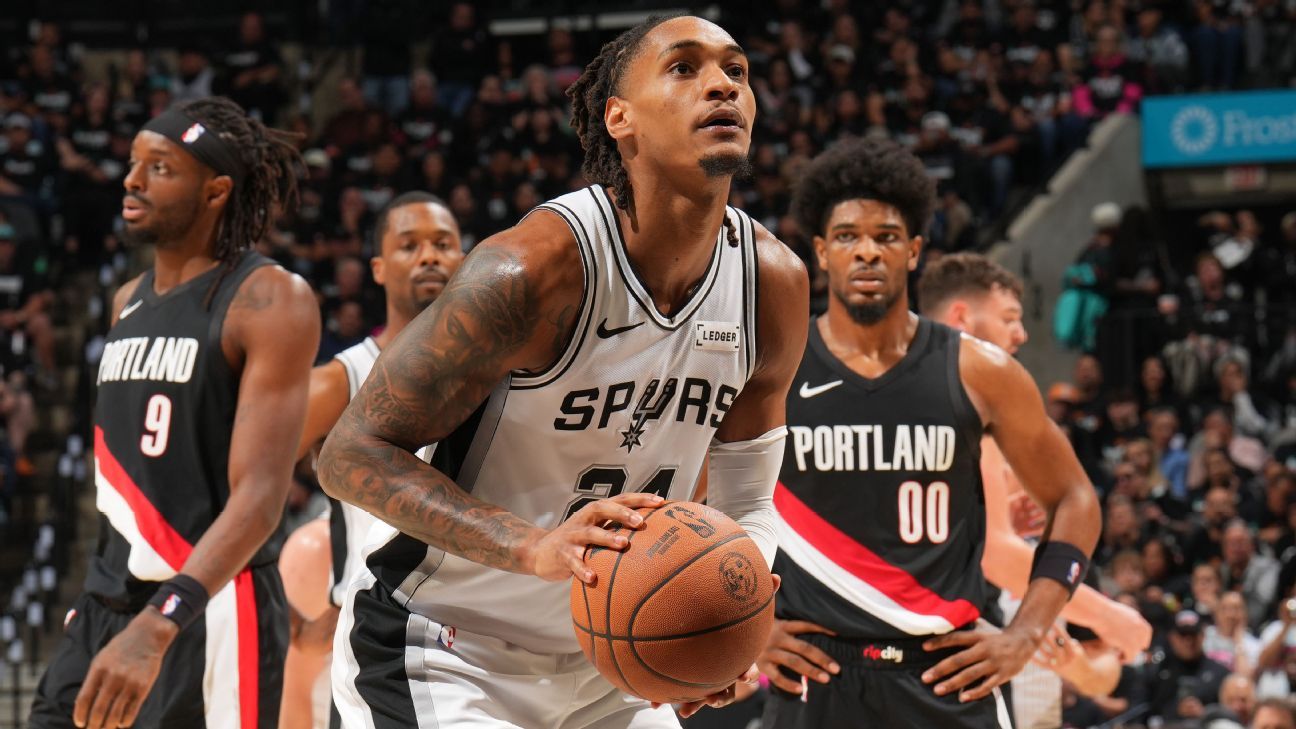
圣安东尼奥,聚光灯下,主场作战的马刺队与到访的波特兰开拓者队之间的系列赛第二场正进入高潮。
在上周二晚的较量中,为了避免陷入0-2的落后局面,开拓者队在后卫斯库特·亨德森 (Scoot Henderson) 的带领下发起反击,亨德森在他年轻职业生涯中最重要的比赛里砍下了31分。与此同时,马刺队则不得不应对维克托·文班亚马 (Victor Wembanyama) 因脑震荡缺阵带来的影响。在这场拉锯战中,两支球队都曾领先两位数,但也都被对手抹平。
所有的铺垫都指向了最后的决战。比赛还剩11.4秒,落后3分的圣安东尼奥马刺队发边线球。马刺队设计了一个扳平比分的战术,将球传给了队内头号三分射手德文·瓦塞尔 (Devin Vassell)……然而,哨声响起,开拓者队后卫朱·霍勒迪 (Jrue Holiday) 采取了战术犯规。
原本扣人心弦的关键时刻——此前近三分钟的激战中仅有一次停顿——就这样演变成了罚球大战。开拓者队守住了领先优势,以106-103的比分获胜,将系列赛大比分扳平。然而,一场潜在的经典对决并没有以精彩的绝杀收场,而是以一种平淡的方式落下了帷幕。
“这只是我的直觉,”开拓者队临时主教练蒂亚戈·斯普利特 (Tiago Splitter) 在本赛季早些时候告诉 ESPN,谈及在这种情况下犯规的逻辑时,他表示,“如果你去问我们球队或其他我待过的球队的数据分析人员,他们也会说你应该犯规。”
讽刺的是,这种做法对马刺队来说也并不陌生。在本赛季另一场备受瞩目的比赛——拉斯维加斯举办的 NBA 杯半决赛中,马刺队在同样的情况下连续三次对俄克拉荷马城雷霆队犯规。这两场比赛都成为了“领先3分就犯规”策略的典型案例。在 NBA,这一策略在普及度提升的同时,争议也随之增加。
多年来,教练们一直在思考领先3分时该如何防守:是死守三分线,还是故意犯规,送给对方两次罚球,以换取切断对方投中扳平三分的机会?
他们越来越多地选择第二种方案。2010年,一项 Synergy Sports 的分析 发现,球队在领先3分的情况下只有11.5%的机会选择犯规。但录像研究显示,在过去的两个赛季中,当比赛最后10秒领先3分时,球队选择故意犯规的比例已达到34.2%。
这些额外的犯规给教练带来了更多的策略抉择,也引发了批评者们更多的抱怨,他们谴责每一场以罚球而非三分球收尾的比赛。2026年的季后赛才开始一周,就已经有类似的案例出现;今年春天更多的季后赛对决注定会引发更大的愤怒。
在本赛季的过程中,ESPN 研究了多年的比赛录像和文字直播数据,并采访了联盟中十几位教练、高管和分析师,深入探讨“领先3分就犯规”这一策略——它是否真的有效、其优缺点,以及它作为一种体育娱乐产品对球迷产生的视觉影响。
犯规,还是不犯规
在这个数据分析时代,聪明的 NBA 人士对某种策略的有效性产生分歧并不多见。但领先3分时是否犯规正是这样一个罕见的例外。
有些教练是坚定的信奉者。在斯普利特的授意下,开拓者队本赛季在领先3分时犯规的次数领跑全联盟。斯普利特表示,他更倾向于犯规,因为他“是在欧洲篮球环境下成长起来的,在那里,98%的教练在领先3分时都会选择犯规”。他认为球队应该在比赛还剩17秒时就开始考虑犯规——这是本文采访的所有教练中最为激进的时间点。
但对于这位前马刺队中锋来说,这还不够。斯普利特是如此狂热的拥护者,以至于在今年的全明星赛后,当世界队被安东尼·爱德华兹 (Anthony Edwards) 投中扳平比分的三分球时,他向记者开玩笑说:“我很生气他们没有在领先3分时犯规。”
这种做法有着清晰的逻辑。
“从概率上讲,如果你把它拆解开来,当作一个数学题来看,这是有道理的,”俄克拉荷马城雷霆队主教练马克·戴格诺特 (Mark Daigneault) 说道,他也是这一策略的主要践行者之一。“对手想要在[领先3分犯规后]扳平比分,需要完成更多步骤。他们必须罚进第一球,然后故意罚丢第二球并让球碰到篮筐,接着抢到进攻篮板,最后还要在抢到篮板后得分。如果你把这些步骤的个人概率结合起来,算出发生的总概率,我认为这要低于他们投进一个高难度强投三分的概率。”
或者,正如洛杉矶湖人队主教练 JJ·雷迪克 (JJ Redick) 在2024年的一期“Mind the Game”播客中用更直白、甚至带点脏话的方式所说:领先3分犯规是正确的举动,因为“这些家伙太他妈强了。……你再也负担不起让这些球员得到轻松出手空间的机会了。”
然而,其他教练并不太相信犯规能显著提高获胜几率。
几位教练表示,他们更倾向于直到比赛只剩5到6秒时才犯规。底特律活塞队主教练 JB·比克斯塔夫 (JB Bickerstaff) 几乎总是倾向于进行常规防守而非犯规。费城76人队主教练尼克·纳斯 (Nick Nurse) 则表示,两种选择之间的胜率差异“非常微小。当你观察事实时,你会发现这种差距比传闻中的要小得多”。
为了验证事实真相,我进行了一项关于“领先3分犯规”的研究,利用 GeniusIQ 筛选了过去五个赛季中防守方在最后24秒领先3分的所有回合。通过观看这些回合并追踪结果——特别寻找明显的、可见的故意犯规行为——我首先发现了球队最有可能采用该策略的时间点。
2021-22赛季至今领先3分犯规率
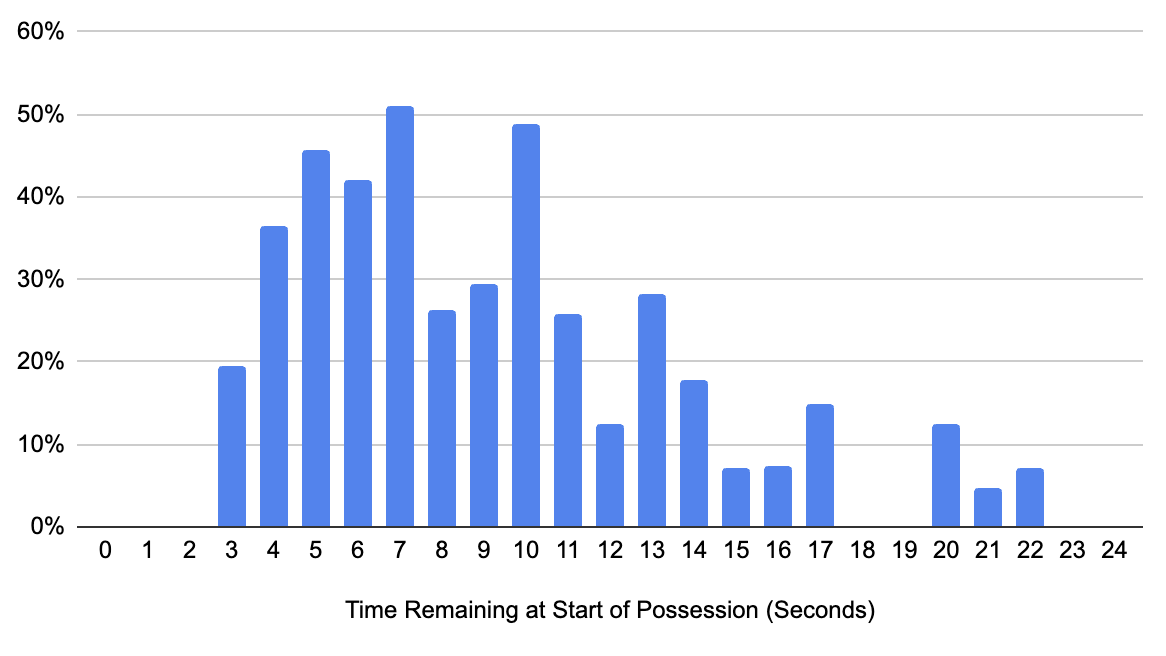
随后,通过将范围缩小到3至17秒之间的回合(绝大多数犯规发生在此期间),我可以比较球队决定犯规与进行常规防守时的整体胜率。
在涉及此决策的524场比赛中,结果惊人地相似。选择领先3分犯规的球队胜率为92.0%,而选择常规防守的球队胜率为91.7%。
| 策略 | 直接获胜 | 直接告负 | 进入加时 | 胜率* |
|---|---|---|---|---|
| 领先3分犯规 | 122 | 2 | 19 | 92.0% |
| 进行防守 | 321 | 3 | 57 | 91.7% |
| — | — | — | — | — |
| *胜率计算将所有加时赛视为50/50的获胜机会。 |
针对这一话题的不同研究根据参数的不同得出了不同的结果。(大多数公开研究要么是多年前的,要么集中在 NCAA 篮球上,后者的末尾规则有所不同。)通常,球队工作人员表示,他们的数据显示犯规在有限的情况下有效。
但一位研究过该策略背后数学原理的东部联盟高管证实了我研究的总体结论:通过犯规获得的优势微乎其微。这不像多投三分球或 NFL 球队在第四档选择进攻那样,是一个显而易见的数据分析“扣篮”。
“你可以在整个执教生涯中采用其中任何一种策略,在这些比分胶着的比赛中,获胜场次几乎是一样的,”这位高管说。
影响如此微弱的一个原因是,在比赛后期领先3分本身就是一个非常有优势的局面。“如果你只是正常打完比赛,你本身就有很大的赢球机会,”这位高管补充道。
当进攻方被迫面对一套明知道他们要投三分的防守时,他们的远投命中率会暴跌。在过去的五个赛季中,当球队在最后24秒落后3分时,三分球命中率仅为18.9%。如果只计算30英尺以内的出手,剔除超远距离的随手一甩,这一数字也仅为21.1%。
因此,如果总体上的策略差异很小,那么大多数关于是否在领先3分时犯规的决定将取决于具体情况。本文采访的大多数教练表示,他们会根据具体情况做出选择,考虑因素包括剩余时间、球的位置、比赛势头、双方的暂停情况以及双方的阵容实力。
即便是乐于犯规的雷霆队,也随着阵容的更迭演变了他们的策略。戴格诺特表示,在俄克拉荷马城签下以赛亚·哈尔滕施泰因 (Isaiah Hartenstein) 后,他在布置领先3分犯规时变得更加激进,因为这位7英尺高的中锋出色的篮板能力有助于挫败对手在故意罚丢后抢夺进攻篮板的计划。在潜在的罚球大战中,戴格诺特还可以依靠谢伊·吉尔杰斯-亚历山大 (Shai Gilgeous-Alexander),他在过去四个赛季的罚球命中率高达89%。
基于语境的混合策略可以取得成功,因为即便只是“领先3分可能犯规”的威胁,也能帮助防守方守住领先优势。几位教练表示,当他们认为对方教练可能会下达犯规指令时,他们实际上会缩小自己的战术手册。
“这会影响你的战术布置,”戴格诺特说。“例如,有一些三分球战术是把球传到低位或罚球线延长线。但这些战术简直是把领先3分犯规的机会拱手相让。在这种情况下,对手很容易对你犯规。”
犯规越多,麻烦越多
如果领先3分时犯规在理论上行得通,那么值得探讨的是,为什么在实践中它并没有显著提升胜率。对于寻求领先3分犯规的球队来说,有三个主要的陷阱可能会让他们栽跟头。
第一点很简单:金州勇士队主教练史蒂夫·科尔 (Steve Kerr) 说,安全地犯规是“说起来容易做起来难”。
每一位信奉“领先3分犯规”哲学的教练都曾遇到过球队无法正确执行的情况,因为对手布置了一个精妙的战术,从而快速投中三分。雷迪克在“Mind the Game”播客中曾说:“领先3分时我每一次都会犯规。”但在他作为主教练的第一次实践中,即上赛季圣诞大战,湖人队让斯蒂芬·库里 (Stephen Curry) 投中了扳平比分的三分球,库里在接边线球时跑出了空位。
同样,在上周对阵马刺队的第二场比赛中,波特兰在故意犯规后的回合中让对手获得了一次三分出手,因为圣安东尼奥在接球后立即出手。
这种接球即射的打法尤其危险,因为犯规意味着在进攻球员进入投篮动作时面临接触的风险。活塞队后卫凯德·坎宁安 (Cade Cunningham) 和达尼斯·詹金斯 (Daniss Jenkins) 本赛季都在感觉到身体接触时随手一抛,从而骗到了三次罚球。
“这些家伙太聪明了,”前芝加哥公牛队主教练比利·多诺万 (Billy Donovan) 说。“如果你离球员稍微远一点去拉人,他们就会直接起跳投篮。你最不想看到的就是送给对方三次罚球。”
球队工作人员强调,当防守者在领先3分犯规时,需要在进攻球员运球向下或背对篮筐接球时进行身体接触。但在某些情况下,要完成一次安全的犯规比其他情况更难。“如果球员全速冲过全场,很难把他们抱住,”奥兰多魔术队主教练贾马尔·莫斯利 (Jamahl Mosley) 说。
第二个问题发生在球队成功执行领先3分犯规之后,如果时间所剩无几,这几乎会迫使对手尝试故意罚丢、抢板并补篮。
“你已经看到今年有多少人故意罚丢并抢回球权,然后获得绝佳机会了,”纳斯说。“我认为人们在故意罚丢方面做得越来越好了。我认为篮板球不再是防守方占据压倒性优势了。它们变成了50对50的机会,几乎更像是地板球而不是篮板球。”
纳斯是对的:根据对 GeniusIQ 数据的分析,在过去两个赛季中,在最后10秒落后2或3分的球队成功抢到了38个故意罚丢球中的16个,占比42%(包括未碰篮筐的违例)。这比所有情况下罚球不中后10.5%的进攻篮板率高出四倍。
上个月,丹佛掘金队在领先3分犯规后输掉了比赛,当时湖人队后卫奥斯汀·里夫斯 (Austin Reaves) 罚进第一球,在第二球罚丢后抢到自己的篮板并抛投命中,将比赛拖入加时。
最后,过早的领先3分犯规可能导致所谓的“瞬间告负”,即领先3分的球队甚至没进加时就输掉了比赛。如果一支球队在领先3分时进行常规防守,最坏的情况是平局(除非出现3+1这种意外)。但领先3分犯规通过额外的回合拉长了比赛,这种反复的过程意味着偶尔会出现常规时间内的失利。
雷霆队在上赛季季后赛的聚光灯下经历了这种最坏的情况,当时他们在第一场对阵掘金队时的领先3分犯规起到了反作用。丹佛罚进两球,随后雷霆队中锋切特·霍姆格伦 (Chet Holmgren) 两罚不中,阿隆·戈登 (Aaron Gordon) 在另一端投中制胜三分。
但即便经历了这次惨败,戴格诺特对他“领先3分犯规”哲学的坚定信念从未动摇。事实上,雷霆队在当月晚些时候的一场分区决赛中击败了明尼苏达,当时他们再次选择了领先3分犯规,而不是让爱德华兹尝试扳平比分的三分。
尽管输给掘金的那场比赛非常显眼且充满争议,但在之前的季后赛中,有三次球队没有在领先3分时犯规,结果眼睁睁看着对方射手在强投下命中跳投强行拖入加时:克里斯·米德尔顿 (Khris Middleton) 对阵步行者、杰伦·布朗 (Jaylen Brown) 对阵步行者以及泰雷斯·马克西 (Tyrese Maxey) 对阵尼克斯。
“如果你[在领先3分时犯规]20次,总会有一两次让你栽跟头,”戴格诺特说。“但如果你20次都不犯规,你知道的,会有四次被对方投进三分。这只是这些决定背后的权衡。”
“终结精彩比赛的恶心方式”
至少在公开场合,教练们不愿谈论“领先3分犯规”策略如何影响篮球作为一种娱乐产品。“我们的工作不是做视觉效果最好的事,而是做竞争性最强的事,”戴格诺特说。
但在私下里,这在 NBA 圈子里并不是一个特别受欢迎的策略。“我讨厌它。从娱乐角度看,这显然很糟糕,”一位西部分析师说道。
“这太逊了。放慢比赛节奏感觉违背了篮球精神,”另一位西部分析师表示。
“我绝对鄙视故意犯规。这是终结精彩比赛的一种恶心方式,”第三位联盟分析师说。
一些分析师虽然认为领先3分犯规很聪明并欣赏其策略元素,但仍认为它是这项运动的一个污点。有人将其比作棒球中的故意保送。就像故意保送虽然在某些情况下很聪明,但却剥夺了球迷看到大谷翔平 (Shohei Ohtani) 在比赛关键时刻击球的机会一样,领先3分犯规也让观众错失了看到明星射手在关键时刻尝试英雄式投篮的机会。
正是这类投篮填满了 NBA 历史的精彩集锦录像带。如果回到斯普利特的球员时代,他的马刺队在2013年总决赛第六场对阵迈阿密热火队时在领先3分时犯规,那么雷·阿伦 (Ray Allen) 在底角的那个伟大时刻就永远不会发生。
尽管本世纪 MLB 进行了各种规则修改,但故意保送依然存在——领先3分犯规也是如此。高管们认为这在短期内不太可能改变。
据一位了解讨论情况的消息人士透露,在与老板、总经理或竞赛委员会的会议上,领先3分犯规尚未成为热门话题。其他影响联盟日常运作的优先事项——如摆烂、扩军和比赛的身体对抗强度——其重要性都排在这一每年仅发生几十次的战术动作之前。
| 赛季 | 领先3分犯规决策次数 |
|---|---|
| 2021-22 | 33 |
| 2022-23 | 30 |
| 2023-24 | 29 |
| 2024-25 | 42 |
| 2025-26 | 43 |
相比之下,多位消息人士将领先3分犯规与快攻战术犯规 (transition take foul) 进行了对比,NBA 在2022年取缔了后者——但在那之前的赛季,全联盟发生了超过1700次快攻战术犯规。而领先3分犯规发生的频率大约只有其2%。
即便联盟认定领先3分犯规是一个问题,目前也不清楚是否存在完美的解决方案。联盟消息人士警告称,NBA 在处理任何与比赛后期犯规相关的规则变动时都需要非常谨慎。对最后几秒的非投篮犯规增加额外惩罚可能会诱发假摔。
而其他限制故意犯规的现有规则,如快攻战术犯规和最后几分钟的“砍鲨”限制规则,都平等地适用于双方球队。然而,如果禁止领先3分犯规,可能会产生竞争公平性的担忧:在这种情况下,领先的球队在比赛结束前不能犯规,但落后的球队却可以。
尽管如此,语境依然重要。NBA 最不愿看到的场景是更多的季后赛焦灼战,甚至是总决赛的胶着局,最终演变成双方的罚球游行。这种情况理论上可能会促使联盟更快采取行动。
如果季后赛进一步引发人们对比赛后期犯规取代三分球的焦虑,随着篮球数据分析与篮球美学在又一个领域发生碰撞,那么是否存在完美的解决方案或许并不重要。那位东部联盟高管表示,任何合理的规则改变都“比看着一场罚球比赛并抹杀这项运动中最令人兴奋的一刻要好”。
由生成式 AI 翻译,译文内容可能不准确或不完整,以原文为准。
点击查看原文:Is 'foul up 3' a game-winning strategy or clutch-time saboteur?
Is ‘foul up 3’ a game-winning strategy or clutch-time saboteur?
On center stage in San Antonio, Game 2 between the host Spurs and visiting Portland Trail Blazers was approaching its apex.
Battling to avoid an 0-2 hole in the series last Tuesday night, the Blazers rallied behind guard Scoot Henderson, who scored 31 points in the most important game of his young career. The Spurs, meanwhile, had to weather the loss of Victor Wembanyama to a concussion. Both teams held – and blew – double-digit leads in the back-and-forth affair.
All of that rising action built toward a climax, as San Antonio inbounded the ball down by three points with 11.4 seconds left. The Spurs designed a potential game-tying play, inbounded the ball to leading 3-point shooter Devin Vassell … and heard a whistle, as Trail Blazers guard Jrue Holiday committed a take foul.
What had once been breathless clutch time, with just one stoppage amid nearly three straight minutes of furious action, thus ground down into a free throw duel. The Trail Blazers maintained their lead and evened the series with a 106-103 win – but a potential classic ended not with a bang but a whimper.
“That’s just my gut feeling,” interim Trail Blazers coach Tiago Splitter told ESPN earlier this season about the logic of fouling in this circumstance. “The numbers, when you ask analytical people in our team, in other teams that I’ve been part of, also say that you should foul.”
Ironically, that approach must have seemed familiar to the Spurs, too. In another spotlight event this season, the NBA Cup semifinal in Las Vegas, the Spurs fouled Oklahoma City three consecutive times in the same situation. Both games offered concrete examples of the “foul up three” strategy, which is growing simultaneously in popularity and controversy in the NBA.
For years, coaches have considered how to defend when leading by three points late in a game: They could guard the 3-point line, or they could commit an intentional foul, ceding two free throws in exchange for cutting off the chance for a game-tying triple.
They’ve increasingly chosen the second option. In 2010, a Synergy Sports analysis found that teams took only 11.5% of their foul up three opportunities. But film study shows that over the last two seasons, teams have chosen to intentionally foul 34.2% of the time with a three-point lead in the final 10 seconds.
Those extra fouls add more strategic decisions for coaches – and more complaints from critics who decry every game that ends with more free throws in lieu of 3s. The 2026 postseason is only a week old and has already added another to the pile; more playoff games this spring are bound to yield yet more outrage.
Over the course of this season, ESPN studied years of game film and play-by-play data and spoke with more than a dozen coaches, executives and analysts across the league to learn all about the foul up three strategy – whether it even works, its strengths and drawbacks, and its aesthetic effect on basketball as an entertainment product for fans.
To foul, or not to foul
It’s not often in this analytical age that intelligent NBA figures disagree about the efficacy of a strategy. But fouling when up by three is one such rarity.
Some coaches are firm believers. At Splitter’s behest, the Trail Blazers led the league in fouls up three this season. Splitter said he prefers to foul because he was “raised in European basketball, where I would say 98% of the coaches over there foul up three.” He thinks teams should start fouling with 17 seconds left – the most aggressive timing cited by any coach surveyed for this article.
But even that’s not enough for the former Spurs center. Splitter is such a fervent advocate that after this year’s All-Star Game, when Team World allowed a game-tying 3-pointer to Anthony Edwards, he joked to reporters, “I was mad they didn’t foul up three.”
That approach comes with a clear logic.
“Probabilistically, if you broke it down piece by piece and looked at it as a math problem, it makes sense,” said Oklahoma City Thunder coach Mark Daigneault, another leading practitioner of the strategy. “For the opponent to tie the game [after a foul up three], I think more has to happen. They have to make the first free throw. They have to miss the second free throw, on the rim. They have to get the offensive rebound and then they have to score off the offensive rebound. If you took the individual probabilities of those and combined them and said what’s the probability of this happening, I would say that that’s lower than whatever the probability is of them making a tough contested 3.”
Or, as Los Angeles Lakers coach JJ Redick put it in simpler, more profane terms on a 2024 episode of the “Mind the Game” podcast: Fouling when up by three is the right move because “these guys are too f—ing good. … You can’t afford to allow guys to get a clean shot anymore.”
Other coaches, however, are less convinced that fouling meaningfully improves their chance of securing a win.
Several coaches said they prefer not to foul until there are five to six seconds left on the clock. Detroit Pistons coach JB Bickerstaff almost always prefers to play straight-up defense instead of fouling. And Philadelphia 76ers coach Nick Nurse said the difference in win probability between the two options is “very minuscule. When you look at the facts of it, it’s a lot less than I think the grapevine says that it is.”
I wanted to test the facts of the situation, so I conducted my own study of fouling up three, using GeniusIQ to filter for all possessions from the past five seasons in which the defensive team was leading by three points in the final 24 seconds. By watching those plays and tracking their outcomes – looking specifically for an overt, visible effort to intentionally foul – I found, first, when teams are most likely to employ the strategy.
Foul Up 3 Rate, 2021-22 to Present
Then, by narrowing the scope to possessions between 3 and 17 seconds – when the vast majority of fouls occurred – I could compare the overall win probability when teams decide to foul with when they play straight-up defense.
The results from 524 games with this decision are remarkably similar. Teams that chose to foul up three won 92.0% of their games, versus 91.7% for those that played normal defense.
| Strategy | Outright Wins | Outright Losses | Overtime | Win Rate* |
|---|---|---|---|---|
| Foul Up 3 | 122 | 2 | 19 | 92.0% |
| Play Defense | 321 | 3 | 57 | 91.7% |
| — | — | — | — | — |
| *Win Rate treats all overtime games as 50/50 chances to win. |
Different studies on this topic have yielded different results, depending on the parameters. (Most public studies are either from years ago or focus on NCAA basketball, which has different late-game rules.) Generally, team employees said their data suggests fouling works in limited circumstances.
But an Eastern Conference executive who has studied the math behind this strategy confirmed the general conclusion of my study: Whatever edge is gained from fouling is small. This isn’t a clear-cut analytical slam dunk like shooting more 3-pointers or NFL teams going for it on fourth down.
“You could coach your whole career employing either strategy and win pretty much the same number of those close-game situations,” the executive said.
One reason the impact is so muted is that leading by three points late in a game is already such an advantageous situation. “You already have a good chance to win the game anyway if you just play it out,” the executive said.
Offenses’ long-range accuracy plummets when they’re forced to take 3s against a defense that knows what’s coming. Over the past five seasons, teams are shooting just 18.9% on 3-pointers when trailing by three in the final 24 seconds. That figure is 21.1% if you count only attempts within 30 feet, removing long-range heaves from the equation.
So if the strategic difference is small in the aggregate, it makes sense that most decisions on whether to foul up three would depend on the specific situation. Most coaches interviewed for this piece said they choose on a case-by-case basis, based on factors including time remaining, location of the ball, the game’s momentum, both teams’ timeout situation and both rosters’ strengths.
Even the foul-happy Thunder have evolved their strategy along with their roster. Daigneault said he became more aggressive in calling for fouls up three after Oklahoma City signed Isaiah Hartenstein, because the 7-footer’s rebounding prowess helps foil opponents’ plans to grab an offensive rebound after an intentional free throw miss. Daigneault can also rely on Shai Gilgeous-Alexander, who is 89% at the foul line over the past four seasons, in a potential free throw duel.
A mixed-use strategy based on context can be successful, as even the threat of fouling up three can help a defense attempting to hold a late-game lead. Several coaches said they effectively shrink their playbook when they think the opposing coach might order a foul.
“It influences your playcalling,” Daigneault said. “For example, there’s three-point plays you can run where you throw it to the post or throw it to the elbow. But those plays just put a foul up three on a silver platter. It’s not difficult for the opponent to foul you in that situation.”
More fouls, more problems
If fouling when up by three makes sense in theory, it’s worth exploring why it doesn’t boost win percentage more in practice. There are three main pitfalls that can trip up a team that seeks to foul up three.
The first is simple: Fouling safely, Golden State Warriors coach Steve Kerr said, is “easier said than done.”
Every coach who espouses the foul up three philosophy still has instances in which his team is unable to execute properly because the opponent draws up a savvy play that yields a quick 3. Redick said on the “Mind the Game” podcast, “I’m fouling up three every single time.” But in his first opportunity to do so as a head coach, on Christmas last season, the Lakers gave up a game-tying 3-pointer to Stephen Curry, who got open on the inbound pass.
Similarly, in Game 2 against the Spurs last week, Portland allowed a 3-point attempt on the possession after its intentional foul because San Antonio shot immediately off the pass.
Such catch-and-shoot plays are especially dangerous because fouling means risking contact while the offensive player enters his shooting motion. Pistons guards Cade Cunningham and Daniss Jenkins both drew three-shot fouls this season by throwing up a half-court heave when they felt contact.
“These guys are so smart,” former Chicago Bulls coach Billy Donovan said. “If you’re off the player a little bit and you go to grab the guy, they just rise up and shoot. The last thing you want to do is give up three free throws.”
Team employees stressed that when defenders foul up three, they need to make contact on the offensive player’s downward dribble or when he catches the ball with his back to the basket. But it’s more difficult to commit a safe foul in some situations than others. “If guys are coming full court, it’s really hard to wrap them up,” Orlando Magic coach Jamahl Mosley said.
The second problem is what happens after a team successfully executes a foul up three, which – if there’s little time left – all but forces its opponent to attempt an intentional free throw miss, rebound and putback.
“You’ve seen this year how many people have missed the free throw on purpose and got it back and gotten a great look,” Nurse said. “I think people are getting better at missing it. I think the rebounds are not so lopsided towards the defense anymore. They’ve become 50-50, almost like loose balls rather than rebounds.”
Nurse is right: Over the past two seasons, according to an analysis of GeniusIQ data, teams trailing by two or three points in the final 10 seconds have successfully rebounded 16 of 38 missed free throws, or 42% (including violations that don’t hit the rim). That’s four times higher than the 10.5% offensive rebounding rate on missed free throws in all situations.
Last month, the Denver Nuggets lost after fouling up three when Lakers guard Austin Reaves made the first free throw, rebounded his own miss on the second and sank a floater to send the game to overtime.
And finally, an early foul up three can lead to the so-called insta-loss, where the team up by three loses without even going to overtime. If a team plays straight-up defense with a three-point lead, its worst-case scenario is a tie (barring a fluke such as a four-point play). But fouling up three extends the game with extra possessions, and that iterative process means the occasional loss in regulation.
The Thunder experienced this worst-case scenario in the spotlight last postseason when their foul up three against the Nuggets in Game 1 backfired. Denver made two free throws, then Thunder center Chet Holmgren missed two free throws and Aaron Gordon made a winning 3-pointer on the other end.
But Daigneault never wavered in his steadfast belief in the foul up three philosophy, even after this disaster. In fact, the Thunder beat Minnesota in a conference finals game later that month after they fouled up three again instead of letting Edwards attempt a game-tying triple.
And as conspicuous and controversial as that loss to the Nuggets was, there were three instances the prior postseason in which teams didn’t foul up three and watched an opposing shooter sink a contested jumper to force overtime: Khris Middleton against the Pacers, Jaylen Brown against the Pacers and Tyrese Maxey against the Knicks.
“If you [foul up three] 20 times, there’s going to be a time or two where it gets you,” Daigneault said. “But if you don’t foul up three 20 times, there’s going to be, you know, four times that they hit a 3. That’s just the tradeoffs of those decisions.”
“A gross way to end exciting games”
Publicly, at least, coaches are reluctant to talk about how the foul up three strategy affects basketball as an entertainment product. “Our job is not to do what’s best optically. It’s our job to do what’s best competitively,” Daigneault said.
But privately, this isn’t a particularly popular strategy around the NBA. “I hate it. It’s obviously bad in terms of entertainment,” one Western Conference analyst said.
“It’s lame. Slowing the game down feels against the spirit of basketball,” another Western Conference analyst said.
“I absolutely despise intentional fouling. It’s a gross way to end exciting games,” a third league analyst said.
Some analysts who say that fouling up three is smart and appreciate its strategic element still think it’s a stain on the sport. One compared it to the intentional walk in baseball. Just as the intentional walk, smart as it might be in certain situations, deprives fans of seeing, say, Shohei Ohtani bat with a game on the line, the foul up three cheats spectators of seeing star shooters attempt a heroic field goal in the clutch.
Those are the type of shots that fill the NBA’s historic highlight reels. If, back in his playing days, Splitter’s Spurs had fouled up three against the Miami Heat in Game 6 of the 2013 Finals, Ray Allen’s momentous shot from the corner never would have happened.
But despite all the rule changes in MLB this decade, the intentional walk still exists – and so, too, does the foul up three. Executives don’t think this is likely to change anytime soon.
Fouling up three hasn’t become a hot-button issue at meetings with owners, general managers or the competition committee, according to a source with knowledge of those discussions. Other priorities that affect the league on a day-to-day basis – such as tanking, expansion and the physicality of play – take precedence over a play that occurs only a few dozen times per year.
| Season | Foul Up 3 Decisions |
|---|---|
| 2021-22 | 33 |
| 2022-23 | 30 |
| 2023-24 | 29 |
| 2024-25 | 42 |
| 2025-26 | 43 |
For comparison, multiple sources compared the foul up three to the transition take foul, which the NBA outlawed in 2022 – but there were more than 1,700 transition take fouls the prior season. Fouls up three occur roughly 2% as frequently.
Even if the league concludes that fouling up three is a problem, it’s not clear that a perfect solution exists. The NBA would need to tread carefully with any rules change related to late-game fouling, league sources warned. Extra penalties against non-shooting fouls in the final seconds could incentivize flopping.
And other existing rules that restrict intentional fouls, such as the transition take foul and anti-Hack-a-Shaq rules in the final minutes, apply to both teams equally. If fouls up three were forbidden, however, there could be competitive concerns: In that case, the leading team couldn’t foul at the end of games, but the trailing team could.
Still, context matters. The NBA’s worst-case scenario with late-game fouls would be more close playoff games, or even a close Finals game, ending with free throw parades on both ends. That outcome could theoretically spur more rapid action.
And if the playoffs spark further angst about late-game fouls taking the place of late-game 3s, as basketball analytics clash with basketball style in yet another arena, then it might not matter if there’s no perfect solution. Any reasonable rule change, the Eastern Conference executive said, would be “better than watching a free throw contest and removing the single most exciting thing in the sport.”
By Zach Kram, via ESPN