By John Hollinger / The Athletic, 2026-10-20 20:30:03

NBA新秀合同续约通常是体育界最有趣的交易之一。它们只发生在成功的选秀上,而且通常只针对那些有望成为球队长期核心的球员。
总体而言,我是这类续约的支持者——球员锁定了长期保障和世代财富,不必在新秀合同最后一年冒受伤风险,而球队(很可能)能以比一年后受限制自由市场略低的价格留下球员,并可以在工资帽账本上写下长期数字后着手其他计划。双方都避免了受限制自由市场这场过山车之旅。
不过,并非每个球员都值得续约。一般来说,球员需要在第三个赛季结束时达到首发水准,双方才会对续约有太大热情。在东部时间周一下午6点的截止日期前,2023年NBA选秀首轮只有七名球员同意续约,但全部七份合同都是九位数的。与此同时,另有14名球员有资格续约,但其中只有两三人有希望拿到大合同。
我们不必花太多时间琢磨为什么这些边缘球员大多没拿到合同——抱歉,这一轮没有出现“齐克·纳吉式合同”——但最引人注目的未续约案例无疑是奥兰多魔术的安东尼·布莱克,他是2023届中唯一一位可能配得上一亿美元投资却没拿到的球员。
从根本上说,魔术很难承诺为布莱克买单,因为以任何接近其市场价的金额续约,都会让球队在未来两个赛季都触及预计的第二道土豪线,尤其是布莱克最大的短板(投篮)恰恰是奥兰多全队上下普遍存在的问题。另一个低调的原因是,如果这支工资帽已顶死的阵容开局不佳,魔术似乎随时可能进行赛季中交易,而布莱克在任何交易中都是潜在的巨大筹码(且若无续约在身,他1010万美元的工资占用相当友好)。
布莱克之后,波特兰开拓者的斯库特·亨德森和密尔沃基雄鹿的小海梅·哈克斯是另外两位未续约的重要球员。个中缘由不难看出。两人在各自球队都面临拥挤的位置竞争,可能成为赛季中交易对象,因此球队大概率更愿意保留灵活性,而不是为一名非首发球员锁定长期合同。
不过,没发生的事就聊到这里。让我们谈谈那些最终达成的交易。这七份合同我至少都在一定程度上看好,尽管各队的工资帽状况不同,值得逐一讨论。
维克托·文班亚马,马刺
(五年顶薪,预计2.52亿美元,非超级顶薪,第五年球员选项)
圣安东尼奥与其在俄克拉荷马城的对手之间最大的区别在于:2027-28赛季,谢伊·吉尔杰斯-亚历山大预计将拿到6400万美元……而维克托·文班亚马只拿4350万美元,因为文班亚马在续约中只占了工资帽的25%,而非最高的30%。这为马刺在未来四个赛季每年节省约900万美元,让他们在围绕这位明星内线搭建其余阵容时拥有大得多的灵活性,尤其是当斯蒂芬·卡斯尔和迪伦·哈珀等早慧的年轻球星陆续具备续约资格时。文班亚马也在此立下了标杆:当文班亚马只拿25%时,卡斯尔或哈珀还好意思开口要30%吗?
显然,这让他的合同成为马刺的巨大胜利——仿佛这还需要证明似的。在联盟顶薪规则下,给文班亚马一份烂合同是不可能的,而这份续约尤为划算,因为他拿的并不是满额顶薪。实际上,差得还远。多曼塔斯·萨博尼斯和扎克·拉文本赛季的薪水都将超过文班在续约第一年的收入。
布兰登·米勒,黄蜂
(五年2.09亿美元)
我就是来看这口气的。米勒比阿门·汤普森恰好多拿了100万美元,我怀疑这绝非巧合。
现实地讲,夏洛特本来就必须花钱留住米勒。能持球能投篮的大体型侧翼是每一位总经理的心头好,即便是那些不断吊人胃口又令人失望的大侧翼也不例外。米勒的BORD$价值尚未追上这份合同(我对他下赛季的估值是2720万美元),但市场现实也摆在那里:如果米勒本赛季打出任何像样的表现,他将成为受限制自由市场上的热门目标。高顺位、大体型、能持球的侧翼,在这个联盟里可不是省钱的地方。
米勒的起薪仍为黄蜂提供了进行其他阵容升级的良好空间。如果他在2027-28赛季如预期拿到3600万美元,黄蜂将低于奢侈税线4200万美元——对于一支手握拉梅洛·鲍尔交易中高达4070万美元交易特例的球队来说,这是个可观的数字。
阿门·汤普森,火箭
(五年2.08亿美元)
数据显示汤普森是联盟中最有价值的球员之一,他是防守端的噩梦,同时凭借持球、终结和为队友创造机会的能力,低调地成为一股颇具威胁的进攻力量。我的BORD$指标对他下赛季的估值已接近顶薪区间。
然而,正如我们上赛季所见,在季后赛环境中,当对手可以针对性布防并利用汤普森飘忽不定的投篮时,这份价值会有所缩水。此外,给这类球员一份过于巨大的合同也存在一定的未来风险,因为如果他在二十多岁中期运动能力下滑,情况可能急转直下。
这就是为什么对汤普森而言,一个合理的落点是年均略高于4000万美元而非顶薪,但这是休斯顿在续约博弈中的又一份好合同,两年前他们与阿尔佩伦·申京也达成了类似的安排。也许最重要的是,汤普森2027-28赛季3590万美元的价码,很可能让球队保有足够的空间同时续约凯文·杜兰特和弗雷德·范弗利特,并保持在第二道土豪线之下。
基翁特·乔治,爵士
(五年1.575亿美元)
2023年选秀的第16顺位拿到了第四高的金额,为他高兴。但在所有签下的合同中,我或许对这一份最为存疑。
乔治上赛季得分不少,但大多数高阶数据对此持怀疑态度。他糟糕的防守数据也无济于事,尽管其中一部分可能与犹他上赛季大部分时间的彻底摆烂混为一谈。
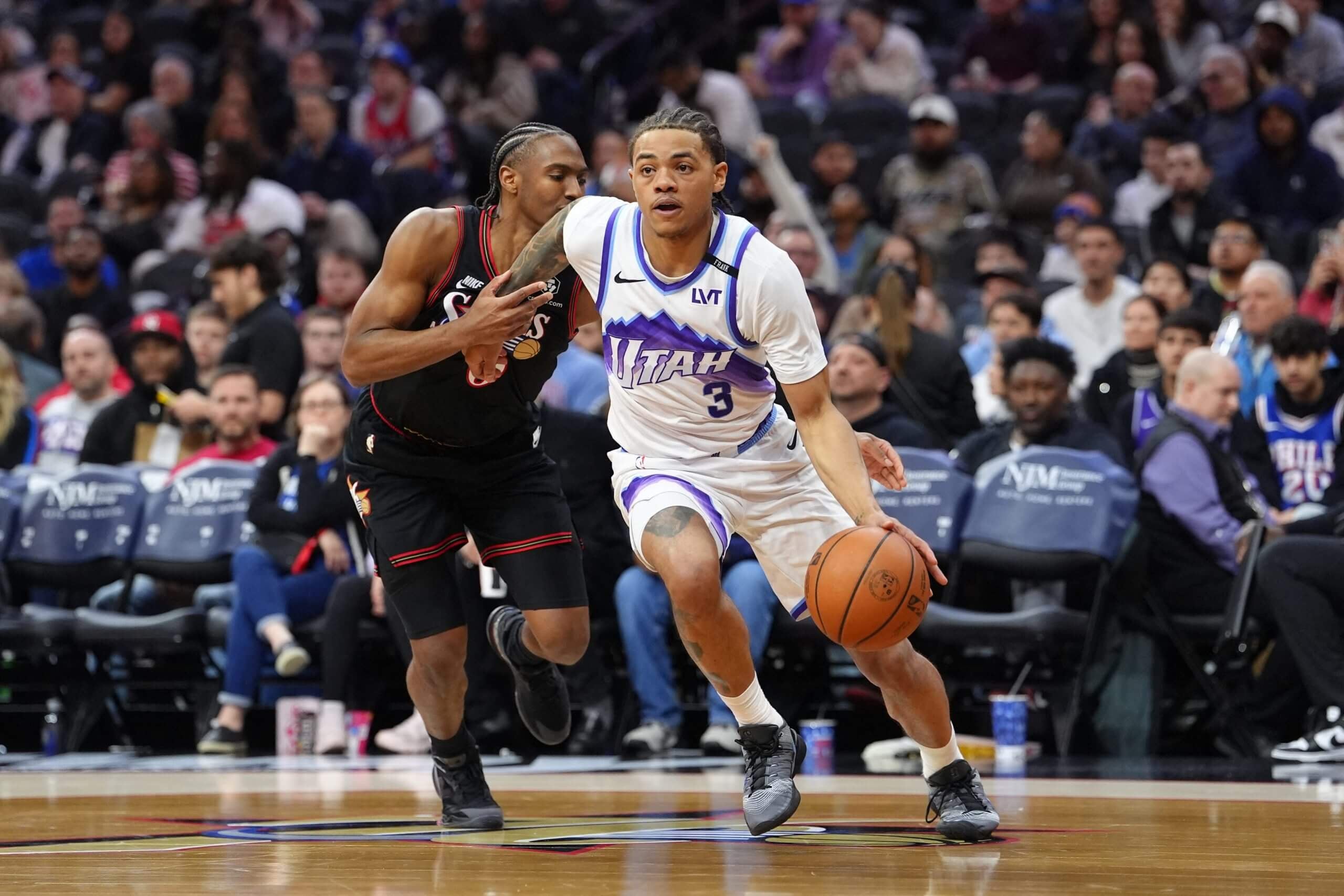
基翁特·乔治突破上篮,过掉泰瑞斯·马克西。(Kyle Ross / Imagn Images)
但我的数据并不特别看好的最大原因是,上赛季比乔治前两个赛季好太多了。这是一个异常年份,还是新的常态?我的BORD$估值持怀疑态度(下赛季仅1440万美元),但主观上,在这笔交易中我更倾向于站在犹他一边。乔治一直展现出远投能力,但前两个赛季三分命中率仅为33.4%和34.3%;上赛季提升到了37.1%。
不过关键在于:他的罚球命中率高达89.2%,非常出色,生涯罚球命中率也有85.7%。这恰恰表明他的三分命中率可能仍有上升空间。此外,他上赛季两分球命中率达51.5%,可能是少数中距离准到可以常规出手的球员之一。即便达林·彼得森爆发并更多分走乔治的球权,他的投篮也会让他成为一件武器。
那么,用相当于第四首发级别的薪水签下他值得吗?你可以为他的上限辩护,但也存在一种情形:防守被对手打爆,而得分效率又不足以弥补。可以说,犹他选择现在锁定而非等到明年夏天,是一次经过计算的风险。
奥萨尔·汤普森,活塞
(五年1.55亿美元)
奥萨尔·汤普森的合同金额略低于他在休斯顿的双胞胎哥哥,原因在于他持球创造能力的展现相对逊色。但在最佳状态下,他是一位现象级的防守破坏者,还能在转换进攻中轻松取分。
这类球员会有一些局限,尤其是在季后赛环境中,尤其是在底特律这种场上还有其他非射手球员的球队里,但这不应动摇一个更大的判断:对活塞来说,这是一份非常公道的合同。此外,与阿门一样,奥萨尔在投篮上的任何进步都会让这份合同变成活塞的巨大胜利。即便他在进攻端进步有限,他的防守也足以保证首发底线的价值。
卡森·华莱士,雷霆
(五年1.39亿美元)
我一直在琢磨俄克拉荷马城将如何应对一年后即将到来的薪资暴涨——届时华莱士和谢伊·吉尔杰斯-亚历山大的续约合同将同时生效,把球队远远推过第二道土豪线。显然,其中一部分是雷霆今年为降到该线以下所做的操作,这给了他们一个潜在的两年窗口期,可以在真正的后果(例如2033年首轮签被锁定在首轮末位)追上来之前,大幅越过第二道土豪线。
正因如此,我曾猜测雷霆可能会给华莱士一份起薪2500万美元但只续两年的合同,并附第三年球员选项,让他若打出身价,可以在二十多岁中期争取更大的 payday。
结果,雷霆以2027-28赛季2500万美元的价码(实际为2400万美元)用五年合同将他锁定为长期核心。这对雷霆当然存在一定风险,但在冠军窗口大开的当下,为一名精英防守者支付第五首发级别的薪水,很难说得上鲁莽。
俄克拉荷马城正在转型为一支不同类型的球队,阵容呈头重脚轻之势——2028-29赛季将有六名球员年薪至少2200万美元,周围则环绕着新秀合同或廉价合同。雷霆未来需要担心的还不只是土豪线:这支球队的税单可能接近2亿美元。但锁定华莱士,让雷霆只要克莱·班内特还愿意开支票,就能继续稳居西部精英之列。
布兰丁·波杰姆斯基,勇士
(五年1.1亿美元)
波杰姆斯基是2023年的第19顺位,是那一届签下续约合同的首轮秀中顺位最低的。(次轮秀乔丹·沃尔什和图马尼·卡马拉也签了续约,但他们的合同遵循不同的时间表。)
结合斯蒂芬·库里的续约来看,勇士未来规划的信号很明显:这看起来并不像一支把2027年工资帽空间作为A计划的球队,对吧?波杰姆斯基的合同在2027-28赛季比他的自由球员占位高出150万美元,差距不算大,但当你试图在一支老将球队的工资帽结构中塞进顶薪级别的金额时,每一美元都很重要。与此同时,以5600万美元锁定库里,消除了库里像詹姆斯·哈登今夏在克利夫兰那样,先观望能签下哪些老将再决定自己工资占用的变数。
这两点对金州建队计划而言都不致命。2027年工资帽空间的最大意义,多半只是对尼古拉·约基奇的一厢情愿。现实地讲,这支球队更可能通过交易来获得下一位顶梁柱球星,而库里和波杰姆斯基的在册合同是一个颇具吸引力的起点。
波杰姆斯基与库里的搭配并不完美,但他是一名优秀的年轻球员,即便作为第六人拿这份薪水也不算离谱,而且未来应能保持正向的交易价值。
由生成式 AI 翻译,翻译内容可能不准确或不完整,以原文为准。
查看原文:Why I'm bullish on the rookie extensions for the 2023 NBA Draft class
Why I’m bullish on the rookie extensions for the 2023 NBA Draft class
NBA rookie-scale contract extensions are usually some of the most fun transactions in sports. They only happen with successful draft picks, and usually only with those who are on track to be long-term core pieces for their teams.
I’m generally a fan — the player locks in long-term security and generational wealth without risking an injury in the final year of his rookie contract, while the team (likely) gets a slight discount on what it would cost in restricted free agency a year later and can get to work on other plans with a long-term figure written in ink on its salary-cap sheets. Both sides get to avoid the roller-coaster ride that is restricted free agency.
However, not every player is worth extending. Generally, players need to be starter-caliber performers by the end of their third season for either side to have much enthusiasm for the process. Only seven players selected in the first round of the 2023 NBA Draft agreed to extensions before Monday’s 6 p.m. ET deadline, but all seven did so on nine-figure deals. Meanwhile, 14 other players were eligible to sign extensions, but only two or three of them were serious candidates for a sizable deal.
We don’t need to spend a lot of time figuring out why most of these bit players didn’t get deals — sorry, there were no Zeke Nnaji Specials in this cycle — but the most notable non-deal was definitely that of the Orlando Magic’s Anthony Black, the one player from the 2023 class who might be worthy of a $100 million investment and didn’t get it.
Basically, it’s hard for the Magic to commit to paying Black when doing so at anything approaching his market rate would put the team into the projected second apron each of the next two seasons, especially when Black’s biggest weakness (shooting) is a shortcoming replicated up and down Orlando’s roster. The other, low-key part of this is that the Magic seem primed for an in-season trade if this capped-out roster doesn’t start strong, and Black is a potentially huge chip in any deal (and comes with a friendly $10.1 million cap hit if no extension is attached).
After Black, the Portland Trail Blazers’ Scoot Henderson and the Milwaukee Bucks’ Jaime Jaquez Jr. were the other two significant names to not sign extensions. In each case, it’s not hard to see what happened. Both face crowded position groups on their current teams and could be in-season trade candidates, so their teams likely preferred flexibility over locking in long-term for a non-starter.
But enough about what didn’t happen. Let’s talk about the deals that got to the finish line. I’m at least somewhat bullish on all seven, although their specific team cap situations are different and warrant some discussion.
Victor Wembanyama, Spurs
(Five-year max, estimated $252 million, no supermax, fifth-year player option)
The biggest difference between San Antonio and its rival in Oklahoma City is that in 2027-28, Shai Gilgeous-Alexander will make an estimated $64 million … and Victor Wembanyama will make $43.5 million, thanks to Wembanyama taking just 25 percent of the salary cap on his extension instead of the maximal 30 percent. That saves the Spurs about $9 million a year each of the next four seasons, giving them much more flexibility to construct the rest of the roster around their star big man, especially as other precocious young stars like Stephon Castle and Dylan Harper become extension-eligible. Wembanyama has thrown down a marker here, too: Would Castle or Harper be gauche enough to ask for 30 percent when Wembanyama took 25?
Obviously, that makes his contract a massive win for the Spurs — as if it wasn’t already. It is not possible to give a bad contract to Wembanyama given the league’s max rules, and this extension is a notably good one because he won’t be making his max. Not even close, actually. Domantas Sabonis and Zach LaVine will both make more this season than Wemby does in the first year of his extension.
Brandon Miller, Hornets
(Five years, $209 million)
I’m just here for the petty. Miller got exactly $1 million more than Amen Thompson, and I suspect that wasn’t an accident.
Realistically, Charlotte was always going to have to pay to keep Miller. Big wings who can handle and shoot are the apple of every general manager’s eye, even the big wings who continually tease and disappoint them. Miller’s BORD$ value hasn’t caught up to this contract yet (I had his valuation at $27.2 million for the coming season), but there’s a market reality here, too: If Miller had any kind of good year this season, he was going to be a popular target in restricted free agency. Highly drafted, big, ballhandling wings aren’t the place you save money in this league.
Miller’s starting salary still provides the Hornets a good platform to make other roster upgrades. If he makes $36 million in 2027-28 as projected, that leaves the Hornets $42 million below the luxury-tax line, a notable number for a team sitting on a gargantuan $40.7 million trade exception from the LaMelo Ball deal.
Amen Thompson, Rockets
(Five years, $208 million)
The numbers say Thompson is one of the most valuable players in the league, a terror on defense who also is low-key a pretty compelling offensive force thanks to his ability to handle, finish and create for others. My BORD$ metric had a max-territory valuation on him for the coming season.
However, that breaks down a bit in playoff environments, as we saw a season ago, when teams can scheme and take advantage of Thompson’s wayward shooting. There’s also some slight future risk on too huge a deal for a player like this, because if he loses athleticism in his mid-20s, things can go south quickly.
That’s why a fair end point for Thompson was an average of just over $40 million per year rather than a max, but this is another good deal for Houston in the extension game after it made a similar arrangement with Alperen Şengün two years ago. Perhaps most importantly, Thompson’s $35.9 million price tag for 2027-28 likely gives the team enough wiggle room to re-sign both Kevin Durant and Fred VanVleet and remain below the second apron.
Keyonte George, Jazz
(Five years, $157.5 million)
The 16th pick of the 2023 draft got the fourth-most money, so good for him. But of all the deals that were signed, I was perhaps the most suspicious of this one.
George scored in bunches last season, but most advanced metrics were far more suspicious. His poor defensive metrics don’t help, either, although some of that may be conflated with the abject tanking that Utah undertook for much of last season.
Keyonte George drives to the hoop around Tyrese Maxey. (Kyle Ross / Imagn Images)
But the biggest reason my numbers aren’t overly bullish was that last season was so much better than George’s first two seasons. Was this an outlier year, or is this the new normal? My BORD$ valuation is skeptical (just $14.4 million for the coming season), but subjectively, this is where I’d be more inclined to take Utah’s side of the bargain. George has always shown deep shooting ability but only made 33.4 percent and 34.3 percent from 3 in his first two seasons; last season, that improved to 37.1 percent.
Here’s the thing, though: He also shot 89.2 percent from the free-throw line, which is awesome, and is at 85.7 percent for his career. If anything, that indicates that he might still have more meat left on the bone for his 3-point percentage. Additionally, he shot 51.5 percent on 2s last season and might be one of the few players good enough on middies to shoot them on the regular. Even if Darryn Peterson erupts and pushes George off the ball more, his shooting will make him a weapon.
Is that bargain worth paying him what is essentially fourth-starter money? You can make the upside case for it, but there’s a scenario where the defense is found wanting and the scoring isn‘t quite efficient enough to make up for it. It’s fair to say Utah took a calculated risk here by locking in now rather than waiting until next summer.
Ausar Thompson, Pistons
(Five years, $155 million)
Ausar Thompson’s deal isn’t for quite the same amount as his twin brother in Houston, owing to his lesser demonstrated ability to create off the bounce. But at his best, he’s a phenomenal defensive disrupter who can also get easy baskets in transition.
That type of player can have some limits, especially in playoff environments and especially on a team like Detroit’s that has other non-shooters on the court, but it shouldn’t sink the larger notion that this is a very fair contract for the Pistons. Additionally, as with Amen, virtually any shooting development for Ausar would turn this into a giant win for the Pistons. Even if he doesn’t progress much offensively, his defense guarantees low-end-starter value.
Cason Wallace, Thunder
(Five years, $139 million)
I had been wondering how Oklahoma City might manage a massive salary spike that’s about to hit a year from now, when extensions for Wallace and Shai Gilgeous-Alexander kick in and will take the team well past the second-apron threshold. Part of that, obviously, was the moves the Thunder made this year to get under that threshold, giving them a potential two-year window to shoot well past the second apron before real consequences (such as a 2033 first-round pick locked at the end of the round) catch up to them.
Because of that, I had wondered if the Thunder might offer Wallace a deal that started at $25 million but only extended for two seasons, with a third-year player option that could let him net a bigger payday in his mid-20s if he earns it.
Instead, they got him at that $25 million figure for 2027-28 ($24 million, actually) on a five-year deal that locks him in as a long-term core piece. There is some risk here for the Thunder, obviously, but paying an elite defender fifth-starter money hardly seems reckless when the Thunder’s championship window is wide open.
Oklahoma City is pivoting to be a different type of team, with a top-heavy roster that will have six players making at least $22 million in 2028-29 while rookie or inexpensive contracts surround them. And it’s not just the aprons the Thunder must fear down the line: The tax bill on this team could approach $200 million. But locking in Wallace keeps the Thunder on target to remain among the Western Conference’s elite for as long as Clay Bennett is willing to write the checks.
Brandin Podziemski, Warriors
(Five years, $110 million)
Podziemski, the 19th pick in 2023, was the lowest-selected first-rounder from that draft to sign an extension. (Second-rounders Jordan Walsh and Toumani Camara have also signed extensions, but their contracts operated on a different calendar.)
Taken in concert with Steph Curry’s extension, the tell on the Warriors’ future planning is that this doesn’t exactly seem like a team that has cap space as Plan A for 2027, right? Podziemski’s deal pays him $1.5 million more than his cap hold in 2027-28, which isn’t a massive difference, but every dollar matters when you’re trying to shoehorn max-type money into a veteran team’s cap structure. Meanwhile, having Curry locked in for $56 million takes away the variable of Curry waiting to determine his cap hit until he sees what veterans could be signed, as James Harden did in Cleveland this summer.
Neither of those things is fatal for Golden State’s team-building plans. The only point of 2027 cap space, most likely, was a Nikola Jokić prayer. Realistically, this team is looking at trading its way to acquiring its next tentpole star, and having Curry and Podziemski under contract is a compelling starting point.
Podziemski’s fit next to Curry is imperfect, but he’s a good young player who wouldn’t be paid outrageously even as a sixth man and should carry positive trade value going forward.
By John Hollinger / The Athletic
 热评