By John Hollinger | The Athletic, 2026-06-27 09:00:41
The Athletic 带来2026年NBA自由球员市场的实时报道
NBA自由球员市场: 前25名 | 得分后卫 | 小前锋 | 控球后卫
大前锋自由球员市场看起来相当不错,尤其是如果你对一位40岁出头的划时代超级巨星感兴趣的话。尽管在勒布朗·詹姆斯 (LeBron James) 之后,市场热度有所下降,但根据我的BORD$估值,今年的球员中仍然包括多位首发级别的人选,以及另外几位非常适合担任高出场时间替补的球员。(点击此处了解该估值方法。)
一如既往,我列出的自由球员和潜在自由球员(因球员选项、球队选项和非保障合同)涵盖了所有人,但不包括那些绝无可能被裁掉,并且——更重要的是——也不可能通过放弃选项和签新合同来进行其他薪金操作的球员。
(PO = 球员选项; TO = 球队选项; NG = 非保障; TONG = 球队选项,非保障; PG = 部分保障; POPG = 球员选项,部分保障; R = 受限制; R-2w = 受限制双向球员***)***
第一档:顶薪球员
无。
第二档:高于全额中产,低于顶薪
1. 勒布朗·詹姆斯 (LeBron James),洛杉矶湖人: $31,960,618
詹姆斯仍然是一位极具价值的球员,我的老化算法模型可能低估了他在2026-27赛季的潜在贡献;毕竟,关于“即将年满42岁的高使用率前锋”,我们确实没有任何数据可以参考。眼下,他很可能寻求一份一年短约(根据38岁以上规则,他最多只能签三年),因此问题在于薪资(某种程度上)和球队适配性(很大程度上)。
解决后一个问题可能需要在前一个问题上做出巨大让步,因为既需要詹姆斯,又有合理机会去争夺重要荣誉的球队,通常不是那种有闲置薪金空间的球队。即便是回归湖人也很复杂,因为支付他的薪水会让湖人失去一些薪金空间方案,而这些方案在未来几年当里夫斯薪资大约是现在的三倍时,将不复存在。
2. 朱利安·尚帕尼 (Julian Champagnie),圣安东尼奥马刺 (TONG):$25,726,203
马刺在2026-27赛季的薪资不会很高,但一旦维克托·文班亚马 (Victor Wembanyama)、斯蒂芬·卡斯尔 (Stephon Castle)、迪伦·哈珀 (Dylan Harper) 和卡特·布莱恩特 (Carter Bryant) 都符合续约条件,他们将在两年内成为一支极其昂贵的球队。
因此,马刺有很明显的动机去取消尚帕尼下赛季低廉的球队选项,并与他签下一份年薪递减的新合同,而不是等到2027年他成为完全自由球员后再全额支付。
这可能意味着要承诺一份五年约1亿美元左右的合同,也就是在球队选项之外额外支付近九位数的新钱,并将这笔钱分摊到五个赛季。为了进一步平滑薪资冲击,马刺可以从合同的最大值开始,然后每个赛季递减8%的薪水。
第三档:全额中产级别球员
3. 托拜厄斯·哈里斯 (Tobias Harris),底特律活塞:$19,715,982
友情提示:BORD$估值不包含季后赛表现。哈里斯打出了一个稳定的常规赛,但在活塞的季后赛征程中,在杰伦·杜伦表现挣扎时,他作为球队的第二选择,真正证明了自己的价值。在此过程中,他表明了,无论活塞未来打算用薪金空间做什么,直接放走哈里斯都不是一个可行的选择,除非他们能在同一位置上得到一个全明星级别的升级。
说这么多,归根结底就是,即使即将年满34岁,哈里斯似乎依然很有机会拿到一份与他2024年在活塞最初签下的2年5000万美元合同相差不远的合同——这次可能更接近4000万而不是5000万,但仍然会超过预计的1500万美元全额中产特例。活塞的薪金表可以轻松容纳这个范围内的薪资。
4. 约翰·科林斯 (John Collins),洛杉矶快船:$18,890,305
科林斯要到九月下旬才满29岁,他在离开亚特兰大后,已经连续三个赛季打出稳健、首发级别的表现。关键在于他作为三分射手的成长,他在2024-25赛季和2025-26赛季的三分命中率分别达到了39.9%和40.6%。这种拉开空间的能力让他能够胜任大前锋的位置,并减少了对他作为矮个中锋时冲击篮筐的依赖。
快船拥有科林斯的伯德条款,但在经历了令人失望的2025-26赛季后,他们可以选择走清理薪金空间的路线,而非保留现有阵容。如果他离开洛杉矶,他很可能会成为那些拥有全额非奢侈税中产特例球队的目标,尤其是那些需要首发大前锋或顶级前场替补的球队。以他的年龄,球队可能倾向于签三年,甚至可能争取两年。
5. 德雷蒙德·格林 (Draymond Green),金州勇士 (PO):$13,679,047
格林仍然是同位置上最好的防守者之一,但在进攻端,他的价值已经严重缩水,以至于他的整体价值预期大约在非奢侈税中产特例的水平。
这对勇士来说构成了一个有趣的局面,因为格林持有2026-27赛季价值2770万美元的球员选项。如果他放弃选项,然后以较低的薪资重新签订一份长约,这将有助于勇士应对硬工资帽的限制,但他下赛季的薪水和他的BORD$价值之间存在巨大差距。他会接受一份3年4500万到5000万美元的合同吗?如果不接受,勇士可能宁愿他执行选项……尤其是如果金州勇士能够接受将格林作为一份潜在的到期合同,在赛季中期交易中用来重塑未来阵容。
6. 普雷舍斯·阿丘瓦 (Precious Achiuwa),萨克拉门托国王:$12,934,026
我知道很多人去年没怎么看国王比赛,这真不能怪你们,但阿丘瓦打出了一个突破性的赛季,是联盟中进步最快的球员之一。他在拉开空间方面依然贡献不多,但他的篮板、终结能力和积极性使他成为一名有价值的球员。
国王没有他的伯德条款,因此他们必须动用非奢侈税中产特例才能将他签回,鉴于经常受伤的德安德烈·亨特是阵容中唯一的大前锋,这显得非常有必要。然而,国王的奢侈税处境也让这成为一个有趣的难题。国王可能不得不裁掉德玛尔·德罗赞,才能降到第一条硬工资帽以下,从而获得使用全额中产特例的资格。除非阿丘瓦的市场行情远低于这个BORD$估值,否则这可能给其他竞购者敞开大门。
7. 迪恩·韦德 (Dean Wade),克利夫兰骑士:$12,835,954
骑士的财务状况将让他们非常难以留住韦德,除非他们豁出去,不计代价地冲破所有硬工资帽。
进入休赛期时,骑士在付给韦德一分钱之前就已经超过了预计的第二条硬工资帽。虽然降低詹姆斯·哈登的薪水以及交易或分期裁掉丹尼斯·施罗德可以缓解一些压力,但要为韦德提供一份八位数的合同,算账依然困难重重。这可能会让这位3D前锋极易被竞争对手用一份丰厚的报价挖走。
有一点需要注意:韦德频繁的伤病可能会把他的市场行情限制在比BORD$估值稍低的水平。过去五个赛季,他没有一个赛季出场超过60场。
第四档:低于全额中产,高于底薪
8. 哈里森·巴恩斯 (Harrison Barnes),圣安东尼奥马刺:$10,978,562
随着朱利安·尚帕尼和卡特·布莱恩特的不断发展,巴恩斯在马刺似乎注定要被挤出轮换,看着自己的角色在NBA总决赛中萎缩至无。
然而,或许有办法在短期内留下这位34岁的老将,给他一笔钱,并利用马刺拥有的他的伯德条款。马刺在预计奢侈税线以下拥有海量资金,但当维克托·文班亚马可能在2027-28赛季开始执行他可能获得的超级顶薪时,情况将发生剧变。利用这一点,马刺可以与巴恩斯签下一份一年期的溢价合同,该合同在交易截止日可相当于一个交易特例,甚至可以在今年夏天用他进行先签后换,且只保障第一年薪资(先签后换合同必须至少三年),以换回一名即战力球员。
9. 德玛尔·德罗赞 (DeMar DeRozan),萨克拉门托国王 (PG):$10,371,138
正如我最近关于球员和球队选项的文章中所指出的,国王面临一个令人费解的决定,因为德罗赞2026-27赛季价值2570万美元的合同有1000万美元是保障的,而国王在重建年里规避奢侈税硬工资帽最现实的途径,要么是交易他,要么是裁掉他并使用分期支付条款。
一个技术细节:如果德罗赞被裁并与其他球队签约,他下一份合同的大小会很关键,因为国王将在他新合同金额超过一年老将底薪(预估为220万美元)的部分,获得其中50%的奢侈税计算抵扣。

关于老将德玛尔·德罗赞,萨克拉门托需要做出一个有有趣的决定。(Darren Yamashita / Imagn Images)
10. 多姆·巴洛 (Dom Barlow),费城76人 (TO):$9,557,414
巴洛去年从一份双向合同中脱颖而出,赢得了一个轮换席位,而且他目前只有23岁。如果76人在自由球员市场无法找到升级人选,他可能成为明年的首发。
他还有一个价值仅340万美元的球队选项,这本可能是一个典型的“放弃并重签”的情况,但有两个因素需要考虑。首先,76人最多只能在不使用特例的情况下给他410万美元的合同,所以巴洛可能觉得还不如履行完这份合同,明年再进入自由球员市场。其次,76人自己在奢侈税线附近的走钢丝操作可能已经足够复杂,以至于在巴洛身上即使是70万美元的差额也可能真的至关重要。
11. 乔纳森·库明加 (Jonathan Kuminga),亚特兰大老鹰 (TO):$9,409,216
老鹰持有库明加价值2430万美元的球队选项。显然,从纯粹的价值角度来看,执行这个选项毫无意义,但这里有许多变数。
首先,老鹰在奢侈税线以下有足够多的空间,他们可能会考虑执行这个选项,将其作为一个可以在赛季中使用的巨大交易特例,甚至让库明加基于这个金额附加一份价值续约合同到未来的赛季。老鹰也可以放弃选项,与库明加签一份更直接的合同,但他与杰伦·约翰逊的技术特点重叠,除非他的角色被限制在15分钟的板凳时间里,否则将是一个尴尬的搭配。最后,老鹰还有清理薪金空间的方案,这可能会促使他们直接放弃选项,分道扬镳。
12. 八村塁 (Rui Hachimura),洛杉矶湖人:$9,398,473
八村塁已经成为一名高效射手,过去两个赛季的三分命中率分别达到44.3%和41.3%,但他的三分出手次数不够多,不足以让他成为一个真正令对手胆寒的空间威胁。
他的比赛在其他方面扎实但缺乏亮点,这使得他作为首发有些勉为其难,更适合在两个前锋位置之间摇摆的替补角色。这个对八村塁的BORD$估值很有意思,因为如果湖人为了最大化薪金空间而放弃他的鸟权,他的薪资可以完美地嵌入湖人价值940万美元的空间特例中。最大的空间特例报价是一份3年2900万美元的合同,这看起来很公平。
13. 凯利·乌布雷 (Kelly Oubre),费城76人:$8,856,031
人们不禁猜想,是否存在一些情况:乌布雷可以留在费城,同时76人还能使用他们的非奢侈税中产特例来增加天赋,并避免缴纳奢侈税。
唉,这实在难以两全,乌布雷或许能找到一个更适合他的地方,在那里他可以更多时间打他天生的小前锋位置,而不是充当一个矮个的大前锋。这位30岁的球员是一名正向防守者,上赛季三分命中率达到36%。现在让他打首发可能有点勉强,但毫无疑问,他作为第三前锋会有市场。
14. 莫·盖耶 (Mo Gueye),亚特兰大老鹰 (TONG):$8,336,432
盖耶本赛季有一个价值240万美元的非保障球队选项,这可能为老鹰创造“放弃并重签”的操作情景。老鹰在奢侈税线以下有充足的空间,他们可以放弃这个选项,现在就用一笔前高后低的合同重新签下他;即使他们想成为一支拥有薪金空间的球队,凭借盖耶极低的薪金空间占位,他们也可以做类似的操作。如果这样的话,BORD$估值显示,要替代那个划算的2026-27赛季底薪数字,一个公平的方案可能是一份三年的合同,总价值在2000万美元左右,给予这位仍在成长的防守悍将。
15. GG·杰克逊 (GG Jackson),孟菲斯灰熊 (TO):$7,167,651
杰克逊有一个价值240万美元的球队选项,灰熊和上面的老鹰一样,在奢侈税线以下有大量空间(更不用说一些涉及他低薪金占位的薪金空间方案了)。然而,杰克逊在灰熊的表现太不稳定了,灰熊可能现在就能会三思而后行,是否要立刻与他签长约。另一个暂缓的原因是,到2027年,灰熊将拥有超过顶薪的海量薪金空间,并且杰克逊仅占一个很低的薪金空间占位,尽管届时他将成为一名完全自由球员。
16. 肯里奇·威廉姆斯 (Kenrich Williams),俄克拉荷马城雷霆 (TO):$6,326,713
“肯尼拼抢”感觉就像一位雷霆队的终身球员,他在季后赛中也证明了,自己仍能贡献一些扎实的上场时间。可惜的是,雷霆即将面临硬工资帽的沉重打击,再也承受不起一名“气氛组”球员占据他球队选项价值710万美元的薪资。可以预见,雷霆会放弃这个选项,并尝试用一份更长、年薪更低的合同签下威廉姆斯,大概在3年1500万美元的范围。
17. 乔纳森·艾萨克 (Jonathan Isaac),奥兰多魔术 (PG): $6,205,187
艾萨克2026-27赛季价值1450万美元的合同中有800万美元是保障的。这位经常受伤的大个子,健康时在防守端仍然是一股充满活力的力量,但他有限的进攻能力拉低了他的价值。
对于一支能够承受他缺席比赛的球队来说,他会是前场极佳的奢侈品,但这支球队可能不再是魔术了。作为联盟中薪资空间最紧张受限的球队之一,魔术可以通过将艾萨克的保障部分分期支付七个赛季来缓解硬工资帽的束缚,这是可能的,因为他在当前合同结束后还有两年的非保障合同。魔术必须在6月28日之前做出决定,届时他的合同将转为完全保障。
18. 奥利维尔-马克森斯·普罗斯珀 (Olivier-Maxence Prosper),孟菲斯灰熊 (TO):$5,477,704
“O-底薪”上赛季在灰熊的一份双向合同中表现出色后,拥有一个价值250万美元的球队选项。他的很多上场时间是在灰熊因伤兵满营不得不摆出的“广撒网”阵容中充当矮个中锋,但普罗斯珀的真实卖点是作为一名充满活力的侧翼球员,他能防守、能跑动并投中空位投篮。普罗斯珀上赛季的三分命中率达到40.5%,如果他的真实能力水平与此接近,那他至少是一名末端轮换球员。
作为一位非伯德自由球员,除非动用特例,否则灰熊最多只能在底薪基础上稍微加薪来留下普罗斯珀,所以“放弃并重签”合同可能不现实,但可以预见,一份使用灰熊部分非奢侈税中产或空间特例的3年1300万美元合同,对双方都是有利的……即使“O-空间特例”读起来没那么顺口。
19. 盖尔雄·亚布塞莱 (Guerschon Yabusele),芝加哥公牛:$5,336,603
亚布塞莱在尼克斯队的表现不佳,但他为公牛出战的26场比赛中,表现与2024-25赛季在76人时更加一致。在纽约的失败很大程度上源于三分线外一段异乎寻常的低迷期(在尼克斯时命中率仅28.6%),而他的这份BORD$价值几乎与他在完成交易至公牛时所放弃的那个价值575万美元的球员选项相当。他的市场行情可能更接近底薪,而非他一年前得到的奢侈税中产特例,但从数据统计来看,他看起来基本上和以前是同一个球员。
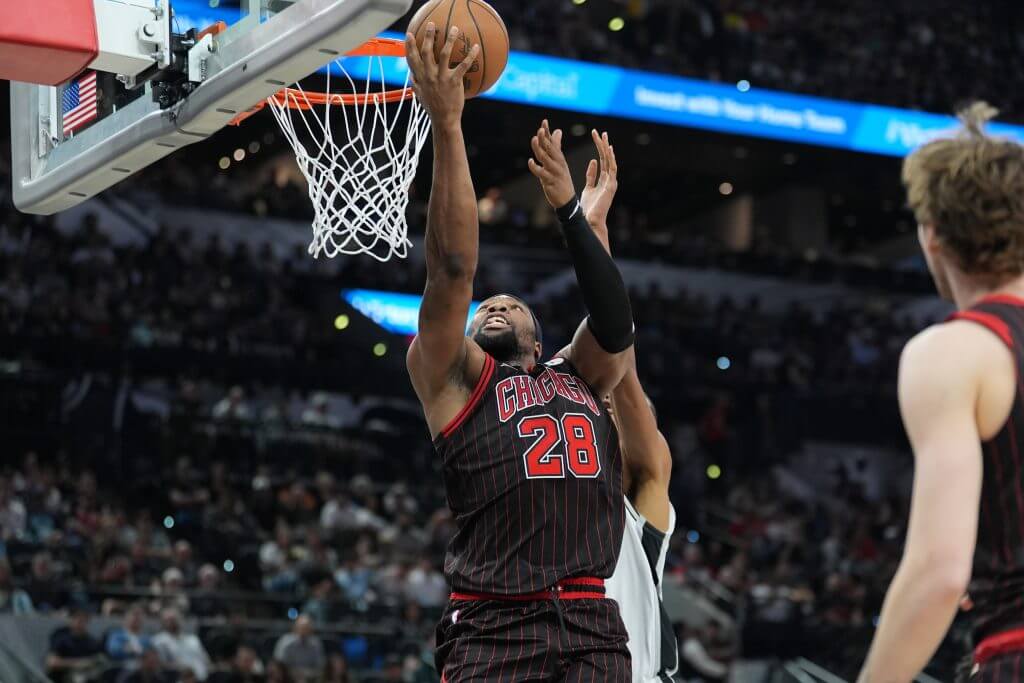
盖尔雄·亚布塞莱在尼克斯挣扎,但在芝加哥反弹。(Daniel Dunn / Imagn Images)
20. 杰里米·索汉 (Jeremy Sochan),纽约尼克斯:$5,199,830
索汉仍然不会投篮,而且可能永远都练不出来,让他在马刺打控球后卫是重建过程中的一个低谷。然而,他是一名充满能量的防守者和冲框好手,尤其是在与一位能拉开空间的中锋搭档时。年仅22岁的索汉需要加盟一支重建球队,拿到一份便宜的合同并获得发展上场时间。显然,纽约不适合他,但在合适的环境下,他仍能提供轮换价值。
21. 约什·米诺特 (Josh Minott),布鲁克林篮网 (TONG):$5,157,623
作为坚守米诺特阵营的最后一人,我预计篮网会执行他价值260万美元的选项,并在本赛季留用他。这位23岁的球员有望在布鲁克林获得在明尼苏达和波士顿时期所没有的上场时间和锻炼机会。初入联盟时,米诺特还是一位非射手,但他上赛季的三分命中率达到了41.6%。虽然样本量小,但如果他在一个完整的赛季里能接近这个命中率,那他确实是个人物。
22. 贾巴里·沃克 (Jabari Walker),费城76人 (PG):$4,825,451
费城76人有点奇怪地在上赛季和沃克签下了一份只有25万美元保障的合同,而不是一个可以放弃的球队选项,这基本上锁定了费城要跟他再凑合一年,支付他258万美元的薪水。BORD$估值显示,这比直接裁掉他要好接受得多,尤其对于一支无论如何都得用底薪球员填补他这个位置的球队来说。
第五档:优质底薪球员
23. 凯尔·安德森 (Kyle Anderson),明尼苏达森林狼
“慢动作”的适配性严重依赖于球队体系,他最擅长的环境是其他四名队友都能投篮,而他可以在持球或作为短挡拆接球入时发挥作用。他仍然是捅球切球的大师和防守组织者,即使没有三分球能力,他上赛季的真实命中率也达到了57.3%。
24. 特伦登·沃特福德 (Trendon Watford),费城76人 (TO)
这位与凯尔·安德森打法相似,上赛季同样交出了57.3%真实命中率的球员,沃特福德表现最好的时候,是在三分线内能够球在手中的时候。然而,随着上赛季的进行,他逐渐失宠,76人面临着一个有趣的抉择,是否执行他价值280万美元的球队选项。如果费城想让他回来,放弃选项然后以一年240万美元的老将底薪签下他,相对奢侈税线而言,将节省一些开支。
25. 杰肖恩·泰特 (Jae’Sean Tate),休斯顿火箭
泰特能防守任何外围位置且充满能量,但他的职业生涯三分命中率只有30.9%,持球进攻能力也有限。这使得他在休斯顿那套本就挤满了类似特点球员的阵容中,很难获得稳定上场时间,但他能在另一支球队产生影响。一支需要额外强硬侧翼防守者的季后赛级球队,应该将泰特视作一个底薪目标。
26. 尼古拉斯·巴图姆 (Nic Batum),洛杉矶快船 (TO)
对于已经37岁的巴图姆来说,他那个600万美元的球队选项实在太贵了,因为他已经变成了一名极低使用率的球员(上赛季使用率仅9.6%!),只在空位时才出手投篮。但他确实能将这些球投进(三分命中率40.4%),也能防守好自己的位置。
27. 莱昂纳德·米勒 (Leonard Miller),芝加哥公牛 (TONG)
米勒有一个价值240万美元的球队选项,如果执行,将变为部分保障,并在6月30日转为全额保障。无论采用何种机制,他都值得留下。在公牛一落千丈,跌向乐透区的过程中,米勒打得相当好,所以执行选项似乎是很可能的选择。这位左手将在上赛季效力过的两支球队中,两分球命中率合计达到69.3%,如果他在一个完整赛季里能接近这个终结效率,无论他那低平弹道的三分球能否稳定命中,他都具备价值。
保障这240万美元是留下米勒最直接的方式,但公牛也可以拒绝执行选项,利用他低额的薪金空间占位,作为非伯德自由球员,在与他承诺一份更长期的底薪或接近底薪的合同——可能带有部分保障条款和一个球队选项年——之前先进行操作。
28. 乔纳森·莫格博 (Jonathan Mogbo),多伦多猛龙 (TO)
莫格博已经如此远离常规轮换阵容了,以至于他几乎连“厨房”的门都摸不着,在他的第二个赛季,他只打了249分钟。猛龙拥有他价值230万美元的球队选项,鉴于他们在大前锋位置上的拥挤,很可能会选择另一个方向。莫格博可能需要开始命中三分球,才能获得一个轮换角色,但他是一个能创造防守机会的球员,也能作为进攻连接点,他会适合一支快节奏、在他这个位置上能给他更多施展空间的球队。
29. 凯文·乐福 (Kevin Love),犹他爵士
乐福在训练营开始前就将年满38岁,已经进入了“老将导师”的生涯阶段,但他仍然提供着罕见的三分投射与精英篮板能力的结合,并能送出一些联盟中最棒的长传球。他很可能非常适合作为一支争冠球队的第五号内线。

如果找到合适的球队,凯文·乐福作为第五号内线或许仍能发挥一些能量。(Jesse Johnson / Imagn Images)
30. 乔治·尼昂 (Georges Niang),2025-26赛季未出场
尼昂因膝盖问题缺席了上个赛季,他的合同在联盟中几经转手,最终被孟菲斯灰熊裁掉。33岁的他似乎不太可能重新获得轮换层面的生存能力,并且必须证明自己有足够的移动能力来防守,但同时,他在其七个NBA赛季中的六个赛季里,三分命中率都达到了40%。
31. 科比·布朗 (Kobe Brown),印第安纳步行者 (R)
步行者这个迷失的赛季带来的一个好处是,在快船坐了两个半赛季的板凳后,布朗获得了多一点的机会。他并没有打出统治级表现,但他的三分命中率达到43.3%,如果能减少失误,他可以扮演一个角色。步行者给他开出的报价上限是479.2万美元,这是快船在交易他之前拒绝执行的第四年选项的金额,但这不会是一场竞价战。
第六档:边缘球员,双向合同潜力股
32. 皮特·南斯 (Pete Nance),密尔沃基雄鹿 (NG)
在上赛季雄鹿滑出竞争者行列时,南斯签下了一份正式合同,他作为空间型四号位(三分命中率42.0%)表现得足够高效,这或许能让他拥有留在联盟的持久力。他本赛季价值250万美元的合同将在7月4日转为保障。如果被裁,他仍具备签双向合同的资格。
33. 克里斯·布歇 (Chris Boucher),上赛季效力于犹他爵士
布歇上赛季仅打了九场比赛,在被交易到爵士后遭裁掉,但他2024-25赛季在多伦多表现稳健,作为第五号内线可能仍有价值。
34. 安东尼·吉尔 (Anthony Gill),华盛顿奇才
吉尔是一名矮壮型内线,他留在阵容中,既是因为他在场下的领导力,也是因为他能在场上所做的有限贡献。如果他能回归,定位将是更衣室里的“老叔”。
35. 杰夫·格林 (Jeff Green),休斯顿火箭
格林上赛季只打了30场比赛,总共175分钟,这还不包括他在对阵湖人系列赛第三场中那次令人震惊的临时登场,他的各项数据都创下了职业生涯新低。今年夏天他将年满40岁,所以生涯可能接近尾声。
36. 道格·麦克德莫特 (Doug McDermott),萨克拉门托国王
我不太确定他整个34岁的赛季是怎么在国王队的板凳末端度过的,但他想在别人板凳上度过自己的35岁赛季,将面临着艰巨的挑战。
37. 马克西·克勒贝尔 (Maxi Kleber),洛杉矶湖人
克勒贝尔在43场比赛中只投进了33球,并且连续四个赛季的效率值(PER)停留在个位数。34岁的他,下一站很可能是回到欧洲。
38. 穆罕默杜·盖耶 (Mouhamadou Gueye),芝加哥公牛 (TONG)
别把他和亚特兰大的莫·盖耶 (Mo Gueye)搞混了,这位是在赛季末签下了一份填名单的合同,且仍具备签双向合同的资格。公牛几乎肯定要么现在拒绝执行选项,要么稍后裁掉他,除非是为了配平交易需要用到他的合同。他们仍然可以用一份双向合同把他签回来。
39. 萨纳西斯·阿德托昆博 (Thanasis Antetokounmpo),密尔沃基雄鹿
他的雄鹿生涯很可能已经走到尽头,但我猜他可能在今年夏天晚些时候,成为迈阿密热火的头号自由球员引援目标。
由生成式 AI 翻译,译文内容可能不准确或不完整,以原文为准。
点击查看原文:NBA free agency 2026: Power forward market is solid, but LeBron James is lone star
NBA free agency 2026: Power forward market is solid, but LeBron James is lone star
The Athletic has live coverage of 2026 NBA free agency.
NBA free-agent market: Top 25 | shooting guards | small forwards | point guards
The free agent power forward market looks pretty good, especially if you’re interested in a generational superstar in his early 40s. While the market drops off after LeBron James, this year’s crop still includes multiple starter candidates and several others who are ideal as high-minute bench players based on my BORD$ valuations. (More on the methodology here.)
As always, I’ve included all free agents and potential free agents due to player options, team options and non-guaranteed contracts, except for absurd cases where there is no chance of a player being waived and — importantly — also no chance for other cap shenanigans by declining options and signing new contracts.
(PO = player option; TO = team option; NG = non-guaranteed; TONG = team option, non-guaranteed; PG = partial guarantee; POPG = player option, partial guarantee; R = restricted; R-2w = restricted two-way***)***
Tier 1: Max guys
None.
Tier 2: More than MLE, less than max
1. LeBron James, L.A. Lakers: $31,960,618
James is still an extremely valuable player, and my aging algorithm may underrate his potential contributions in 2026-27; we really have no data to work with as far as “high-usage forward entering his age-42 season” is concerned. At this point, he’s likely looking at a one-year deal (he can’t sign for more than three because of the over-38 rule), so the questions are about money (somewhat) and fit (quite a bit).
Resolving the latter part could require a major haircut on the former, as the type of teams that could both use James and have a reasonable chance of contending for something important are also not the type to have extra cap space lying around. Even a return to the Lakers is complicated, as paying him would take L.A. out of some cap-room scenarios that won’t be available to the Lakers in future summers when Reaves is making roughly triple what he is now.
2. Julian Champagnie, San Antonio (TONG): $25,726,203
The Spurs will not be an expensive team in 2026-27 but will be extremely expensive within two years once Victor Wembanyama, Stephon Castle, Dylan Harper and Carter Bryant all become extension eligible.
Thus, they have an obvious incentive to wipe out Champagnie’s cheapo team option for the coming season and sign him to a new contract for descending dollars, instead of waiting until he’s an unrestricted free agent in 2027 and then paying full freight.
That likely entails committing to something like five years and $100 million or so, i.e. paying him just south of nine figures in new money in addition to the team option and spreading that money over five seasons. To further smooth the cap hit, San Antonio could start the contract at its maximal value and decline his salary by 8 percent each season.
Tier 3: MLE guys
3. Tobias Harris, Detroit: $19,715,982
Reminder: BORD$ doesn’t include the playoffs. Harris had a solid regular season but really proved his worth in Detroit’s playoff run, operating as the Pistons’ second option while Jalen Duren fizzled. In doing so, he exhibited that, whatever the Pistons plan to do with their future cap, just letting Harris walk isn’t a viable option unless they’re getting a star-caliber upgrade at the same position.
All of this is a long-winded way of saying that, even pushing age 34, Harris seems a good bet to get something relatively close to the two-year, $50 million deal he originally inked in Detroit in 2024 — maybe closer to 40 than 50 this time, but still in excess of the projected $15 million midlevel exception. Detroit’s cap sheet can comfortably handle him on a number in that range.
4. John Collins, LA Clippers: $18,890,305
Collins won’t turn 29 until late September and has put together three straight solid, starting-caliber seasons after leaving Atlanta. The key is his development as a 3-point shooter, hitting 39.9 percent in 2024-25 and 40.6 percent in 2025-26. That spacing component has allowed him to play power forward and made him less dependent on rim-running as an undersized center.
The Clippers have Bird rights on Collins but could choose cap-room scenarios instead of bringing the band back after a disappointing 2025-26. If he leaves LA, he’d be a likely target for teams with their full non-taxpayer MLE, especially those needing a starting power forward or a top frontcourt sub. At his age, teams would probably want to keep at it three years and maybe angle for two.
5. Draymond Green, Golden State, (PO): $13,679,047
Green is still one of the best defenders at his position, but offensively, his value has cratered to the point that his overall value proposition is around the non-taxpayer MLE.
That makes for an interesting situation for the Warriors, because Green has a player option for $27.7 million for 2026-27. While it would help the Warriors manage the tax aprons if he were to decline the option and re-sign a longer deal for lower money, there’s also a pretty big gap here between his 2026-27 salary and his BORD$ value. Would he take a deal for three years and $45 million to $50 million? If not, the Warriors might do just as well if he opts in … particularly if Golden State can stomach the idea of Green as a potential expiring contract in a midseason deal to reshape the roster for the future.
6. Precious Achiuwa, Sacramento: $12,934,026
I know a lot of you didn’t watch the Kings last year, and I can’t really blame you, but Achiuwa had a breakout season and was one of the most improved players in the league. He still won’t give you much as a floor spacer, but his rebounding, finishing and activity make him a valuable player.
The Kings have no Bird rights on him, so they would have to use their non-taxpayer midlevel exception to bring him back, something that’s highly desirable given that the oft-injured De’Andre Hunter is the only other power forward on the roster. However, Sacramento’s tax position also makes this an interesting dilemma. The Kings might have to waive DeMar DeRozan just to get under the first apron and have access to their full MLE. Unless Achiuwa’s market ends up far south of this BORD$ estimate, that could open the door for other bidders.
7. Dean Wade, Cleveland: $12,835,954
Cleveland’s financial position is going to make it very challenging to keep Wade, unless the Cavs just say damn the torpedoes and blow past all the aprons.
Entering the offseason, the Cavs are over the projected second apron before they pay Wade a dollar. While adjusting James Harden’s salary downward and trading or stretching Dennis Schröder could relieve some of that pressure, it is still hard to do the math on an eight-figure deal for Wade. That could leave the 3-and-D forward vulnerable to poaching from a rival with a strong offer.
One note here: Wade’s frequent injuries could put a lid on his market at a bit lower than BORD$ suggests. He hasn’t played 60 games in any of the past five seasons.
Tier 4: Less than MLE, more than minimum
8. Harrison Barnes, San Antonio: $10,978,562
Barnes seems destined to be squeezed out in San Antonio by the continued development of Julian Champagnie and Carter Bryant, seeing his role wither to nothing in the NBA Finals.
However, there may be a way to keep the 34-year-old around for the short term, give him a bag and take advantage of the Spurs’ Bird rights on him. San Antonio has a mountain of dollars available below the projected tax line, but that picture changes dramatically when Victor Wembanyama’s likely supermax kicks in for 2027-28. To take advantage of that, the Spurs could sign Barnes to a one-year balloon deal that operates as a trade exception at the deadline, or even use him in a sign-and-trade this summer with only the first year guaranteed (sign-and-trade contracts must be for at least three seasons) to bring him back a win-now guy.
9. DeMar DeRozan, Sacramento (PG): $10,371,138
As I noted in my recent piece on player and team options, the Kings have a puzzling decision because DeRozan’s $25.7 million deal for 2026-27 has a $10 million guarantee, and the Kings’ best realistic pathway to skirting the tax aprons in a rebuilding year is to either trade him or waive-and-stretch the contract.
One nerdy note: If DeRozan is waived and signs elsewhere, the size of his next deal matters because the Kings would receive a set-off from their tax calculation for 50 percent of any amount above the one-year veteran minimum (an estimated $2.2 million).
Sacramento has an interesting call to make on veteran DeMar DeRozan. (Darren Yamashita / Imagn Images)
10. Dom Barlow, Philadelphia (TO): $9,557,414
Barlow broke out to earn a rotation spot off a two-way deal last year and is still only 23 years old. If the Sixers can’t land an upgrade in the free-agent market, he might be the starter next year.
He also has a team option for just $3.4 million, something that might be a classic “decline and re-sign” situation, but for two factors. First, the Sixers can only sign him for $4.1 million without going into exception money, so Barlow might feel better just riding out the contract and hitting free agency next year. Second, the Sixers’ own tap dance vis-à-vis the tax line could be complicated enough that even a $700,000 difference on Barlow might really matter.
11. Jonathan Kuminga, Atlanta, (TO): $9,409,216
The Hawks have a team option for $24.3 million on Kuminga. Obviously, it makes no sense to pick it up from a pure value perspective, but there are a lot of moving parts here.
First, Atlanta has enough room below the tax line that the Hawks might consider picking up the option to use as a giant trade exception that can be utilized in-season, or even to have Kuminga append a value extension to that number for future seasons. The Hawks could also decline the option and sign Kuminga to a more straightforward deal, but his skill overlap with Jalen Johnson makes him a clunky fit unless he’s limited to a 15-minute bench role. Finally, the Hawks have cap-room scenarios that could incentivize them to just decline the option and move on.
12. Rui Hachimura, L.A. Lakers: $9,398,473
Hachimura has become a lights-out shooter, making 44.3 percent and 41.3 percent of his 3s the past two seasons, but he doesn’t let it fly with enough volume to make him a truly terrifying spacing threat.
His game is otherwise solid but forgettable, leaving him stretched as a starter and more suited to a bench role toggling between the two forward spots. This BORD$ valuation for Hachimura is interesting because it would slide perfectly into the Lakers’ $9.4 million room exception if L.A. renounces his rights to maximize its cap room, which seems likely. The maximal room exception offer is a three-year, $29 million deal, which seems fair.
13. Kelly Oubre, Philadelphia: $8,856,031
One wonders if there are scenarios in which Oubre could re-sign in Philly, and the Sixers could still use their non-taxpayer midlevel exception to add talent while also avoiding the tax.
Alas, it’s a tough needle to thread, and Oubre may find a better fit in a place where he can play more minutes at his natural small forward spot rather than as an undersized power forward. The 30-year-old is a plus defender and shot 36 percent from 3 last season. Starting him is probably a stretch at this point, but surely he will have a market as a third forward.
14. Mo Gueye, Atlanta, (TONG): $8,336,432
Gueye has a non-guaranteed team option for $2.4 million for this season, which could create “decline and re-sign” scenarios for the Hawks. The Hawks have enough room below the tax line that they could decline the option and re-sign him to a new deal right now with front-loaded money; even if they try to be a cap-room team, they could do something similar because of his minimum cap hold. If so, BORD$ would suggest a fair way to replace that bargain 2026-27 number would be a three-year deal in the $20 million range for the still-developing defensive ace.
15. GG Jackson, Memphis (TO): $7,167,651
Jackson has a team option for $2.4 million, and the Grizzlies, like the Hawks above, have oodles of room below the tax line (not to mention some cap-space scenarios involving his minimum cap hold). However, Jackson has been so erratic for Memphis that the Grizzlies may think twice about going long with him just yet. The other reason to hold off is that, in 2027, the Grizzlies will have a greater-than-max hoard of cap room and a minimum cap hold on Jackson, although he would be an unrestricted free agent at that point.
16. Kenrich Williams, Oklahoma City (TO): $6,326,713
Kenny Hustle feels like a Thunder Lifer, and he showed in the payoffs that he can still deliver some solid minutes. Alas, Oklahoma City is about to get hammered by the tax aprons and can no longer afford to have a Vibes Guy making $7.1 million, the value of his team option. Look for the Thunder to decline the option and try to ink Williams to a longer deal for lower money, perhaps something in the range of three years and $15 million.
17. Jonathan Isaac, Orlando (PG): $6,205,187
Isaac has an $8 million guarantee on his $14.5 million deal for 2026-27. The oft-injured big man is still a dynamic force on defense when healthy, but his limited offensive game dampens his value.
On a team that can afford to have him miss games, he’s a tremendous frontcourt luxury, but that team might not be the Magic. One of the most cap-handcuffed teams in the league, Orlando can ease its tax-apron constraints by stretching Isaac’s guarantee over seven seasons, something possible because he has two non-guaranteed years left on his contract after the current one. Orlando would have to make a decision by June 28, when the contract becomes fully guaranteed.
18. Olivier-Maxence Prosper, Memphis (TO): $5,477,704
“O-minimum” has a team option for $2.5 million after showing well on a two-way deal for the Grizzlies last season. A lot of those minutes came as a pint-sized center in throw-spaghetti-at-the-wall lineups that Memphis had to trot out due to all its injuries, but Prosper’s true selling point is as an energy wing who defends, runs the floor and hits open shots. Prosper made 40.5 percent from 3 last season, and if his true ability level is at all close to that, he’s at worst a back-end rotation player.
As a non-Bird free agent, Memphis can only pay Prosper with a modest raise on his minimum unless the Grizzlies go into exception money, so a “decline and re-sign” pact might not be in the cards, but one could see how a three-year, $13 million deal using a piece of Memphis’ non-taxpayer or room exception might be beneficial for both sides … even if “O-room exception” doesn’t flow off the tongue as easily.
19. Guerschon Yabusele, Chicago: $5,336,603
Yabusele flamed out with the Knicks, but his performance in 26 games with the Bulls was much more consistent with what he’d done in Philly in 2024-25. Much of his failure in New York was the result of an outlier bad stretch from the 3-point line (28.6 percent as a Knick), and this BORD$ value almost matches the $5.75 million player option he waived to complete the trade to the Bulls. His market may hew closer to the minimum than the taxpayer midlevel exception he got a year ago, but statistically, he looks like basically the same player.
Guerschon Yabusele struggled with the Knicks but bounced back in Chicago. (Daniel Dunn / Imagn Images)
20. Jeremy Sochan, New York: $5,199,830
Sochan still can’t shoot and probably never will, and playing him at point guard was a low point in the Spurs’ rebuild. However, there’s an energy defender and rim crasher in here, especially if paired with a floor-spacing center. Still just 22, Sochan needs to land on a rebuilding team on an inexpensive deal and get some developmental minutes. That won’t be New York, obviously, but he still could provide rotational value in the right setting.
21. Josh Minott, Brooklyn (TONG): $5,157,623
As the last person on Minott Island, I’m expecting Brooklyn to pick up his $2.6 million option and roster him this season, where the 23-year-old can hopefully get the minutes and reps that weren’t available in Minnesota and Boston. A non-shooter when he entered the league, Minott made 41.6 percent of his 3s last season. It’s a small sample, but if he shoots anywhere close to that over a full season, he’s a player.
22. Jabari Walker, Philadelphia (PG): $4,825,451
The Sixers, somewhat oddly, signed Walker to a deal last year with a $250,000 guarantee rather than a declinable team option, basically locking Philly into riding out one more year with him at $2.58 million. BORD$ suggests that is a far more palatable option than cutting him, especially for a team that would be filling his spot with a minimum guy anyway.
Tier 5: Good minimums
23. Kyle Anderson, Minnesota
Slo-Mo’s fit is heavily team dependent, as he works best if the other four guys can all shoot and he can get reps either on the ball or as a short-roller. He’s still a master of the poke-check move and a defensive playmaker, and even without a 3-ball, he had a 57.3 true shooting percentage last season.
24. Trendon Watford, Philadelphia (TO)
A Kyle Anderson play-alike who had the same 57.3 true shooting percentage last season, Watford operates best when he can have the ball in his hands inside the 3-point arc. However, he fell out of favor as last season went on, and the Sixers face an interesting decision on whether to pick up his $2.8 million team option. If Philly wanted him back, declining the option and signing the one-year vet minimum for $2.4 million would offer some savings relative to the tax line.
25. Jae’Sean Tate, Houston
Tate can defend any of the perimeter positions and plays with great energy, but he’s 30.9 percent career 3-point shooter with limited on-ball juice. That made it tough for him to get on the floor on a Houston roster already crowded with similar profiles, but he’d make an impact on a different roster. A playoff-caliber team that needs an extra wing stopper with toughness should target Tate as a minimum guy.
26. Nic Batum, LA Clippers (TO)
Batum’s $6 million team option seems far too rich for where he is at age 37, as he’s become an extreme low-usage player (9.6 percent last season!) who only shoots when left open. But he does make them (40.4 percent from 3) and guards his position.
27. Leonard Miller, Chicago (TONG)
Miller has a $2.4 million team option that becomes half guaranteed if picked up and fully guaranteed on June 30. He’s worth keeping regardless of the mechanism. Miller played fairly well while the Bulls otherwise swooned toward the lottery, so picking it up seems likely. The lefty shot 69.3 percent on 2s between his two stops last season, and if he finishes anywhere near that in a full season, he has value regardless of whether his low line-drive 3s find the net consistently.
Guaranteeing the $2.4 million is the most straightforward means to keep Miller, but Chicago could also decline the option and take advantage of his minimum cap hold before committing to a longer minimum or minimum-ish deal — probably with soft guarantees and a team option year — as a non-Bird free agent.
28. Jonathan Mogbo, Toronto (TO)
Mogbo fell so far out of the mix that he was barely even in the kitchen, playing just 249 minutes in his second season. The Raptors have a $2.3 million team option on him and may go in another direction given the crowd they have at power forward. Mogbo probably needs to start making 3s to have a rotation role, but he is a defensive event creator who can be an offensive connector and would fit on an up-tempo roster with more breathing room at his position.
29. Kevin Love, Utah
Love turns 38 before camp and has settled into the Veteran Swami phase of his career, but he still offers the unusual intersection of 3-point shooting and elite rebounding and slings some of the best outlet passes in the game. He’d likely be a nice fit as a fifth big on a contending team.
Kevin Love could still have some juice as a fifth big on the right team. (Jesse Johnson / Imagn Images)
30. Georges Niang, did not play in 2025-26
Niang missed last season recovering from knee issues, and his contract bounced around the league before he was finally waived by Memphis. At 33, he seems unlikely to regain rotation viability and will have to prove he has enough mobility to defend, but he’s also made 40 percent of his 3s in six of his seven NBA seasons.
31. Kobe Brown, Indiana (R)
One advantage of the Pacers’ lost season is that it gave Brown a bit more of a chance after sitting at the end of the Clippers‘ bench for two-and-a-half years. He didn’t exactly dominate, but he made 43.3 percent from 3 and could have a role if he reduces his turnovers. The Pacers are capped at offering him $4.792 million, the amount of the fourth-year option that the Clippers declined before trading him, but this will not be a bidding war situation.
Tier 6: Fringe guys, two-ways
32. Pete Nance, Milwaukee (NG)
Signed to a roster contract as the Bucks spiraled out of contention last season, Nance was effective enough as a stretch four (42.0 percent from 3) that he might have staying power. His $2.5 million deal for this season is guaranteed on July 4. He is also two-way eligible if waived.
33. Chris Boucher, last with Utah
Boucher only played nine games last season and was waived after being traded to the Jazz, but he had a solid 2024-25 season in Toronto and might still have some value as a fifth big.
34. Anthony Gill, Washington
Gill is an undersized big who is on the roster as much for his leadership off the court as for whatever he can do on it. If he’s back, it’s as the locker room “unc.”
35. Jeff Green, Houston
Green only played 30 games and 175 minutes last season, not including his shocking insertion into Game 3 of the Lakers series, and finished with career lows across the board. He also turns 40 this summer, so the end may be near.
36. Doug McDermott, Sacramento
I’m not really sure how he spent his entire age-34 season at the end of the Kings’ bench, but he’s facing an uphill battle to spend his age-35 season on anyone’s bench.
37. Maxi Kleber, L.A. Lakers
Kelber scored 33 baskets in 43 games and had a single-digit PER for the fourth straight season. At 34, his next stop is likely back in Europe.
38. Mouhamadou Gueye, Chicago (TONG)
Not to be confused with Atlanta’s Mo Gueye, this one signed a roster-filler deal at the end of the season and is still two-way eligible. The Bulls surely will either decline the option now or waive him later, unless his contract needs to be used in a trade. They could still bring him back on a two-way deal.
39. Thanasis Antetokounmpo, Milwaukee
His Bucks career has likely come to an end, but I’m guessing he might become a top free-agent target for Miami later this summer.
By John Hollinger, via The Athletic