By John Hollinger | The Athletic, 2026-06-17 09:00:07

总体而言,2026年的NBA自由球员市场成色一般,但得分后卫位置上的深度要好于其他绝大多数位置。
奥斯汀·里夫斯 (Austin Reaves) 是一位全明星级别的核心后卫,他将成为一名真正的完全自由球员;诺曼·鲍威尔 (Norman Powell) 在刚刚打出一个全明星级别的赛季后也将成为完全自由球员;而像科比·怀特 (Coby White) 和阿约·多苏姆 (Ayo Dosunmu) 这样优秀的球员也依然处于黄金的20多岁。
根据我的BORD$估值公式,今年夏天将有七位身价超过1000万美元的得分后卫进入完全自由球员市场,而洛杉矶快船队阵中颇具看点的贝内迪克特·马瑟林 (Bennedict Mathurin) 则将作为受限制自由球员试水市场(在此了解更多关于BORD$计算方法的信息)。除了鲍威尔之外,他们都只有20多岁,这使得今年夏天成为了寻找潜在长期首发球员的绝佳机会。
与以往一样,我将所有因球员选项、球队选项和无保障合同而产生的自由球员及潜在自由球员都纳入了讨论范围,但排除了一些极端情况——即球员绝无可能被裁,且(这一点很重要)也绝无可能通过拒绝选项并签署新合同来进行其他薪资空间操作的情况。例如,你可以放心,俄克拉荷马城雷霆队绝对不会裁掉阿杰·米切尔 (Ajay Mitchell),他在2026-27赛季的无保障合同年薪仅为300万美元。波特兰开拓者队的西迪·西索科 (Sidy Cissoko) 和快船队的克里斯·邓恩 (Kris Dunn) 也是同理。
自由球员市场: 前25名
(PO = 球员选项;TO = 球队选项;NG = 无保障;PG = 部分保障;R = 受限制)
第一档:顶薪球员
无
第二档:高于中产,低于顶薪
1. 奥斯汀·里夫斯,洛杉矶湖人 (PO):34,429,743美元
里夫斯显然会选择跳出目前的合同,他2026-27赛季的薪水仅为微薄的1490万美元。湖人队可以利用他极低的预留空间(2090万美元)先用薪资空间补强阵容,然后再回头与他签下一份更符合市场行情的合同。根据BORD$的估值,对于一位28岁、虽然存在防守和耐用性疑问、但上赛季证明了自己可以担任高使用率进攻发起者的球员来说,合理的续约价码大约是4年1.4亿美元。
然而,湖人队可能会被迫开出更高的价码。作为市场上最引人瞩目的完全自由球员之一,里夫斯可能会吸引急需天赋的竞争对手(如布鲁克林篮网队)开出令人难以拒绝的顶薪报价。
第三档:中产级别球员
2. 基翁·埃利斯 (Keon Ellis),克利夫兰:19,989,738美元
相比于执教过他的教练们,我的数据模型一直以来都对埃利斯极为看好,这次的估值也不例外。骑士队在赛季中期从萨克拉门托国王队交易得到埃利斯后几乎没有怎么使用他,而国王队此前更令人费解地不愿让他上场,这也正是他最初被摆上货架的原因。
在最佳状态下,埃利斯是一位优秀的防守型后卫,空位三分极其靠谱(职业生涯命中率高达40.7%!),但在面对顶级侧翼时他身材偏矮,且无法提供太多的自主进攻创造力。正因如此,我认为他的真实市场价可能只有这个估值的一半。即便在这个价位上,骑士队的奢侈税问题也让他们不太可能留下他。26岁的埃利斯非常适合像篮网这样的重建球队,或者是像犹他爵士或华盛顿奇才队这样正走出低谷的球队。
3. 诺曼·鲍威尔,迈阿密:19,165,238美元
鲍威尔力压他的队友入选了全明星,而他的那位队友不仅单场砍下过83分,还入选了最佳防守阵容——这客观上是对鲍威尔上半赛季火热投篮手感的夸张过度反应。在33岁的年纪,市场对鲍威尔的争夺不会过于狂热,尤其是在长约方面。此外,迈阿密热火队在休赛期的其他不确定因素(咳咳 扬尼斯 咳咳)可能会限制他们在自由市场开启时挽留他的诚意。
话虽如此,热火队拥有鲍威尔的完整伯德权,且球队的奢侈税和土豪线情况非常可控。如果签下一份短约,他的合同将极具交易价值。热火队有理由在短期内溢价续约他——比如2年5000万美元——以便为热火队日后的交易提供足够的薪资配平筹码。
4. 科比·怀特,夏洛特:18,121,736美元
怀特是一位极具价值的得分手,比起首发,他更适合担任精英级别的第六人,但他能打有球也能打无球,且拥有足够的身材去防守得分后卫。这应该能让他的身价至少达到非纳税人中产特例,考虑到他只有26岁,且市场上有数支拥有薪资空间的球队,他的最终价格很可能会高于这一水平。如果夏洛特黄蜂队全额支付他的薪水,会面临一些轻微的税务问题,但这很容易通过将格兰特·威廉姆斯 (Grant Williams)、约什·格林 (Josh Green) 和/或特雷·曼 (Tre Mann) 等表现不佳的千万级合同送往他处来解决。
5. 阿约·多苏姆,明尼苏达:14,485,494美元
在赛季中期从芝加哥公牛队被交易到明尼苏达森林狼队后,多苏姆在季后赛中用一场43分的表演以及其他几次亮眼发挥证明了自己的价值。他是一名完全自由球员,因此森林狼队必须开出一份符合市场行情的合同,但他们似乎可以用非纳税人中产特例或略高于此的价格,为这位26岁的球员提供一份三年期合同,从而击退任何合理的竞争对手。
森林狼队的优势在于,他们拥有多苏姆的伯德权,这意味着在续约他时无需担心土豪线的限制,这使得他在球队计划中的价值远高于他们用中产特例签下的同等薪资的其他球员。
6. 乔丹·古德温 (Jordan Goodwin),菲尼克斯:12,832,658美元
古德温是一位有价值的球员,但各支球队可能很难在自由球员市场上准确评估他的价值。BORD$模型一直以来都比NBA市场更看好古德温,而他在现实中从未拿过高于底薪的合同。即便在菲尼克斯打出了突破性的一个赛季,他奇特的球风特点——算不上进攻创造者或控球后卫,也算不上纯投手(尽管上赛季他在有一定出手权的情况下投出了37.1%的三分命中率,这可能会改变一些人的看法),但他是一个擅长拼抢球权的防守者,同时作为一个身高6英尺3英寸(约1.91米)的后卫,他的前场篮板拼抢能力简直疯狂——这让他很难完美融入大多数NBA球队的常规轮换体系。
太阳队在最大化古德温的技能包方面做得非常出色,但菲尼克斯今年夏天也面临一些预算限制,而且太阳队的首要任务很可能是科林·吉莱斯皮 (Collin Gillespie) 和马克·威廉姆斯 (Mark Williams)。古德温可能不得不再次接受一个低于BORD$评估的身价。
第四档:低于中产,高于底薪
7. 贝内迪克特·马瑟林,洛杉矶快船 (R):11,961,877美元
作为一名充满争议的受限制自由球员,马瑟林或许可以被形容为“乔纳森·库明加 (Jonathan Kuminga) 2.0”。他是一个天生的得分手,能制造大量的罚球,但他防守和组织等其他环节的不足使他在印第安纳步行者队变得可有可无,也阻碍了他在快船队获得首发位置。
23岁的马瑟林对于急需注入年轻活力和运动能力的快船队来说,是一个值得押注的选择。当然,快船队拥有匹配报价的权利。(由于未达到首发标准,马瑟林的资质报价为880万美元;快船队无疑应该开出这个报价。)
总体而言,用一份接近中产级别的多年合同锁定他的风险与回报比看起来是一次不错的赌博。然而,唯一的变数在于,快船队也有一些释放薪资空间的方案,这可能涉及让他白白走人,或者尝试让他签下一份“1+1”的短期合同,使用预计为940万美元的空间特例。
8. 昆汀·格莱姆斯 (Quentin Grimes),费城:11,640,346美元
令人好奇的是,费城76人队的新管理层是否会和旧管理层有类似的想法——后者在交易截止日似乎选择了格莱姆斯而非贾里德·麦凯恩 (Jared McCain)。此外,格莱姆斯可能更想去其他地方争取首发位置,而不是在费城永远坐在两位年轻明星后卫后面当替补。新任总经理迈克·甘西 (Mike Gansey) 公开谈论使用76人队的非纳税人中产特例,这也是格莱姆斯可能离队的另一个信号。因为只有在格莱姆斯离开的情况下,这种情况才真正可能发生。如果他能找到一支既急需侧翼又拥有薪资灵活性的球队,我能预见到他的市场价会高于BORD$的估值,一路飙升到全额中产。
9. 佩莱·拉尔森 (Pelle Larsson),迈阿密 (TONG):11,334,890美元
拉尔森的价值显然远高于他下赛季的底薪合同,但他被列在这里是为了讨论一种“拒绝并重新签约”的情况,即热火队试图通过废除他最后一年的合同,来换取锁定一份合理的长期合同。例如,一份3年2500万美元左右的合同,或许能很好地在他2026-27赛季的廉价合同与之后即将到来的自由球员市场之间起到过渡作用。考虑到他的年龄(25岁)、场上角色以及他作为#热火文化 核心成员的身份,无论如何他都会回到迈阿密。
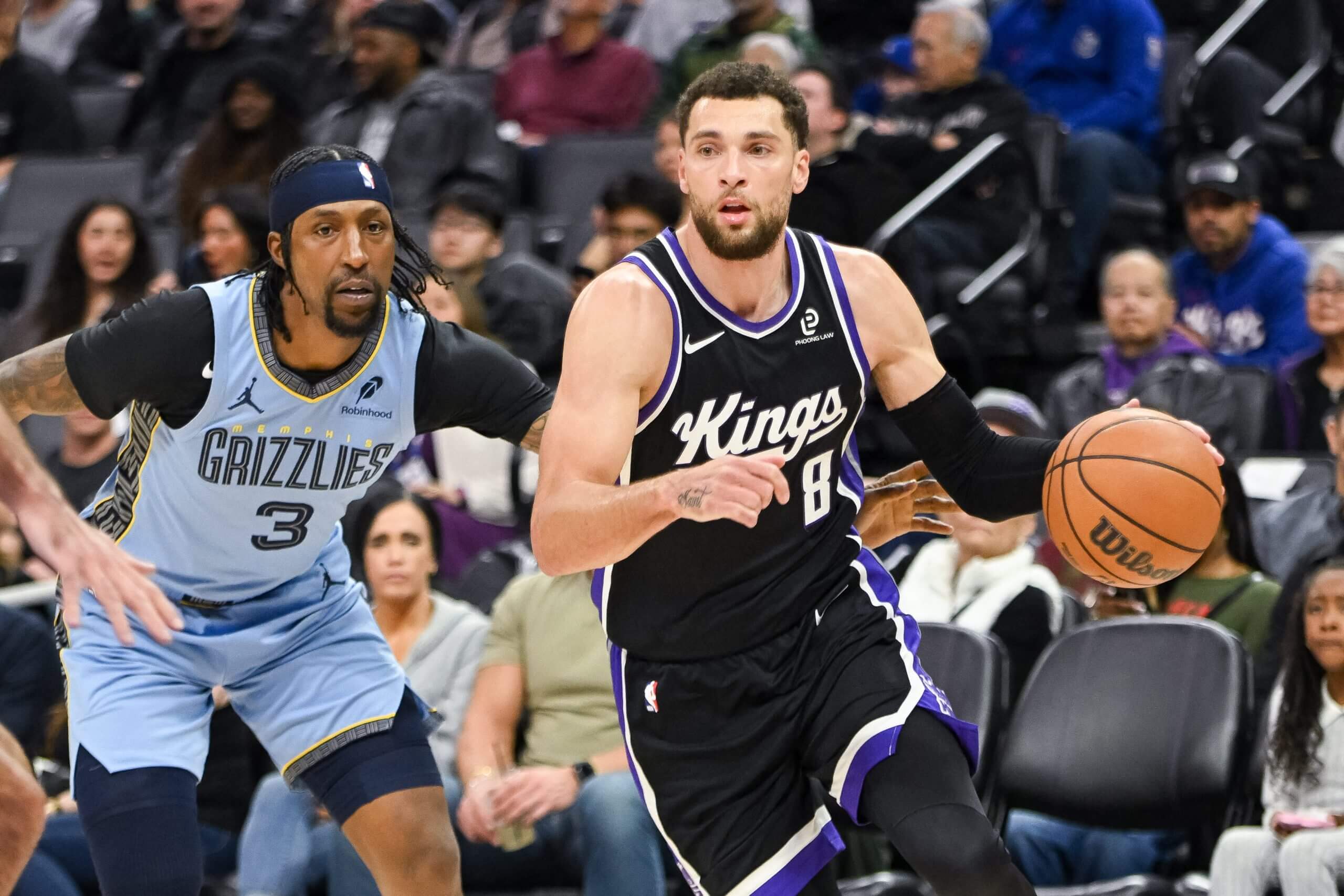
国王队的扎克·拉文 (Zach LaVine) 拥有一项巨大的球员选项,他似乎很可能会执行该选项。(Ed Szczepanski / Imagn Images)
10. 扎克·拉文,萨克拉门托 (PO):9,332,241美元
你被邀请参加泰勒·斯威夫特 (Taylor Swift) 和特拉维斯·凯尔西 (Travis Kelce) 婚礼的概率,都比在自由市场上看到拉文的概率要高。他本赛季拥有一个价值4900万美元的球员选项,相对于他近期的表现来说,这显然是极大的溢价。我推测国王队应该不至于疯狂到使用延伸条款裁掉他并分期支付他的合同,但考虑到他们的奢侈税问题,这也并非没有可能。
11. 肯塔维奥斯·考德威尔-波普 (Kentavious Caldwell-Pope) (PO):8,663,942美元
与上面的拉文一样,考德威尔-波普基本上绝无可能拒绝他2100万美元的球员选项,去试水一个可能只给他开出这一金额零头的自由市场。
12. 卢克·肯纳德 (Luke Kennard),洛杉矶湖人:7,376,308美元
湖人队很可能会放弃肯纳德的预留空间,以释放大量的薪资空间。然而,我好奇的是肯纳德是否会通过空间特例留在湖人队,该特例预计起薪为940万美元,这与肯纳德的BORD$估值以及他去年夏天在市场上得到的合同(1年1100万美元)非常接近。他在洛杉矶的表现远好于在亚特兰大时期,尤其是展现出了更强的侵略性去出手那些半空位三分,而此前在老鹰队和灰熊队效力时,他常常会放弃这样的机会。
13. 贾米尔·沃特金斯 (Jamir Watkins),华盛顿 (TO):7,283,228美元
这看起来是华盛顿奇才队一个经典的“拒绝并重新签约”案例。沃特金斯去年春天从双向合同转为一份标准的底薪合同,并带有第二年的球队选项。在沃特金斯新秀赛季展现出防守端如同“地狱看门犬”般的撕咬能力后,奇才队可以拒绝该选项,并在今年夏天与他续签一份更长的合同。作为一名非鸟权自由球员,如果选项被拒绝,奇才队可以在2026-27赛季以262万美元或更低的价格开启沃特金斯的新合同,而无需动用特例空间。
14. 兰德里·沙梅特 (Landry Shamet),纽约:6,915,116美元
纽约尼克斯队将拥有沙梅特的早鸟权,在经历了他在纽约度过的那个春天之后,尼克斯队需要利用这一权利才有可能留住他。纽约面临的第二土豪线情况也可能会让保留沙梅特和米切尔·罗宾逊 (Mitchell Robinson) 这样的球员变得复杂,尤其是因为BORD$模型没有将季后赛表现计算在内,而沙梅特的身价很可能已经被推高到了远超此处所列数字的水平。
15. 科比·桑德斯 (Kobe Sanders),洛杉矶快船 (TONG):6,931,825美元
这与上面沃特金斯的情况类似,也是一个“拒绝并重新签约”的案例。桑德斯是一名次轮秀,凭借着在同等身材下扎实的控球技术以及中距离跳投时出色的起跳高度,他证明了自己有能力进入轮换阵容的末端。作为一名非鸟权自由球员,如果选项被拒绝,快船队可以在2026-27赛季以262万美元的起薪与他签约,而无需动用特例空间。
16. 蒂姆·哈达威二世 (Tim Hardaway Jr.),丹佛:6,366,071美元
哈达威在丹佛签下了一份一年的底薪合同,在替补席上打出了扎实的一个赛季后,他理应获得涨薪。他已经34岁了,且刚刚创下了职业生涯的三分球和两分球命中率新高,因此可能会出现一些数据回落,但他显然配得上(至少)一份双年特例(预计为550万美元)的一年合同,或者是一份包含球队选项的更长合同。
17. 乔丹·米勒 (Jordan Miller),洛杉矶快船 (TO):6,356,903美元
这是另一个“拒绝并重新签约”的方案,不过这次的对象是一位年龄稍大(26岁)且刚刚在快船队度过第三个赛季的球员。因此,快船队拥有米勒的完整伯德权,并且没有任何合同限制。如果快船队作为一支拥有薪资空间的球队来运作,这会特别有帮助,因为米勒的空间预留权仅为底薪。通俗地说,这意味着快船队可以先用大卡车拉来其他合同把空间填满,然后再回头来安顿好米勒。
18. 巴迪·希尔德 (Buddy Hield),亚特兰大 (PG):5,536,529美元
老鹰队在2月份通过交易得到希尔德后便将其雪藏,令人感到匪夷所思的是,从各种迹象来看,他依然能打。在希尔德上场时间达到两位数的唯一一场比赛中,他砍下了31分,而且即便投出了以他的标准来看异常糟糕的三分命中率(上赛季三分命中率为34.9%),他的整体数据依然相当体面。老鹰队很可能会裁掉他的部分保障合同,使他能够以底薪或双年特例的身份签约,成为替补席上的一名雇佣兵投手。
19. 卡姆·托马斯 (Cam Thomas),此前效力于密尔沃基:5,119,082美元
这一估值对托马斯来说相当激进,因为整个联盟似乎已经对他那种“投篮优先”的球风感到厌倦,他可能需要去海外打球来重塑自己的价值。在合适的球队中,他凭借自主得分能力可以提升第二阵容的下限,但他此前在篮网队和雄鹿队都未能很好地胜任这一角色,最终折戟沉沙。
20. 德安东尼·梅尔顿 (De’Anthony Melton),金州 (PO):5,037,613美元
梅尔顿已经证明了只要他能保持健康留在场上,他就极具价值,上赛季他在勇士队出战的49场扎实比赛中再次证明了这一点。他目前手握一份带有球员选项的底薪合同,很可能会选择跳出合同以争取一份稍大一些的合同。他可能会成为某些球队使用双年特例或空间特例的目标。一个可能性较低但仍有机会发生的情况是,勇士队在2026-27赛季以394万美元的起薪将他作为非鸟权自由球员签回,并可能在2027-28赛季再附带一个球员选项。
第五档:优质底薪球员
21. 马利克·比斯利 (Malik Beasley),2025-26赛季未出战
比斯利在投篮手感火热的2024-25赛季证明了自己的价值,但在针对其涉嫌非法博彩的调查结束之前,他依然处于“无人敢碰”的状态。如果他被允许上场打球,他显然至少值一份空间特例级别的合同,但短期内,我们似乎不太可能在NBA赛场上看到他。
22. 马蒂斯·塞布尔 (Matisse Thybulle),波特兰
作为联盟中最出色的防守球员之一,塞布尔堪称NBA的沃伦·巴菲特 (Warren Buffett):没有人比他更擅长囤积“股票”(在篮球高阶数据中,抢断与盖帽合称为stocks,与股票同音)。然而,在BORD$模型中,他依然被评估为底薪球员,原因有二:首先,比赛还有进攻端,他极低的出手权和缺乏组织进攻的感觉,使得球队很难在第四节把他留在场上。另一个让他难以留在场上的原因是他伤病不断;在过去的两个赛季中,塞布尔总共只打了45场比赛,并且在七个NBA赛季中仅有一次出场超过66场。
23. 乔丹·克拉克森 (Jordan Clarkson),纽约
克拉克森在纽约迎来了职业生涯的新生,他转型为一名角色型的替补侧翼,极其擅长拼抢前场篮板(不,我是认真的),并且比犹他爵士时期投入了更多的防守精力。凭借这一点以及他在更衣室里极高的人气,他应该能够作为球队的第四后卫,将职业生涯的第二春延续更长时间。
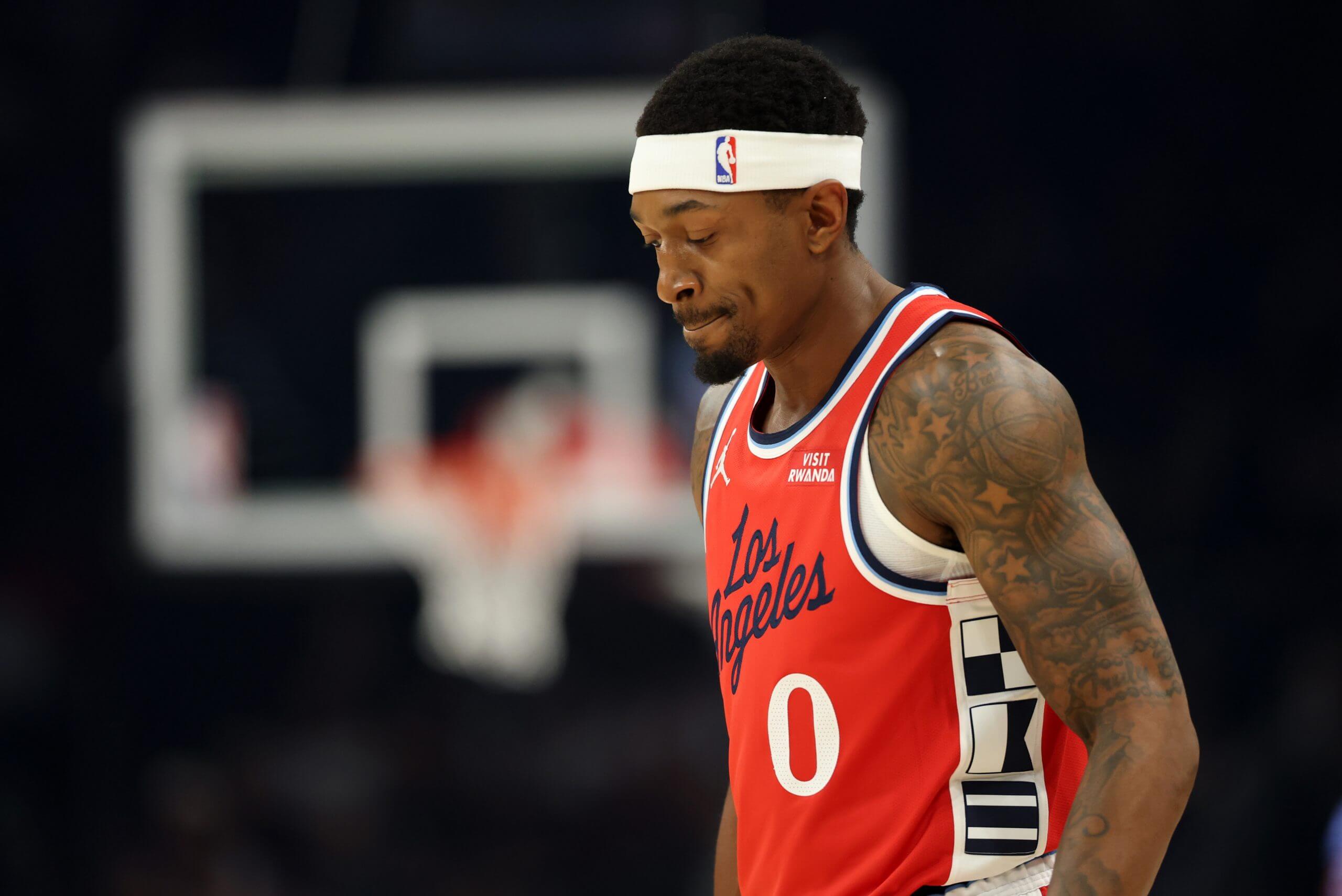
布拉德利·比尔 (Bradley Beal) 在过去两个赛季中身价有所下跌。(Mark J. Rebilas / Imagn Images)
24. 布拉德利·比尔,洛杉矶快船 (PO)
我推测比尔会选择执行他520万美元的球员选项,毕竟他在2025-26赛季仅为快船队出战了6场比赛。由于伤病不断以及上场时效率的下滑,市场对他的需求自华盛顿奇才时期以来已经一落千丈,但健康版本的比尔依然可以成为一名优秀的第六人。
25. 加里·特伦特 (Gary Trent),密尔沃基 (PO)
考虑到特伦特经历了一个如此艰难的2025-26赛季,他不太可能为了追求更大的合同而跳出380万美元的合同。但他可能会选择跳出合同,然后重新签下一份实质上相同的合同(一年底薪),从而为雄鹿队在薪资账目上节省大约150万美元。
26. 奥查伊·阿巴基 (Ochai Agbaji),布鲁克林 (R)
严格来说,他只是理论上的受限制自由球员,布鲁克林篮网队几乎绝无可能开出880万美元的资质报价来让阿巴基在实际操作中成为受限制自由球员。阿巴基是一位出色的运动员,他的跳投在热身时依然完美无瑕,能划出美丽的45度弧线,但这从未转化为他在比赛中高产的武器。他很可能会得到一份底薪合同,作为球队的第五侧翼,不过如果篮网队今年夏天无法用掉他们堆积如山的薪资空间,他们最终可能会与他签下一份奇特的一年期“气球合同”(高薪短约)。
27. 博格丹·博格达诺维奇 (Bogdan Bogdanović),洛杉矶快船 (TO)
在膝盖伤势导致博格达诺维奇在过去两个赛季表现挣扎之后,快船队无疑会拒绝他1600万美元的球队选项。问题是之后会发生什么。如果他能证明自己的双腿已经恢复,那么签下一份一年的底薪合同是很有可能的。在下肢受伤之前,博格达诺维奇曾是2023-24赛季联盟中最出色的第六人之一。
28. 迈伦·加德纳 (Myron Gardner),迈阿密 (TONG)
热火队又淘到宝了,是吧?作为来自阿肯色大学小石城分校的落选秀,加德纳签下了一份双向合同,并证明了自己是一个难缠的防守者,这位24岁的新秀还投出了40.6%的三分命中率。他的合同非常适合进行“拒绝并重新签约”,这能让热火队在今年夏天用一份更长的合同锁定他,而迈阿密大概率会这么做。
29. 昆顿·杰克逊 (Quenton Jackson),印第安纳 (PG)
杰克逊处于与这份名单上大多数球员不同的阶段,在为挣扎中的步行者队打完一个扎实的49场比赛的2025-26赛季后,他即将迎来自己的28岁赛季。他拥有一份260万美元的合同,其中只有27.5万美元是保障的,但在7月15日之后将转为全额保障。我认为他去年的表现足够出色,配得上一个阵容席位和这份全额保障。
30. A.J.·劳森 (A.J. Lawson),多伦多
作为一个体重只有180磅(约81.6公斤)的球员,劳森是一位NBA级别的防守者,其篮板球能力出奇地好,而且上赛季他投出了42.2%的三分命中率,震惊了众人。虽然根据他以往的履历,这个数字很可能是一个异常值,但他只需要保持三分球三投一中左右的水平,就足以在阵容中占有一席之地。以一份底薪合同回归似乎是一个合理的安排。
第六档:边缘球员、双向合同球员
31. 帕特·康诺顿 (Pat Connaughton),夏洛特 (TONG)
作为这支非常年轻的黄蜂队中33岁的老将(OG),康诺顿此前为了配合交易截止日的交易而被裁掉,随后又被签回,这表明黄蜂队看重他的价值远不止他微不足道的上场时间。话又说回来,当他上场时,他的表现其实相当不错:在297分钟的出场时间里,康诺顿的效率值(PER)为12.9,且正负值(BPM)为正数。他的合同设计使得他的380万美元薪水在需要时可以用于交易配平,但更有可能的是,黄蜂队会拒绝他的选项,然后以一份老将底薪将他签回,这在他们的工资帽上计算的金额仅为原来的一半左右。
32. 加里·哈里斯 (Gary Harris),密尔沃基 (PO)
与上面的特伦特一样,在哈里斯几乎跌出雄鹿队轮换阵容之后,他几乎不可能跳出380万美元的合同,但他可以选择跳出合同,重新签下一份老将底薪合同——这不会让他损失任何收入,却能为雄鹿队在薪资账目上节省150万美元。
33. 杰登·克拉克 (Jayden Clark),明尼苏达 (R)
克拉克是一位出色的防守者,对球的落点有敏锐的直觉,但他在进攻端的局限性使得他很难获得任何稳定的角色。现在他的新秀合同已经到期,令人好奇他的下一份合同是否会是一份双向合同(他仍有一年的双向合同资格),签在一支重建球队中,如果他的投篮有所改善,这能为他提供一条更清晰的通往出场时间的道路。
34. 丹特·埃克萨姆 (Dante Exum),此前效力于华盛顿
埃克萨姆去年在(又一次)遭遇赛季报销的伤病之前仅打了20场比赛;达拉斯独行侠队将他的薪水甩给了奇才队,后者随后裁掉了他。在常规赛揭幕战时他将满31岁,但他之前在达拉斯一年多的表现足够扎实,足以保证他获得一个第五后卫的阵容席位。
35. 林迪·沃特斯二世 (Lindy Waters II),圣安东尼奥
我不太确定为什么马刺队在季后赛前没有更努力地升级这个位置。沃特斯已经打了五个NBA赛季,作为阵容末端的球员有其用武之地,但他不再具备双向合同资格,这可能会导致他被挤出阵容。
36. 尼克·史密斯 (Nick Smith Jr.),洛杉矶湖人
史密斯在上赛季末与湖人队签下了一份正式合同,但他仍然具备双向合同资格且只有22岁,这可能是他立足NBA的最佳途径。史密斯展现出了极佳的爆发力,并且能够打出令人印象深刻的得分高潮——上赛季他在高出手权下投出了39.5%的三分命中率——但他作为无球后卫身材严重偏矮,且防守非常不稳定。我不认为他在湖人队出战的30场比赛表现足够有说服力,能让他获得一份保障的底薪合同。
37. 加勒特·坦普尔 (Garrett Temple),多伦多
作为一名顶级的更衣室领袖,40岁的坦普尔在目前这个阶段基本上相当于一名助理教练。他上赛季打了22场比赛,仅投中四个球。如果这就是终点,那么作为一名落选秀,长达16年的职业生涯是一项相当了不起的成就,他很可能会对执教或管理层工作产生浓厚兴趣。
38. 塞斯·库里 (Seth Curry),金州
伤病限制了库里在2025-26赛季仅出战10场比赛。他前一年在夏洛特投出了45.6%的三分命中率,但他今年夏天将满36岁,自主进攻创造力有限,且身材严重偏矮。如果他能保持健康留在场上,他依然值得留在阵容中。
39. 卡姆·克里斯蒂 (Cam Christie),洛杉矶快船 (NG)
克里斯蒂被选中时是一个长期培养对象,但在经历了两个平淡无奇的赛季,且职业生涯两分球命中率仅为45.5%(此外三分线外的准星也令人失望)之后,快船队可能会倾向于放弃他。他230万美元的合同将于6月30日转为保障合同,而快船队的一些薪资空间方案需要裁掉他。然而,一种可能的结局是他明年接受一份双向合同留在洛杉矶,因为他仍然具备双向合同资格。

湖人队会如何处理布朗尼·詹姆斯 (Bronny James) 的合同? (Troy Taormina / Imagn Images)
40. 布朗尼·詹姆斯,洛杉矶湖人 (PG)
我绝不是在暗示詹姆斯的合同保障可能取决于另一位球员在自由市场上的命运,但他第二赛季结束时的效率值(PER)仅为9.0,在42次出场中正负值(BPM)为-4.5。他的合同略多于一半保障,但如果他在6月29日之前未被裁掉,则将转为全额保障。从细微处来看,如果湖人队选择将他126万美元的保障金额分五年延期支付,而不是支付他230万美元的保障金,那么湖人队在休赛期的薪资空间策略会得到轻微的优化。
41. 贝兹·姆本格 (Bez Mbeng),犹他 (TONG)
NBA历史上拿到三双的最差球员。嘿,总得有人来当这个“最差”。事实上,姆本格在赛季末出战的15场比赛中表现并不算糟糕,尽管他确实让爵士队打得像那么回事,他应该会是一个强力的双向合同候选人。
42. 麦克斯·舒尔加 (Max Shulga),波士顿 (TONG)
这位2025年的次轮末位秀签下了一份正式合同以帮助波士顿凯尔特人队避开奢侈税,但我预计凯尔特人队会拒绝他的选项,以帮助重建他们阵容的末端,并尝试以一份双向合同将舒尔加签回。
43. 基利安·海斯 (Killian Hayes),萨克拉门托 (TONG)
国王队在年底签下了海斯并让他打了23场比赛,想看看他是否比在底特律活塞队时表现得更好。答案是否定的。
海斯的投篮命中率仅为30.4%,是联盟中对球队进攻伤害最大的球员之一。他也不再具备双向合同资格,因此除非国王队需要在交易中使用他的合同,否则我推测他们要么会拒绝他的选项,要么会裁掉他,而他最终将回到欧洲打球。
44. 文斯·威廉姆斯 (Vince Williams),此前效力于犹他
爵士队在上赛季末威廉姆斯遭遇前交叉韧带(ACL)撕裂后裁掉了他,他很可能会缺席2026-27赛季的大部分或全部比赛。健康时的他显然是具备NBA正式阵容实力的球员,但他已经没有双向合同资格了。然而,用一份Exhibit 10合同签下他会是一个不错的选择。这种安排可以让球队监控他的康复情况,并让他在G联盟球队中寻找状态,然后在交易截止日后(届时通常会腾出阵容席位)再将他召回。
45. 海登·格雷 (Hayden Gray),犹他 (TONG)
在另行通知之前,他在技术上仍是一名NBA球员,因为他在常规赛最后一天签约,并在25分钟内为那群披着爵士队球衣的临时拼凑阵容贡献了6分。如果爵士队无法在交易中利用他的薪水,他们将会裁掉格雷,但在缅因队度过了一个扎实的2025-26赛季G联盟之后,他确实有相当大的机会获得一份双向合同。
由生成式人工智能翻译,译文内容可能不准确或不完整,以原文为准。
点击查看原文:NBA free agency 2026: Austin Reaves, Norman Powell highlight shooting guard class
NBA free agency 2026: Austin Reaves, Norman Powell highlight shooting guard class
The NBA free-agent market in general isn’t good, but it’s stronger at shooting guard than at most other spots.
Austin Reaves is an All-Star-caliber lead guard who will be a true unrestricted free agent, Norman Powell is also unrestricted while coming off an All-Star season, and players like Coby White and Ayo Dosunmu are valuable performers who are still in their 20s.
According to my BORD$ formula, seven different shooting guards worth more than $10 million will hit unrestricted free agency this summer, while the LA Clippers’ interesting Bennedict Mathurin will hit the market via restricted free agency (more on the BORD$ methodology here). They’re all in their 20s except Powell, making it a strong environment to find a potential long-term starter.
As always, I’ve included all free agents and potential free agents due to player options, team options and non-guaranteed contracts, except for absurd cases where there is no chance of a player being waived and — importantly — also no chance for other cap shenanigans by declining options and signing new contracts. For instance, you can rest assured the Oklahoma City Thunder won’t be waiving Ajay Mitchell from his non-guaranteed deal for 2026-27 that pays him just $3 million. Ditto for Sidy Cissoko in Portland and Kris Dunn with the Clippers.
Free-agent market: Top 25
(PO = player option; TO = team option; NG = non-guaranteed; PG = partial guarantee; R = restricted)
Tier 1: Max guys
None
Tier 2: More than MLE, less than max
1. Austin Reaves, L.A. Lakers (PO): $34,429,743
Reaves obviously will opt out of his current deal, which pays him a mere pittance at $14.9 million for 2026-27, and the Lakers can use his artificially low cap hold ($20.9 million) to fill in the roster with cap room before coming back to sign him at a more market-appropriate contract. That landing point would seem about four years and $140 million, based on BORD$, for a 28-year-old who has defense and durability questions but also showed last season he can be a high-usage, lead initiator on offense.
However, the Lakers may be forced to go even higher. As one of the most prominent unrestricted free agents on the board, Reaves could command an over-the-top max offer from a talent-needy rival such as the Brooklyn Nets.
Tier 3: MLE guys
2. Keon Ellis, Cleveland: $19,989,738
My numbers have always been far, far more bullish on Ellis than the people who coach his teams, and this valuation is no exception. The Cavs barely used Ellis after acquiring him at midseason from Sacramento, whose more baffling unwillingness to put him on the court made him available in the first place.
At his best, Ellis is a plus defender at guard who is money on open 3s (40.7 percent career!), but he’s undersized against apex wings and doesn’t offer a lot of shot creation. Because of that, I’d say his true market is probably for half this amount. Even at that price, the Cavs’ tax issues seem to make them an unlikely destination. At 26 years old, Ellis could be a nice fit on a rebuilding team, such as Brooklyn, or one emerging from hibernation, such as Utah or Washington.
3. Norman Powell, Miami: $19,165,238
Powell made the All-Star team ahead of his teammate who both had an 83-point game and made the All-Defensive team, an objectively hilarious overreaction to Powell’s torrid shooting in the first half of the season. At age 33, the market isn’t going to get too overheated for Powell, especially on a longer deal, and Miami’s other offseason uncertainties (cough Giannis cough) could limit how far the Heat are willing to go to retain him as free agency kicks off.
That said, Miami has full Bird rights, and the tax and apron situations are very manageable. On a short deal, his contract will be tradeable. There’s a case for a short-term overpay — say, two years and $50 million — to give Miami enough ballast to salary match in trades later.
4. Coby White, Charlotte: $18,121,736
White is a valuable scorer who profiles more as an elite sixth man than a starter, but he can play on or off the ball and has enough size to check shooting guards. That should get his price point to the non-taxpayer MLE at the very least, and likely above it given his age (26) and the presence of multiple cap-room teams. Charlotte has some minor tax issues if it pays him full freight, but those could easily be resolved by dropping off an underperforming low-eight-figure contract, such as those of Grant Williams, Josh Green and/or Tre Mann, someplace else.
5. Ayo Dosunmu, Minnesota: $14,485,494
After a midseason trade from Chicago, Dosunmu proved his worth to Minnesota in the postseason with a 43-point game and several other notable performances. He’s an unrestricted free agent, so the Wolves will have to deliver a market-value deal, but it seems like they could come in at the nontaxpayer MLE or slightly above and ward off any reasonable competition on a three-year deal for the 26-year-old.
The trick for Minnesota is that his Bird rights mean the Wolves don’t have to worry about tax aprons when re-signing him, making him much more valuable for their purposes than another player they signed for the same money with the MLE.
6. Jordan Goodwin, Phoenix: $12,832,658
Goodwin is a valuable player, but one whom teams may have trouble valuing, at least in a free-agency environment. BORD$ has always been a much bigger fan of Goodwin than the NBA market, which has never seen him make more than the minimum. Even after a breakout year in Phoenix, his odd profile — not really a shot creator or point guard, not really a shooter (although his 37.1 percent from 3 on real volume last season could change some minds on that front), but a ballhawking defender who is also an utterly insane offensive rebounder for 6 feet 3 — doesn’t neatly slide into most NBA rotation boxes.
The Suns did a great job of getting the most from Goodwin’s skill set, but Phoenix also has some budget limitations this summer, and the Suns’ first priorities likely are Collin Gillespie and Mark Williams. He may have to settle once again for a smaller number than BORD$ suggests.
Tier 4: Less than MLE, more than minimum
7. Bennedict Mathurin, LA Clippers (R): $11,961,877
A divisive restricted free agent who might be described as “Jonathan Kuminga 2.0”, Mathurin is a natural scorer who draws heaps of free throws, but his deficiencies in other phases of the game made him expendable in Indiana and stopped him from claiming a starting role with the Clippers.
At age 23, on a Clippers team that badly needs infusions of youth and athleticism, he’d be a solid bet for this particular franchise, and of course, the Clippers will have matching rights. (Mathurin’s qualifying offer is $8.8 million because he didn’t meet the starter criteria; surely the Clippers should tender that number.)
Overall, the risk/reward on locking in multiple years at midlevel-ish money feels like a good gamble. The one wild card, however, is that the Clippers also have cap-room scenarios that could involve either letting him walk or trying to get him to ink a “one-plus-one” short-term deal for the estimated $9.4 million room exception.
8. Quentin Grimes, Philadelphia: $11,640,346
One wonders if the new regime in Philadelphia will feel similar to the old one, which seemingly chose Grimes over Jared McCain at the trade deadline. There’s also the matter of Grimes perhaps wanting to chase a starting role somewhere else rather than being permanently etched into a backup role in Philly behind two young star guards. The fact that new GM Mike Gansey spoke openly about using the Sixers’ non-taxpayer MLE is another sign Grimes might be a goner. That can really only happen if Grimes leaves. I could see his market going higher than this BORD$ value, all the way up to the full MLE, if he finds the right mix of desperation and cap flexibility.
9. Pelle Larsson, Miami (TONG): $11,334,890
Larsson is obviously worth way more than his minimum contract for this coming season, but he is listed here for the purposes of a “decline-and-resign” scenario where the Heat try to lock in a good long-term number in return for ripping up the last year of his deal. Something around three years and $25 million, for instance, might be a nice way to bridge his cheapo deal for 2026-27 with his impending free agency afterward. Between his age (25), his role and his being a core #HeatCulture guy, he’ll be back in Miami one way or another.
The Kings’ Zach LaVine has a huge player option that he seems likely to pick up. (Ed Szczepanski / Imagn Images)
10. Zach LaVine, Sacramento (PO): $9,332,241
You have better odds of getting invited to the Taylor Swift-Travis Kelce wedding than you do of seeing LaVine in free agency, with a $49 million player option for this season that is a massive overpay relative to his recent production. I presume the Kings aren’t crazy enough to stretch him, but with their tax issues, that’s a possibility.
11. Kentavious Caldwell-Pope (PO): $8,663,942
As with LaVine above, there is basically zero chance Caldwell-Pope declines his $21 million player option and hits a market that would likely value him at a fraction of that amount.
12. Luke Kennard, L.A. Lakers: $7,376,308
The Lakers likely will renounce Kennard to open up a trove of cap room. However, the scenario I wonder about with Kennard is him staying with the Lakers via their room exception, which starts at a projected $9.4 million and is a pretty close match to both Kennard’s BORD$ value and what he got on the market last summer (one year at $11 million). He played much better in L.A. than he did in Atlanta, in particular showing more aggression taking the semi-open 3s that he too often passed up in stops with the Hawks and Grizzlies.
13. Jamir Watkins, Washington (TO): $7,283,228
This one looks like a classic decline-and-resign scenario for Washington. Watkins signed last spring off his two-way to a straight minimum deal with a second-year team option, one that allows the Wizards to decline the option and re-up on a longer deal this summer after Watkins showed himself to be an absolute hellhound on defense in his rookie season. As a non-Bird free agent, if the option is declined, Washington can start Watkins’ next deal at $2.62 million or less in 2026-27 without needing to dip into exception money.
14. Landry Shamet, New York: $6,915,116
The Knicks will have early Bird rights on Shamet, and after the spring he had in New York, the Knicks will need them to have any chance of retaining his services. New York’s second-apron situation could also make keeping players such as Shamet and Mitchell Robinson complicated, especially since BORD$ doesn’t factor in the playoffs and Shamet’s price likely has been driven much higher than the number listed here.
15. Kobe Sanders, LA Clippers (TONG): $6,931,825
This is a similar decline-and-resign situation to the one with Watkins above. Sanders was a second-round pick who showed himself capable of back-end rotation minutes thanks to a solid handle for his size and good elevation on his midrange jumper. As a non-Bird free agent, if the option is declined, the Clippers can start him at $2.62 million in 2026-27 without going into exception money.
16. Tim Hardaway Jr., Denver: $6,366,071
Hardaway signed a one-year deal for the minimum in Denver and has earned a raise after a solid year off the bench. He’s 34 and coming off career highs in both 3-point and 2-point percentage, so some regression may be in order, but he’s clearly worth the biannual exception (at least), projected to be $5.5 million, on a one-year deal or a longer one with some team options built in.
17. Jordan Miller, LA Clippers (TO): $6,356,903
This is another decline-and-resign scenario, albeit with an older player (age 26) who is coming off his third season with the Clippers. As a result, the Clippers have full Bird rights on Miller and have no contractual restraints. That’s especially helpful if they operate as a cap room team, given that Miller’s cap hold is only for the minimum. In layman’s terms, that means the Clippers can back up the truck and load it with other contracts before coming back to take care of Miller.
18. Buddy Hield, Atlanta (PG): $5,536,529
The bizarre thing about the Hawks putting Hield on ice once he arrived via trade in February is that, by most indications, he can still play. Hield scored 31 points in the one game he saw double-digit minutes and, even with outlier bad shooting by his standards (34.9 percent from 3 last season) he still had a decent overall stat line. The Hawks will likely waive his partially guaranteed deal, leaving him open to sign for the minimum or biannual exception as a hired gun off the bench.
19. Cam Thomas, last with Milwaukee: $5,119,082
This valuation is pretty aggressive for Thomas, as the league seems to be exhausted with his shoot-first style, and he might need to go overseas to rebuild his value. On the right team, he can be a floor-raiser for the second unit because of his shot creation, but he also crashed out of that exact role in Brooklyn and Milwaukee.
20. De’Anthony Melton, Golden State (PO): $5,037,613
Melton has proven to be valuable when he can stay on the court, as he showed again in 49 solid games with the Warriors last season. He’s on a minimum deal with a player option and likely will opt out for a slightly bigger payday. He could be a target with a team’s biannual or room exception. A less likely but still possible scenario is that the Warriors bring him back as a non-Bird free agent starting at $3.94 million in 2026-27, possibly with another player option tacked on in 2027-28.
Tier 5: Good minimums
21. Malik Beasley, did not play in 2025-26
Beasley showed his value in a torrid shooting 2024-25 season, but he is radioactive until an investigation into alleged illegal gambling is settled. He’s clearly worth room-exception-type money (at least) if he’s cleared to play, but in the short term, it seems unlikely we’ll see him on an NBA team.
22. Matisse Thybulle, Portland
One of the game’s most phenomenal defensive players, Thybulle is the NBA’s Warren Buffett: Nobody is better at hoarding stocks. He still rates as a minimum guy by BORD$, however, for two reasons: First, there’s another side of the ball, and his low-volume shooting and lack of playmaking feel make it tough to keep him on the floor in fourth quarters. The other thing that makes it hard to keep him on the floor is the fact that he’s constantly injured; Thybulle only played 45 games, combined, over the last two seasons, and has cleared 66 games just once in seven NBA seasons.
23. Jordan Clarkson, New York
Clarkson rebirthed his career in New York as a role-playing bench wing who feasts on offensive boards (no, really) and plays more defense than the Utah version. Between that and his general locker room popularity, he should be able to continue this second act as a fourth guard for a while longer.
Bradley Beal has seen his value dip in the past couple of seasons. (Mark J. Rebilas / Imagn Images)
24. Bradley Beal, LA Clippers (PO)
I presume Beal will opt in to the $5.2 million he’s owed after only appearing in six games for the Clippers in 2025-26. The demand for his services has cratered since his Washington days because of constant injuries and a dip in effectiveness when he’s played, but the healthy version of Beal can still be a plus sixth man.
25. Gary Trent, Milwaukee (PO)
Trent is unlikely to opt out of his deal for $3.8 million for a bigger payday, given what a rough 2025-26 season he had. But he may opt out to sign what is effectively the same contract (a one-year minimum) that saves the Bucks about $1.5 million on their cap sheet.
26. Ochai Agbaji, Brooklyn (R)
A restricted free agent strictly in theory, there is little to no chance that Brooklyn will issue the $8.8 million qualifying offer to make Agbaji an RFA in practice. Agbaji is a good athlete, and his jump shot remains pristine in warm-ups, lofting beautiful 45-degree parabolas, but it has never translated into his being a high-volume weapon in games. He’s likely looking at a minimum deal as a fifth wing, although the Nets could end up doing a weird one-year balloon payment with him if they can’t use their mountain of cap space this summer.
27. Bogdan Bogdanović, LA Clippers (TO)
The Clippers will surely decline his $16 million option after knee issues have rendered Bogdanović ineffective over the last two seasons. The question is what happens afterward. A landing spot on a one-year deal for the minimum seems possible if he can prove he has his legs. Bogdanović was one of the league’s best sixth men in 2023-24 before his lower appendages betrayed him.
28. Myron Gardner, Miami (TONG)
The Heat got another one, huh? Undrafted out of Arkansas-Little Rock and signed to a two-way, Gardner proved to be a pesky defender who also shot 40.6 percent from 3 as a 24-year-old rookie. His contract is set up perfectly for a decline-and-resign that lets the Heat lock him in for a longer deal this summer, which Miami presumably will do.
29. Quenton Jackson, Indiana (PG)
Jackson is at a different stage than most players on this list, entering his age-28 season after a solid 49-game 2025-26 season for the flailing Pacers. He has a $2.6 million contract that only has $275,000 guaranteed, but it becomes a full guarantee after July 15. I think he played well enough last year to earn the roster spot and the guarantee.
30. A.J. Lawson, Toronto
An NBA-caliber defender who rebounds surprisingly well for a guy who weighs 180 pounds, Lawson also shocked the masses by shooting 42.2 percent from 3 last season. While that number is likely an outlier based on his previous track record, he just needs to make one out of three or so to justify a roster spot. It seems returning on a minimum deal would be a reasonable accommodation.
Tier 6: Fringe guys, two-ways
31. Pat Connaughton, Charlotte (TONG)
The 33-year-old OG of an otherwise very young Hornets team, Connaughton was waived to accommodate a deadline trade and then brought back, signaling that the Hornets valued him beyond his meager on-court minutes. Speaking of which, when he played, he was actually pretty decent: Connaughton had a 12.9 PER and a positive BPM in his 297 minutes.
His contract is set up to be able to use his $3.8 million salary in a trade if needed, but what’s more likely is that they decline his option and then bring him back on a veteran minimum deal that counts for barely half as much on their cap sheet.
32. Gary Harris, Milwaukee (PO)
As with Trent above, there is little chance of Harris opting out of a $3.8 million deal after he mostly fell out of the Bucks’ rotation, but he could opt out to re-sign another deal for the vet minimum — costing him nothing but saving Milwaukee $1.5 million on the cap sheet.
33. Jayden Clark, Minnesota (R)
Clark is a good defender with a nose for the ball, but his offensive limitations have made it difficult for him to carve out any kind of permanent role. Now that his rookie contract has expired, one wonders if his next deal might be a two-way (he still has one year of eligibility left) on a rebuilding team that can offer a clearer pathway to eventual playing time if his shooting comes around.
34. Dante Exum, last with Washington
Exum only played 20 games last year before suffering (yet another) season-ending injury; Dallas dumped his salary on the Wizards, who cut him. He’ll be 31 on opening day, but his past year-plus in Dallas was solid enough to warrant a roster spot as a fifth guard.
35. Lindy Waters II, San Antonio
I’m not really sure why the Spurs didn’t try harder to upgrade this position before the playoffs. Waters has played five NBA seasons and has his uses as a back-end roster guy, but his no longer being two-way eligible may result in him being squeezed out.
36. Nick Smith Jr., L.A. Lakers
Smith signed a roster deal with the Lakers at the end of last season, but the fact that he’s still two-way eligible and only 22 years old may be his best pathway to NBA relevance. Smith shows plus quickness and can go on impressive shooting jags — he made 39.5 percent from 3 last season on high volume — but he’s also badly undersized for an off-ball guard, and his defense is really inconsistent. I don’t think his 30 games with the Lakers were quite strong enough to make a case for a guaranteed minimum deal.
37. Garrett Temple, Toronto
An elite culture guy, the 40-year-old Temple is basically an assistant coach at this point. He played 22 games last season and scored four baskets. If this is the end, a 16-year career after going undrafted is a pretty impressive feat, and he’ll likely have a lot of interest in coaching or front office work.
38. Seth Curry, Golden State
Injuries limited Curry to 10 games in 2025-26. He shot 45.6 percent from 3 in Charlotte the year before, but he turns 36 this summer, has limited shot creation skill and is badly undersized. He’s still worth having around if he can stay on the court.
39. Cam Christie, LA Clippers (NG)
Christie was selected as a long-term development pick, but after two uneventful seasons and a career 45.5 percent mark on shots inside the arc (in addition to underwhelming accuracy outside it), the Clippers might be tempted to cut bait. His $2.3 million contract becomes guaranteed on June 30, and the Clippers have cap-room scenarios that require waiving him. However, one way this could end up is with him taking a two-way next year to stay in LA, since he still has eligibility.
What will the Lakers do with Bronny James’ contract? (Troy Taormina / Imagn Images)
40. Bronny James, L.A. Lakers (PG)
Far be it from me to suggest that James’ contract guarantee may be contingent on the fate of another player in free agency, but he finished his second season with a PER of 9.0 and minus-4.5 BPM in 42 appearances. His deal is slightly more than half-guaranteed but goes full if he isn’t waived by June 29. At the margins, the Lakers’ offseason cap-room strategy is slightly improved by stretching his $1.26 million over five years rather than paying him a $2.3 million guarantee.
41. Bez Mbeng, Utah (TONG)
The worst player in NBA history to record a triple-double. Hey, somebody has to be. In truth, Mbeng wasn’t terrible in his 15 late-season games, even if he helped the Jazz play that way, and should be a strong two-way candidate.
42. Max Shulga, Boston (TONG)
The late second-round pick in 2025 signed a roster deal to help the Celtics avoid the luxury tax, but I expect that the Celtics would decline his option to help rebuild the back end of their roster and try to bring him back on a two-way instead.
43. Killian Hayes, Sacramento (TONG)
The Kings brought in Hayes for 23 games at the end of the year to see if he was any better than he showed in Detroit. He was not.
Hayes shot 30.4 percent from the field and was among the league’s most destructive offensive players. He’s also no longer two-way eligible, so unless the Kings need to use his contract in a trade, I presume they will either decline the option or cut him, and he’ll end up back in Europe.
44. Vince Williams, last with Utah
The Jazz waived Williams after he tore his ACL late last season, and he will likely miss most or all of the 2026-27 campaign. He’s clearly a roster-caliber player when healthy but has no two-way eligibility left. However, he would be a good pickup on an Exhibit 10 deal. That arrangement would allow a team to monitor his rehab and give him reps with the G League squad, then add him after the trade deadline when roster spots typically open up.
45. Hayden Gray, Utah (TONG)
Technically an NBA player until further notice, as he signed on the last day of the season and scored six points in 25 minutes for the merry band of castoffs dressed up as Jazz basketball players. The Jazz will waive Gray if they can’t use his salary in a trade, but he does have a somewhat realistic chance of getting a two-way deal after a solid 2025-26 G League season in Maine.
By John Hollinger, via The Athletic