By Law Murray | The Athletic, 2026-05-19 09:00:20
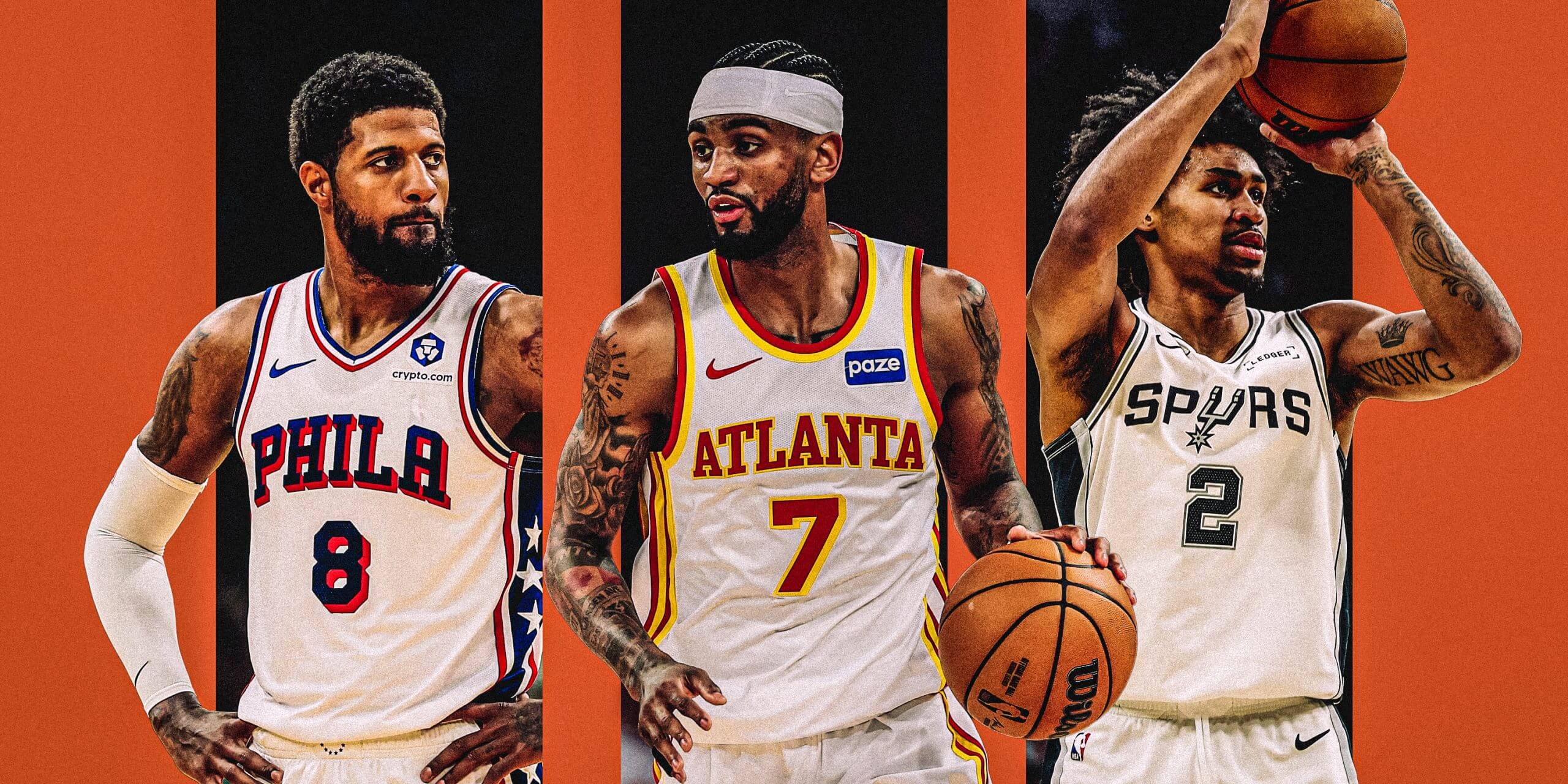
第四档是人数最多的一档,构成了NBA前100名球员的底部。理想情况下,这一档的球员都是各自角色里的明星。他们中有些人曾入选过全明星,还有几个人如果现在还没达到那个高度,未来也有望触及。
这一档细分为六个子档,其中的球员要么处于最适合自己的角色中,要么承担着球队运转所必需的职责。这组球员的多功能性极强。有些球队最好的球员就在这一档,这充分说明了这些球队可能存在的问题。还有些球员在球场一端的表现无可挑剔,但在另一端的下限却比预期的要低。
总的来说,球队会希望自己的阵容中拥有不止一位这样的球员。拥有联盟中一些最顶尖的角色球员,是跻身争冠第一梯队的关键。尽管存在缺陷或短板,但这一档的球员依然非常优秀。
第四档A
这些球员都展现出了冲击第三档的实力。不过,我还是更倾向于将他们稳妥地放在第四档。
佩顿·普里查德 (Payton Pritchard) 是一名控卫身材的球员,他在常规赛中极具得分爆发力。他是联盟中较优秀的单打得分手之一,决策出色,并且能以稳定的命中率投射大量三分。他曾为夺冠做出贡献,赢过最佳第六人,并证明了自己作为首发也能交出不俗的数据。不过,普里查德在季后赛中未能完全保持这一水准,这或许就是他的天花板。
这里的得分后卫们在各自的职业生涯阶段都经历了一段时间的沉淀才达到如今的高度,而他们的巅峰或许还在后头。
尼基尔·亚历山大-沃克 (Nickeil Alexander-Walker) 去年作为一名备受瞩目的准自由球员,险些无缘第五档。他与亚特兰大老鹰的契合度甚至超过了人们的高预期,他作为替补和后来的首发兼顾了两个后卫位置,在赢得最快进步球员奖的同时,实际上也让特雷·杨 (Trae Young) 变得不再不可或缺。布兰登·米勒 (Brandon Miller) 因肩膀伤势(随后接受了手术)缺席了赛季初的大部分比赛,但他依然复出打了65场比赛。当他在冬天找到节奏时,夏洛特黄蜂队的战术才开始走上正轨。米勒是夏洛特的第二进攻选择,虽然他的效率不及康·克努佩尔 (Kon Knueppel),但他是一名出色的挡拆得分手,能出手大量三分。特雷·墨菲三世 (Trey Murphy III) 是亚历山大-沃克在新奥尔良的前队友,拥有与米勒相似的身材。墨菲在持球进攻时显得有些吃力,运球越多,他的效率就会呈断崖式下跌。他也不是最强悍的防守者。但他是一名强大的无球球员,拥有优美的投篮手型和极具威胁的弹跳力,并且在防守端也能制造威胁。
贾勒特·阿伦 (Jarrett Allen) 和以赛亚·哈尔滕施泰因 (Isaiah Hartenstein) 五年前在克利夫兰曾是队友,两人都是在2017年被选中的。如今,他们已是联盟中较出色的护筐手。作为一个极少低位背身单打或在油漆区外投篮的球员,阿伦的得分相当可观,而且他依然能以很高的频率站上罚球线。他盖帽不多,但在油漆区外防守时显得游刃有余,并且深谙如何持续在篮下干扰对手,同时保持高水平的篮板保护。哈尔滕施泰因是俄克拉荷马雷霆队2025年夺冠的重要拼图,尽管在雷霆的两个赛季里,他的耐用性一直令人担忧。与阿伦一样,哈尔滕施泰因也很少背身单打,且不怎么主动寻找出手机会;他本赛季场均助攻数(3.5次)几乎与场均投篮命中数(3.9次)持平。哈尔滕施泰因同样盖帽不多,但他总能出现在正确的防守位置,并且下手非常积极。
第四档B
你能从这组球员身上获得多少产量,很大程度上取决于你球队所处的阶段。对于控球后卫约什·吉迪 (Josh Giddey)、朱·霍勒迪 (Jrue Holiday) 和杰伦·萨格斯 (Jalen Suggs) 来说尤其如此。由于队友的情况、自身的局限性以及他们超越该位置基本职责的个人能力,这三位球员近来都被要求承担传统控卫之外的职责。
吉迪之所以身处芝加哥,部分原因在于杰伦·威廉姆斯 (Jalen Williams) 的崛起减少了他在俄克拉荷马的持球时间。一方面,吉迪在节奏极快的公牛队中迎来了爆发,成为球队的主控手,在过去两个赛季中,只有尼古拉·约基奇 (Nikola Jokić) 的三双次数比他更多。但另一方面,吉迪在公牛队拿到的20次三双中,有11次是在3月或4月取得的。吉迪是一名高产的球员,但他之所以被排在第四档,是因为这些产量很大程度上是由快节奏催生的,并且是在常规赛最无关紧要的收官阶段刷出来的。公牛队——或者任何球队——能否在以吉迪为主要组织核心的情况下打出高效的半场进攻,仍要打上一个问号。霍勒迪的到来是波特兰开拓者五年来首次重返季后赛的关键因素。在进攻端,他依然能兼顾持球和无球,同时在领防端展现出极高水准。在波特兰,霍勒迪投出了职业生涯新高的三分球数量,同时场均助攻数也创下近三年新高。不过,他的身体损耗令人担忧,他已经征战了17个NBA赛季,且本赛季仅出战53场,为近十年来最少。萨格斯一直是魔术队的关键胜负手。他很像霍勒迪,是一名能完美兼容其他主要组织者的控卫,从而腾出手来在防守端翻江倒海。萨格斯在防守端极具破坏力,并且能投出不错的三分连中潮。但他并不是最强悍的持球点,一旦失去手感,他的进攻就会变得挣扎(参考对阵底特律活塞的第5至第7场比赛)。
迈克尔·波特 (Michael Porter Jr.) 在布鲁克林的首个赛季,全明星周末前打出了全明星级别的表现。但在全明星赛后,他未能维持这一水准,这也是为摆烂球队效力的弊端之一。波特曾是联盟中最好的无球借掩护三分投手之一,在全明星周末前,在与新秀持球手搭档的情况下,他场均能砍下25分。掘金队为了重塑阵容深度将他交易,但自2019年以来,在没有波特的情况下,丹佛还从未赢过任何一轮季后赛。
另一方面,德文·瓦塞尔 (Devin Vassell) 已经从马刺低谷时期的主要持球手之一,蜕变为如今联盟中较出色的万能胶球员,因为现在的马刺除了维克托·文班亚马 (Victor Wembanyama) 之外,已经拥有了充足的持球点。与波特相似,瓦塞尔在借掩护接球时极具威胁,不过瓦塞尔更倾向于借助掩护兜出来进行中距离投篮。瓦塞尔是一名进攻下限极高的球员,他能命中投篮并做出正确的战术选择,虽然他在防守端身材偏矮,但在防守端同样是一位极具价值的存在。
第四档C
这是最受关注的子档之一,里面不乏名气响亮的球星和高产得分手,也有一些凭借得分之外的特质立足联盟的价值球员。正如人们所预料的那样,这一子档中的得分手在得分能力之外,都面临着更大的挑战。
CJ·麦科勒姆 (CJ McCollum) 在过去一年中被交易了两次,先是换了乔丹·普尔 (Jordan Poole),然后又换了特雷·杨。如今,作为一名征战了13个NBA赛季的双能卫,他即将进入自由市场。麦科勒姆在季后赛中表现不俗,帮助老鹰队从尼克斯队手中偷走了几场胜利,但一旦纽约决定锁死麦科勒姆的进攻,他的表现便一落千丈。
RJ·巴雷特 (RJ Barrett) 和扎克·拉文 (Zach LaVine) 都是优秀的进攻球员,但他们在出勤率和防守端都有些挣扎。本赛季当巴雷特在场时,多伦多猛龙的进攻明显更好,尽管要与控卫伊曼纽尔·奎克利 (Immanuel Quickley) 以及全明星前锋布兰登·英格拉姆 (Brandon Ingram) 和斯科蒂·巴恩斯 (Scottie Barnes) 瓜分球权,他依然能以很高的频率站上罚球线。不幸的是,拉文在他12年的职业生涯中,已经先后在三支遭遇过60败的球队中担任首发。他依然名强力的射手,在进攻端可以通过持球或无球等多种方式发挥作用。但除了投篮得分之外,他很难在其他方面对比赛产生太大影响,尤其是现在他已经年过30。
我最终在这里塞进了五名小前锋。狄龙·布鲁克斯 (Dillon Brooks) 刚刚在第三支球队坐稳首发,并帮助这支原本无缘季后赛的队伍杀入了季后赛。一方面,他乐意接受超出其能力的进攻角色,通过挡拆、单打和低位背身,在九年职业生涯中首次场均得分达到20分。他在防守端充满斗志。但布鲁克斯不爱传球,投篮水平也只能算及格,作为前锋篮板保护不力,而且他的整体防守效果相比效力孟菲斯时期已有所下滑。
德马尔·德罗赞 (DeMar DeRozan) 依然能频繁站上罚球线,并且在大量持球的情况下统治中距离。他有着“反摆烂”级别的极高出勤率,尽管三分投射不尽如人意,但凭借极低的失误率、纯粹的出手选择和组织能力,他的进攻下限极高。他连续12个赛季场均得分20+的纪录终于在今年中断,但他依然在出战自新秀赛季以来最少时间的情况下,场均砍下18.4分。然而,德罗赞在防守端是软肋,因此对于一支志在赢球的球队来说,他已经无法再承担30分钟的出场时间了。
在征战了16个NBA赛季后,就球星属性而言,保罗·乔治 (Paul George) 或许与德罗赞恰恰相反。乔治在进攻端的持球和无球依然非常高效,防守端也依然能防守和制造破坏。但在费城的两个赛季里,乔治缺席的场次比打的还多,而且他精湛的技术被急剧下滑的爆发力所抵消,这导致他常常在场上沦为看客。
约什·哈特 (Josh Hart) 绝对是联盟中最好的衔接纽带之一,虽然他的防守不如以往强悍,但他依然是篮板能力最强的侧翼之一,同时还能为杰伦·布伦森 (Jalen Brunson) 和卡尔-安东尼·唐斯 (Karl-Anthony Towns) 分担关键的持球压力。哈特在常规赛中还投出了职业生涯新高的41.3%的三分命中率,不过在季后赛开始后,他的投篮手型和命中率有所退步。
奥萨尔·汤普森 (Ausar Thompson) 保持了健康,活塞队也因此受益。像哈特一样,汤普森是凯德·康宁汉姆 (Cade Cunningham) 身边的关键衔接点,展现了良好的二次传导球能力,并通过拼抢前场篮板和场均联盟第一的2.0次抢断,帮助球队在球权争夺战中占据上上风。他是一名令人畏惧的防守者,尽管在极少数被对手拉开单打的情况下,他还有提升空间。汤普森最大的问题在于完全没有投篮能力。
纳兹·里德 (Naz Reid) 在两年前被评为NBA最佳第六人,如今在他职业生涯的黄金时期,他已经完美融入了这一角色。他出勤率极高且技术全面,虽然里德在进攻端遇到了瓶颈,但他本赛季展现出了更高水平的防守强度,抢断和盖帽均创下生涯新高。
第四档D
这一子档由联盟中一些技术更为全面的球员组成,但他们每个人都面临着一个极其明显的挑战。
迪伦·哈珀 (Dylan Harper) 面临的挑战最容易克服:在人才济济(尤其是他所处的后卫位置)的圣安东尼奥马刺队中,他既需要积累经验,又要分享球权并担任替补。即便在有限的出场时间里,哈珀依然找到了方法,成为马刺队在攻防两端最具影响力的替补球员。他的防守非常出色,其出手选择和决策能力完全不像他这个年龄段的球员。他已经证明了自己是为季后赛而生的。
安德鲁·内姆哈德 (Andrew Nembhard) 本赛季在泰瑞斯·哈利伯顿 (Tyrese Haliburton) 接受跟腱手术康复期间担任了控球后卫,而他自己也一直在与伤病作斗争,当时球队不得不放弃竞争。内姆哈德增加的进攻负荷影响了他的防守。但在进攻端,作为组织者的内姆哈德表现非常出色,同时投篮手感良好,并且他在过去两年里证明了自己是一名季后赛型球员,无论哈利伯顿在不在场都是如此。
戴森·丹尼尔斯 (Dyson Daniels) 在本赛季的大部分时间里都担任得分后卫,但随着扎卡里·里萨谢 (Zaccharie Risacher) 逐渐失去信任,以及亚特兰大开始让麦科勒姆搭档亚历山大-沃克首发,丹尼尔斯被推到了小前锋位置——这可以说是他最擅长的位置。丹尼尔斯是一名极佳的战术衔接者,他场均助攻数(5.9次)甚至超过了场均投篮命中数(5.3次),并且他在拼抢球权方面表现优异,场均能抢下2.4个前场篮板并贡献2.0次抢断。但丹尼尔斯是一个糟糕的投手,目前很难看出他的投篮该如何改善。
赫伯特·琼斯 (Herbert Jones) 的使用方式是联盟中最有趣的之一。在这里,他被列为小前锋,但鹈鹕队有时会让他在首发中担任控卫和中锋,而且他确实在半场防守中开局就去对位防守中锋。琼斯是一名可靠的战术衔接者,在进攻端能持球和组织,同时在防守端也能制造破坏。但琼斯今年的防守表现不及以往;在过去两个赛季总共只打了76场比赛后,他的耐用性并不理想,而且他在终结和投篮方面也显得有些挣扎。
第四档E
这一子档由那些原本接近被归入第五档、但最终超越了该档次,或者在某些情况下成功避开该档次的球员组成。
基扬特·乔治 (Keyonte George) 在犹他爵士这支摆烂球队中打了三个赛季,当他在场时,爵士队的防守非常糟糕。乔治本赛季还缺席了28场比赛。但他取得了长足的进步,并赢得了作为爵士队未来控卫的资格。他场均能站上罚球线7次,场均贡献6.1次助攻,三分命中率为37.1%,罚球命中率高达89.2%。尽管总出场时间创下生涯新低,但乔治本赛季扣篮次数(26次)比他前两个赛季的总和(23次)还要多,并且在经历前两个赛季不足40%的命中率后,他将本赛季的投篮命中率提升到了45.6%。
尽管首发阵容中拥有巴恩斯、英格拉姆以及前文提到的巴雷特这三位需要球权的球员,伊曼纽尔·奎克利 (Immanuel Quickley) 依然交出了不俗的数据,而他因为腿筋拉伤缺席今年季后赛也让球队大受影响。奎克利悄然间成为了联盟中最高效的首发控卫之一,助攻失误比超过了4:1。
VJ·艾奇库姆 (VJ Edgecombe) 是费城在2025赛季末通过摆烂获得的安慰奖,而他新秀赛季的表现对于一名经验丰富的老将来说都已足够合格。这位20岁的年轻人能够在泰瑞斯·马克西 (Tyrese Maxey) 这位明星后卫身边,在一支季后赛球队中承担起繁重的首发职责,这确实令人印象深刻。艾奇库姆身上有着缩水版同龄安东尼·爱德华兹 (Anthony Edwards) 的影子。
杰伦·格林 (Jalen Green) 在菲尼克斯的首个赛季由于多次腿筋受伤而大多不尽如人意。在与德文·布克 (Devin Booker)、狄龙·布鲁克斯和科林·吉莱斯皮 (Collin Gillespie) 多次搭档首发之前,他职业生涯首次以替补身份出战。他的进攻节奏相对混乱,命中率和罚球次数均创下生涯新低。但格林的防守态度比他在休斯敦时要好,菲尼克斯如果失去他,可能很难保住季后赛席位。
小海梅·哈克斯 (Jaime Jaquez Jr.) 从起伏不定的二年级赛季中反弹,打出了联盟中最出色的替补赛季之一。显而易见,哈克斯需要有球在手,但他是一名强悍的终结者,在几乎放弃了挡拆战术的迈阿密进攻体系中,展现出了令人印象深刻的组织和决策能力。
图马尼·卡马拉 (Toumani Camara) 在攻防两端都毫无花哨可言。他能制造大量的进攻犯规,完成抢断,在其他方面也是一个不错的战术衔接者。但他是全队仅有的四名打满所有首发的球员之一,也是全联盟22位投进超过200记三分球的球员之一。卡马拉是本赛季仅有的五位至少有三场比赛投进至少8记三分的球员之一;一旦他手热起来,就真的势不可挡。
贾巴里·史密斯 (Jabari Smith Jr.) 并不是一个足够出色的持球者或传球手,无法在持球端做太多贡献,而且联盟中也有比他更好的外线防守者和篮板手。但他作为一名6英尺11英寸(约2.11米)的球员,拥有稳定的投篮和出色的运动能力,并且他现在只有23岁。
丹佛掘金在今年季后赛中非常想念佩顿·沃特森 (Peyton Watson),他因为多次腿筋拉伤而缺阵,如今他正面临着一个令人关注的受限制自由球员市场。掘金队在2022年首轮最后一顺位选中了他,而他已经成长为一名三分命中率达41%的射手,不仅能盖帽和防守,还展现出了一定的持球潜力。
安德鲁·维金斯 (Andrew Wiggins) 在职业生涯的这个阶段更像是一个战术衔接者,虽然他表现尚可,但他面临着一个非常有趣的球员选项决定。维金斯如今并不是最强悍的持球选择,但他也在客串大前锋,以配合迈阿密的阵容和节奏选择。
第四档F
第四档的最后一个子档包含了三名因重大手术而缺席了至少大半个赛季的球员。
德章泰·默里 (Dejounte Murray) 至少能够从跟腱手术中复出,并试图让鹈鹕队看起来体面一些。他是目前罕见的能从前交叉韧带(ACL)和跟腱撕裂中双双复出的球员之一。默里刚复出时的表现非常出色,新奥尔良赢下了他前九场比赛中的五场,当时默里承担了繁重的持球任务,在防守端四处飞奔并制造破坏。但几周后默里撞上了体力墙,鹈鹕队输掉了他出战的最后五场比赛。
对于因前交叉韧带(ACL)撕裂缺席了整个赛季的弗雷德·范弗里特 (Fred VanVleet) 来说,复出之路将充满挑战。范弗里特已经是一位32岁、身材偏矮的后卫,他本就没有出众的运动天赋,且在2024-25赛季的投篮命中率仅为37.8%,因此他有很多困难需要克服。但范弗里特一直以来都是联盟主要组织者中最好的决策者之一,总能找到在攻防两端影响比赛的方法。
沃克·凯斯勒 (Walker Kessler) 在本赛季仅打了前五场比赛,就在受限制自由球员市场开启前接受了赛季报销的肩膀手术。他的耐用性令人担忧,因为在过去的两个赛季中他总共缺席了42场比赛。凯斯勒展现出了一定的三分投射潜力和更多的组织机会,而且他已经是一名出色的篮板手和盖帽手,但他必须保持健康留在场上,并证明自己能为一支赢球的队伍做出贡献。
由生成式 AI 翻译,译文内容可能不准确或不完整,以原文为准。
点击查看原文:NBA Players Tiers 2026: Dylan Harper, Jarrett Allen and stars in their role in Tier 4
NBA Players Tiers 2026: Dylan Harper, Jarrett Allen and stars in their role in Tier 4
2026 NBA Player Tiers: Tier 5 | Tier 3
Tier 4 is the deepest and rounds out the bottom of the NBA’s top 100 players. Ideally, players in this tier are stars in their role. Some have been All-Stars, and several could still get to that level if they aren’t there now.
There are six sub-tiers here, featuring players in roles that either suit them or are necessary for their teams to function. There is a lot of versatility in this group. Some teams have their best player here, which says plenty about the issues that team might have. Others are fine on one end of the court but have a lower floor on the other end than you’d like.
Overall, teams should want more than one of these players on their rosters. Having some of the best role players in the league is critical to joining the inner circle of contenders. Even with their flaws or shortcomings, this tier has very good players.
Tier 4A
All of these players have shown the ability to be in Tier 3 consideration. I was comfortable settling them for Tier 4.
Payton Pritchard is a point guard-sized player who is geared to score in the regular season. He’s one of the better isolation scorers in the league, makes excellent decisions and shoots a ton of 3s at solid percentages. He’s contributed to a championship, won Sixth Man of the Year and shown he could produce as a starter. Pritchard hasn’t quite maintained that level in the playoffs, which may make this his ceiling.
The shooting guards here have all taken some time in their respective career phases to get to where they are now, and the best may still be yet to come.
Nickeil Alexander-Walker narrowly missed Tier 5 last year as a valued upcoming free agent. His fit in Atlanta was even better than the high expectations, as he played both guard positions as a backup and then a starter, effectively making Trae Young expendable while winning Most Improved Player. Brandon Miller missed most of the opening stretch of the season with a shoulder injury that later required surgery, but he still returned to play 65 games. The Hornets started making sense when he found his rhythm in the winter. Miller is Charlotte’s second option, and while he isn’t as efficient as Kon Knueppel, he is a good scorer out of ball screens who fires a ton of 3s. Trey Murphy III, Alexander-Walker’s former teammate in New Orleans, has similar size to Miller. Murphy is a bit stretched as an on-ball player, as his efficiency nose dives the more he has to dribble. He’s also not the strongest defender. But he is a strong off-ball player with a beautiful shot and threatening bounce, and he makes plays defensively.
Jarrett Allen and Isaiah Hartenstein were teammates in Cleveland five years ago after both were drafted in 2017. Now, they’re two of the better rim protectors in the league. Allen scores quite a bit for a player who rarely posts up or shoots much outside of the paint, and he still gets to the free-throw line at a high rate. He doesn’t block a lot of shots, but he is comfortable guarding outside of the paint, and he understands how to challenge at the rim consistently while rebounding at a high level. Hartenstein was a major piece to Oklahoma City’s 2025 championship team, though his durability has been a concern over his two seasons there. Like Allen, Hartenstein rarely posts up, and he doesn’t look for his shot much; he averaged almost as many assists this season (3.5) as field goals made (3.9). Hartenstein also doesn’t block many shots, but he’s consistently in the right spots and he has active hands.
Tier 4B
What you get from this group in terms of volume production largely depends on the phase of your team. That’s especially true for point guards Josh Giddey, Jrue Holiday and Jalen Suggs, three players who have all been asked to do things other than be traditional point guards in recent times because of their teammates, their own limitations and their own abilities that go beyond the basics of the position.
Giddey is in Chicago in part because his on-ball time in Oklahoma City was decreased by the emergence of Jalen Williams. On one hand, Giddey has broken out as a lead ballhandler for a Bulls team that plays at a breakneck pace, and only Nikola Jokić has more triple-doubles over the last two seasons. On the other hand, 11 of Giddey’s 20 triple-doubles with the Bulls have come in March or April. Giddey is a highly productive player, but he’s in Tier 4 because a lot of that production is juiced by pace and bolstered by the most unserious portions of basketball the regular season offers. It’s questionable that the Bulls, or any team, can have a proficient half-court offense with Giddey as the primary playmaker. Holiday’s presence was a major factor in Portland visiting the postseason for the first time in five years. He can still get it done on and off the ball offensively, while still displaying a high level of point-of-attack defense. Holiday pulled more 3s than ever in Portland while averaging a three-year high in assists. His mileage is a concern, as he’s played 17 NBA seasons and played his fewest games (53) in a decade. Suggs has been a critical difference-maker for the Magic. He’s a lot like Holiday in that he’s a point guard who fits with other primary playmakers so that he can wreak havoc elsewhere. Suggs blows things up defensively and can get on good streaks from 3. But he isn’t the strongest on-ball player, and when his jumper abandons him, things can get rough offensively (see: Games 5-7 against the Detroit Pistons).
Michael Porter Jr. was producing like an All-Star before the break in his first season in Brooklyn. He did not maintain that same level after the All-Star break, one of the perils of playing for a tanking team. Porter was one of the best off-screen 3-point shooters in the league and did well to score 25 points per game before the break while playing with rookie ballhandlers. The Nuggets traded him to reshape their depth, but Denver hasn’t won a playoff series without Porter available since 2019.
On the other hand, Devin Vassell has gone from one of San Antonio’s primary ballhandlers during the nadir period of the Spurs to one of the better glue guys in the league now that the Spurs are flush with ballhandlers not named Victor Wembanyama. Like Porter, Vassell is dangerous coming off screens, though Vassell is more likely to curl his screens into midrange attempts. Vassell is a high-floor offensive player who hits shots and makes the right play, and while he gives up size defensively, he is a valuable presence on that end of the floor as well.
Tier 4C
This is one of the louder sub-tiers, full of big names and big scorers, along with others who have established themselves as valuable players for traits that go outside of scoring. As one might expect, the scorers in this sub-tier all have bigger challenges outside of their ability to get a bucket.
CJ McCollum has been traded twice in the last year, first for Jordan Poole and then for Trae Young. Now, he’s entering free agency as a combo guard who has played 13 NBA seasons. McCollum played well enough to help the Hawks steal multiple games from the Knicks in the playoffs, but it was all downhill once New York decided to shut off McCollum’s water.
RJ Barrett and Zach LaVine are good offensive players who have struggled with availability and defense. Toronto’s offense was significantly better with Barrett on the floor this season, and he gets to the free-throw line at a high rate despite splitting touches with point guard Immanuel Quickley and All-Star forwards Brandon Ingram and Scottie Barnes. LaVine has now unfortunately been a starter for three different 60-loss franchises in his 12-year career. He is still a strong shooter who can be used in a variety of ways on and off the ball offensively. But he’s unlikely to impact a game much beyond making shots, especially now that he’s over the age of 30.
I wound up packing five small forwards in here. Dillon Brooks just became a starter on a third team that went from not being in the playoffs to being in the playoffs. On one hand, he happily accepted an outsized offensive role, and he was a 20-point scorer for the first time in his nine-year career while operating out of ball screens, isolations and post-ups. He guards with pride. But Brooks doesn’t pass, his shooting is merely adequate, he rebounds poorly for a forward and his overall defensive effectiveness has waned from his time in Memphis.
DeMar DeRozan still gets to the line at a high rate and owns the midrange while operating heavily on the ball. He has anti-tank availability, and his offensive floor is high despite undesirable 3-point shooting due to his low turnovers, pure shot selection and ability to make plays. He finally had a streak of 20-point seasons snapped at 12 years, but he still put up 18.4 points per game while playing the fewest minutes since his rookie season. But DeRozan can’t guard and, therefore, can’t play 30 minutes for a team trying to win anymore.
After 16 NBA seasons, Paul George might be the opposite of DeRozan as far as stars go. George is still very effective on and off the ball offensively, and he can still guard and make plays defensively. But George has missed more games than he’s played in two seasons in Philadelphia, and his skill is offset by sharply declining burst that renders him a passenger too often.
Josh Hart is simply one of the best connectors in the league, and while his defense isn’t as strong as it used to be, he’s one of the best rebounding wings while serving as key ballhandling relief for Jalen Brunson and Karl-Anthony Towns. Hart also made a career-best 41.3 percent from 3 in the regular season, though his shot has regressed to begin this postseason.
Ausar Thompson stayed healthy, and the Pistons benefited accordingly. Like Hart, Thompson is a key connector next to Cade Cunningham, showing good secondary ballhandling and the ability to help a team dominate the possession battle with offensive rebounds and a league-leading 2.0 steals per game. He’s a feared defender, though he could be better in the few instances where he is challenged in isolation. Thompson’s biggest issue is his complete inability to shoot.
Naz Reid was voted the NBA’s best reserve two years ago, and he has settled into that role for his prime. He is consistently available and versatile, and while Reid’s offense has plateaued, he showed a higher level of defensive intensity this season, posting career bests in steals and blocks.
Tier 4D
This sub-tier is made up of some of the league’s more versatile players, all of whom have a particularly glaring challenge.
Dylan Harper has the easiest challenge to overcome: the combination of experience while sharing touches and being a reserve on a San Antonio team that is loaded, particularly at his position. Even in limited minutes, Harper found a way to be the most impactful Spurs reserve on both ends of the floor. His defense has been outstanding, and his shot selection and decision-making belie his age. He’s shown that he is built for postseason basketball.
Andrew Nembhard played point guard this season while Tyrese Haliburton recovered from Achilles tendon surgery, and he struggled with injury for a team that had to pull the plug on competing. Nembhard’s increased offensive workload hurt his defense. But Nembhard was very good as a playmaker offensively while shooting the ball well, and he showed the previous two years that he is a playoff riser, whether or not Haliburton is there.
Dyson Daniels played shooting guard for the majority of the season, but he shifted to arguably his best position at small forward once Zaccharie Risacher fell out of favor and Atlanta started McCollum next to Nickeil Alexander-Walker. Daniels is a tremendous connector who averaged more assists (5.9) than field goals (5.3), and he is great for the possession battle, averaging 2.4 offensive rebounds and 2.0 steals. But Daniels is a terrible shooter, and it’s hard to see how that improves right now.
Herbert Jones had some of the most interesting usage in the league. Here, he’s listed as a small forward, but the Pelicans started him at point guard and center at times, and he actually did begin halves guarding centers in the half court. Jones is a solid connector as a player who can handle the ball and make plays offensively while also making plays defensively. But Jones has been better defensively in the past than he was this year; his durability hasn’t been great after playing in only 76 games combined in the last two seasons, and he struggles to finish and to shoot.
Tier 4E
This sub-tier comprises players who were close to Tier 5 consideration but ultimately rose above it, or in some cases, stayed out of it.
Keyonte George has played on a tank for three seasons in Utah, and the Jazz have been awful defensively with him on the floor. George also missed 28 games this season. But he made significant strides in his game and has earned the right to be the point guard of the future for the Jazz. He got to the line seven times a game, averaged 6.1 assists and made 37.1 percent from 3 and 89.2 percent from the free-throw line. Despite a career-low total minutes, George had more dunks this season (26) than his first two seasons combined (23), and he got his field goal percentage up to 45.6 percent after being sub-40 percent in his first two seasons.
Immanuel Quickley was able to produce despite starting with three players who needed the ball in Scottie Barnes, Brandon Ingram and the aforementioned RJ Barrett, and he was missed this postseason due to a hamstring strain. Quickley is quietly one of the most efficient starting point guards in the league, with more than four assists for every turnover.
VJ Edgecombe was Philadelphia’s consolation prize for tanking away at the end of the 2025 season, and his rookie campaign would have been adequate for a seasoned veteran. The fact that the 20-year-old Edgecombe was able to handle a massive starter role for a playoff team next to a star guard in Tyrese Maxey was quite impressive. Edgecombe has some traits of a smaller Anthony Edwards at a similar age.
Jalen Green had a mostly forgettable first season in Phoenix because of multiple hamstring injuries, and he played the first games of his career as a reserve before sharing the floor with Devin Booker, Dillon Brooks and Collin Gillespie for many of his starts. His offense was relatively out of rhythm, with career-low percentages and free-throw volume. But Green’s defensive effort was better than it was in Houston, and Phoenix likely won’t hold onto its playoff spot without him.
Jaime Jaquez Jr. bounced back from an uneven sophomore season to have one of the league’s best seasons by a reserve. It’s clear that Jaquez needs the ball in his hands, but he’s a strong finisher who showed impressive playmaking and decision-making in a Miami offense that basically punted ball screens.
Toumani Camara is not at all flashy on either end of the floor. He draws a surplus of offensive fouls, gets steals and is otherwise a decent connector. But he was one of four players to start every game, and he was one of 22 players to make more than 200 3s. Camara was one of five players this season to have at least three games with at least eight made 3s; when he got hot, he got really hot.
Jabari Smith Jr. isn’t a good enough ballhandler or passer to do much on the ball, and there are better perimeter defenders and rebounders. But he’s a solid shooter and athlete at 6-foot-11, and he is still only 23 years old.
Denver missed Peyton Watson this postseason because of multiple hamstring injuries, and he is headed for an interesting restricted free agency. The Nuggets took a shot on him with the last pick of the 2022 first round, and he has developed into a 41 percent 3-point shooter who blocks shots and guards while hinting at some on-ball juice.
Andrew Wiggins is more of a connector at this point in his career, and while he’s decent, he has a very interesting player option decision. Wiggins is not the strongest on-ball option these days, but he’s also playing as a power forward to accommodate Miami’s lineup and pace choices.
Tier 4F
This final sub-tier in Tier 4 features three players who lost at least a significant portion of the year to major surgeries.
Dejounte Murray was at least able to come back from Achilles tendon surgery and attempt to make the Pelicans look respectable. He’s one of the rare players who have now come back from both ACL and Achilles tears. Murray’s initial return was very good, and New Orleans won five of his first nine games, with Murray in a heavy on-ball role and flying around and making plays defensively. But Murray hit a wall after a few weeks, and the Pelicans lost the last five games in which he played.
It’s going to be a challenging return for Fred VanVleet, who missed the entire season with a torn ACL. VanVleet is already an undersized 32-year-old guard who did not have special athleticism and made only 37.8 percent from the field in the 2024-25 season, so he has a lot to overcome. But VanVleet has always been one of the best decision-makers in the league among primary playmakers while finding a way to impact the game on both ends.
Walker Kessler played the first five games of the season before undergoing season-ending shoulder surgery just ahead of restricted free agency. His durability is something of a concern, as he missed 42 games in the previous two seasons combined. Kessler hinted at a 3-pointer and some increased playmaking opportunities, and he’s already a strong rebounder and shot blocker, but he has to stay on the floor and show he can contribute to a winning team.
By Law Murray, via The Athletic