By Sam Vecenie | The Athletic, 2026-06-12 10:00:41
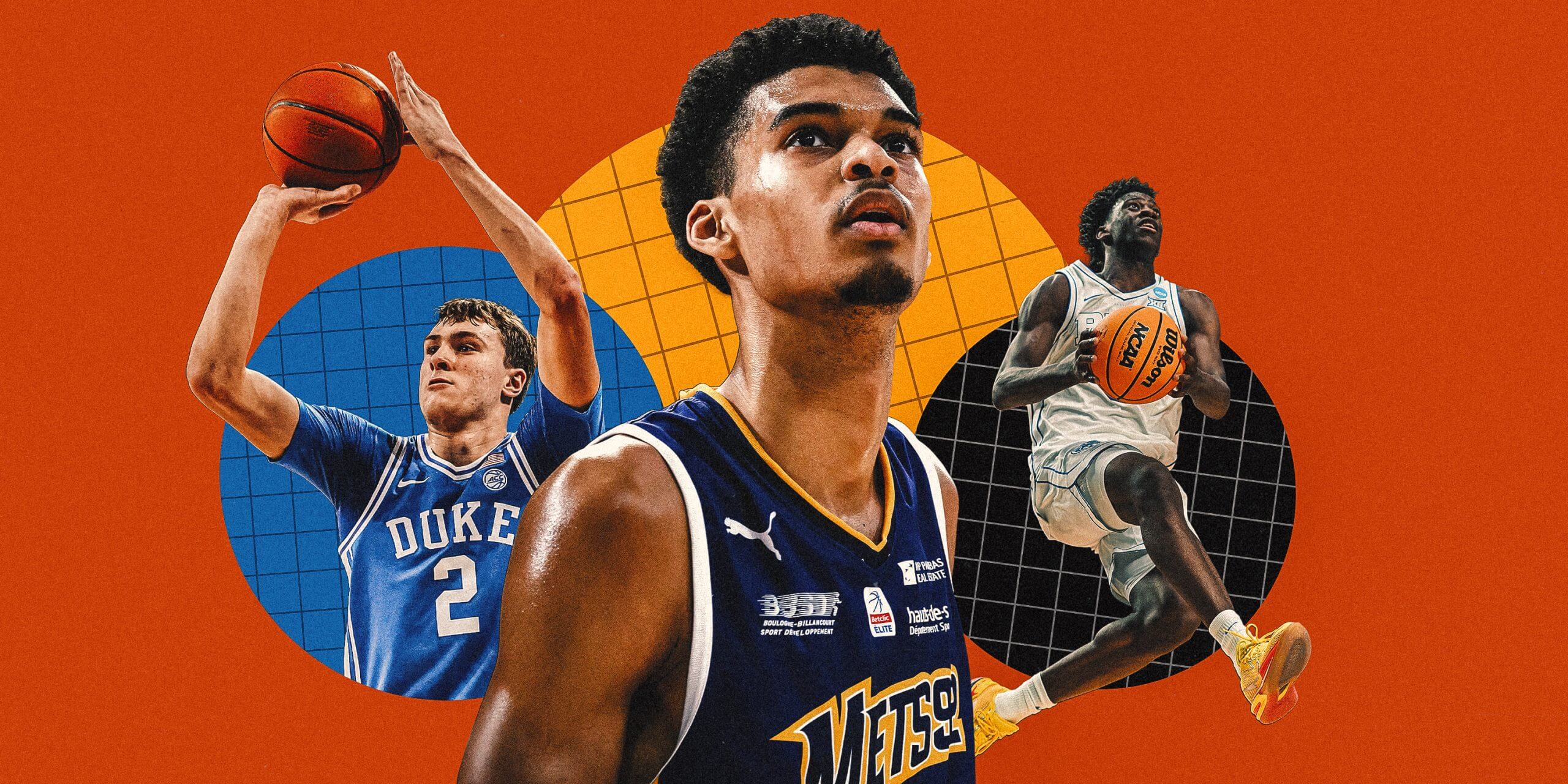
十多年来,我一直从事专业的NBA选秀评估工作,起初在CBS体育,如今在The Athletic。因此,让我们重新启动我上赛季做过的一个项目:如果将2026年NBA选秀中最顶尖的新秀,与我自2015年以来评估过的所有其他选秀球员放在一起进行横向对比,他们会排在什么位置?
2026届选秀的顶端战力有多强?在本月晚些时候即将被选中的球员中,有四位进入了我这份前20名新秀的榜单。然而,这四人中没有一个能挤进前五,这也印证了我与一些NBA高管的交流——他们同样怀疑这届新秀中是否真的存在能在一支争冠球队中担任大当家的球员。
尽管如此,手握今年选秀前四顺位的球队及其球迷绝对应该感到兴奋,因为他们稳稳能选到一位精英级的新秀。
几点说明:
• 为了给这四位新人腾出空间,去年榜单中被挤掉的球员有哪些?布兰登·英格拉姆 (Brandon Ingram)、拉梅洛·鲍尔 (LaMelo Ball)、小贾巴里·史密斯 (Jabari Smith Jr.) 和保罗·班凯罗 (Paolo Banchero)。
• 在我的评分板上得分很高,但未能进入此前榜单的球员有哪些?贾利尔·奥卡福 (Jahlil Okafor)、丹吉洛·拉塞尔 (D’Angelo Russell)、詹姆斯·怀斯曼 (James Wiseman)、安东尼·爱德华兹 (Anthony Edwards)、杰伦·格林 (Jalen Green) 和 RJ·巴雷特 (R.J. Barrett)。其中最严重的看走眼显然是爱德华兹,他在2020年成为了状元秀。当时我过于怀疑他持续制造攻筐威慑力和深入禁区的能力,因为他过去常常沉迷于急停跳投。
• 榜单中仅有两届选秀没有代表球员。最近的一届是2024年,那一届没有出现任何第一档或第二档的球员。那届新秀中没有任何一人能排进我这十年来前35名新秀的行列。随着鲍尔的落榜,2020届选秀也无缘此榜。回过头来看,这在情理之中,因为考虑到疫情的影响,那一届选秀存在着极大的不确定性。但随着鲍尔、爱德华兹、德尼·阿夫迪亚 (Deni Avdija)、泰雷斯·哈利伯顿 (Tyrese Haliburton) 和泰雷斯·马克西 (Tyrese Maxey) 纷纷成长为建队基石,显然我低估了那一届的成色。
• 本榜单完全基于这些球员进入选秀时我对其作为新秀的评分,而非他们进入职业联盟后的表现。
1. 维克托·文班亚马 | 7尺4中锋 | 大都会92队 | 2023
文班亚马是毫无争议的头号新秀,因为我们以前从未见过这样的球员。这并不是说像卡里姆·阿卜杜尔-贾巴尔 (Kareem Abdul-Jabbar)(当时名为卢·阿尔辛多 (Lew Alcindor))、拉尔夫·桑普森 (Ralph Sampson)、沙奎尔·奥尼尔 (Shaquille O’Neal) 和勒布朗·詹姆斯 (LeBron James) 这样真正天赋异禀的奇才不够令人惊叹;而是我们从未见过一个身高7尺4寸、在青少年时期就能在运球、传球和投篮方面达到如此水平的人。也许如果桑普森和阿卜杜尔-贾巴尔出生在这个时代,他们也会开发出这些技能。
但文班亚马是完全颠覆性的。从本质上讲,他被预测在防守端能像鲁迪·戈贝尔 (Rudy Gobert) 一样,同时在进攻端又是一个货真价实的投篮创造者和终结者。这确实是一个极其荒谬的技能组合。
文班亚马是自詹姆斯以来进入NBA的上限最高的新秀,而他进入NBA前三年的表现更是为他的比赛画上了圆满的惊叹号。在新手合同结束前,他所做的一切就是带领圣安东尼奥马刺队杀入NBA总决赛,同时在MVP评选中名列第三,斩获年度最佳防守球员,并入选最佳阵容一阵。
我认为在相当长的一段时间内,我们不会再看到像文班亚马这样的新秀了。
2. 库珀·弗拉格 | 6尺8锋线 | 杜克大学 | 2025
弗拉格 (Cooper Flagg) 和榜单上的下一位是榜眼位置的有力竞争者。在健康状况方面,弗拉格显然更让人放心,因为他从未遭遇过重大伤病。
大一赛季,弗拉格带领杜克大学杀入四强,夺得ACC联盟冠军,并取得了35胜4负的战绩。在进攻端,他成为了一个技术极其娴熟的错位单打噩梦,他可以通过背身单打、迎着防守强投或低位背打来欺负小个子球员。他也可以通过破坏对手的防守重心来惩罚大个子球员,要么绕过他们直奔篮筐,要么完成撤步跳投。当防守人对他进行协防包夹时,他总能做出正确的阅读。而在防守端,他整个赛季都是协防端的中流砥柱,并且在对位防守时展现出了极高水平的竞争性。如果他在未来的某个时刻入选最佳防守阵容,没有人会感到惊讶。
他也是长期以来进入NBA的年轻人中,最具竞争心、最专注于赢球的球员之一。他渴望伟大,但他会为了球队的胜利不惜一切代价。他时刻都在全力以赴,在攻防两端都保持着不懈的侵略性。他能给队友带来能量,展现出无尽的强韧与无畏。他是最容易让人相信能成为赢球保障的球员,因为他能提升身边队友的战力。除了文班亚马之外,如果一切发展顺利,弗拉格拥有极高的下限与极高的上限的最完美结合。他有机会成为NBA的下一个顶级锋线。
本赛季,弗拉格在达拉斯独行侠队荣膺年度最佳新秀,场均贡献21分、6.7个篮板和4.5次助攻。他看起来就像是一位未来的超级巨星。
3. 蔡恩·威廉森 | 6尺6锋线 | 杜克大学 | 2019
当威廉森 (Zion Williamson) 在杜克大学效力时,他拥有我在篮球场上见过的力量与爆发力的最完美结合。他的体型更像是一名精英级别的橄榄球防守端锋,而不是传统的篮球运动员。在死球期间,威廉森走起路来摇摇晃晃,但一旦比赛开始,他就是一股不可阻挡的力量。他强力起跳却能在空中像磁悬浮一样滞空的画面,至今仍是一种独特的视觉享受。
作为控球者,他的动作非常迅捷,能用犀利的体前变向晃过防守人,然后在中距离急停跳投。当时他比现在更习惯于远距离投篮。他冲击篮筐的能力在当时是独一无二的,并且在他登场时也完美转化到了NBA赛场。
唉,在选秀前,威廉森的伤病隐患就已经存在了。他在高中时受过脚伤,在麦当劳全美高中明星赛上伤过大拇指,2017年春天膝盖轻微受伤,在杜克大学时又遭遇了右膝扭伤。虽然以威廉森的体型来看,他的技术已经非常出色,但人们仍然担心随着年龄的增长,他会失去部分顶级的爆发力。
尽管如此,威廉森当时的上限被认为有潜力成为NBA最好的球员。他显然是这份榜单上的第三人。
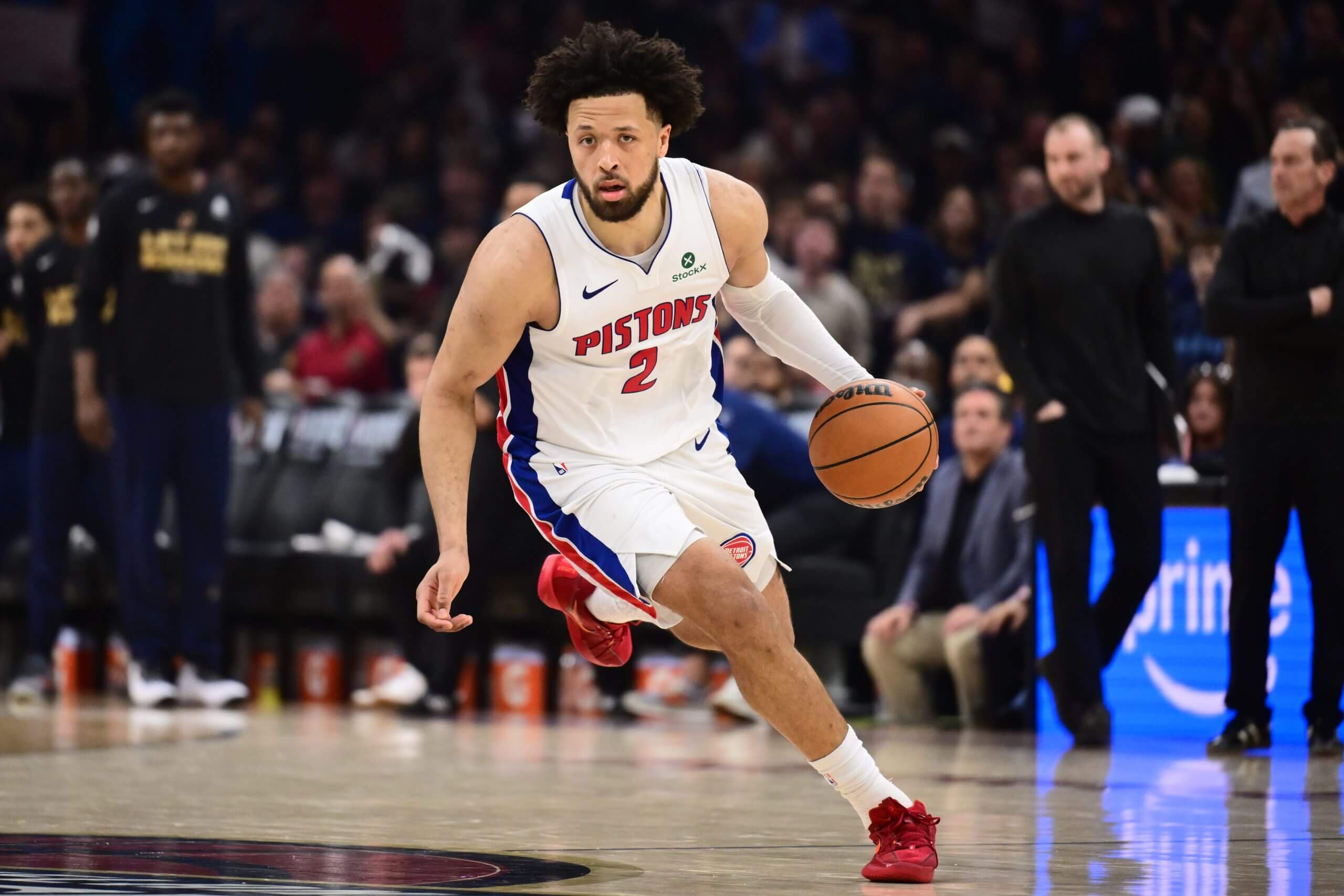
凯德·坎宁安 (Cade Cunningham) 在底特律活塞队兑现了他的潜力。(Ken Blaze / Imagn Images)
4. 凯德·坎宁安 | 6尺6后卫 | 俄克拉荷马州立大学 | 2021
在2021年NBA选秀前,我比许多人更看好坎宁安。我将他列为那一届中唯一的第一档球员,这很大程度上是因为他为自己和队友创造投篮机会的能力。回溯到他在佛罗里达州蒙特沃德学院的最后一年,坎宁安就展现出了在高水平比赛中掌控局面的独特能力。他和卢卡·东契奇 (Luka Dončić) 可能是很长一段时间以来进入联盟的两位技术最精湛的挡拆创造者;两人都拥有高大的身躯,这使他们能够在防守人绕过掩护追防的沉退防守中保持优势,或者在后卫间挡拆换防、对位更小体型球员时占据主动。
无论是在高中还是大学,坎宁安都证明了自己可以在行进间运球时用任意一只手完成各种传球路线的阅读,这一点在NBA得到了很好的转化,本赛季他在底特律活塞队场均能送出9.9次助攻。
由于速度不够快,坎宁安在单打中拉开空间的能力曾受到质疑。在防守端,他表现尚可,但谈不上优秀。在俄克拉荷马州立大学时,坎宁安也是一个失误机器,场均失误达4次。这一点在NBA也没有改变。然而,这并没有让我过分担心他无法成为一名入选最佳阵容级别的超级天才。而这一切在他的新秀合同期间得到了印证。
在活塞队解雇前总经理特洛伊·韦弗 (Troy Weaver) 并聘请特拉詹·兰登 (Trajan Langdon) 之前,韦弗在围绕坎宁安建队的三年里工作做得极其糟糕。在经历了一个专注于投篮训练的夏天后,坎宁安在第四个赛季入选了最佳阵容三阵。随后,他在第五个赛季带领底特律夺得东部第一,并入选最佳阵容一阵。是的,他发展得非常顺利。
5. 卡尔-安东尼·唐斯 | 6尺11大个子 | 肯塔基大学 | 2015
唐斯 (Karl-Anthony Towns) 曾是那支至今仍是我记忆中最好的大学篮球队的一员:那支统治力十足、采用“五虎轮换”战术、取得38胜1负战绩的肯塔基大学野猫队,他们在2015年四强赛输给威斯康星大学之前一路横扫对手。镇守内线的唐斯是这一切的关键。
他的大学数据看起来相对平庸:场均10.3分、6.7个篮板和2.3次盖帽。但他是在场均仅21.1分钟的出场时间里完成这些数据的,而且他效力于一支阵容豪华得近乎荒谬的球队,队内没有任何人场均得分超过11分。作为一名低位球员,他的效率极高,拥有显然是精英级别的柔和手感。每一个在高中看过他打球的人都知道他能投篮,尽管他在大学赛季只投进了两个三分球。凭借在7尺身高下运球、传球和投篮的能力,他看起来就像是一个错位单打噩梦。他的防守看起来是最容易转化到职业赛场的技能。他肆无忌惮地封盖对手,盖帽率位列全美前20。他篮板球抢得很好,并且能有效地融入各种挡拆防守策略中。
尽管他已经三次入选最佳阵容,但他的职业生涯走向却有所不同。唐斯已经成为联盟历史上中锋位置上可以说是最好的7尺射手。在他的职业生涯中,他在3097次三分出手里投出了39.7%的三分命中率,并在2022年全明星周末赢得了三分大赛冠军,下赛季他的三分命中数将进入历史前100名。在防守端,唐斯在职业生涯早期曾是一个很难围绕其建队的球员,但在今年尼克斯队杀入NBA总决赛的过程中,他彻底改变了人们对他职业生涯的看法。他在防守端做得非常出色,并在比赛的各个方面都展现出了极强的韧性。
6. AJ·迪班萨 | 6尺9锋线 | 杨百翰大学 | 2026
迪班萨 (AJ Dybantsa) 长期以来一直被视为潜在的状元秀人选。作为杨百翰大学的大一新人,他场均砍下25.5分,投篮命中率51%,三分命中率33%,罚球命中率77.4%。你能用两根手指头数出达到这些指标的球员数量。他拥有我很久没在锋线球员身上见过的顶级身体天赋。他将顶级的柔韧性与爆发力融为一体,这使他能够作为直线突破手持续撕裂对手的防线。在转换进攻中,他绝对是个大杀器。他制造罚球的嗅觉更是首屈一指。
他拥有成为联盟顶级锋线投篮创造者的一切工具,但他需要打磨自己比赛中的某些部分。这就是为什么他在这里排名第六。首先,他需要提高远距离投篮能力。他的中距离投篮很强,但有时会过于依赖这一手段。他是一个不错的传球手,但偶尔会漏掉传球路线。在防守端,迪班萨是一个优秀的、可换防的持球防守者,但有时他在破坏对手进攻方面的表现不如预期。
尽管如此,迪班萨依然是一个特殊的新秀,由于他在制造攻筐威慑力方面的高效表现,加上他不断进步的投篮,他在NBA的前景非常被看好。在未来的某个时刻,他场均砍下30分并非没有可能。
7. 卡梅隆·布泽尔 | 6尺8前锋 | 杜克大学 | 2026
自高中一年级以来,布泽尔 (Cameron Boozer) 一直是同龄人中最高产的球员,同时他不断丰富自己的武器库,成长为我们很久没在选秀中见过的、最全能的进攻棋子之一。在杜克大学,布泽尔投出了55.6%的投篮命中率、39.1%的三分命中率和78.9%的罚球命中率,并荣膺全美年度最佳球员。根据Sports-Reference的数据,布泽尔成为首位(不分年级)在场均至少出战20场比赛的情况下,交出场均22分、10个篮板和4次助攻,且投篮命中率达到55%的球员。布泽尔就像一个节拍器。你很清楚他每晚能贡献什么。他非常接近一个“绝不会水”的进攻型新秀。
围绕布泽尔的疑问主要在防守端。在杜克大学,他是一名强硬、注重身体对抗的防守者,并且他经常与队友沟通并大声喊出防守策略。但即便他拥有敏锐的防守判断力,对手在防守端针对布泽尔的概率依然很高。由于缺乏垂直弹跳能力,他在中锋位置上身材偏矮。而如果打四号位,面对外线型球员,考虑到他庞大的体型,他可能很难经常绕过掩护去追防,而且在打四号位时,他可能会被要求比平时更频繁地进行换防。
但这其实很简单,就是赌一个近乎完美的进攻型新秀,并接受他在防守端的妥协。他是我在篮球场上见过的球商运转最快的球员之一。
8. 达林·彼得森 | 6尺5后卫 | 堪萨斯大学 | 2026
彼得森 (Darryn Peterson) 能够跻身前十有几个原因。首先,他是我长期以来评估过的进入大学篮球界最全面的后卫。他是一个充满侵略性的得分手,而且我非常喜欢他通过挡拆提升传球能力的方式。在今年进入堪萨斯大学之前,他从未停滞不前,一直在稳步上升,直至成为全美高中生招募榜的顶尖球员。在全美瞩目的强强对话中,他的表现经常优于同届的每一位精英新秀。今年在堪萨斯大学,尽管在赛季初期遭遇了严重的抽筋问题和腿筋伤势,他依然在场均29分钟内砍下20分,展现出了他在NBA成为精英得分手的潜力。
唉,这些伤病问题给彼得森带来了一些匪夷所思的时刻,比如他会在上半场统治比赛,但下半场却不再登场。如果彼得森能在100%健康的状态下打完更多完整的比赛,我认为他很有可能排在这份榜单的前五名。然而,他的伤病和这些状况给球探们带来了疑问。今年他并没有持续冲击篮筐——这既是因为他的伤病,也是因为他身边的阵容几乎没有任何外线投篮威胁。他在高中后期展现出的传球能力在今年并没有经常显现,因为他更多地在打无球。
彼得森是一个精英级的新秀,但身上也存在疑问,这就是为什么他被排在这份榜单的中游位置。
9. 本·西蒙斯 | 6尺10后卫 | 路易斯安那州立大学 | 2016
西蒙斯 (Ben Simmons) 的职业生涯是那种会被做成YouTube视频的素材,尤其是在他NBA生涯的前四个赛季进行得如此顺利之后。
西蒙斯在路易斯安那州立大学(LSU)时具有绝对的统治力,他是一个身高6尺10寸的转换进攻发动机,在运动天赋上碾压身边的每一个人。他场均贡献19分、12个篮板和5次助攻,而LSU则用极快的比赛节奏来放大他的天赋。他会在快攻中抢下篮板直接推进来主导进攻,并且拥有力量与协调性的完美结合,能够一边运球一边阅读场上局势。他可以轻松冲击篮筐,并经常在篮筐之上完成终结。像西蒙斯这种体型的球员,本不该拥有那样的移动速度。他简直就是一个行走的禁区杀手,经常能使出狂野的欧洲步,迫使防守崩溃或撕开通往篮筐的通道,然后完成终结或分球给队友。他能送出教科书般的各种传球。
然而,西蒙斯在防守端有时会表现出一种无所谓的散漫态度。他拥有成为伟大球员的一切工具,但并不总是使用它们。他并不总是掌控比赛,在进入NBA之前,有些晚上他看起来就像是在场上闲逛。许多选秀前的报告也对他的态度提出了质疑。
在因右脚骨折缺席了他的第一个职业赛季后,西蒙斯在新秀赛季为费城76人队场均贡献15.8分、8.1个篮板和8.2次助攻。他在第二个赛季入选了全明星阵容,并在第三个赛季入选了最佳阵容三阵。随后在2020-21赛季,他在年度最佳防守球员评选中位列第二,并获得了一张MVP选票。然而,他在那个季后赛中表现得极其挣扎,最终在东部半决赛对阵亚特兰大老鹰队的抢七大战中,出现了他放弃空篮传球的经典一幕。在那之后,一切都变成了灾难,他最后一次在NBA上场打球是在2025年4月。
一直围绕着西蒙斯的性格隐忧与伤病交织在一起,毁掉了一个曾经前途无量的职业生涯。回过头来看,西蒙斯或许不应该获得如此高的评价,但显然,这绝非因为他的天赋不够。
10. 马克尔·富尔茨 | 6尺5后卫 | 华盛顿大学 | 2017
说到奇怪的职业生涯,富尔茨 (Markelle Fultz) 的经历可能是这份榜单上所有球员中最令人匪夷所思的。
怎么强调富尔茨在华盛顿大学时作为新秀的创造力和特殊性都不为过。他场均贡献23分、6个篮板和6次助攻,同时还有1.6次抢断和1.2次盖帽。他展现出了极佳的传球视野,能够凭借近7尺的臂展从各种不同的角度完成传球路线的阅读。所有的指标都预测他将成长为一个精英级别的三级得分手。
富尔茨还拥有特殊的创造力和节奏感。 His handle was tight and crisp, with serious hesitation and craft with his footwork. 他能从各种不同的角度在篮下起跳完成终结。他的变向过人犀利而突然。这本该成功的。
但随后,肩膀伤势以及他在进入NBA之前对投篮姿势的修改,彻底摧毁了他的投篮能力。起初,他的肩膀问题被诊断为酸痛和肩胛肌失衡。但在接下来的赛季中,富尔茨被诊断出患有胸廓出口综合征。
富尔茨再也没能找回他的投篮能力。在NBA,他场均三分出手从未超过1.9次。在被76人队交易后,他在联盟中坚持了下来,并与奥兰多魔术队签下了一份为期三年、价值5000万美元的续约合同。对我来说,很难将这次失误归咎于评估人员看走眼。在我们在NBA看到最好的富尔茨之前,他就受伤了。
11. 贾·莫兰特 | 6尺2后卫 | 莫瑞州立大学 | 2019
莫兰特 (Ja Morant) 在选秀前的一年里被威廉森的光芒所掩盖,但他本身也是一个非常特殊的新秀。作为一个真正被低估的高中生,他最终加盟了莫瑞州立大学,并在大二赛季迎来爆发,场均砍下24.5分、10次助攻、5.7个篮板、1.8次抢断和0.8次盖帽。他用在转换进攻中令人惊叹的运动天赋,以及一颗天生就能洞察场上所有传球路线的大脑,统治了每一场比赛。此外,他手中有球时极具动感,是一个真正的速度化身,能够随意改变方向和速度,或者仅仅是过掉防守人轻松杀入禁区。
有时,你需要深入挖掘数据并设置各种筛选条件才能淘到沧海遗珠。但在莫兰特这里,你只需简单地指出这一点:根据Sports-Reference.com的数据,他是过去65年大学篮球历史上,唯一一位单赛季场均至少得到24分和10次助攻的球员。莫兰特已经成为了一名入选过最佳阵容的球员,尽管在过去几年里,由于伤病以及因枪支相关事件导致的禁赛,他缺席了大量比赛。令人担忧的是,他单赛季出场次数从未超过67场,并且在过去三个赛季中总共只打了79场比赛。
莫兰特在孟菲斯的日子似乎即将走到尽头;我们将拭目以待他能否在其他地方让自己的职业生涯重回正轨。
12. 德安德烈·艾顿 | 7尺0中锋 | 亚利桑那大学 | 2018
回过头来看,我把这次评估搞砸了。我当时非常喜欢东契奇,并且在他进入联盟时给他的评分高于NBA的普遍共识,但那一年将艾顿 (Deandre Ayton) 排在第一位确实过于激进了。为什么他当时如此被看好?我不确定在过去十年的大学篮球界中,是否有任何球员比2018年的艾顿看起来更像那么回事,而当时我仍处于一个认为身体卖相比实际表现更重要的阶段。他身高超过7尺,拥有惊人的7尺6寸臂展,以及你能见到的最完美的250磅雕塑般身材。
在亚利桑那大学的唯一一年里,艾顿场均贡献20分和11个篮板,投篮命中率高达61%,并投进了十几个三分球。他是全美最佳阵容一阵成员,并当选了Pac-12联盟年度最佳球员。艾顿的低位技术非常出色,他有潜力在挡拆中担任顺下攻筐手,而且在19岁时他的身体对抗能力就已经达到了极高水平,以至于他看起来在上限状态下甚至能欺负NBA球员。如果他能达到上限,甚至有可能取得像帕特里克·尤因 (Patrick Ewing) 那样极其崇高的成就。
唉,我低估了他在控球技术和传球能力上的落后程度。我也忽略了他打球时很少降低重心,这让对手能够经常利用这一点来限制他。作为曾杀入NBA总决赛的菲尼克斯太阳队的关键一员,艾顿拥有一个扎实的职业生涯。他最终被交易到了波特兰开拓者队,现在效力于湖人队,本赛季他在那里有一些亮眼表现。但这是这份榜单中第一个彻底看走眼的案例,因为我当时将他排在东契奇之上,即使这在当时是共识。
13. 卢卡·东契奇 | 6尺8后卫 | 皇家马德里 | 2018
东契奇在同龄欧洲篮球界中的统治力是无与伦比的。我在当时对此进行了详尽的报道,并且非常喜欢东契奇的打法,基本上将他列为那一届与艾顿并列的“1B”新秀(艾顿为1A)。他在19岁时就赢得了欧洲联赛(Euroleague)MVP,并且已经证明了自己是一个身高6尺8寸的真正的挡拆大师。将东契奇的履历称为过去25年里所有青少年篮球运动员中最辉煌的一份,这一点也不为过。
那么,为什么他没有成为无可争议的状元秀呢?我在这方面受到的误导比大多数人要少,但当时整个行业在预测来自欧洲的球员时都普遍存在不安全感。在此之前,只有两位没有大学经历的欧洲球员在选秀前两顺位被选中。他们的名字在恶名昭彰中被单独提及:达科和巴尼亚尼。但达科·米利西奇 (Darko Milicic) 在塞尔维亚场均得分不足10分。安德里亚·巴尼亚尼 (Andrea Bargnani) 在欧洲联赛为巴斯克尼亚效力时表现更好,但场均也只有9.9分和2个篮板。大多数其他年轻的欧洲前五顺位新秀在NBA都没有取得多大成功。然而,这些球员中没有一个能达到东契奇那样的成就。只有在2001年19岁时入选欧洲联赛最佳阵容二阵的保罗·加索尔 (Pau Gasol) 勉强可以与之媲美。
东契奇的体型让许多人质疑他的长期上限——这也是他最终跌到第3顺位的原因——因为他并没有那么强的爆发力。但他技术极其精湛,拥有精英级别的球场视野。他拥有特殊的篮球大脑,对身边局势的研判能力异于常人。东契奇本该被公认为像詹姆斯一样的新秀。如果他成长在今天的篮球生态系统中,我认为他显然会被这样看待。只是在当时并非如此。
虽然我只是过于喜欢艾顿,而不是低估了东契奇,但我确实低估了他的上限。我当时认为他更有可能成为一名全明星/最佳阵容级别的球员,而不是联盟前五的超级巨星。
14. 斯库特·亨德森 | 6尺2后卫 | G联赛点燃队 | 2023
我高估了亨德森 (Scoot Henderson) 的运动天赋,从而对他做出了错误的评估。原因在于(不仅是我,还有篮球界的许多人)缺乏对年轻球员在G联赛中的表现如何转化为NBA战力的理解。18岁时,他在该联赛中场均贡献18分、5个篮板和6次助攻,而他的对手则是那些为了在NBA生存而拼尽全力的成年人。
在最佳状态下,亨德森能以极高的水平改变节奏和速度,并且他的控球技术使他能够在狭小空间内穿梭。他还将力量、低重心和身体对抗融合在一起以保持优势。这使他在挡拆配合中表现得非常全面。他可以急停投篮、抛投,也可以冲击篮筐并用强力或柔和的手感完成终结,或者他能做出高水平的传球阅读。并且他总是用自己的侵略性推动转换进攻。
但我曾以为他在职业生涯中会比现在获得更多的禁区触球机会。他的新秀赛季表现糟糕,因为他无法进入自己需要的球场区域,并且似乎很难看清对手协防的位置。他在第二个赛季展现出了一些积极的闪光点。他的真实命中率与联盟平均水平相比提高了10个百分点。作为一名急停跳投得分手,他找到了更稳定的应对方法,并且失误也减少了。
上个赛季,亨德森遭遇了左腿筋撕裂,这导致他缺席了波特兰的前51场比赛。然而,一旦他复出,他看起来状态不错。他在场均25分钟内贡献14.2分、2.7个篮板和3.7次助攻,随后在波特兰对阵圣安东尼奥的前三场季后赛中表现出色。他在该系列赛中场均得到15分,投篮/三分/罚球命中率为48%/46%/75%,人们应该对亨德森进入关键的第四个赛季感到兴奋。
15. 杰森·塔图姆 | 6尺8锋线 | 杜克大学 | 2017
在经历了几次看走眼之后,我很乐意指出,在2017年我比普遍共识更看好塔图姆 (Jayson Tatum),将他列为那一届仅次于富尔茨的第二号球员。我非常喜欢他的打法,并认为他流畅的技术动作能够很好地转化到职业赛场。塔图姆在杜克大学时是一个技术精湛的得分手,场均贡献17分、7个篮板和2次助攻,但更让我印象深刻的是他在整个赛季中不断进步的方式。
塔图姆起跳投篮前的脚步动作是精英级别的,展现出了巨大的潜力。他在三威胁状态下的试探步极具杀伤力,而且他的中距离低位技术对于一个青少年来说已经非常成熟。他的平衡能力极佳,这使他能够以超越年龄的流畅度完成各种撤步跳投。对于他的角色定位来说,他的传球视野非常出色,尽管他在向篮筐突破时经常出现失误。塔图姆是一个非常值得下注的潜力股,因为他出身于篮球世家(他的父亲贾斯汀 (Justin) 曾在圣路易斯大学打球,目前是一名教练),并且以拥有顶级的职业态度和训练习惯而闻名。
尽管几乎每支球队都将富尔茨视为头号人选,但波士顿凯尔特人队却将塔图姆排在他们选秀板的首位,他们与76人队交易了状元签,向下交易到第3顺位,却依然得到了他们心仪的球员。塔图姆已经成为了一支夺冠球队的大当家、五次入选最佳阵容,并在这支底蕴深厚的豪门历史中,将自己定位为最伟大的凯尔特人球员之一。
16. 切特·霍姆格伦 | 7尺0大个子 | 冈萨加大学 | 2022
霍姆格伦 (Chet Holmgren) 是我在2022年NBA选秀中的头号球员,如果不是因为他的体型,我本会给他评定为第一档。从冈萨加大学毕业时,霍姆格伦的体重仅为195磅,他必须证明自己能够承受NBA的对抗强度。 But Holmgren has always been one of the most competitive players you’ll watch. 我非常喜欢他的打法,并将他视为那一届中我最想要的球员。
他是一个独特的球员,也是我在他这个年龄段评估过的最好的防守者之一。他在防守位置感上已经是精英级别,并且在7尺身高和7尺6寸臂展下拥有所有长度优势。他的预判和本能非常惊人,他会完成一些我在那个年龄段见过的最不可思议的协防轮转来帮助队友。我曾预测“如果他的身体条件允许,他将至少赢得一次年度最佳防守球员奖”。凭借他在挡拆防守中的多面性、协防帮助队友的能力以及他的护筐表现,他目前是NBA最好的五位防守者之一。他不断封锁对手的进攻角度,让对手痛苦不堪。除了能命中远距离投篮外,他还能以这样的身高控球,并能运球过掉对方的中锋。
去年当我做这个排名时,我预测霍姆格伦在职业生涯中至少会入选一次最佳阵容。这在本赛季实现了,他是他那届选秀中第一个做到的球员。尽管在季后赛对阵文班亚马时暴露了一些问题,但霍姆格伦看起来将在相当长的一段时间内成为NBA顶尖的双向球员之一。
17. 迪伦·哈珀 | 6尺5后卫 | 罗格斯大学 | 2025
作为2025年NBA选秀中仅次于弗拉格的第二号球员,哈珀 (Dylan Harper) 看起来有极大的机会成为一名全明星控球后卫。他几乎满足了所有要求。在控卫位置上,他拥有6尺5寸的极佳身材和长臂。尽管在罗格斯大学效力于一套缺乏空间感的陈旧进攻体系中,他依然展现出了精英级别的冲击篮筐能力。他经常制造犯规,并在他的职业生涯中展现出了出色的视野,无论是在红衫骑士队还是在美国国家队。他在防守端极具竞争性且作风强硬。唯一令人担忧的是他需要继续打磨自己的急停跳投,这最终也是他被归入这一档而不是前十名的原因。
作为一名新秀,哈珀证明了他将成为联盟中的精英后卫之一。他是马刺队杀入总决赛的关键一员,在季后赛中场均贡献13.6分、5.6个篮板和2.6次助攻,投篮命中率为41%,看起来他已经准备好在下个赛季爆发成为一名球星。在联盟历史上,很少有新秀后卫能在像哈珀今年季后赛这样的高压时刻表现得如此出色。他看起来就像是文班亚马身边的二当家,而且他们都还处于新秀合同期。
18. 凯莱布·威尔逊 | 6尺9前锋 | 北卡罗来纳大学 | 2026
威尔逊 (Caleb Wilson) 本赛季在北卡罗来纳大学展现出了极强的爆发力和高产的表现,凭借他的运动天赋、积极性以及在转换进攻和中距离低位创造投篮机会的能力统治了比赛。他场均贡献19.8分、9.4个篮板和2.7次助攻,投篮命中率高达57.8%。在大学历史上,还没有哪位大一新生能在场均交出如此数据的同时,还保持这样高的投篮命中率。在今年2月份他大拇指骨折之前,北卡罗来纳大学在战术体系中基本上把他当作一个“迷你版扬尼斯 (Giannis)”来使用,而那次伤病也结束了他(以及基本上是焦油脚跟队)的赛季。
但他的技术水平低于排在他前面的几位球员,他的比赛也缺乏一些打磨。本赛季他在上篮时的手感有些令人怀疑,他的控球技术需要继续提高,并且他仍然不习惯出手和投进三分球。在防守端,他可以做出有影响力的防守表现,但他每回合的防守影响力并没有预期的那么强。他的上限接近于排在他之上的2026届球员,但下限更低。尽管如此,手握4号签的芝加哥公牛队应该感到兴奋,因为他们得到了一位在正常年份里我认为配得上榜眼签的球员。
19. 杰伦·萨格斯 | 6尺4后卫 | 冈萨加大学 | 2021
在选秀前我非常喜欢萨格斯 (Jalen Suggs),并且至今仍是他打法的忠实粉丝。他在新秀合同期间就入选了最佳防守阵容,我预计他还会再入选几次。但在那一届中,我将他排在第二位,排在榜单上的下一位球员之前,这确实过于激进了。我相当大幅度地高估了他的进攻能力。
在大学里,他是一个怪兽级别的持球防守者,尽管在防守端有点喜欢赌博式防守,但他拥有成为精英防守者的一切工具。然而,当我在他NBA第二个赛季结束后重新观看他的录像时,我意识到我高估了他在挡拆配合中的技术成熟度。他的脚步动作还有很长的路要走,并且在起跳投篮前的收球脚步并不总是正确。他冲击禁区的压力更多是基于冈萨加大学进攻体系中的简单阅读,而不是复杂的战术推进。到目前为止,他在NBA的跳投一直不稳定,尽管在过去三个赛季中,他场均在近6次三分出手下投出了35.6%的三分命中率。
萨格斯仍然是一个完美的赢球拼图,能够帮助球队蓬勃发展。他不会成为一支强队的前两号得分选择,但我敢打赌他最终会成为争冠球队中极具价值的球员。如果他成为这一代的朱·霍勒迪 (Jrue Holiday)——一个作为主力后卫赢得多个总冠军并能提升身边队友的球员,我一点也不会感到惊讶。但如果我们对那一届进行重选,我可能会在第六或第七顺位选择他,排在坎宁安、斯科蒂·巴恩斯 (Scottie Barnes)、埃文·莫布里 (Evan Mobley)、杰伦·约翰逊 (Jalen Johnson)、阿尔佩伦·申京 (Alperen Şengün) 和弗朗茨·瓦格纳 (Franz Wagner) 之后。
20. 埃文·莫布里 | 7尺0大个子 | 南加州大学 | 2021
回过头来看,莫布里在2021年选秀中是毫无疑问的榜眼人选,但我当时把他排在第三,落后于萨格斯。我在那一年的选秀指南中写道,莫布里“有潜力成为联盟中少数几个既能成为真正的投篮创造者和进攻发起者,同时又能提供最佳防守阵容级别技能的球员之一。他是很长一段时间以来进入联盟的技术最精湛的大个子新秀之一。”在评估这两位球员时,我显得异常愚蠢。
当时我担心两个因素。首先,我担心莫布里的体型,因为他并不是特别强壮。其次,莫布里当时在投篮方面很挣扎,我担心在没有跳投威胁的情况下,他的进攻会陷入停滞。这在他进入联盟的前几年得到了印证,因为NBA的防守人可以在防他拉开空间时选择收缩防守,从而降低他作为突破手的威胁。
但他出色的运动天赋,加上他极佳的预判和比赛感觉,最终让他脱颖而出。莫布里在第四个赛季入选了最佳阵容,此外还赢得了他的第一座年度最佳防守球员奖杯。我敢打赌,他将多次入选最佳阵容。
由生成式 AI 翻译,译文内容可能不准确或不完整,以原文为准。
点击查看原文:Where do AJ Dybantsa, Cameron Boozer rank among NBA Draft prospects since 2015?
Where do AJ Dybantsa, Cameron Boozer rank among NBA Draft prospects since 2015?
I’ve been evaluating NBA Draft prospects professionally for more than a decade, first at CBS Sports and now at *The Athletic.*So let’s re-heat a project I did last season, assessing where the best prospects in the 2026 NBA Draft would rank if I were slotting them compared to every other draftee I’ve evaluated since 2015.
How strong is the top end of the 2026 class? Four players who will be drafted later this month are listed within my top-20 prospects. However, none of those players are inside the top five, which also reflects conversations I’ve had with NBA executives about whether there is truly a No. 1 player on a title team in this class.
Still, teams and fans of teams with top-four picks in this draft should be absolutely thrilled, as they’re locked into getting an elite prospect.
A few notes:
• The players who fell off last year’s list to make way for the new four? Brandon Ingram, LaMelo Ball, Jabari Smith Jr. and Paolo Banchero.
• The highest-graded players on my board who didn’t make the previous list? Jahlil Okafor, D’Angelo Russell, James Wiseman, Anthony Edwards, Jalen Green and R.J. Barrett. The big miss is obviously Edwards, who went No. 1 in 2020. I was too skeptical of his ability to consistently create rim pressure and paint touches, as he often settled for pull-up jumpers.
• There are only two drafts not represented here. The most recent one is 2024, which featured zero Tier One or Tier Two players. No player in that class would have even rated within my top-35 prospects of the decade. The 2020 class is also not featured with Ball falling off. That makes sense looking back, as that class featured an immense level of uncertainty given the pandemic. But with Ball, Edwards, Deni Avdija, Tyrese Haliburton and Tyrese Maxey emerging as franchise players, it’s clear I undervalued that class.
• This list is based solely upon how I graded these players as prospects when they entered the draft, not how they played as pros.
1. Victor Wembanyama | 7-4 center | Metropolitans 92 | 2023
Wembanyama is the clear No. 1 prospect, because we had never seen a player like this before. That’s not to say that truly special talents like Kareem Abdul-Jabbar (then Lew Alcindor), Ralph Sampson, Shaquille O’Neal and LeBron James weren’t as impressive; rather, we’d never seen a 7-foot-4 human who could dribble, pass and shoot at this level as a teenager. Maybe if Sampson and Abdul-Jabbar had been born in this era, they would have developed those skills.
But Wembanyama was entirely novel. Essentially, he projected to be Rudy Gobert-like on defense while also being a legitimate shot creator and shot-maker on offense. It’s a truly absurd combination of skills.
Wembanyama is the highest-upside prospect to enter the NBA since LeBron, and his performance through his first three years in the NBA has only put an exclamation mark on his game. All he’s done is lead the San Antonio Spurs to the NBA Finals before the end of his rookie-scale contract while finishing third in MVP voting, winning the Defensive Player of the Year award and being named First Team All-NBA.
I don’t think we’ll see a prospect like Wembanyama again in quite some time.
2. Cooper Flagg | 6-8 wing | Duke | 2025
Flagg and the next guy on this list are the clear contenders for the No. 2 spot. Flagg is safer when it comes to health, as he’s never suffered a major injury.
Flagg led Duke to a Final Four, an ACC title and a 35-4 record as a freshman. On offense, he became a highly skilled mismatch nightmare who could bully smaller players by backing them down, shooting over the top of them or posting up. Or he could hammer bigger players by getting off-balance, and either going around them to the rim or hitting a stepback. When defenders collapsed onto him, he always made the right reads. And then on defense, he was a force in help all season and competed on the ball at a high level. It wouldn’t stun anyone if he makes an All-Defensive team at some point.
He’s also one of the most competitive, winning-focused teenagers to enter the NBA in a long time. He wants to be great, but he does whatever it takes for the team to win. He plays hard all the time and is relentless in his aggression on both ends. He gives energy to his teammates and is all sorts of tough and fearless. He’s the easiest person to buy into becoming a winning basketball player because he amplifies those around him. Outside of Wembanyama, Flagg has the best combination of a ridiculously high floor and also a ridiculously high ceiling if everything goes right in his development. He has a chance to become the next apex wing in the NBA.
Flagg won Rookie of the Year this season with the Dallas Mavericks, averaging 21 points, 6.7 rebounds and 4.5 assists. He looks like a future superstar.
3. Zion Williamson | 6-6 wing | Duke | 2019
When Williamson played at Duke, he had the best blend of power and explosiveness I’ve ever seen on a basketball court. Built more like an elite defensive end than a traditional basketball player, Williamson waddled around between plays but was an undeniable force once the game began. The way he leaped with force but then hung in the air like he was levitating is still a unique viewing experience.
He was sudden with his movements as a ballhandler, freezing defenders with nasty inside-out moves before pulling up from the midrange. He was more comfortable shooting from distance then than he is now. His ability to pressure the rim was unique then and has translated to the NBA when he’s been on the court.
Alas, the injury concerns were there before the draft with Williamson. He suffered a foot injury in high school, a thumb injury at the McDonald’s All-American game, a minor knee injury in the spring of 2017 and a right knee sprain at Duke. While Williamson was remarkably skilled for his size, there were worries he would lose some of his elite explosiveness as he aged.
Still, Williamson’s upside at the time was seen as potentially the best player in the NBA. He’s clearly the No. 3 player here.
Cade Cunningham has fulfilled his potential with the Detroit Pistons. (Ken Blaze / Imagn Images)
4. Cade Cunningham | 6-6 guard | Oklahoma State | 2021
I was higher on Cunningham than many entering the 2021 NBA Draft. I had him as my lone Tier 1 player in that class largely because of how he created shots for both himself and his teammates. Going back to his final year at Montverde (Fla.) Academy, Cunningham possessed a unique ability to control the game at a high level. He and Luka Dončić are likely the two most polished ball-screen creators to enter the league in a long while; both have enormous frames that allow them to maintain advantages in drop-coverage situations with defenders trailing, or in switch situations where they would get matched up against smaller players in guard-to-guard actions.
In both high school and college, Cunningham showed he could hit every passing read off a live dribble with either hand, something that has translated nicely to the NBA, given that he averaged 9.9 assists per game this season for the Detroit Pistons.
Cunningham’s ability to separate in isolation was questionable because he wasn’t all that fast. Defensively, he was OK, not great. Cunningham was also a turnover machine at Oklahoma State, averaging four per game. That hasn’t changed in the NBA. And yet, it didn’t worry me enough to think that Cunningham wouldn’t be a tremendous, All-NBA caliber talent. And that has played out over his rookie-scale deal.
Troy Weaver, the former Pistons’ general manager, did a catastrophic job of building around Cunningham for three years before the team fired him and hired Trajan Langdon. After a summer of focusing on shooting, Cunningham made Third Team All-NBA in his fourth season. Then he led Detroit to the No. 1 seed in the Eastern Conference in his fifth season, earning First Team All-NBA status. Yeah, he’s turned out just fine.
5. Karl-Anthony Towns | 6-11 big | Kentucky | 2015
Towns was a part of what is still the best college basketball team I have watched in recent memory: the dominant, platoon-based, 38-1 Kentucky Wildcats who ran the table before losing to Wisconsin in the 2015 Final Four. Towns in the middle was the key to all of it.
His college numbers looked relatively pedestrian: 10.3 points, 6.7 rebounds and 2.3 blocks. But he did that in just 21.1 minutes per game while playing on a laughably loaded team where no one averaged more than 11 points. He was wildly efficient as a post player with clearly elite touch, and everyone who saw him in high school knew he could shoot even though he made only two 3s during his collegiate season. He looked like a mismatch nightmare with his ability to dribble, pass and shoot at 7 feet tall. His defense looked like the easiest translatable skill. He swatted shots with impunity, finishing top 20 in the country in block rate. He rebounded well and was used in a variety of ball-screen coverages effectively.
His pro career has gone differently, even though he has made three All-NBA teams. Towns has become arguably the best 7-foot shooter at the center position in league history. He’s a career 39.7 percent 3-point shooter on 3,097 career attempts, won the 3-point contest at All-Star Weekend in 2022 and will enter the top 100 all-time in 3-point makes next season. On defense, Towns turned into a difficult player to build around early in his career but he has drastically changed the perception of his career during the Knicks’ run to the NBA Finals this year. He’s done a great job defensively and showcased serious toughness in all aspects of his game.
6. AJ Dybantsa | 6-9 wing | BYU | 2026
Dybantsa has long been seen as a potential No. 1 pick, and as a freshman at BYU he averaged 25.5 points while shooting 51 percent from the field, 33 percent from 3 and 77.4 percent from the line. You can count the number of players who matched those marks on two fingers. He has better physical tools than any wing I’ve seen in a while. His ability to play with elite bend mixed with explosiveness allows him to consistently get into the teeth of the defense as a straight-line driver. In transition, he’s an absolute menace. His nose for the foul line is second to none.
He has all of the tools to become an apex wing shot creator in the league, but he’ll need to iron out some parts of his game. That’s why he’s ranked sixth here. First, he needs to improve as a shooter from distance. His midrange game is strong, but he can lean on that too aggressively sometimes. He’s a good passer, but he will occasionally miss passing reads. Defensively, Dybantsa is a good, switchable on-ball defender but has moments of not disrupting the game as well as you’d expect.
Still, Dybantsa is a special prospect, and one who projects exceptionally well in the NBA because of how effective he is at creating rim pressure, in addition to his improved shooting. It’s not impossible that he could average 30 points per game at some point.
7. Cameron Boozer | 6-8 forward | Duke | 2026
Since he was a freshman in high school, Boozer has been the most productive player in his age group while continually expanding his game, turning into one of the most versatile offensive chess pieces we’ve seen enter the draft in a while. At Duke, Boozer shot 55.6 percent from the field, 39.1 percent from 3 and 78.9 percent from the line en route to winning national player of the year honors. Per Sports-Reference, Boozer became the first player (regardless of class) to average 22, 10 and 4 while shooting 55 percent from the field and playing at least 20 games. Boozer is a metronome. You know what you’re getting every night from him. He’s pretty close to a can’t-fail offensive prospect.
The questions surrounding Boozer come on the defensive end. He was a tough, physical defender at Duke, and he constantly communicates and calls out coverages to his teammates. But the odds are high that teams will take advantage of Boozer defensively, even though he’s a sharp processor. He is undersized for the center position, given his lack of vertical leaping ability. But then at the four, if a team has a perimeter-based player, he might have a hard time chasing around screens regularly given his bulky frame, and he’ll likely be asked to switch more consistently playing the four than he would otherwise.
But this is as simple as betting on a nearly complete offensive prospect and living with the tradeoffs. He is one of the quickest processors on a basketball court that I’ve ever seen.
8. Darryn Peterson | 6-5 guard | Kansas | 2026
Peterson ranks in the top 10 for a couple of reasons. First, he was as complete a guard as I’ve evaluated entering college basketball in a long time. He’s an aggressive shot hunter, and I love the way that he went about improving his passing ability out of ball screens. Until this season at Kansas, he had never stagnated, continually working his way up a steady trajectory to the top of his recruiting class. He performed better than every elite prospect in the class regularly when they faced off in showcase matchups. And at Kansas this year, he averaged 20 points in 29 minutes per game and looked like the elite scorer he has the potential to be in the NBA, despite dealing with significant cramping issues and a hamstring injury early in the year.
Alas, those issues created some bizarre moments for Peterson, as he would dominate first halves and not return after halftime. If Peterson had played more full games at 100 percent, I think there is a strong chance he would be ranked somewhere in the top five of this list. However, his injuries and issues have led to questions for scouts. He didn’t consistently get to the rim this year — both because of his injuries and a roster around him that featured essentially zero shooting. His passing ability that showed up in his later high school career didn’t pop up regularly this year, as he played much more off the ball.
Peterson is an elite prospect but one with questions, which is why he slots in around the middle portion of this list.
9. Ben Simmons | 6-10 guard | LSU | 2016
Simmons’ career is the kind that they make YouTube videos about, especially after it went so well in his first four NBA seasons.
Simmons was utterly dominant at LSU, a 6-foot-10 transition dynamo who was athletically superior to everyone around him. He averaged 19 points, 12 rebounds and five assists as LSU played at a breakneck pace to accentuate his gifts. He would grab-and-go on the break to lead the offense and had a sublime blend of power and coordination to dribble and read the court simultaneously. He could get to the rim with ease and would finish well above it with regularity. Guys aren’t supposed to move like Simmons did at his size. He was a walking paint touch who would throw in wild Euro step moves to cause the defense to collapse or to open up a lane to the rim before finishing or kicking out to his teammates. He could make every pass in the book.
And yet, Simmons could showcase a laissez-faire attitude on defense. He had all of the tools to be great but didn’t always use them. He didn’t always take control of the game and had nights when he looked like he was just hanging out before getting to the NBA. Many pre-draft reports also questioned his attitude.
After sitting out his first pro season with a broken right foot, Simmons averaged 15.8 points, 8.1 rebounds and 8.2 assists as a rookie for the Philadelphia 76ers. He made the All-Star team in his second season, and earned Third Team All-NBA honors his third season. Then in 2020-21, he was second in Defensive Player of the Year voting and got an MVP vote. However, he struggled immensely that postseason, culminating in a Game 7 moment in the second round against the Atlanta Hawks when he passed up a wide-open dunk. Things became a disaster after that, and he last played an NBA game in April 2025.
A combination of the concerns that always surrounded Simmons mixed with injuries tanked a once-promising career. In retrospect, Simmons probably should not have been as highly regarded as he was, and yet it’s clear that it never had anything to do with his talent.
10. Markelle Fultz | 6-5 guard | Washington | 2017
Speaking of strange careers, Fultz’s is probably the most bizarre of any player on this list.
It’s hard to overemphasize how creative and special a prospect Fultz was at Washington. He averaged 23 points, six rebounds and six assists per game while mixing in 1.6 steals and 1.2 blocks. He displayed tremendous passing vision, with the ability to execute reads from a variety of different angles with his near-7-foot wingspan. Every indicator projected him turning into an elite 3-level scorer.
Fultz also had special creativity and tempo. His handle was tight and crisp, with serious hesitation and craft with his footwork. He could gather into a shot at the rim from a variety of different angles. His crossovers were nasty and sudden. This should have worked.
But then a shoulder issue, mixed with changes to the mechanics of his jumper before he reached the NBA, sapped his shooting ability. At first, his shoulder problem was diagnosed as soreness and a scapular muscle imbalance. But the following season, Fultz was diagnosed with thoracic outlet syndrome.
Fultz never recovered his shooting ability. He has never attempted more than 1.9 3-pointers per game in the NBA. He has stuck around the league and earned a three-year, $50 million contract extension with the Orlando Magic after being traded by the 76ers. It’s hard for me to blame this one on evaluators getting it wrong. Fultz got hurt before we got to see his best in the NBA.
11. Ja Morant | 6-2 guard | Murray State | 2019
Morant was overshadowed by Williamson during his pre-draft year but was a special prospect in his own right. A true under-the-radar recruit, he wound up at Murray State, where he exploded as a sophomore, averaging 24.5 points, 10 assists, 5.7 rebounds, 1.8 steals and 0.8 blocks. He dominated every game with mind-bending athleticism in transition and a brain that innately saw passing angles all over the court. Moreover, he was dynamic with the ball in his hands, a genuine blur who could change directions and speed, or merely just beat his man to get an easy paint touch.
Sometimes, you need to dig deep into stats and put all sorts of filters on them to find the diamonds in the rough. In Morant’s case, you can simply say this: He’s the only player in the last 65 years of college basketball, per Sports-Reference.com, to average at least 24 points and 10 assists per game in a season. Morant has been an All-NBA player, although he has missed a lot of time during the last few years with injuries and a suspension stemming from firearm-related incidents. It is concerning that he has yet to play more than 67 games in a season and has played a total of 79 games in his last three seasons.
Morant’s time in Memphis seems to be coming to an end; we’ll see if he can get his career back on track elsewhere.
12. Deandre Ayton | 7-0 center | Arizona | 2018
In hindsight, I screwed this one up. I loved Dončić and had a higher grade on him than the NBA consensus when he entered the league, but having Ayton at No. 1 that year was too aggressive. Why was he so highly thought of? I’m not sure that any player in college basketball over the last decade has looked the part more than Ayton did in 2018, and I was still in a phase when I thought that mattered more than it does. He is over 7 feet tall, with a massive 7-foot-6 wingspan and as chiseled a 250-pound frame as you’ll find.
In his lone year at Arizona, Ayton averaged 20 points and 11 rebounds while shooting 61 percent from the field and made a dozen 3s. He was a first-team All-American and the Pac-12 Player of the Year. Ayton’s post game was excellent, he had potential as a rim-runner in ball screens and his physicality was so next-level at 19 years old that he looked like he could bully even NBA guys at his ceiling. There were some incredibly lofty Patrick Ewing-ish outcomes if he reached his ceiling.
Alas, I undervalued how far behind he was with his ball skills and passing ability. I also missed that he rarely played with any bend, which allowed the opposition to leverage him regularly. Ayton has had a solid career as a key piece of a Phoenix Suns team that made the NBA Finals. He was eventually traded to the Portland Trail Blazers and now plays for the Lakers where he had some positive moments this season. But this is the first one here that is an outright miss, given that I had him below Dončić, even if that was a consensus take at the time.
13. Luka Dončić | 6-8 guard | Real Madrid | 2018
Dončić’s dominance was unparalleled in European basketball at his age. I wrote extensively about this at the time and loved Dončić’s game, ranking him essentially as the 1B in his class to Ayton’s 1A. He won Euroleague MVP at 19 and had already proven himself as a true pick-and-roll savant at 6-foot-8. It’s not unfair to call Dončić’s resume the most decorated one among all teenage basketball players of the last 25 years.
So why in the world was he not the consensus No. 1 pick? I fell victim to this less than most, but it was an industry-wide lack of comfort at the time with projecting players from Europe. Only two European players without collegiate experience had been selected in the top two picks in the draft. Their names live in mononymous infamy: Darko and Bargnani. But Darko Milicic averaged under 10 points per game in Serbia. Andrea Bargnani was better playing for Baskonia in Euroleague but averaged just 9.9 points and two rebounds. Most of the other young European top-five picks weren’t that successful in the NBA. However, none of those players were nearly as accomplished as Dončić. Only Pau Gasol, who won second-team All-Euroleague honors at 19 in 2001, could approximate it.
Dončić’s frame led many to question his upside long-term — which is how he ended up going No. 3 — as he wasn’t all that explosive. But he was immensely skilled and saw the court at an elite level. He has a special basketball mind, processing things around him unlike anyone else. Dončić should have been universally recognized as a LeBron-like prospect. If he came up in today’s basketball ecosystem, I think he would clearly be seen as such. It just wasn’t the case at the time.
While I just liked Ayton too much as opposed to undervaluing Dončić, I underrated his upside. I thought he was likely to be an All-Star/All-NBA player as opposed to a top-five player in the league.
14. Scoot Henderson | 6-2 guard | G League Ignite | 2023
I misevaluated Henderson by grading him out as more athletic than he actually is. The reason was a lack of understanding (not just from me, but from many across the basketball industry) of how teenagers’ performance in the G League translated to the NBA. At 18, he averaged 18 points, five rebounds and six assists in that league, playing against men fighting for their NBA lives.
At his best, Henderson changed tempo and pace at an exceedingly high level and had a handle that allowed him to navigate tight areas. He also blended power with a low center of gravity and physicality to maintain advantages. That made him very well-rounded in ball-screen actions. He could pull up and hit floaters, get to the rim and finish with authority or touch, or he could make high-level passing reads. And he always drove transition play with his aggressiveness.
But I thought he would get more paint touches than he has so far in his career. His rookie season was poor, as he couldn’t get into the areas of the court he needed and seemed to struggle to read where help defenses were playing him. He showed positive flashes in his second season. His true-shooting percentage compared to the league average jumped by 10 percentage points. He found more consistent answers as a pull-up shooter and turned the ball over less often.
This past season, Henderson dealt with a torn left hamstring that held him out of Portland’s first 51 games. However, once he returned, he looked good. He averaged 14.2 points, 2.7 rebounds and 3.7 assists in 25 minutes per game, then was excellent in Portland’s first three playoff games against San Antonio. He averaged 15 points per game for the series while shooting at 48/46/75 splits, and there should be some excitement about Henderson entering a critical fourth year.
15. Jayson Tatum | 6-8 wing | Duke | 2017
After a few losses, I’ll happily note that I was higher on Tatum than the consensus in 2017, ranking him as my No. 2 player in the class behind Fultz. I loved his game and thought the smoothness of his repertoire would translate. Tatum was a polished scorer at Duke, averaging 17 points, seven rebounds and two assists, but it was more about the way that he got better throughout the season that impressed me.
Tatum’s footwork into his gathers was elite and showcased serious potential. His jab-step game was filthy out of triple-threat situations, and his mid-post game was already incredibly developed for a teenager. His balance was superb and allowed him to find different stepback jumpers with a smoothness beyond his years. His passing vision was tremendous for the role, though he consistently turned the ball over on his slashes toward the rim. Tatum was a great bet to continue to improve, as he came from a basketball family (his father Justin played at Saint Louis and is a coach) and was known to have an elite work ethic and habits.
Whereas nearly every team had Fultz as the top player, the Boston Celtics had Tatum atop their board, traded out of the No. 1 pick with the 76ers down to No. 3 and still got their guy. Tatum was the best player on a title team, a five-time All-NBA selection and has positioned himself as one of the greatest Celtics in the storied franchise’s history.
16. Chet Holmgren | 7-0 big | Gonzaga | 2022
Holmgren was my top player in the 2022 NBA Draft, and I would have had a Tier One grade on him if not for his frame. Weighing in at just 195 pounds coming out of Gonzaga, Holmgren had to prove he could withstand the wear and tear of the NBA. But Holmgren has always been one of the most competitive players you’ll watch. I loved his game and saw him as the guy I wanted most in that class.
He was a unique player, and one of the best defenders I’d evaluated at his age. He was already positionally elite and had every length-based tool at 7 feet with a 7-foot-6 wingspan. His anticipation and instincts were outlandish, and he’d make some of the most incredible scramble rotations to help his teammates I’d seen at that age. I predicted that “if his frame allows it, he is going to win at least one Defensive Player of the Year award.” He’s one of the five best defenders in the NBA right now with the versatile nature of his defense in ball screens, his ability to scramble and help his teammates and his rim protection. He constantly cuts off angles and makes life miserable for the opposition. He can also handle the ball at his size and take opposing centers off the dribble, in addition to knocking down shots from distance.
Last year when I did this ranking, I predicted that Holmgren would make at least one All-NBA team in his career. That occurred this season, and he’s the first in his draft class to do so. Some playoff issues against Wembanyama popped up, but Holmgren looks like he’s going to be among the NBA’s elite two-way players for quite a while.
17. Dylan Harper | 6-5 guard | Rutgers | 2025
The second player from the 2025 NBA Draft behind Flagg, Harper looked like he had a tremendous chance to become an All-Star point guard. He ticked nearly every box. He has great size and length for the position at 6 feet 5 with long arms. He created rim pressure at an elite level at Rutgers, despite playing in an archaic offense that lacked spacing. He drew fouls regularly and has showcased vision throughout his career, both for the Scarlet Knights and for USA Basketball. He’s competitive on defense and tough. The only cause for concern was that he needs to keep working through his pull-up game, and that’s ultimately what slotted him more in this bucket as opposed to within the top 10.
As a rookie, Harper proved that he’s going to be among the game’s elite guards. He’s been a critical part of the Spurs’ run to the finals, averaging 13.6 points, 5.6 rebounds and 2.6 assists while shooting 41 percent from the field in the postseason and looking like he’s ready to explode into being a star as soon as next season. Few rookie guards in league history have been as good in high-leverage moments as Harper has this postseason. He looks like the No. 2 next to Wembanyama, and they’re both on rookie-scale contracts.
18. Caleb Wilson | 6-9 forward | North Carolina | 2026
Wilson was wildly explosive and productive this season at North Carolina, dominating games with his athleticism, motor and ability to create shots both in transition and in the mid-post. He averaged 19.8 points, 9.4 rebounds and 2.7 assists while shooting 57.8 percent from the field. No player to average those numbers has also shot that well from the field as a freshman. North Carolina essentially played him as if he were a mini-Giannis this year in its scheme before he broke his thumb in February, an injury that ended his (and essentially the Tar Heels’) season.
But his skill level is lower than some of the guys ahead of him, and he has less polish to his game. His touch on layups was suspect this season, his handle needs to continue improving and he’s still not comfortable taking and making 3s. Defensively, he can make impact plays, but his possession-by-possession impact was not as strong as you would like. His ceiling is close to as high as the 2026 players ranked above him, but the floor is lower. Still, the Chicago Bulls at No. 4 should be thrilled that they’re getting a player that I would rate as being commensurate with the No. 2 pick in a normal class.
19. Jalen Suggs | 6-4 guard | Gonzaga | 2021
I loved Suggs pre-draft, and I remain a big fan of his game. He made an All-Defensive team on his rookie contract, and I’d expect him to make a few more. But I was too aggressive ranking him as my No. 2 player in the class ahead of the next player on this list. I overestimated his offensive game by a fairly substantial margin.
He was a monster on-ball defender in college who got a bit gambly on that end, but he had all of the tools to be elite. However, when I went back and watched his tape after his sophomore NBA season, I realized that I overestimated his polish in ball screens. His footwork had a long way to go, and he didn’t always hit the right steps in his gathers. His paint pressure was more predicated upon easy reads within Gonzaga’s offense as opposed to complicated progressions. His jumper has been hit-or-miss so far in the NBA, although he’s hit 35.6 percent from distance over the last three seasons on nearly six attempts per game.
Suggs is still a consummate winner who helps teams thrive. He’s not going to be a top-two option on a great team, but I’d bet he ends up as an exceedingly valuable player on title teams. It would not stun me if he became this generation’s Jrue Holiday, a guy who wins multiple titles as a lead guard who can elevate those around him. But I would probably take him sixth or seventh if we were re-drafting that class, behind Cunningham, Scottie Barnes, Evan Mobley, Jalen Johnson, Alperen Şengün and Franz Wagner.
20. Evan Mobley | 7-0 big | USC | 2021
Looking back, Mobley was a no-brainer at No. 2 in 2021, but I had him third behind Suggs. I wrote in that year’s draft guide that Mobley “has potential to be one of the few guys in the league who can be real shot creators and offensive initiators along with providing All-Defense-level skill. He’s one of the most skilled big-man prospects to enter the league in a long time.” I was remarkably stupid in how I assessed these two players.
I was worried about two factors. First, I was concerned about Mobley’s frame, as he wasn’t overly strong. Second, Mobley struggled to shoot at the time, and I was worried about his offensive game falling apart without the threat of the jumper. That bore itself out over his first few years, as NBA defenders could close out short on him and make him less impactful as a driver when he was spacing.
But his athletic tools, mixed with his tremendous anticipation and feel for the game, won out. Mobley was an All-NBA selection in his fourth year in addition to winning his first Defensive Player of the Year trophy. He’s going to be a multi-time All-NBA guy, I’d bet.
By Sam Vecenie, via The Athletic