By Jeremy Kolok, Staff Writers | San Antonio Express-News (SAEN), 2026-05-21 17:01:39
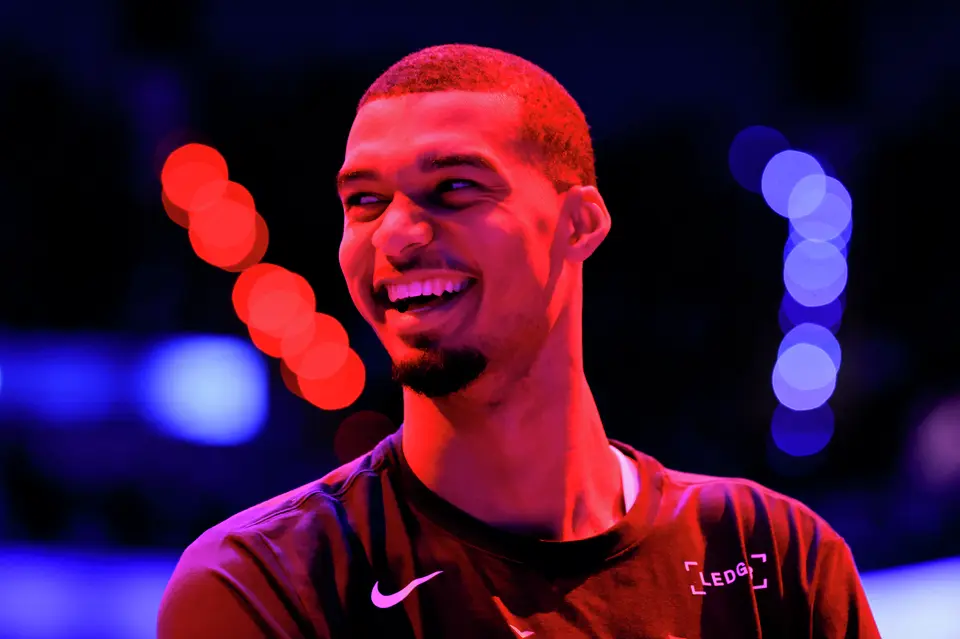
维克托·文班亚马 (Victor Wembanyama) 打出了NBA历史上最独特的数据赛季之一,但从历史来看,MVP投票者最看重的依然是出勤率、得分和球队战绩。
文班亚马的第三个NBA赛季,展现出了联盟历史上从未在任何一位22岁球员身上见过的统治力。
这位马刺超级巨星对胜利的影响力远超传统数据表所能体现的范畴。他不仅是圣安东尼奥的防守支柱,同时也继续崛起为篮球界最具统治力的攻防一体巨星之一。
在本赛季的三位MVP最终候选人——文班亚马、谢伊·吉尔杰斯-亚历山大 (Shai Gilgeous-Alexander) 和尼古拉·约基奇 (Nikola Jokić) 之中,文班拥有最出色的在场/不在场净效率差值(on/off differential),这一指标衡量的是当一名球员在场上与不在场时,球队表现的提升幅度。
在许多方面,这种影响力定义了文班的这个赛季。
他场均斩获25分、11.5个篮板和3.1次盖帽,同时只要他在场,马刺就会摇身一变,成为整个NBA防守最强悍的球队之一。高阶数据一致表明,他是联盟中最顶尖的防守者,也是综合影响力最强的球员之一。
但从历史上看,MVP的投票往往倾向于遵循更为传统的公式。

吉尔杰斯-亚历山大带领雷霆夺得西部第一战绩,场均砍下30分以上,且出场时间远超文班。约基奇则再次为丹佛掘金轰下惊人的进攻数据。长期以来,球队战绩、得分表现和出勤率在MVP评选中都起着举足轻重的作用,而这三点在今年的竞争中也起到了决定性作用,最终吉尔杰斯-亚历山大连续第二年斩获该奖项。
文班的情况则有所不同。
他并不符合传统MVP得主的模板,他的核心竞争力在于攻防两端的统治力,以及在他这个年龄段罕见的数据影响力——尤其是在防守端,像在场/不在场净效率差值这样的指标,直观地证明了当他在场时,马刺的改变有多么天翻地覆。
尽管文班最终在今年的投票中落选,但他的数据表现预示着,这绝不会是他最后一次对该奖项发起有力冲击。如果说这个赛季证明了什么,那就是这位马刺超级巨星对比赛的影响力已经达到了MVP级别。他的下一步,或许仅仅是去满足那些投票者在历史上最为看重的传统标准。
由生成式 AI 翻译,译文内容可能不准确或不完整,以原文为准。
点击查看原文:Why didn’t Victor Wembanyama win MVP? We break it down.
Why didn’t Victor Wembanyama win MVP? We break it down.
Victor Wembanyama produced one of the NBA’s most unique statistical seasons, but MVP voters historically have rewarded durability, scoring and team success above all else.
Victor Wembanyama’s third NBA season was unlike anything the league has seen from a 22-year-old.
The Spurs superstar impacts winning in ways that extend far beyond traditional box score numbers, anchoring San Antonio defensively while continuing his rise as one of basketball’s most dominant two-way forces.
Among this season’s three MVP finalists — Wembanyama, Shai Gilgeous-Alexander and Nikola Jokić — Wemby posted the strongest on/off differential, a metric that measures how much better a team performs when a player is on the court versus off it.
In many ways, that effect defined Wemby’s season.
He averaged 25 points, 11.5 rebounds and 3.1 blocks per game while transforming the Spurs into one of the NBA’s toughest defensive teams whenever he was on the floor. Advanced metrics consistently placed him among the league’s elite defenders and most impactful overall players.
But historically, MVP voting has tended to follow a more traditional formula.
Gilgeous-Alexander led the Thunder to the top seed in the Western Conference while averaging more than 30 points per game and logging significantly more minutes than Wemby. Jokić once again posted massive offensive numbers for Denver. Team success, scoring production and durability have long played a major role in MVP voting, and all three factored heavily into this year’s race as Gilgeous-Alexander won the award for the second straight season.
Wemby’s case was different.
Rather than fitting the mold of a traditional MVP winner, his candidacy was built around two-way dominance and statistical impact rarely seen from a player his age — particularly on the defensive end, where metrics like on/off differential highlighted just how dramatically the Spurs changed with him on the floor.
Wemby ultimately fell short in this year’s voting, but his statistical profile suggests this likely won’t be his last serious run at the award. If this season showed anything, it’s that the Spurs superstar already impacts the game like an MVP. The next step may simply be checking the traditional boxes voters have historically valued most.
By Jeremy Kolok, Staff Writers, via San Antonio Express-News