By NBA insiders, 2026-06-24 13:47:00
2026年NBA选秀大会第二轮将于周三(东部时间晚8点,ESPN/ABC)拉开帷幕,卫冕冠军纽约尼克斯队将手握第31号签,率先做出选择。
首日活动中,杨百翰大学的AJ·迪班萨 (AJ Dybantsa) 被华盛顿奇才队以状元签选中,堪萨斯大学的达林·彼得森 (Darryn Peterson) 则在第二顺位被犹他爵士队挑走。小莫雷兹·约翰逊在第9顺位被达拉斯选中,这让他与前密歇根大学教练、本周一被任命为独行侠队主教练的达斯蒂·梅重聚。
第二轮选秀大会会有哪些看点?Jeremy Woo 和 Ben Golliver 将解答围绕2026年NBA选秀仍然存在的一些最大疑问,同时Woo将推出他针对第二日的模拟选秀榜单。哪支球队有望在第二轮有引人关注的操作?又有哪些低调的新秀可能成为选秀中的“捡漏”?
以下模拟选秀的球员评述内容源自新秀球探报告,可在Jeremy Woo评选的百大新秀排行榜中查阅。
更多NBA选秀报道:
首轮完整解析 | 交易追踪
最佳可用球员 | 更多选秀内容
哪支球队是周三选秀中最有趣的球队?
Golliver: 布鲁克林篮网队总是那么引人入胜且难以预测。他们在去年的选秀首轮选中了四名后卫,随后在本周二又用6号签选中了另一位后卫小米克尔·布朗。
篮网队在本周早些时候涉及朱利叶斯·兰德尔的交易中,将一个次轮签送给了森林狼队,但他们仍然持有第43号签,并且他们的阵容各处都有迫切的需求。
谁是你非常看好、且很有可能在周三被选中的低调新秀?
Woo: 瑞安·康威尔(路易斯维尔大学)。虽然他实际上是一个小号的得分后卫,但我喜欢他的身体对抗、投篮和坚韧,并且认为他的防守足以让他在NBA找到一个长期的归宿。他应该会在30多顺位被选中。
在你的第二轮模拟选秀中,你最欣赏哪一组球队与球员的适配?
Woo: 亨利·维萨尔以第31顺位加盟尼克斯。他是一名尼克斯队在第24顺位时可能就考虑过的球员,之后球队进行了一系列向下交易。在周二进行的三笔交易之后,球队最终增加了五个次轮签。
如果尼克斯队交易这个选秀权——这完全有可能——他将是一个强有力的选项,因为纽约可能在前场深度上存在需求。

Woo:第二轮模拟选秀
31. 纽约尼克斯队(来自奇才)
亨利·维萨尔 (Henri Veesaar),北卡罗来纳大学,大三
优势: 就其身高而言,维萨尔拥有出色的进攻天赋,在篮筐周围有良好的手感,并且拥有足够稳定的三分投射能力,让防守方不敢掉以轻心。他也具备在防守端占据油漆区空间的体格。
劣势: 他有些臀部僵硬,不是最灵活的防守者,弹速也不够快,这将限制他在防守端只能采用沉退策略。对于他这种身高的球员来说,他体重偏轻,有时在身体对抗和篮板方面会比较挣扎。
裁决: 转学到北卡罗来纳大学后,维萨尔的进攻能力得到了释放,他与凯莱布·威尔逊在NBA级别的锋线上配合默契。像卢克·科内特和昆滕·波斯特这样的空间型5号位的成功,为他提供了一个可行的蓝图,使其能够长期在某一角色上立足。
32. 孟菲斯灰熊队(来自步行者)
巴巴·米勒 (Baba Miller),辛辛那提大学,大四
优势: 很难找到像米勒这种类型的球员,他是一名技术娴熟、大器晚成的2米13长人,能控球、能为队友创造机会,同时还具备防守端的多样性。
劣势: 米勒是一个糟糕的投手,在大学四个赛季里,他的三分命中率为29%,罚球命中率也仅有61%。他有时会在身体对抗上陷入挣扎。
裁决: 米勒在辛辛那提大学度过了他最好的一年大四赛季,凭借稳定的产出、对篮板球和利用身高优势的投入度提升,他迎来了转折点。很少有他这种身高同时还具备如此流畅性和潜在多功能性的球员,如果他继续进步,这为他开辟了一条通往NBA价值的道路。
33. 明尼苏达森林狼队(来自篮网)
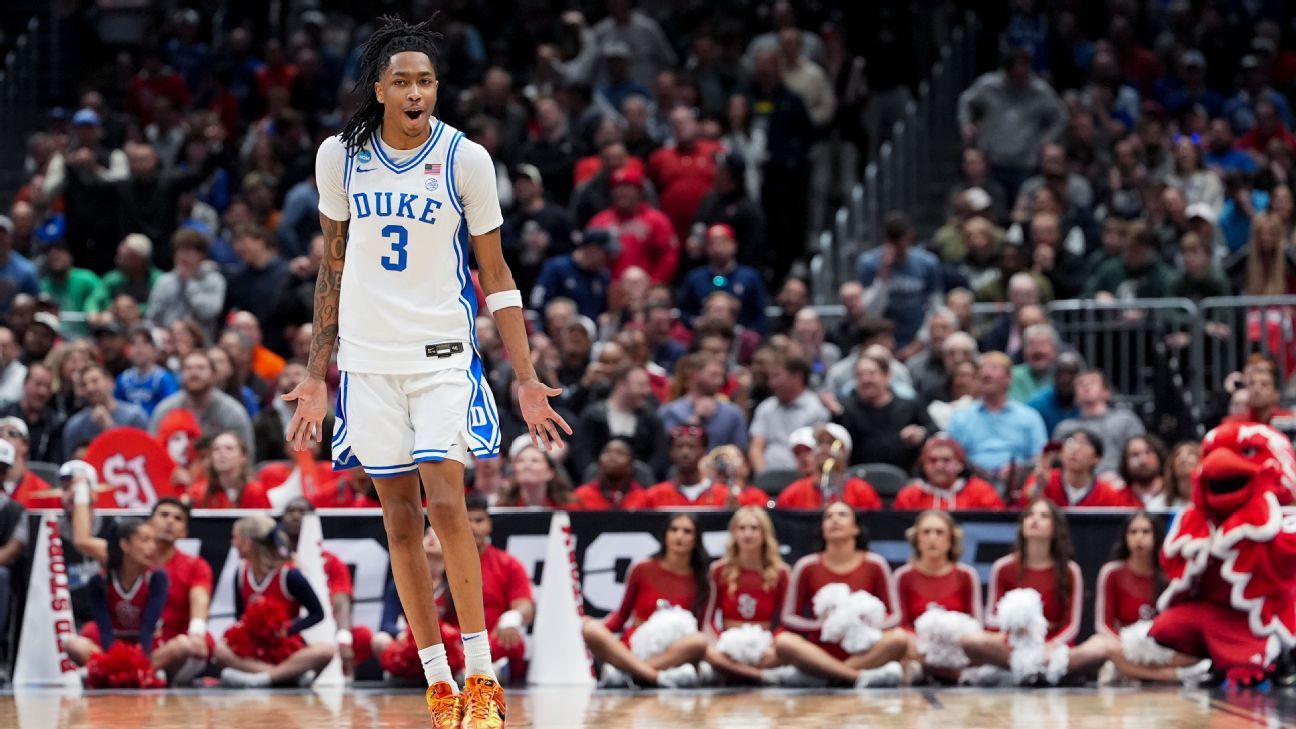
以赛亚·埃文斯 (Isaiah Evans),杜克大学,大二
优势: 埃文斯以他的远距离投射为生——本赛季他在杜克大学场均出手7次三分——并且有能力命中高难度的、身体失衡的远投。作为一名侧翼投手,他拥有不错的体型和臂展,并且在防守端有成长空间。
劣势: 稳定性对埃文斯来说有时是个挑战,尽管他本赛季朝着正确的方向迈出了一步。他不具备爆发力和速度,运球后创造机会的能力也不强,这可能在进攻端将他限制在更像是一个外线专家的角色。
裁决: 本赛季在杜克大学,埃文斯取得了全面的进步。在他继续发展的过程中,他可以凭借投射能力立足。他可能需要更多时间才能成为NBA中一名能赢球的贡献者,但像他这种水准和身材的射手常常供不应求。
34. 克利夫兰骑士队(来自国王)
梅里克·托马斯 (Meleek Thomas),阿肯色大学,大一
优势: 作为一名双能卫,托马斯拥有不错的体型,本赛季三分命中率达到41.6%,并且防守表现比预期的要好。他是一个坚韧的竞争者,作为投篮创造者还有成长空间。
劣势: 改进他的投篮选择和提高篮下终结能力,对于他在下一个级别比赛中打出他偏爱的风格至关重要。虽然他能够持球,但他并非天生的控球后卫——这是他比赛中仍在发展的一个领域。
裁决: 托马斯在阿肯色大学与小达里厄斯·阿卡夫并肩作战,度过了一个稳健的大一赛季。他在NBA的成功很可能取决于他能否成为一名高效的得分手。他结合了同位置上的身材优势、投射和竞争心,这为他在成熟后赢得上场时间提供了一条途径。
35. 丹佛掘金队(来自马刺)
狄龙·米切尔 (Dillon Mitchell),圣约翰大学,大四
优势: 米切尔拥有强壮的体格和出色的防守多样性,这让他能够以6尺8的身高防守多个位置。他在防守端和篮板球方面能够创造额外的球权。
劣势: 他在进攻端贡献甚微——几乎所有得分都集中在篮下——并且在大学四年之后仍缺乏可靠的跳投能力。
裁决: 虽然米切尔所填补的高能量特定角色的价值将是非正统且因队而异的,但他是一名能够在联盟中凭身体对抗立足的NBA级别天才。接下来会发生什么,很大程度上取决于球队如何最大化发挥其优势的构想。
36. 洛杉矶快船队(来自灰熊)
杰克·卡伊尔 (Jack Kayil),德国阿尔巴柏林队
优势: 卡伊尔是一名拥有强壮体魄的双能卫,已经展现出创造进攻机会的潜力——他能够执行挡拆,并且能在运球后命中远距离投篮。
劣势: 在他职业生涯的这个阶段,他不是一名非常高效的得分手,有时会比较依赖高难度投篮。作为一名组织者,他仍在发展中,并且需要一些时间才能为NBA上场时间做好准备。
裁决: 卡伊尔曾承诺加盟冈萨加大学,但最终选择试水并留在选秀中。他在德国为阿尔巴柏林队效力的职业赛季表现出色,作为一名进攻核心,帮助球队取得了常规赛第二名的成绩。随着他的成熟,存在一些有趣的上升发展空间。
37. 俄克拉荷马城雷霆队(来自独行侠)
里奇·桑德斯 (Richie Saunders),杨百翰大学,大四
优势: 作为一名高质量的远程射手,桑德斯拥有作为角色球员侧翼投手的可靠特质,他投篮选择出色,并且在防守端全力以赴。
劣势: 桑德斯将在今年晚些时候年满25岁,这使他成为本届选秀中年龄最大的球员之一。他在二月份遭遇了前十字韧带撕裂,预计将完全康复,但在开始职业生涯时面临这一健康障碍。即便在受伤前,他也不具备超凡的速度或爆发力。
裁决: 尽管年龄限制了他的上限,但如果桑德斯能够恢复到最佳状态,他具备NBA即战力。他是一名神射手,拥有足够的次要技能和球感,能够进入联盟并留下,最可能作为一个阵容深度选项。
38. 芝加哥公牛队(来自鹈鹕)
伊曼纽尔·夏普 (Emanuel Sharp),休斯顿大学,大四
优势: 夏普在休斯顿大学的四年里三分命中率为37%,并且将自己打造成了一名高质量的防守者,愿意在防守的第一线进行缠斗。
劣势: 对于得分后卫来说,他身材尺寸不足,且需要别人为他创造干净的投篮机会,这很可能将他限制在一个较小的3D类型角色中。
裁决: 夏普是休斯顿大学出品的另一名意志坚韧的角色球员,他应该能立即提供价值,为NBA板凳席增加深度。他可靠的空间拉开能力和强硬的防守,使他成为那种能立刻在常规赛上场时间里帮助球队的球员。
39. 休斯顿火箭队(来自公牛)
瑞安·康威尔 (Ryan Conwell),路易斯维尔大学,大四
优势: 康威尔是一名有能力的远程射手,他利用自己投篮的威胁来展开进攻。他强壮、快速,并且相对于他的身材而言,打球充满了力量。他是一名愿意利用臂展进行防守的球员,并且是一个篮板好手。
劣势: 对于得分后卫来说身材偏小,并且不是最天生的为他人创造机会的组织者,康威尔的角色路径相对较窄,充其量可能只是一个替补席的得分手。
裁决: 在四年内辗转四所大学之后,康威尔逐渐将自己定位为一个次轮秀人选。职业生涯三分命中率37%,他是一个足够好的投手,并且打球足够努力,能够在职业生涯早期找到一个角色。如果他不能成为一名精英级别的投篮创造者,他的体型和缺乏组织能力最终可能会对他不利。
40. 波士顿凯尔特人队(来自雄鹿)
布雷登·史密斯 (Braden Smith),普渡大学,大四
优势: 作为NCAA历史总助攻王(1103次),史密斯是一位坚韧的比赛管理者和分配球者,他能在关键时刻为自己创造投篮机会,并能远距离发炮。就他的体型而言,他在防守端的破坏性极强。
劣势: 史密斯是联合试训中身高最矮的球员,赤脚身高5尺10寸(1.78米),体重166磅(75公斤)。他将不得不继续面对比他高大的对手进行搏斗,尤其是在防守端,而在NBA,像他这种身材的球员会成为被攻击的目标。
裁决: 史密斯在普渡大学度过了辉煌的职业生涯,带着强劲的赢球履历进入NBA。从无形资产的角度来看,他有很多值得喜欢的地方,并且他拥有全面的进攻特质。然而,他必须继续克服与身高相关的障碍,才能在职业联赛中担任替补角色。
41. 迈阿密热火队(来自勇士)
菲利克斯·奥克帕拉 (Felix Okpara),田纳西大学,大四
优势: 奥克帕拉是一名拥有NBA标准身材、协调性好的大个子,他能跑快攻、完成进攻并封盖投篮。这套技能组合让他在深层替补角色中具备一定的吸引力。
劣势: 除非有微乎其微的机会他能练出定点三分球,否则他在进攻端提供不了更多潜力。
裁决: 奥克帕拉在选秀前的试训过程中表现出色,作为一名可靠的大个子,他能在攻防两端都贡献些许价值,从而进入了双向合同球员的讨论范围。
42. 圣安东尼奥马刺队(来自开拓者)
贾科比·吉莱斯皮 (Ja’Kobi Gillespie),田纳西大学,大四
优势: 吉莱斯皮具备微波炉式的远距离得分爆发力,并且在他的身材尺寸下,在防守端是个讨厌的纠缠者。
劣势: 他更像是一个得分手而不是分配球者,且缺乏其位置上的理想身高。他常常状态起伏不定,并依赖于高难度投篮来彰显自己的存在感。
裁决: 在贝尔蒙特大学开启大学生涯后,吉莱斯皮在马里兰大学和田纳西大学度过了不错的几年,同时一步步进入了NBA的视野。如果他的得分能力能压倒其身高方面的担忧,他有望成为一个潜在的板凳选项。
43. 布鲁克林篮网队(来自快船)
布鲁斯·桑顿 (Bruce Thornton),俄亥俄州立大学,大四
优势: 桑顿是一个高效、低失误的得分手,拥有作为替补后卫而言稳健的进攻特质。他知道如何到达自己的投篮点,并做出正确的决策。他在俄亥俄州立大学有着出色的职业生涯,并将自己打造成了一名杰出的进攻球员。他或许必须保持其卓越的效率指标才能在NBA立足,如果一切顺利,他的上限很可能仅限于一个替补角色。
劣势: 他身材偏矮且体重偏重,很大程度上依赖于自己的力量来为自己创造机会。他在防守端也不是一个出色的组织者。
裁决: 桑顿在俄亥俄州立大学有着出色的职业生涯,并将自己打造成了一名非常优秀的进攻球员。他或许必须保持其卓越的效率指标才能在NBA立足,如果一切顺利,他的上限很可能仅限于一个替补角色。
44. 圣安东尼奥马刺队(来自热火)
特雷冯·布拉齐尔 (Trevon Brazile),阿肯色大学,大四
优势: 身高6尺10寸的布拉齐尔能够远投,能接高吊球完成空接,也能封盖投篮。他拥有在NBA通常备受追捧的技能组合,并且对于他的身高而言相当敏捷。
劣势: 布拉齐尔23岁,联合试训时体重为225磅。对于一个大前锋来说他偏瘦弱,有时会在身体对抗和稳定性方面挣扎。
裁决: 他打出了自己最完整的大学赛季,并受益于与小达里厄斯·阿卡夫并肩作战,展示了他能够拉开空间并轻松完成得分。他所做的事情受到NBA球队的高度重视——问题仅仅在于他是否能在这些事情上做得足够好以长期立足。
45. 萨克拉门托国王队(来自黄蜂)
伊扎亚·尼尔森 (Izaiyah Nelson),南佛罗里达大学,大四
优势: 尼尔森是一名防守端的组织者和篮板手,同时也能跑快攻并利用速度完成进攻。
劣势: 他不能很好地拉开空间,控球技术不熟练,且作为NBA中锋身高不足。
裁决: 尼尔森从阿肯色州立大学时期开始,其产出平稳过渡,本赛季在南佛罗里达大学他真正崭露头角,帮助球队打进了NCAA锦标赛。他能够在油漆区干脏活累活并保护篮筐的能力,使他成为第二轮中一个引人关注的潜力选择。
46. 奥兰多魔术队
乌戈纳·奥尼恩索 (Ugonna Onyenso),弗吉尼亚大学,大四
优势: 作为一名拥有NBA级别臂展的护筐手,奥尼恩索以场均2.9次盖帽位列全国第二。
劣势: 除了防守之外,奥尼恩索的比赛能力有限。他常常在得分上陷入挣扎,并且没有太多次要技能。
裁决: 来自NBA非洲学院的奥尼恩索,在他的第三所学校弗吉尼亚大学绽放光芒,成为了这支30胜6负球队的防守支柱。那些防守技能需要足够精英级别才能让他在NBA立足,但他是第二轮中一个可靠的、有发展潜力的深度选项。
47. 纽约尼克斯队(来自太阳)
阿隆·恩克鲁玛 (Aaron Nkrumah),田纳西州立大学,大四
优势: 恩克鲁玛上赛季场均贡献2.8次抢断,是一名可靠的防守端组织者,对于得分后卫位置来说,身材不错。
劣势: 他是一名年龄偏大的新秀,其进攻效率无论是篮下还是远距离都有待提高。
裁决: 恩克鲁玛的职业生涯始于NCAA三级联赛,并一步步向上攀登,赢得了G联赛精英训练营的后期邀请,并成功打进了联合试训。他的防守表现给了他一个留下的机会,前提是他能命中足够多的投篮并在进攻端融入体系。
48. 达拉斯独行侠队(来自太阳)
弗谢沃洛德·伊先科 (Vsevolod Ishchenko),俄罗斯库班火车头队
优势: 伊先科上赛季在VTB联合联赛中的投篮命中率为50%,三分命中率为45%,展现了作为投手的潜力,同时也能作为防守组织者贡献价值。他拥有同位置上出色的身材,并展现出引人入胜的传球直觉。
劣势: 他在持球方面仍在发展,并且需要增强力量,积累更高级别的比赛经验。
裁决: 伊先科荣获了VTB联合联赛年度最佳年轻球员奖,本赛季取得了全面的进步,展现了引人关注的双向潜力。作为一名有发展前景的补充球员和潜在的“放养”型球员,他实实在在地拥有二轮秀的魅力。
49. 丹佛掘金队(来自老鹰)
贾登·布拉德利 (Jaden Bradley),亚利桑那大学,大四
优势: 布拉德利是一名有能力的比赛管理者和可靠的领防者。在大学四年里,他的决策能力不断提高。
劣势: 他不是一名高产的三分射手,并且以他的身材,篮下终结也不够稳定。他能执行简单的阅读,但并非真正顶级的组织者。
裁决: 作为Big 12联盟年度最佳球员,布拉德利是36胜3负并打入最终四强的亚利桑那大学队的关键一员。他有机会找到一个NBA替补的定位,但尤其需要在投射方面持续进步才能实现这一点。
50. 多伦多猛龙队
托比·阿瓦卡 (Tobe Awaka),亚利桑那大学,大四
优势: 阿瓦卡是一名拥有出色臂展的杰出篮板手,在亚利桑那大学扮演了重要的辅助角色。他强壮、打球努力,并以领导力和无形资产著称。
劣势: 他赤脚身高6尺8寸,这对于NBA大个子来说偏矮。他的进攻能力也仅限于在篮筐附近完成终结。
51. 华盛顿奇才队(来自森林狼)
米洛斯·乌赞 (Milos Uzan),休斯顿大学,大四
优势: 对于双能卫来说,乌赞拥有不错的身材和良好的组织本能,使他能够作为额外的传球手和投手融入不同的阵容。
弱点: 他不算是特别强壮或速度快的持球手,并且在高效得分方面挣扎,这引发了人们对他能否稳定创造良好投篮机会的质疑。
裁决: 本赛季在休斯顿大学,乌赞给金斯顿·弗莱明斯当副手,但仍然在过去两年美洲狮队的成功中扮演了重要角色,作为一名拥有足够多样技能的 guard,他能帮助填补空缺。他可能需要在得分方面更进一步,但他的经验和同位置上的身材优势赋予了他深度吸引力。
52. 洛杉矶快船队(来自骑士)
特雷·唐纳森 (Tre Donaldson),迈阿密大学,大四
优势: 对于一名体型较小的后卫来说,唐纳森拥有出色的力量和爆发力,帮助他切入防守腹地并创造机会。他在防守第一线是一个强悍的身体对抗型防守者。
劣势: 他的决策和投篮选择有时会失控。对于一名高出手次数的后卫来说,他的投射数据处于平均水平。
裁决: 唐纳森是一名有着橄榄球背景的、身体素质上乘的运动员,转学到迈阿密大学后展现了全面的进步。他是一名可靠的双向合同候选人,特别是如果他能在控球和组织方面持续取得进步的话。
53. 休斯顿火箭队
夸迪尔·科普兰 (Quadir Copeland),北卡州立大学,大四
优势: 科普兰作为控球后卫拥有绝佳的身高和富有创造力的传球视野,他能够越过防守观察并为队友创造机会。他作为后卫篮板能力出色,并具备一定的防守多样性。
劣势: 他冒很多风险,容易犯错。同时,他也是一个低产量的三分射手,作为空间点可能毫无作用。
裁决: 科普兰是一名极具观赏性的球员,但并非总是非常高效。然而,6尺6寸的控球后卫并不常见,如果他能够控制好自己的决策能力,他在发展联盟将具有一定的成长吸引力。
54. 金州勇士队(来自湖人)
托比·拉瓦尔 (Tobi Lawal),弗吉尼亚理工大学,大四
优势: 拉瓦尔是本届选秀中综合运动能力最出色的球员之一,拥有45英寸的最大弹跳。他是一名好的篮板手,能够封盖投篮且在篮筐之上打球。
弱点: 他的进攻技巧尚处于初级阶段,限制了他对比赛的影响力,他很大程度上被限制在扣篮和篮下完成进攻。他更像是一个待雕琢的璞玉,而非典型的23岁新秀。
裁决: 拉瓦尔是在伦敦长大、大器晚成的球员,在过去几年里他的全面比赛能力取得了一些进步。他精英级别的身体素质使他成为一个引人关注的潜力选择,但他进攻端还很粗糙,最多只能被看作是一个高能量的深度球员。
55. 纽约尼克斯队
泰勒·尼克尔 (Tyler Nickel),范德堡大学,大四
优势: 尼克尔是一名天赋异禀的射手,过去两个赛季在范德堡大学的三分命中率达到40%。他作为侧翼拥有绝佳的身材,这有助于他干净利落地出手投篮,并且能在移动中命中投篮。
劣势: 他没有太多的次要技能,进攻角色仅限于接球投篮,并且防守能力充其量只是平均水平。
裁决: 尼克尔是一个对自己角色有清晰认知的专家,拥有足够的坚韧度和身材,有机会在防守端不会太吃亏。NBA对于有身高的射手持续不断的需求,足以让他敲开联盟的大门。
56. 芝加哥公牛队(来自掘金)
布莱斯·霍普金斯 (Bryce Hopkins),圣约翰大学,大四
优势: 霍普金斯是一名多才多艺的锋线球员,具备延伸到三分线的投篮手感、不错的转移球本能,以及在其体型下出色的力量和篮板能力。
劣势: 他的大学生涯因前十字韧带撕裂而偏离了轨道,限制了他在两个赛季的表现,并削弱了他的运动能力。他缺乏顶级的身体条件或招牌技能,并将在今年晚些时候年满24岁。
裁决: 进入选秀前试训阶段,霍普金斯似乎已经恢复了一些昔日的运动能力。他是一名优秀的双向合同候选人,如果他能够保持身体状态并以足够高的命中率投篮,他全面的比赛风格具备一些NBA板凳席的上升空间。
57. 亚特兰大老鹰队(来自凯尔特人)
尼克·马蒂内利 (Nick Martinelli),西北大学,大四
优势: 马蒂内利是一个坚韧、强硬的得分手,拥有一手巧妙的中距离技术。他的竞争心和稳定性使他能够为西北大学承担巨大的进攻重任。
劣势: 虽然马蒂内利今年投出了职业生涯最佳的41%的三分命中率,但这并不被视为他的强项。他身体强壮,但缺乏理想的防守敏捷性,并且对于4号位来说身材偏小。
裁决: 很容易欣赏马蒂内利的无形资产和他在大学时期的进步历程。他需要继续提升作为三分射手的表现,才能最大化他争取到一个深度角色的机会。
58. 新奥尔良鹈鹕队(来自活塞)
马利克·布朗 (Maliq Brown),杜克大学,大四
优势: 布朗是一名敏捷且多才多艺的防守型大个子,能够换防到外线,并且对球有良好的直觉。他能高效地完成在禁区得到的机会。
劣势: 作为得分手,他常常毫无存在感,缺乏可靠的跳投或为自己创造机会的能力。在进攻端,你所看到的就是你所能得到的。
裁决: 布朗的防守使他在杜克大学价值连城,但他需要以某种方式扩展他的进攻技能,才有机会在NBA长期立足。
59. 明尼苏达森林狼队(来自马刺)
诺姆·雅科夫 (Noam Yaacov),比利时奥斯坦德队,丹麦/以色列
优势: 雅科夫是一个狡猾的挡拆执行者,他在比利时度过了一个非常出色的赛季。他足够聪明,能够帮助运转第二阵容,拥有良好的视野和直觉。
劣势: 他的身材和臂展都不理想,并且不是一个稳定的远程射手,尤其是在运球后投篮方面。他的体型将造成NBA赛场上防守端的局限性。
裁决: 雅科夫是一个自动获得参选资格的国际新秀,他下赛季承诺加盟犹他大学。除非出现意外,他预计下赛季将在大学打球,这使他实际上成为一个二轮“放养”选秀权,允许一支球队控制他的NBA签约权。随着持续发展,他有可能成为一名可靠的深度控球后卫。
60. 华盛顿奇才队(来自雷霆)
泰勒·比洛多 (Tyler Bilodeau),加州大学洛杉矶分校,大四
优势: 比洛多是本届选秀中的顶级射手,上赛季三分命中率达到46%,这赋予了他作为NBA球场空间拉开者的潜在进攻价值。能投出这种命中率的大个子可不好找。
劣势: 他在防守端对比赛的影响力不大,并且需要别人为他创造进攻机会。他不是一个盖帽手,并且可能在防守外线时陷入挣扎。
裁决: 比洛多作为前场球员的出色投射能力,为他铺设了一条通往NBA的道路。他做得好的事情值得注意;问题在于,他还能为自己的比赛增添些什么?
由生成式人工智能翻译,译文内容可能不准确或不完整,以原文为准。
点击查看原文:Round 2 NBA mock draft: Best available players, predictions
Round 2 NBA mock draft: Best available players, predictions
The second round of the 2026 NBA draft begins Wednesday (8 p.m. ET, ESPN/ABC) with the champion New York Knicks selecting first with the No. 31 pick.
Day 1 featured BYU’s AJ Dybantsa going No. 1 to the Washington Wizards and Darryn Peterson (Kansas) being selected by the Utah Jazz at No. 2. Morez Johnson Jr. was selected by Dallas at No. 9, reuniting him with former Michigan coach Dusty May, who was named the Mavericks head coach on Monday.
What’s in store for Round 2? Jeremy Woo and Ben Golliver answer some of the biggest questions still floating around the 2026 NBA draft, while Woo lays out his mock draft for Day 2. Which team is set up to have an intriguing Round 2, and which under-the-radar prospects could turn into steals?
The mock draft writeups below are from prospects’ scouting reports, found in Jeremy Woo’s top 100 rankings.
More NBA draft coverage:
Full Round 1 breakdown | Trade tracker
Best available | More draft
Which is the most interesting team drafting Wednesday?
Golliver: The Brooklyn Nets are always fascinating and unpredictable. They selected four guards in Round 1 of last year’s draft, then turned around and picked Mikel Brown Jr., another guard, with the No. 6 pick Tuesday.
The Nets sent one of their second-round picks to the Timberwolves in the Julius Randle trade earlier this week, but they still hold the No. 43 pick and have pressing needs throughout their roster.
Who’s an under-the-radar prospect you really like who’s likely to be picked Wednesday?
Woo: Ryan Conwell (Louisville). Although he’s effectively a small 2-guard, I liked his physicality, shooting and toughness and think he’ll defend enough to find an NBA home long term. He should come off the board in the 30s.
What’s your favorite team-player fit you’ve projected in your Round 2 mock?
Woo: Henri Veesaar to the Knicks at No. 31. He’s a player New York likely considered at No. 24 before conducting its series of trades down the board. The team ended up adding five second-round picks after making three trades Tuesday.
If the Knicks trade this pick – which is entirely possible – he would be a strong option, with New York potentially in need of depth up front.
Woo: Round 2 mock draft
31. New York Knicks (via Washington)
Henri Veesaar, North Carolina, Junior
Strengths: Veesaar is offensively gifted for his size, with good touch around the basket and consistent enough 3-point range to keep defenses honest. He has the size to take up space in the paint defensively, as well.
Weaknesses: He’s somewhat stiff-hipped and isn’t the most mobile defender or quick off the floor, which will limit him to drop coverage defensively. He’s on the lighter side for a player his size, and sometimes struggles with physicality and rebounding.
The verdict: Veesaar’s offensive game took off after transferring to North Carolina, where he partnered well with Caleb Wilson on an NBA-quality front line. The success of stretch 5s like Luke Kornet and Quinten Post lays out a feasible blueprint for him to stick long term in a role.
32. Memphis Grizzlies (via Indiana)
Baba Miller, Cincinnati, Senior
Strengths: It’s difficult to find players in the mold of Miller, who is a skilled, late-blooming 7-footer who can handle the ball and find teammates while offering defensive versatility.
Weaknesses: Miller is a poor shooter who made 29% from 3 and shot just 61% from the line over four college seasons. He sometimes struggles with physicality.
The verdict: Miller had his best season at Cincinnati his senior year, and turned a corner with consistent production, improved commitment to rebounding and using his size. There are few players his size with his fluidity and potential versatility, giving him a path to NBA value if he continues to improve.
33. Minnesota Timberwolves (via Brooklyn)
Isaiah Evans, Duke, Sophomore
Strengths: Evans hangs his hat on his long-range shooting – he averaged seven 3s per game at Duke this season – and is capable of hitting tough looks off balance from deep. He has good size and length for a wing shooter, and room to grow defensively.
Weaknesses: Consistency has been a challenge for Evans at times, though he took a step in the right direction this season. He’s not explosive or quick and doesn’t create much off the bounce, which could put him in a box offensively as more of a perimeter specialist.
The verdict: Evans took an all-around step forward this season at Duke, and can hang his hat on his shotmaking as he continues to develop. It may take a little more time for him to become a winning contributor in the NBA, but shooters of his caliber and size are often in demand.
34. Cleveland Cavaliers (via Sacramento)
Meleek Thomas, Arkansas, Freshman
Strengths: Thomas has good size for a combo guard, shot 41.6% from 3 this season and was better defensively than expected. He’s a tough competitor and has room to grow as a shot creator.
Weaknesses: Improving his shot selection and rim finishing is critical for him to play his preferred style at the next level. While he can play on the ball, he’s not a natural point guard – an area of his game that’s still developing.
The verdict: Thomas had a solid freshman season at Arkansas, playing alongside Darius Acuff Jr. His NBA success will likely depend on whether or not he can become an efficient scorer. His mix of positional size, shooting and competitiveness gives him a pathway to earning minutes as he matures.
35. Denver Nuggets (via San Antonio)
Dillon Mitchell, St. John’s, Senior
Strengths: Mitchell has a strong frame and great defensive versatility, which allows him to guard multiple positions at 6-8. He creates extra possessions defensively and on the glass.
Weaknesses: He offers very little offensively – with nearly everything coming at the rim – and lacks a reliable jump shot after four years of college.
The verdict: While the value of the specific high-energy role Mitchell fills will be unorthodox and team-specific, he’s an NBA talent who can hold his own physically in the league. What happens next will largely depend on a team’s vision for maximizing his strengths.
36. LA Clippers (via Memphis)
Jack Kayil, Alba Berlin, Germany
Strengths: Kayil is a combo guard with a strong frame who has flashed potential to create offense – he’s capable of playing pick-and-roll and knocking down shots off the bounce from range.
Weaknesses: He’s not a very efficient scorer at this stage of his career and can be somewhat reliant on tough looks. He’s still developing as a playmaker and will need some time before being ready for NBA minutes.
The verdict: Kayil was committed to Gonzaga, but ultimately tested and opted to stay in the draft. He had a strong season for his age playing pro in Germany for Alba Berlin, helping the team to a second-place regular-season finish while playing as an offensive focal point. There’s some interesting developmental upside as he matures.
37. Oklahoma City Thunder (via Dallas)
Richie Saunders, BYU, Senior
Strengths: As a quality long-distance marksman, Saunders has a solid profile for a role-playing wing shooter who employs good shot selection and battles defensively.
Weaknesses: Saunders turns 25 later this year, making him one of the oldest players in the draft. He tore his ACL in February and is expected to fully recover, but faces that health obstacle as he begins his pro career. He wasn’t supremely quick or explosive before the injury.
The verdict: Although his age limits his upside, Saunders has an NBA-ready game if he can work back to full strength. He’s a sharpshooter with enough secondary skills and feel to get in the door and stick, most likely as a depth option.
38. Chicago Bulls (via New Orleans)
Emanuel Sharp, Houston, Senior
Strengths: Sharp shot 37% from 3 over four years at Houston and fashioned himself into a quality defender who’s willing to battle at the point of attack.
Weaknesses: He’s undersized for a 2-guard and needs clean looks created for him, which will likely limit him to a smaller 3-and-D type of role.
The verdict: Sharp is another tough-minded Houston role player who should have immediate value, providing depth on an NBA bench. His reliable floor spacing and gritty defense make him the type of player who can help a team with regular-season minutes right away.
39. Houston Rockets (via Chicago)
Ryan Conwell, Louisville, Senior
Strengths: Conwell is a capable long-range shooter who works off the threat of his shot. He’s strong, quick and plays with good force for his size. He’s a willing defender with length and is a plus rebounder.
Weaknesses: Undersized for a shooting guard and not the most natural playmaker for others, Conwell has a somewhat narrow role pathway, likely as a bench scorer at best.
The verdict: After playing for four colleges in four years, Conwell has gradually positioned himself as a second-round selection. A career 37% from 3-point range, he’s a good enough shooter and plays hard enough to find his way into a role early in his career. If he doesn’t turn into an elite shotmaker, his size and lack of playmaking could ultimately work against him.
40. Boston Celtics (via Milwaukee)
Braden Smith, Purdue, Senior
Strengths: Checking in as the NCAA’s all-time assists leader (1,103), Smith is a tough game manager and distributor who can create his own shot in a pinch and shoot from range. He excels at being disruptive defensively for his size.
Weaknesses: Smith was the smallest player at the combine, standing 5-foot-10 and 166 pounds. He will have to continue punching above his weight, particularly on the defensive end, where players his size are targeted in the NBA.
The verdict: Smith had a decorated career at Purdue and enters the NBA with a strong winning track record. There’s plenty to like from an intangibles standpoint, and he has a well-rounded offensive profile. He will have to continue overcoming size-related obstacles to stick as a backup in the pros, however.
41. Miami Heat (via Golden State)
Felix Okpara, Tennessee , Senior
Strengths: Okpara is a coordinated big man with NBA dimensions who can run the floor, finish plays and block shots. The combo of skills gives him some appeal in a deep bench role.
Weaknesses: Beyond the outside chance he develops a spot-up 3-point shot, he doesn’t offer upside offensively.
The verdict: Okpara had a good predraft process and played his way into the two-way contract mix as a dependable big man who chips in a little bit of value on both ends.
42. San Antonio Spurs (via Portland)
Ja’Kobi Gillespie, Tennessee, Senior
Strengths: Gillespie offers some microwave scoring ability from deep and is a pest defensively for his size.
Weaknesses: He’s more of a scorer than a distributor, and lacks ideal size for his position. He can frequently be streaky and reliant on tough shots to make his presence felt.
The verdict: After starting his college career at Belmont, Gillespie had good years at Maryland and Tennessee while playing his way into the NBA picture. He profiles as a potential bench option if his scoring ability can outweigh his size concerns.
43. Brooklyn Nets (via Clippers)
Bruce Thornton, Ohio State, Senior
Strengths: Thornton is an efficient, low-turnover scorer with a solid offensive profile for a backup guard. He knows how to get to his spots and makes good decisions, and he had a strong career at Ohio State and fashioned himself into a stellar offensive player. He might have to maintain his excellent efficiency marks to stick in the NBA, with his upside likely limited to a bench role if things click.
Weaknesses: He is undersized and on the heavier side, relying largely on his strength to create for himself. He also isn’t much of a playmaker defensively.
The verdict: Thornton had a strong career at Ohio State and fashioned himself into a very good offensive player. He may have to maintain his excellent efficiency marks to stick in the NBA, with his upside likely limited to a bench role if things click.
44. San Antonio Spurs (via Miami)
Trevon Brazile, Arkansas, Senior
Strengths: At 6-foot-10, Brazile can shoot from long range, catch lobs and block shots. He has a mix of skills that tend to be highly coveted in the NBA and is pretty agile for his size.
Weaknesses: Brazile is 23 and weighed 225 pounds at the combine. He’s slight for a power forward and struggles with physicality and consistency at times.
The verdict: He put together his most complete college season and benefited from playing alongside Darius Acuff Jr., showing he can space the floor and convert easy baskets. The things he does are highly valued by NBA teams – it’s simply a question of whether he’ll be good enough at them to stick in the long run.
45. Sacramento Kings (via Charlotte)
Izaiyah Nelson, South Florida, Senior
Strengths: Nelson is a defensive playmaker and rebounder who can also run the floor and finish plays with his speed.
Weaknesses: He doesn’t space the floor well, isn’t skilled with the ball and is undersized for an NBA center.
The verdict: Nelson’s production neatly translated from his time at Arkansas State, as he came into his own this season at South Florida while helping lead the team to the NCAA tournament. His ability to do the dirty work in the paint and protect the basket makes him an intriguing developmental pick in the second round.
46. Orlando Magic
Ugonna Onyenso, Virginia, Senior
Strengths: As a rim protector with NBA length, Onyenso was the country’s second-leading shot blocker with 2.9 per game.
Weaknesses: Outside of defense, Onyenso’s game is limited. He often struggles to score and doesn’t have much of a secondary skill set.
The verdict: Coming from NBA Academy Africa, Onyenso blossomed at Virginia, his third school, as the defensive backbone of a 30-6 team. Those defensive skills will need to be elite enough to stick in the NBA, but he’s a valid developmental depth option in the second round.
47. New York Knicks (via Phoenix)
Aaron Nkrumah, Tennessee State, Senior
Strengths: Nkrumah averaged 2.8 steals last season and is a solid defensive playmaker with decent size for a 2-guard.
Weaknesses: He’s an older prospect whose offensive efficiency leaves something to be desired, both around the rim and from long range.
The verdict: Nkrumah began his career playing Division III and has worked his way up the ladder, earning a late invite to the G League Elite Camp and playing his way into the combine. His defensive play gives him a chance to stick, provided he can make enough shots and fit in on the other end.
48. Dallas Mavericks (via Phoenix)
Vsevolod Ishchenko, Lokomotiv Kuban, Russia
Strengths: Ishchenko shot 50% from the field and 45% from 3 this past season with VTB United, showing promise as a shooter and also adding value as a defensive playmaker. He has plus positional size and has flashed intriguing passing instincts.
Weaknesses: He’s still developing with the ball in his hands and needs to gain strength and higher-level experience.
The verdict: Ishchenko won the VTB United League’s Young Player of the Year award, making an all-around jump this season and showcasing intriguing two-way potential. He offers legitimate second-round intrigue as a developmental addition and potential stash player.
49. Denver Nuggets (via Atlanta)
Jaden Bradley, Arizona, Senior
Strengths: Bradley is a capable game manager and solid point-of-attack defender. His decision-making continued to improve over four years of college.
Weaknesses: He’s not a high-volume 3-point shooter and doesn’t finish consistently around the rim at his size. He can make simple reads, but isn’t a truly high-end playmaker.
The verdict: As the Big 12 Player of the Year, Bradley was a key part of the 36-3 Arizona team that made the Final Four. He has an opportunity to find a niche as an NBA backup, but will need to keep improving as a shooter, in particular, to realize that.
50. Toronto Raptors
Tobe Awaka, Arizona, Senior
Strengths: Awaka is an outstanding rebounder with plus length who played an important supporting role for Arizona. He’s strong, plays hard and is known for his leadership and intangibles.
Weaknesses: He stands 6-8 barefoot, which is undersized for an NBA big man. His offensive game is also limited to finishing around the rim.
51. Washington Wizards (via Minnesota)
Milos Uzan, Houston, Senior
Strengths: Uzan has nice size for a combo guard and good playmaking instincts, allowing him to fit into different lineups as an additional ball-mover and shooter.
Weaknesses: He’s not especially strong or quick with the ball and struggles to score efficiently, raising questions about whether he can create good looks consistently.
The verdict: Uzan took a back seat to Kingston Flemings this season at Houston, but still played a major role in the Cougars’ success the past two years as a guard with enough variety of skills to help fill in the blanks. He may need to take a step forward as a scorer, but his experience and positional size give him depth appeal.
52. LA Clippers (via Cleveland)
Tre Donaldson, Miami, Senior
Strengths: Donaldson has good strength and explosiveness for a smaller guard, helping him get into the teeth of defenses and make plays. He’s a physical defender at the point of attack.
Weaknesses: His decision-making and shot selection can be wild at times. He has an average shooting profile for a higher-volume guard.
The verdict: Donaldson is a plus athlete with a football background who showed all-around improvement after transferring to Miami. He’s a solid two-way contract candidate, particularly if he can keep making strides with his ball control and playmaking.
53. Houston Rockets
Quadir Copeland, NC State, Senior
Strengths: Copeland has excellent size for a point guard and creative passing vision, as he’s able to see over the defense and make plays for teammates. He rebounds well for a guard and has some defensive versatility.
Weaknesses: He takes a lot of risks and can be mistake-prone. He’s also a low-volume 3-point shooter who can be a non-factor as a spacer.
The verdict: Copeland is an entertaining player, but he’s not always highly effective. However, 6-foot-6 point guards don’t grow on trees, giving him some developmental appeal in the G-League if he can rein in his decision-making.
54. Golden State Warriors (via Los Angeles Lakers)
Tobi Lawal, Virginia Tech, Senior
Strengths: Lawal is one of the best all-around athletes in the draft, with a 45-inch max vertical. He’s a good rebounder who can block shots and play above the rim.
Weaknesses: His offensive skill is rudimentary and limits his ability to impact the game, and he is largely restricted to dunks and finishing plays around the basket. He’s more of a project than your typical 23-year-old prospect.
The verdict: Lawal is a late-blooming player who grew up in London and has made some strides with his all-around game over the past couple of years. His elite physical gifts make him an intriguing developmental pick, but he’s raw offensively and projects as a high-energy depth player at best.
55. New York Knicks
Tyler Nickel, Vanderbilt, Senior
Strengths: Nickel is a gifted shooter who made 40% of his 3s the past two seasons at Vanderbilt. He has excellent size for a wing, helping him get his shot off cleanly, and can make shots off movement.
Weaknesses: He doesn’t have much of a secondary skill set, with his offensive role limited to catching and shooting, and he has average defensive chops at best.
The verdict: Nickel is a specialist with a good sense of his own role and enough toughness and size to have a chance to hold his own on defense. The NBA’s constant need for shooters with size will be enough to get him in the door.
56. Chicago Bulls (via Denver)
Bryce Hopkins, St. John’s, Senior
Strengths: Hopkins is a multifaceted perimeter forward, with touch out to the 3-point line, decent ball-moving instincts and good strength and rebounding ability for his size.
Weaknesses: His college career was derailed by a torn ACL that limited him for two seasons and sapped his athleticism. He lacks elite tools or a calling-card skill and turns 24 later this year.
The verdict: Hopkins appears to have regained some of his old athleticism entering the predraft process. He profiles as a good two-way contract candidate, with a well-rounded enough game for some NBA bench upside if he can maintain his conditioning and knock down shots at a high enough percentage.
57. Atlanta Hawks (via Boston)
Nick Martinelli, Northwestern, Senior
Strengths: Martinelli is a tough, hard-nosed scorer with a clever midrange game. His competitiveness and consistency allowed him to carry a huge offensive load for Northwestern.
Weaknesses: While Martinelli shot a career-best 41% from 3 this year, it’s not viewed as an area of strength. He’s physical, but lacks ideal quickness defensively and is a bit undersized for a 4.
The verdict: It’s easy to like Martinelli’s intangibles and history of improvement in college. He will need to continue improving as a 3-point shooter to maximize his chances of carving out a depth role.
58. New Orleans Pelicans (via Detroit)
Maliq Brown, Duke, Senior
Strengths: Brown is an agile and versatile defensive big who can switch onto the perimeter and has good instincts around the ball. He’s efficient in finishing the opportunities he gets in the paint.
Weaknesses: He is often a nonfactor as a scorer, lacking a reliable jumper or the ability to create for himself. What you see on that end is what you get.
The verdict: Brown’s defense made him quite valuable at Duke, but he will need to expand his offensive game in some fashion to have a chance of sticking long term in the NBA.
59. Minnesota Timberwolves (via San Antonio)
Noam Yaacov, Oostende, Denmark/Israel
Strengths: Yaacov is a crafty pick-and-roll player who comes off a very good year in Belgium. He is savvy enough to help run a second unit, with good vision and instincts.
Weaknesses: He has suboptimal size and length, and isn’t a consistent shotmaker from long range, particularly off the bounce. His size will create defensive limitations on an NBA floor.
The verdict: Yaacov is an auto-eligible international prospect who is committed to Utah next season. He is expected to play in college next season, barring any surprises, making him effectively a second-round stash pick, allowing a team to control his NBA rights. With continued development, he could be a viable depth point guard.
60. Washington Wizards (via Oklahoma City)
Tyler Bilodeau, UCLA, Senior
Strengths: Bilodeau is a top shooter in the class, and he made 46% of his 3s last season, giving him potential offensive utility as a floor spacer in the NBA. Bigs who can shoot it at that clip aren’t easy to find.
Weaknesses: He doesn’t impact the game much defensively and will need offensive looks created for him. He’s not a shot blocker and may struggle to guard the perimeter.
The verdict: Bilodeau’s excellent shooting for a frontcourt player lays out a pathway for him to make it in the NBA. The things he does well are noteworthy; the question is, what else can he add to his game?
By NBA insiders, via ESPN