By Nick Friedell | The Athletic, 2026-06-17 11:00:57
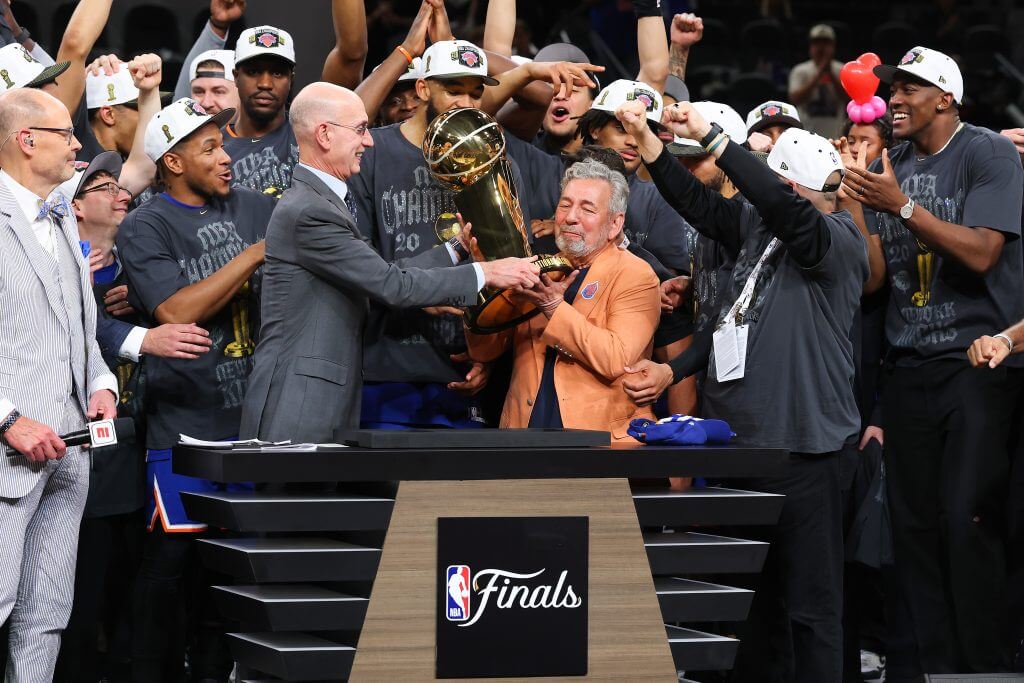
NBA迎来了一波小高潮。人们对总决赛的关注度极高——近30年来收视率最高的系列赛就是明证。比赛竞争激烈,场上的对抗强度令人屏息,比赛过程更是扣人心弦。最重要的是,全世界的球迷都从这一赛事产品中获得了极佳的娱乐体验。
这与漫长而乏味的常规赛形成了鲜明对比。
虽然NBA无法保证纽约尼克斯队每年都能打破长达53年的冠军荒,但本次总决赛提醒了人们,当联盟处于最佳状态时,它能够吸引全球观众,并为数百万球迷带来欢乐。同时,它也提醒了人们,如今的常规赛已经变得多么枯燥乏味。我们不能指望在全年的每一个夜晚,都能看到季后赛最后两个月里那种强度的对抗;但如果NBA不能借着尼克斯夺冠之路所创造的能量乘胜追击,缩小季后赛的激情与常规赛的冷淡之间的差距,那么联盟近期积累的大部分好感都将迅速消逝。
NBA必须抓住这一难得的势头。
整个季后赛期间都洋溢着高强度的对抗。外界的讨论热度极高——其中很大一部分集中在22岁的圣安东尼奥马刺队球星维克托·文班亚马 (Victor Wembanyama) 身上,他似乎注定要在勒布朗·詹姆斯 (LeBron James) 和斯蒂芬·库里 (Stephen Curry) 退役后成为联盟的下一代门面。电视收视率同比上升,这在很大程度上得益于联盟与NBC重建的合作伙伴关系,以及每周在公共电视网上的定期亮相。通过NBA新的电视转播协议,数十亿美元正源源不断地注入这项运动,而且得益于扩军加盟费,未来可能还会有更多资金注入。
几周后,当联盟总裁亚当·肖华 (Adam Silver) 迎来才华横溢的新一届选秀球员时,这一火热势头应该会进一步升温——紧随其后的还有围绕可能发生的扬尼斯·阿德托昆博 (Giannis Antetokounmpo) 交易的关注度,以及下赛季可能是詹姆斯传奇职业生涯的最后一舞。
而这一切发生之前,常规赛刚刚被一系列阴霾所笼罩:摆烂风气如此盛行,以至于肖华不得不针对下赛季出台新规;博彩丑闻持续发酵;以及围绕洛杉矶快船队和科怀·伦纳德 (Kawhi Leonard) 的争议。联盟必须设法解决一个已经困扰其多年的问题:如何让82场常规赛显得更有意义?
NBA多年来一直在寻找答案。大约四年前,联盟在一定程度上承认了这一问题,当时它推出了NBA季中锦标赛,试图激发人们对常规赛初期的兴趣。本赛季,尼克斯队在最近成为了历史上首支在同一年夺得NBA杯和总冠军的球队。但到目前为止,这项锦标赛本身的效果褒贬不一,许多联盟观察家质疑,锦标赛带来的后勤问题——特别是给许多球队造成的赛程冲突——对联盟日程表而言是否弊大于利。联盟在发现问题并试图采取行动方面值得赞扬。但关于赛事产品更深层次的问题依然存在。肖华及其团队试图寻找答案的每一个问题,背后都潜藏着两个字:负荷管理。
球员轮休的现象不会消失,尤其是在运动科学持续强调恢复和预防伤病的情况下。负荷管理对NBA的影响是深远且具有破坏性的。自2012年圣安东尼奥马刺队功勋教练格雷格·波波维奇 (Gregg Popovich) 在一场全美直播的比赛前轮休了蒂姆·邓肯 (Tim Duncan) 及队内几位顶级球星以来,联盟中关于负荷管理如何改变比赛的例子便屡见不鲜。
在报道了近20年NBA之后,有一场比赛让我记忆犹新。那是2022年12月,布鲁克林篮网队背靠背挑战的第二场。在前一天晚上艰难地在主场战胜亚特兰大老鹰队后,篮网队连夜前往印第安纳波利斯,准备在第二天晚上对阵步行者队。
第二天早上,他们宣布将有八名球员缺席比赛,这让所有人大吃一惊,其中包括甚至没有随队出征的球星凯文·杜兰特 (Kevin Durant) 和凯里·欧文 (Kyrie Irving)。篮网队最终因这一决定被罚款2.5万美元,但伤害已经造成。
那天晚上,甘布里吉球馆(Gainbridge Fieldhouse)内的气氛降到了冰点。尽管比赛直到最后都打得很胶着,但球馆里并没有多少兴奋的情绪。球迷们花钱买票,是为了看杜兰特和欧文今年在印第安纳波利斯的最后一次常规赛亮相。当这两位球员都没有登场时,整个球馆仿佛被泄了气一般。
这些年来,我曾多次询问杜兰特,联盟是否应该采取更多措施来改善常规赛。每一次,他都坚定地认为赛事产品本身处于良好的状态。本赛季早些时候,我问了他同样的问题,得到了类似的回答。
“绝对不,老兄,”杜兰特告诉The Athletic。“我们打了太多比赛了,老兄。总会有那么些时候,会有一些艰难的比赛,会有一些不忍直视的比赛。这就是篮球的磨砺,你懂我意思吗?会有一些艰难的比赛。会有球员受伤的时候。也会有你最喜欢的球员可能不在阵容中的时候。这是一个长达六个月的赛季。我们打的是高强度、最高水平的篮球。我只想告诉球迷们,和我们一起经历这段旅程。要理解这其中会有起起落落,也要理解一切不可能都是完美的。”
杜兰特的观点不无道理。NBA超级巨星不是机器。他们不是超人。他们和普通人一样,也有起起落落。赛程非常紧凑,尤其是考虑到现在的比赛节奏比十年前还要快。
但要找到让常规赛重回正轨的方法,答案在于联盟必须竭尽全力让其最顶级的球星保持健康并留在场上。比赛节奏更快,球员的爆发力更强,软组织损伤也变得越来越普遍。这就是为什么金州勇士队主教练史蒂夫·科尔 (Steve Kerr) 一直直言不讳地表示,希望看到NBA减少常规赛的场次,以更好地保护球员的健康。
伤病永远是这项运动的一部分。但为了改变常规赛的基调,联盟无法承受明星球员受伤的代价。球星能卖出球票,带来新闻点击量,并激发最大的关注度。根据Statmuse的数据,被许多人视为有史以来最伟大球员的迈克尔·乔丹 (Michael Jordan) 在其15个NBA赛季中,场均出场38.3分钟,每年打71.5场比赛。相比之下,杜兰特在下赛季进入其第19个NBA年头之际,场均出场36.7分钟,每赛季打66.7场比赛。而詹姆斯在联盟征战23年后,场均出场37.6分钟,每赛季打70.5场比赛。
伟大往往由他们的稳定性和耐用性来定义——尽管37岁的杜兰特和41岁的詹姆斯在各自职业生涯的尾声都遭遇了各种不同的挫折。对联盟来说,更大的问题是其他明星球员正面临着比以往任何时候都多的伤病。像阿德托昆博和文班亚马这样的超级巨星今年都因伤缺席了相当长的时间。今年早些时候,联盟因伤缺席的比赛场次甚至有望创下新纪录。
联盟已经采取措施来解决摆烂问题,但仅靠遏制这一问题并不能解决伤病问题,而伤病同样是许多球迷对常规赛日益冷淡的原因之一。如果明星球员继续因伤缺席一段时间,球迷们仍然会觉得与他们所看到的最终赛事产品脱节。为什么不呢?他们花费了时间和金钱,就是为了看联盟中最顶级的球星。
如果这些球星不能持续留在场上,NBA在过去两个月里建立起来的势头可能会以比到来时快得多的速度消失。
由生成式 AI 翻译,译文内容可能不准确或不完整,以原文为准。
点击查看原文:The NBA has momentum. Now comes the hard part — keeping it
The NBA has momentum. Now comes the hard part — keeping it
The NBA is on a mini heater. The interest in the NBA Finals was off the charts — as evidenced by the fact that it was the highest-rated series in nearly 30 years. The games were competitive, the intensity on the floor was palpable and the play was captivating. Most importantly, fans all over the world were entertained by the product.
It was a far cry from the slog of the regular season.
While the NBA can’t guarantee that the New York Knicks are going to snap a 53-year championship drought every year, the finals were a reminder that the league, at its best, can captivate a global audience and produce joy for millions of fans. They were also a reminder of just how dull the regular season has become. The intensity generated throughout the last two months of the postseason can’t be expected every single night all year, but if the NBA can’t capitalize on the energy the Knicks’ title run created and narrow the gap between playoff excitement and regular-season apathy, much of the goodwill the league has built up recently will fade quickly.
The NBA must take advantage of this rare momentum.
Intensity radiated throughout the playoffs. There was legitimate buzz — much of it centered on 22-year-old San Antonio Spurs star Victor Wembanyama, who appears destined to become the next face of the league when LeBron James and Stephen Curry retire. TV ratings are up year over year, thanks in large part to the league’s renewed partnership with NBC and regular appearances on network television every week. Billions of dollars are flowing into the game through the NBA’s new TV deal, with even more money likely on the horizon thanks to expansion fees.
That hot streak should gain even more steam in a couple weeks when commissioner Adam Silver welcomes a talented new draft class into the league — followed by the interest that surrounds a possible Giannis Antetokounmpo trade — and what could be the final year of James’ legendary career next season.
All of it comes after a regular season marred by a tanking epidemic so widespread that Silver implemented new rules going into next season, an ongoing gambling saga and a controversy surrounding the LA Clippers and Kawhi Leonard. The league has to find a way to fix an issue that has been hovering around it for several years: How do you make 82-regular season games feel more meaningful?
The NBA has spent years searching for answers. It acknowledged the issue, in part, almost four years ago when it introduced the NBA In-Season Tournament and tried to drum up interest into early regular-season games. The Knicks recently became the first team to ever win the NBA Cup and finals in the same year this season. But the results of the tournament itself have had mixed results to this point, with many league observers wondering if the logistical issues created by the tournament, specifically the schedule issues it creates for many teams, is doing more harm than good to the league’s calendar. The league deserves credit for identifying the problem and trying to do something about it. But the larger questions about the product remain. Every problem that Silver and his team continue to try and find an answer to is laced with the undertones of two words: load management.
The resting of players isn’t going away, particularly as sports science continues to emphasize recovery and injury prevention. The impact of load management on the NBA has been long-lasting and harmful to the product. The league is littered with examples of how load management has changed the game ever since longtime San Antonio Spurs coach Gregg Popovich rested Tim Duncan and several of his team’s top stars before a nationally televised contest in 2012.
After nearly 20 years covering the NBA, one game sticks with me. It came in December 2022, on the second night of a back to back for the Brooklyn Nets. After a tough home win the night before over the Atlanta Hawks, the Nets traveled to Indianapolis to face the Pacers the following night.
The next morning, they surprised everyone by revealing that eight players would sit out, including stars Kevin Durant and Kyrie Irving, who didn’t even travel with the team . The Nets were ultimately fined $25,000 for the decision, but the damage had already been done.
The atmosphere inside Gainbridge Fieldhouse that night dimmed. There wasn’t much excitement in the building, despite the fact that the game was close until the end. Fans had paid to see Durant and Irving play in their final regular-season trip of the year through Indianapolis. When neither player took the floor, it felt like air had been let out of the arena.
I’ve asked Durant several times over the years whether the league should do more to improve the regular season. Each time, he has been steadfast in his feeling that he believes the product itself is in a good place. I asked him the same question earlier this season and got a similar response.
“Hell nah, man,” Durant told The Athletic. “We’re playing so many games, man. There’s gonna be times, there’s gonna be some tough games, there’s gonna be some unwatchable games. It’s just the grind of basketball, you know what I’m saying? It’s going to be some tough games. It’s going to be some times when guys get injured. It’s going to be where your favorite players might not be in the lineup. It’s a six-month season. We play a high intensity, the highest level of basketball. I would just tell the fans to just go through the journey with us. Understand that it’s gonna be some ebbs and flows and understand that it’s not gonna all be perfect.”
Durant’s point is fair. NBA superstars aren’t machines. They aren’t superhuman. They have ups and downs just like everybody else. The schedule is packed, especially considering the game is played at a faster pace than even a decade ago.
But the answer in trying to figure out the way in which to get the regular season back on track is for the league to do everything it can to keep its biggest stars healthy and on the floor. The game is faster, the players are more explosive and soft-tissue injuries have become increasingly common. It’s why Golden State Warriors coach Steve Kerr has been outspoken about his desire to see the NBA cut down the amount of regular-season games to try and better preserve player health.
Injuries will always be part of the sport. But injuries to marquee players are what the league can’t afford in order to change the tenor of the regular season. Stars sell the tickets, drive the story clicks and generate the most interest. Michael Jordan, regarded by many as the greatest player who ever lived, averaged 38.3 minutes a game and 71.5 games a year over his 15 NBA seasons, according to Statmuse. For comparison’s sake, Durant is averaging 36.7 minutes a game and 66.7 games a season as he enters his 19th NBA year next season. James has averaged 70.5 games per season and 37.6 minutes a game after 23 years in the league.
The greats are often defined by their consistency — and their durability — although both the 37-year-old Durant and 41-year-old James have dealt with a variety of different setbacks as their respective careers have wound down. The larger issue for the league is that other star players are dealing with more injuries than ever before. Big names like Antetokounmpo and Wembanyama missed significant time this year due to injuries. Earlier this year, the league was on track to set a new record for games missed.
The league has taken steps to address tanking, but curbing that problem alone won’t stop injury issues that are just as much a part of the growing apathy that many fans feel towards the regular season. If star players continue to miss stretches due to injury, fans will still feel disconnected from the final product they see. And why not? They spend their time and money to watch the league’s biggest stars.
If those stars can’t stay on the floor consistently, the momentum the NBA has built over the last two months could disappear far more quickly than it arrived.
By Nick Friedell, via The Athletic