By Fred Katz | The Athletic, 2026-06-08 09:05:29
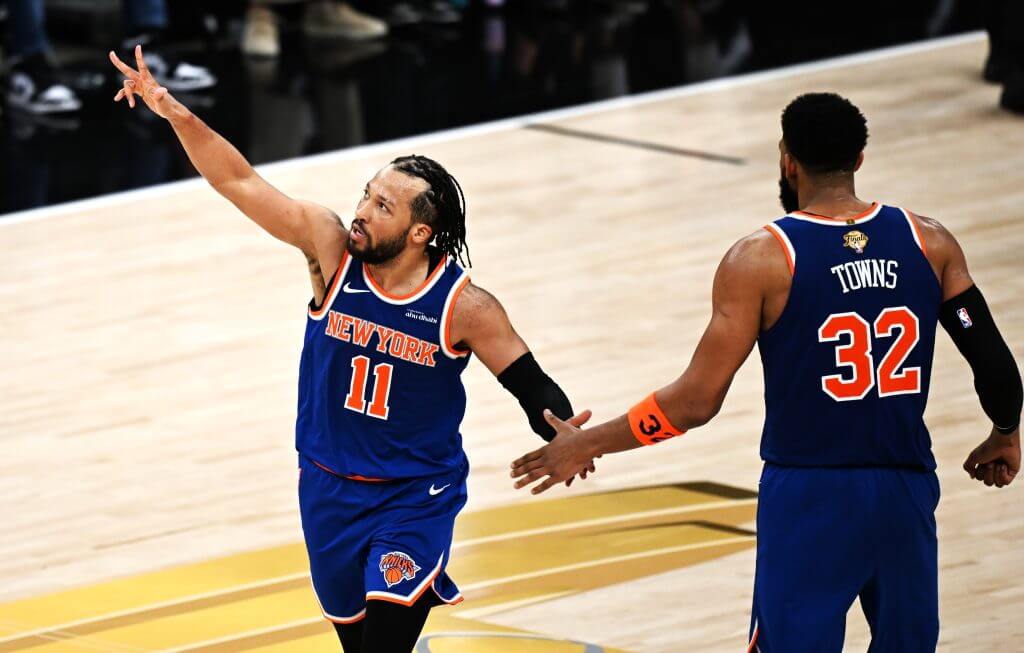
纽约——在“凝聚力”成为纽约尼克斯队的标志性特征之前,本赛季早些时候就已经开始萌发出这种迹象。
尼克斯现在距离他们53年来的首个总冠军仅差两场胜利。但在几个月前,当冠军戒指还远未如此清晰可见时,有一个人为了大局做出了牺牲。
1月底,主教练迈克·布朗 (Mike Brown) 将前年度最佳第六人得主乔丹·克拉克森 (Jordan Clarkson) 摁在了替补席末端。克拉克森的剪影本可以成为“国家得分协会”的标志,但他却坠入了篮球世界的遗忘角落,被固定在板凳席末端,除非尼克斯遭遇伤病潮,否则根本得不到上场时间。
于是,他誓言做出改变。
整个二月他几乎没有上场。到了三月,尼克斯迎战他的老东家犹他爵士。纽约助理教练莫·奇克斯 (Mo Cheeks) 在教练会议上建议布朗启用克拉克森,因为对他来说,这注定是一个情感交织的夜晚。布朗采纳了建议,克拉克森随即迎来爆发:他在26分钟内狂砍27分,带领尼克斯在一场焦灼的比赛中艰难取胜。
这是克拉克森本赛季最后一次得分爆发,但这也标志着他重新回到了轮换阵容中。
克拉克森曾经的标签——那些源源不断的得分——不再是唯一重要的事情。这位征战了12年的老将,学会了新的本领。
从那时起,一个全新且令人耳目一新的克拉克森诞生了。他开始全场领防对方的持球人——而且效果显著。在防守端,无论克拉克森移动到哪里,都充满了爆发力。当他得知数据分析显示他对持球人的施压程度甚至超过了朱·霍勒迪 (Jrue Holiday)——这位可能是他同代人中最坚固的防守型后卫时,他挺起胸膛,脸上露出了笑容。“现在,我绝对得保持下去,”他说。他拼命冲抢进攻篮板。从他重回轮换的那一刻起,直到常规赛结束,他成了整个NBA在篮板球争夺上最凶悍的后卫之一。
这不再是那个价值仅取决于能否投进球的克拉克森。他仿佛化身成了乔什·哈特 (Josh Hart),一个除了把球投进篮筐之外,关心场上所有其他细节的人。
本赛季早些时候,有记者询问尼克斯队长杰伦·布伦森 (Jalen Brunson),克拉克森的转型(以及激发这一转型的无私精神)是否可以成为球队年轻球员的榜样。但在布伦森看来,这个问题的假设还不够极致。
“这可以成为任何人的榜样,”布伦森说道。
任何人——包括哈特、米切尔·罗宾逊 (Mitchell Robinson)、卡尔-安东尼·唐斯 (Karl-Anthony Towns)、米卡尔·布里奇斯 (Mikal Bridges)、OG·阿努诺比 (OG Anunoby),甚至布伦森自己。
在尼克斯奇迹般的季后赛征程中,克拉克森几乎在每一场胜利中都以某种方式做出了贡献。这期间尼克斯取得了13连胜,创造了季后赛历史上第二长的连胜纪录。然而,在总决赛第二场比赛中,克拉克森并未出场。在那场比赛中,纽约以1分险胜,在系列赛中以2-0领先圣安东尼奥马刺。
在离开霜冻银行中心球馆之前,他站在客队更衣室自己的衣柜前。罗宾逊就在他身边。他转向他的挚友,丢下了两个字。
“没有私心,”他说。
罗宾逊点了点头。
这一瞬间定义了这支如今只需再赢两场便能名垂青史的球队——这将是尼克斯自1973年以来的首个总冠军。
首轮对阵亚特兰大老鹰,尼克斯在前三场中输掉了两场。但这没关系。对阵克利夫兰骑士,他们在第四节曾落后22分。但这也没关系。总决赛第一场他们曾落后14分,第二场落后12分;在第二场末段,他们仅用三分钟就将14分的领先优势拱手相让。这一切都没关系。
每一次,从当家球星到角色球员,每个人都坚守自己的岗位。每一次,他们都赢了。
“你一整年都在致力于建立凝聚力,就是为了这样的时刻,”布朗说道。“无论(马刺)打出怎样的进攻高潮,无论比赛进行到什么阶段,我们的队员都在不断地互相鼓励,不仅是场上的球员,替补席上的球员也是如此。”
有时候,尼克斯看起来就像是在共享同一个大脑。
第二节还剩四分钟时,默契发生了。布伦森突破向篮下,但马刺高大的盖帽机器维克托·文班亚马 (Victor Wembanyama) 挡在了路线上。他迅速将球传给底角的兰德里·沙梅特 (Landry Shamet)。沙梅特向左突破,文班亚马补防,沙梅特随即一个击地传球,将球分给对侧底角的布里奇斯。
当布里奇斯运球面对文班亚马时,进攻时间已不足5秒。在那种情况下,大多数球员都会准备仓促出手跳投,尤其是当世界上最具威慑力的防守者挡住去路时。但尼克斯在进攻时间将尽时从不慌张。不知怎的,他们总能知道队友在想什么。
布里奇斯将球传给底角的布伦森,然后重新落位到右侧。布伦森迅速将球转移给阿努诺比。时间仿佛变慢了。当阿努诺比运球突向篮下时,24秒进攻时间只剩2秒。在原本应该慌乱的时刻,还能有如此多繁复的传导球,这绝非寻常。直到周五之前,这甚至连特例都算不上——因为根本不可能发生。然而,尼克斯的传导还没有结束。
阿努诺比迎着篮下的文班亚马强突,并送出了最后一次妙传,助攻右侧底角的布里奇斯顶着哨声命中压哨三分。
在短短10秒钟内,尼克斯完成了4次侵略性极强的突破和5次完美的传球。没有一个人试图去当孤胆英雄。
布伦森将这次进攻描述为:“只是阅读防守并做出反应。”
“我们在互相配合,”他说。
但并非每个人都能如此迅速地阅读比赛并冷静地做出反应。走到这一步需要耐心。正如布朗、唐斯等人所说,这需要“牺牲”。
当赛季初球队进攻运转不顺时,教练组和球员们都需要保持开放的心态。布朗曾想运行一种更类似于尼克斯对阵老鹰时所采用的进攻体系——让唐斯在肘区或高位担任策应点,周围球员进行快速无球跑动。但唐斯无法适应这种打法,于是尼克斯放弃了他们在十月份尝试的许多战术。
直到在1-2落后老鹰之后,他们重新启用了这些战术。唐斯在执行战术时更加精准。他发起的进攻都发生在三分线以内——这本就是战术该开始的地方,而不是像秋天时那样盲目地飘在外线,远离三秒区。根据Second Spectrum的数据,唐斯在触球后的传球比例达到了职业生涯新高。他的防守也达到了前所未有的高度,在与文班亚马的对位中更是百尺竿头更进一步。
唐斯完全融入了这一体系,其他人也是如此。
布伦森增加了无球跑动,这让他能够在防守端全方位地奔跑协防。布里奇斯全身心投入到第一线防守中,展现出了他在常规赛中未曾有过的身体对抗强度。沙梅特从掉出轮换,变成了投篮弹无虚发的奇兵。哈特(正如他自己所承认的)在出场时间减少的某些夜晚,偶尔会迷失宏大目标,但他现在接受了在沙梅特或迈尔斯·“麦克布莱德” (Miles “Deuce” McBride) 飙进三分时自己必须坐在板凳席上的现实。罗宾逊则是带伤作战。
尼克斯能走到今天,并非靠的是大刀阔斧的调整,而是通过一系列微小的调整,其中一些调整早在季后赛甚至本赛季开始前就已经悄然发生。
想要看看尼克斯那种极具压迫感的统治力中蕴含的细节吗?不妨把目光投向马刺进攻的弱侧,阿努诺比长期以来痴迷的研究正成为比赛的主旋律。这位尼克斯锋线多年来一直执着于研究对手的掩护习惯。在总决赛的前两场比赛中,他不断地破坏着圣安东尼奥的掩护配合。
文班亚马经常会为阿努诺比防守的球员做掩护。但阿努诺比并没有选择挤过、绕过或穿过掩护——甚至没有任何介词能准确形容他在这些回合中的防守方式。他直接撞向文班亚马,硬生生地撞向这座消瘦的“摩天大楼”并强行穿过去。圣安东尼奥的战术根本无法顺利展开。
罗宾逊也在为同样细微的防守细节做出贡献。早在2024年,这位身高7英尺的中锋曾反驳过一位记者的说法,当时记者称他为“盖帽手”。
他坚称,自己已经不再是那个只知道扇飞扣篮和上篮的人了。那是以前的罗宾逊,那个缺乏经验、会为了封盖每一次出手而轻易起跳的罗宾逊。现在的罗宾逊更加成熟老练。
“我是去干扰投篮,”他纠正道。
在第二场比赛的最后时刻,马刺有机会将系列赛大比分扳成1-1平,身高7英尺4英寸的文班亚马起跳进行中距离投篮。被布朗换上场加强防守的罗宾逊上前干扰。球砸在后铁弹出,尼克斯守住了1分的优势,艰难取胜。
“最让我感到骄傲的是,米奇 (Mitch) 用正确的方式防守了他,”布朗说道。“文班是现象级的球员。如果他投进了,那就投进了。你不可能封盖他的投篮。你必须让他打得艰难,用你的胸膛去顶防。……所以,米奇在两次防守中成功限制了世界上最具标志性的球员,从而帮助球队赢下了比赛,这简直是太棒了。”
但罗宾逊的防守纪律绝非一日之功——阿努诺比对细节的关注、唐斯的复苏、沙梅特的崭露头角、布朗的战术布置、哈特的牺牲以及克拉克森那已渗透到全队每个人的无私心态,同样都是长期积累的结果。
明星球员的发挥、布伦森在第四节的奇迹时刻,或是唐斯持续的内线摧毁力,固然铸就了尼克斯的伟大,但激发这段历史级季后赛征程的因素,远不止顶尖球星的天赋,甚至也不仅仅是阵容深度。纽约之所以能赢,是因为他们的整体凝聚力——至少到目前为止——比其他任何人都更强大。如果这支球队能再赢下两场比赛,这种“团队至上”的精神将定义他们的传奇。
由生成式 AI 翻译,译文内容可能不准确或不完整,以原文为准。
点击查看原文:Knicks are a team with ‘no egos.’ It's put them within two wins of a championship
Knicks are a team with ‘no egos.’ It’s put them within two wins of a championship
NEW YORK — Before collectiveness became the defining trait of the New York Knicks, signs of it began to sprout earlier this season.
The Knicks sit only two wins short of their first championship in 53 years. But a few months ago, with a ring yet to pop up in such clear sight, one man sacrificed for the greater good.
At the end of January, head coach Mike Brown plopped Jordan Clarkson, a former sixth man of the year winner, at the end of the bench. Clarkson, whose silhouette could have been the logo of the national bucket association, had fallen into basketball’s oblivion, parked on the end of the bench without any burn unless the Knicks were mired with injuries.
So he vowed to change.
He barely played in February. In March, the Knicks faced his former Utah Jazz. New York assistant Mo Cheeks suggested in a coaches’ meeting that Brown use Clarkson, for whom it could be an emotional night. Brown obliged, and Clarkson went off: 27 points in 26 minutes, leading the Knicks to victory in a game that was too close for comfort.
It was Clarkson’s final scoring outburst of the season. It was also his return to the rotation.
No longer did Clarkson’s signifier, all those points, matter. An old dog, a 12-year veteran, had learned new tricks.
From then on, a new, unrecognizable version of Clarkson formed. He started full-court pressuring opposing ballhandlers — and doing so with success. Wherever Clarkson moved to on defense, he did so with burst. He puffed out his chest, a grin across his face, when he learned that the analytics said he was pressing dribblers even more than Jrue Holiday, possibly the staunchest defensive guard of his generation. “Now, I definitely gotta keep this up,” he said. He darted after offensive rebounds. From the moment he returned to the rotation through the end of the regular season, he was one of the NBA’s feistiest guards on the glass.
This was not Clarkson, the man whose value wrapped into whether or not he made shots. It was a Josh Hart impersonator, someone who cared about everything but putting the ball in the hoop.
Earlier this season, a reporter asked the Knicks’ captain, Jalen Brunson, if Clarkson’s reinvention (and the unselfishness that inspired it) could be an example for the team’s young players. For Brunson, the question’s premise was not extreme enough.
“It can be an example for anybody,” Brunson said.
Anybody — including Hart, Mitchell Robinson, Karl-Anthony Towns, Mikal Bridges, OG Anunoby or even Brunson himself.
After contributing in some fashion to nearly every victory during the Knicks’ miraculous playoff run, which includes 13 consecutive wins, the second-longest postseason winning streak ever, Clarkson did not play in Game 2 of the NBA Finals, which New York pulled out by one point to take a 2-0 series lead over the San Antonio Spurs.
Before departing Frost Bank Center, he stood at his cubby in the visiting locker room. Next to him was Robinson. He turned to his dear friend and dropped two words.
“No egos,” he said.
Robinson nodded.
The moment defined a team that now requires only two wins to reach immortality, the Knicks’ first championship since 1973.
The Knicks dropped two of their first three games to the Atlanta Hawks in the first round. It didn’t matter. They fell 22 points in the fourth quarter against the Cleveland Cavaliers. It didn’t matter. They trailed by 14 in Game 1 of the finals and 12 in Game 2; it took them only three minutes to hand a 14-point advantage back at the end of Game 2. None of it mattered.
Each time, from the stars all the way down to the lesser-known players, they stayed within their roles. Each time, they won.
“You work on connectivity throughout the course of the year for moments like these,” Brown said. “And no matter what run (the Spurs) went on, no matter what time of the game, our guys just kept uplifting one another, not just the guys on the floor but the guys on the bench.”
At times, the Knicks look like they share one brain.
With four minutes to go in the second quarter of Game 2, telepathy set in. Brunson drove to the hoop, but the Spurs’ towering shot-blocker Victor Wembanyama was in the way. He fired a pass to Landry Shamet in the corner. Shamet drove to his left. Wembanyama helped, and Shamet bounced a pass to Bridges in the opposite corner.
Less than five seconds remained on the shot clock by the time Bridges dribbled the basketball at Wembanyama. Most players would prepare for a hasty jumper in that moment, especially with the world’s most intimidating defender impeding a path to the hoop. But the Knicks don’t panic late in possessions. Somehow, they know what each teammate is thinking.
Bridges dished a pass to Brunson in the corner, then relocated to the right side. Brunson quickly swung the ball to Anunoby. Time slowed down. Only two seconds showed on the shot clock as Anunoby dribbled to the basket. This much movement in what should be a frantic moment is not the norm. Until Friday, it was not even an exception. It does not happen. And yet, the Knicks weren’t done.
Anunoby drove into Wembanyama at the basket and threw one more helper, this one an assist to Bridges in the right corner for a 3-pointer at the buzzer.
In 10 seconds, the Knicks reeled off four aggressive drives and five perfect passes. Not one player tried to be the hero.
Brunson described the possession as, “Just reading and reacting.”
“We were playing off each other,” he said.
But not everyone can read so quickly and react with such composure. Building to this moment took patience. And as Brown, Towns and others have dubbed it, it took “sacrifice.”
It took open-mindedness from the coaching staff and players alike when the early-season offense did not settle in properly. Brown wanted to run an attack more similar to the one the Knicks deployed against the Hawks, one that placed Towns as a passer in the middle with rapid movement around him. Towns could not get comfortable, and the Knicks veered away from many of the sets they tried in October.
That is — until they re-implemented them after falling 2-1 to the Hawks. Towns ran his sets with more precision. The plays he initiated came inside the 3-point arc, where they were supposed to begin all along, instead of too far from the paint, where they had errantly drifted back in autumn. Towns began passing on a higher percentage of his touches than ever, according to Second Spectrum. His defense reached levels it had never reached, taking another leap during his matchup with Wembanyama.
Towns bought in, as had everyone else.
Brunson moved off the ball more, which allowed him to bolt in every direction on defense. Bridges locked in as a point-of-attack defender, reaching levels of physicality he hadn’t in the regular season. Shamet went from out of the rotation to being unable to miss jumpers. Hart, who (as he has admitted) could lose sight of the grander goal on random nights when his minutes decreased, accepted that sometimes he must sit as Shamet or Miles “Deuce” McBride splashes in 3-pointers. Robinson is playing injured.
The Knicks did not arrive at this moment because of massive adjustments. It was a series of minuscule tweaks, some of which occurred long before the playoffs or even this season.
Want to see the subtleties of the Knicks’ wholly in-your-face dominance? Scan over to the weak side of the Spurs offense, where a long fascination of Anunoby is becoming a theme. The Knicks wing has obsessed for years over opponents’ screening tendencies. Through two finals games, he’s consistently blown up San Antonio’s.
Wembanyama will often lay a screen for whoever Anunoby is defending. But Anunoby isn’t going over or under or around the pick — nor is any other preposition appropriate to explain what is occurring on these plays. He is battering Wembanyama, ramming into a scrawny skyscraper and powering through. San Antonio’s plays cannot properly develop.
Robinson is contributing to a similarly nuanced cause. Back in 2024, the 7-footer refuted one claim from a reporter, who referred to him as a “shot blocker.”
He was no longer a spiker of dunks and layups, he insisted. That was the Robinson of old, the inexperienced one who left his feet to chase every possible swat. This version of Robinson was more refined.
“I alter shots,” he corrected.
At the end of Game 2, with a chance to even the series at one game apiece, the 7-foot-4 Wembanyama rose for a mid-range jump shot. Robinson, who Brown substituted into the game for defense, contested it. The ball hit the back rim, and the Knicks held on for a one-point victory.
“What I’m proud about more than anything else (is) Mitch defended him the right way,” Brown said. “Wemby is iconic. If he makes a shot, he makes a shot. You’re not blocking a shot. You make him work, you lead with your chest. … So just a heck of a job by Mitch guarding the most iconic player in the world on two possessions to possibly win the game.”
But Robinson’s discipline has long been in the making — as have Anunoby’s attention to detail, Towns’ resurgence, Shamet’s emergence, Brown’s scheming, Hart’s sacrificing and Clarkson’s mentality, which has trickled down to the rest of the group.
The stars, the miraculous fourth-quarter moments from Brunson or the constant demolition jobs from Towns, contribute to the Knicks’ greatness, but the factor that has sparked an all-time run extends far beyond talent at the top or even down the rest of the roster. New York is winning because its collective, at least so far, has been greater than anyone else’s. And if this team wins two more games, the collective will define its legacy.
By Fred Katz, via The Athletic