By Chad Belew, For the Express-News | San Antonio Express-News (SAEN), 2026-06-02 04:00:11
去年夏天,在漆黑的夜色中,维克托·文班亚马 (Victor Wembanyama) 在一位名叫延安法师的少林僧人陪伴下,一步步攀登了位于中国河南省嵩山五乳峰的1500级石阶。
没有灯光,没有人群。只有一位身高7英尺4英寸(约2.24米)、年仅22岁的青年,他曾挺过肩膀血栓的折磨,并表示自己需要时间重新找回自我。
延安法师传授给他人生的禅理:“力量源自内心。……若要释放力量,必先改变内心。”
回到圣安东尼奥时,他已脱胎换骨。
这是他在这支球队效力的第三个赛季,而在此之前,这支球队已经连续六个赛季无缘季后赛——创下了建队以来的最长荒。
3月19日对阵菲尼克斯太阳队的比赛中,在马刺落后1分的情况下,文班亚马在距离篮筐17英尺处接球,在比赛仅剩1秒时顶着防守投中了一记反超比分的后仰跳投。
弗罗斯特银行中心球馆不仅爆发出排山倒海的欢呼,整座球馆都在震动。
如果你当时身处那座球馆,你一定会真切地体会到那种感觉:震撼。
所谓“震撼”,是指面对某种超越你对世界认知的宏大事物时,所产生的敬畏与惊叹。加州大学伯克利分校的心理学教授达彻尔·克特纳 (Dacher Keltner) 花了几十年的时间来研究这种情绪。
在对26个国家的研究中,克特纳发现,最常见的震撼源泉并非雄伟的山川或美丽的教堂,而是他人展现出人类极限水平的卓越表现。
而文班亚马几乎每次触球,都能带给人们这种震撼。
西部决赛对阵卫冕冠军的首场较量:客场狂砍41分、24个篮板,并鏖战双加时。在第一个加时赛还剩27秒、马刺落后3分时,文班亚马在刚过中圈、仅迈出一步(以他那惊人的“文班”尺码步伐)的位置接到了球。
在距离篮筐32英尺远的地方,他站稳脚跟,拔起出手。迎着蝉联常规赛MVP的防守。在对手的主场。作为一个年仅22岁、职业生涯首次征战季后赛的年轻人。
他毫无迟疑。
空心入网!
无与伦比的天赋让他投中了这一球,而内心深处的心理自由,则赋予了他出手的底气。
田纳西大学的研究人员曾发表过一篇关于运动队环境中“心理安全感”的研究,其中就将马刺队作为现实世界中的典型案例。
马刺传奇球星蒂姆·邓肯 (Tim Duncan) 曾描述过前马刺主帅格雷格·波波维奇 (Gregg Popovich) 是如何通过特意去了解他这个人(而非仅仅作为一名球员)来建立信任的。充满恐惧的环境只会让运动员产生自我保护的防备心理。而马刺所构建的恰恰相反——一种能够激发人内心最美好一面的文化。
在他的季后赛首秀中,文班亚马打破了邓肯保持的马刺队史季后赛首秀得分纪录。当时,邓肯和马刺名宿大卫·罗宾逊 (David Robinson) 就在场边观战。赛后,文班亚马被问及在这些马刺传奇面前打球是否会感到压力。
他回答道:“我不会说是压力,不。我会说这让人感到安全。感觉就像如果你摔倒了,你知道会有很多双手随时准备接住你。”
当批评者嘲笑他在替补席上落泪时,他并未妥协道歉:“就我个人而言,我拒绝背负必须隐藏情绪的包袱。”
那座古刹和马刺队共同为文班亚马营造了一个可以找回自我的空间——在这里,他足够自由,可以在加时赛中从32英尺外果断干拔;他也足够真实,可以在动情时在替补席上流下热泪。
这两者皆源于同一个地方。
自1996年7月搬到圣安东尼奥以来,我一直都是马刺队的球迷。我经历的第一个完整赛季是马刺队史最糟糕的一个赛季。但那个惨淡的赛季为我们换来了乐透签,而乐透签又为我们带来了邓肯。
邓肯成就了波波维奇最伟大的杰作:五个总冠军,以及一种独特到在30年后依然在开花结果的球队文化。
这一切我都亲眼见证过,但我从未见过像现在这样的景象。我深感震撼。
人们称他为“外星人”。随着时间的推移,这个绰号显得愈发贴切——因为当某人或某事超越了极限,带给人们的便是无尽的震撼。
以此衡量,文班亚马不仅仅是在这座城市制造震撼。他本身就是震撼的化身。
他才22岁。我们的传奇才刚刚开始。
本文作者查德·贝鲁 (Chad Belew) 是南城阿森纳教会(the Arsenal in Southtown)的主任牧师兼创意总监。

由生成式 AI 翻译,译文内容可能不准确或不完整,以原文为准。
点击查看原文:Opinion: We're in awe of Victor Wembanyama and the Spurs
Opinion: We’re in awe of Victor Wembanyama and the Spurs
Last summer, Victor Wembanyama climbed 1,500 stone steps up Wuru Peak in China’s Henan province in complete darkness beside a Shaolin monk named Master Yan’an.
No lights. No crowd. Just a 22-year-old, 7 feet 4 inches tall, who had survived a blood clot in his shoulder and said he needed time to find himself again.
Master Yan’an gave him a teaching: “Power comes from inside. … For power to come out, you have to change the inside first.”
He returned to San Antonio different.
This is his third season with a franchise that had gone six seasons without a playoff game — the longest in its history.
On March 19, against the Phoenix Suns, with the Spurs down by one, Wembanyama caught the ball 17 feet out and hit a go-ahead fadeaway with one second left on the clock.
The Frost Bank Center didn’t just cheer. It shook.
If you were in that building, you know exactly what that feeling was: awe.
To feel in awe is to be in the presence of something vast that transcends your understanding of the world. University of California, Berkeley professor of psychology Dacher Keltner has spent decades studying this emotion.
Across 26 countries, Keltner found that the most common source of awe wasn’t a mountain or a beautiful cathedral. It was other people performing at the outermost edge of what human beings can do.
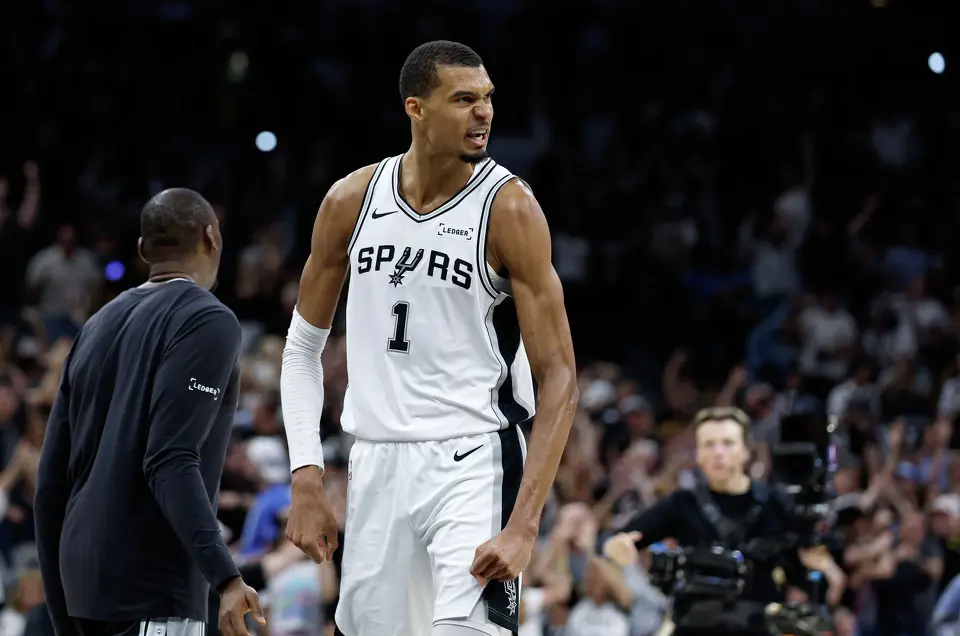
Wembanyama produces that feeling nearly every time he touches the basketball.
Game 1 of the Western Conference finals against the defending NBA champions: 41 points, 24 rebounds, two overtime periods on the road. In the first overtime, with the Spurs trailing by three and 27 seconds left, Wembanyama caught the ball one Wemby-size step across the half-court line.
And standing 32 feet from the basket, he planted his feet, pulled up and let it fly. Against the back-to-back MVP. On their floor. As a 22-year-old in his first playoff run.
He didn’t hesitate.
Nothing but net.
Physical gifts are what let him make that shot. Psychological freedom is what lets him take it.
Researchers at the University of Tennessee published a study on psychological safety in athletic team environments that used the Spurs as a real-world example.
Spurs legend Tim Duncan once described how former Spurs coach Gregg Popovich built trust by going out of his way to know Duncan as a person, not just a player. Fear-based environments produce self-protective athletes. What the Spurs built is the opposite — a culture that brings out the best of what is already inside a person.
After his playoff debut, when Wembanyama broke Duncan’s franchise record for points in a postseason debut, with Duncan and Spurs veteran David Robinson watching courtside, he was asked about the weight of performing in front of Spurs legends.
His answer: “I wouldn’t say weight, no. I would say it feels safe. Feels like if you trip, you know, there’s a lot of hands that are ready to catch you.”
When critics mocked him for crying on the bench, he didn’t apologize. “Personally, I refuse to carry the burden of having to hide my emotions.”
The monastery and the Spurs organization built a space where Wembanyama could find himself — a person free enough to pull up from 32 feet in overtime and honest enough to cry on the bench when it means something.
Both come from the same place.
I’ve been a Spurs fan since I moved to San Antonio in July 1996. My first full season was the worst in franchise history. That losing season gave us the lottery pick. The lottery gave us Duncan.
Duncan gave us Popovich’s greatest work: five championships and a culture so distinct it’s still producing 30 years later.
I’ve watched all of it, and I’ve never seen anything like this. I am in awe.
They call him “the Alien.” The longer this goes, the more the name makes sense — because awe is what occurs when someone or something exceeds limits.
By that measure, Wembanyama isn’t just producing awe in this city. He is it.
He’s only 22 years old. We’re just getting started.
Chad Belew is lead pastor and creative director of the Arsenal in Southtown.
By Chad Belew, For the Express-News, via San Antonio Express-News