By Anthony Gharib | ESPN, 2026-04-11 21:00:00
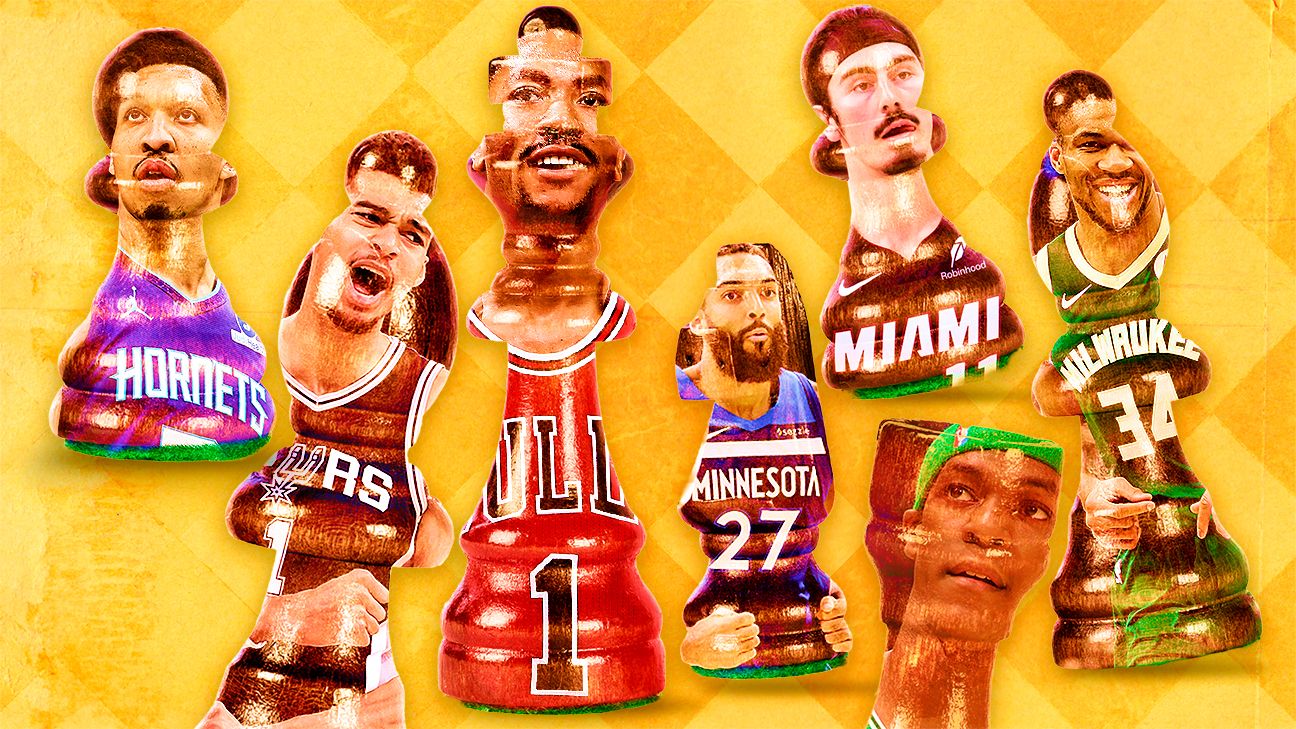
比赛还剩 10 秒。球在勒布朗·詹姆斯 (LeBron James) 手中。
密尔沃基雄鹿队仅领先洛杉矶湖人队两分,雄鹿前锋扬尼斯·阿德托昆博 (Giannis Antetokounmpo) 洞察了这次进攻。在防守詹姆斯时,他绕过掩护,从詹姆斯身后将球捅掉,在 1 月 9 日锁定了 105-101 的胜利。
当晚晚些时候,在加密货币网竞技场 (Crypto.com Arena) 的球员通道内,阿德托昆博解释了他这次防守的策略。
“我深知在关键时刻,球一定会交到勒布朗手中。我知道他想杀入内线并完成进攻。我知道他会叫挡拆,”阿德托昆博告诉 ESPN,“我和他交手过很多次,所以我只是在提前思考。我只是为了让自己处于一个更容易防守成功的位置。”
预判一直是阿德托昆博比赛风格的一部分。这让他完成了 NBA 总决赛历史上最不可思议的进攻之一——在 2021 年系列赛第四场对德安德烈·艾顿 (Deandre Ayton) 的那记关键盖帽。
“我预见到了那次进攻,”他在赛后说道。
10 岁时,他在希腊的一家教堂学会了国际象棋。周日他会参加礼拜,而周一、周三和周五,教友们可以参加乒乓球和国际象棋等活动。老师们教会了阿德托昆博后者。
“然后我就变得非常擅长此道了,”阿德托昆博说。
国际象棋让他明白了提前思考的重要性——无论是在棋盘上还是在木地板上。
那一晚,阿德托昆博赢了这位“国王”。将军。
这位两届 NBA MVP 并不是更衣室里唯一宣传国际象棋力量的人。
联盟中已经形成了一个由球员组成的“兄弟会”,他们都在推崇国际象棋的好处。虽然水平参差不齐,但有一点是恒定的:这项拥有数百年历史的游戏为场上表现提供了不同的视角。现役和退役球员都强调,战略要素——预判走位、识别模式以及领先对手一步——可以从棋盘转化到球场。从失败中吸取的教训同样适用于生活。
一些 NBA 球员公开拥抱国际象棋。卢卡·东契奇 (Luka Doncic)、杰伦·布朗 (Jaylen Brown) 和小海梅·哈克斯 (Jaime Jaquez Jr.) 在 Chess.com 上都有互动机器人,球迷可以向他们发起挑战。
其他人则将其直接带到了社区。
2024 年 12 月,维克托·文班亚马 (Victor Wembanyama) 邀请球迷在纽约华盛顿广场公园与他对弈。大雨并没有阻止这位圣安东尼奥马刺队前锋与任何愿意在棋盘对面直视他的人博弈。随后,文班亚马提议举办“NBA 球员专属国际象棋锦标赛”。
几个月后,在拉斯维加斯,前 NBA 后卫德里克·罗斯 (Derrick Rose) 真的组织了这样一场比赛。
文班亚马对这项游戏的热情也延续到了他的训练中。文班亚马经常进行的休赛期训练是同时进行体能训练和下棋。
明尼苏达森林狼队中锋鲁迪·戈贝尔 (Rudy Gobert) 表示,几乎每次两队相遇,他都会和文班亚马下棋。他知道文班亚马的体能加象棋训练,并解释说这全关乎于在进行体育活动时做出决策。
这模拟了篮球场上的动作。
“当你只是坐着下棋时,你除了专注于棋盘外什么都不用做,”戈贝尔告诉 ESPN,“但当你真正开始感到疲劳,包括心理疲劳和身体疲劳时,我认为做出正确决策会变得更难,所以这更像是一种挑战。”
对于文班亚马来说,国际象棋提供了一种心理调节。
“我觉得这是一石二鸟。有时候你只需要逃离现实,”他告诉 ESPN,“你没有足够的精力去阅读或学习某些东西,所以国际象棋在这方面很好。”
NBA 的许多人对此表示赞同。
为什么这款在 8x8 网格、64 个黑白相间方格上进行的经典棋类游戏,会开始成为 NBA 的流行活动?答案在于 NBA 球星们自己的故事,以及他们如何将这项游戏与场内外的生活联系起来。
两届 NBA 总冠军拉简·隆多 (Rajon Rondo) 表示,他是在 2020 年新冠疫情“泡泡”期间学会下棋的。2022 年退役的隆多告诉 ESPN,在他 16 年的职业生涯中,他从未听说过有 NBA 同行在玩这个。
罗斯——曾被发现在德雷克 (Drake) 演唱会上玩 Chess.com——表示他希望自己能早点开始玩。他在 10 多年前读到下棋可能有助于预防阿尔茨海默症和痴呆症后学会了这项游戏。
随着职业生涯接近尾声,他开始认真对待国际象棋,在最后五个赛季里一直带着棋盘。在底特律活塞队效力期间,他曾对阵当时的队友艾赛亚·斯图尔特 (Isaiah Stewart) 和斯维·米哈伊柳克 (Svi Mykhailiuk)。他在纽约延续了这一趋势,与尼克斯队的工作人员或飞机上的“任何人”对弈。
罗斯同意隆多的看法,即他从未听说过国际象棋在 NBA 广泛流行,他也难以解释原因。
“我总说这有点像阅读。人们真的不太谈论它,除非话题聊到了那里,然后你才会发现谁在读,谁没在读……”罗斯告诉 ESPN,“但很多人就是不喜欢谈论它。”
对于现在的联盟中的许多人来说,国际象棋带来了心理挑战,也是一种替代“无休止刷手机”的选择。一些接受 ESPN 采访的运动员在早年学会了这项游戏,后来又重新捡了起来。
哈克斯经常在加州大学洛杉矶分校 (UCLA) 训练后与队友对弈。圣安东尼奥马刺队前锋哈里森·英格拉姆 (Harrison Ingram) 在北卡罗来纳大学期间加入了一个俱乐部。夏洛特黄蜂队前锋格兰特·威廉姆斯 (Grant Williams) 在成长过程中参加过国际象棋俱乐部和比赛。
鉴于联盟频繁的旅行时间,国际象棋 App 成为了这项运动的一个便捷切入点,让任何人只需几秒钟就能开始一场对局。亚特兰大老鹰队前锋奥涅卡·奥孔武 (Onyeka Okongwu)——在南加州大学 (USC) 期间选修过国际象棋课——经常看到队友们在飞机上对弈。
“这只是为了保持大脑活跃,对吧?”金州勇士队中锋昆汀·波斯特 (Quinten Post) 告诉 ESPN,“作为运动员,我们总是在努力变得更好,而国际象棋是那种你可以通过等级分清楚地看到自己是否在进步的东西。对我来说,追踪自己的进步是非常有趣的事情。除此之外,我只是享受游戏的本质。有无限的东西可以学习,这让钻研它变得非常有趣。”
一些更衣室里挤满了棋手——从德雷蒙德·格林 (Draymond Green) 和克莱·汤普森 (Klay Thompson) 这样多次获得 NBA 总冠军的球员,到森林狼队的杰伦·克拉克 (Jaylen Clark) 和萨克拉门托国王队的马克西姆·雷诺 (Maxime Raynaud) 等年轻球员。
隆多表示,他相信这项游戏在联盟中仍是一个未被开发的社区。但他强调,罗斯的锦标赛是“一个绝妙的主意,能让更多人意识到有人在下棋”。
波斯特在决赛中击败了英格拉姆,但国际象棋才是真正的赢家——正如罗斯所希望的那样。
全联盟的水平和习惯各不相同。
阿德托昆博在赛季期间不常玩,但他以前经常和前雄鹿队友斯特林·布朗 (Sterling Brown) 以及训练团队成员对弈。在 1 月份的一次西海岸客场之旅中,目前在雄鹿教练组担任助教的隆多带了一个棋盘,希望能最终与阿德托昆博对局。
“我告诉他,只要他有空,我随时待命,”他说。
哈克斯——他的目标是成为一名国际象棋特级大师——在赛季期间投入了更多精力。奥孔武以前玩得更勤,但现在没那么多了。
波斯特在休赛期真正投入其中。他会进入一个为期三个月的阶段,刻苦钻研并享受国际象棋。去年夏天,他参观了旧金山国际象棋俱乐部,随后接受了国际大师拉迪亚·吉拉塞克 (Ladia Jirasek) 的在线辅导。
但赛季开始后,情况就不同了。
“因为当我玩的时候,显然是想赢,这对大脑来说非常紧张,对吧?……你会非常投入,无法停止思考其他事情,”波斯特说,“在赛季期间,我很难真正去玩。但我仍然会登录 Chess.com 去解谜题。”
另一方面,威廉姆斯“每两分钟”就会玩一局,他说在结束我们的采访后,有人可能会看到他在大巴上玩。然而,他也意识到自己的缺点。威廉姆斯解释说,他的等级分没有达到应有的高度,因为他不钻研。
“我喝醉了也玩,无聊了也玩,玩得很匆忙,”他说,“我必须在这方面做得更好。”
在拉简·隆多效力于洛杉矶快船队的倒数第二个 NBA 赛季中,他的比赛日例行公事是以对弈结束的。
例如,如果比赛在晚上 7 点开始,赛前仪式和热身会持续到下午 6 点左右。隆多会回到更衣室,拿出棋盘,在跳球前与当时的队友伊维察·祖巴茨 (Ivica Zubac) 下一局。隆多说,他们“每场比赛前”都会玩。
这作为一种心理准备形式,激活了他的心理状态。
“这让我能稍微早点进入思考状态。显然,带着策略思考去开始比赛,”隆多说。
罗斯也是如此,他会听着鲍勃·马利 (Bob Marley) 的歌下棋,“一直下到我上场为止”。
“更多的是,我是一名控球后卫。要能看到后面两三步的走势,或者在被对手痛击时能够保持冷静,”罗斯说,“所以要能够克服困难。”
戈贝尔、哈克斯和威廉姆斯也是如此。
一场三分钟的超快棋对局能让威廉姆斯冷静下来。哈克斯在吃赛前餐或在理疗台上时,一定会玩上一局。
“我认为这能让我专注。它让我的思维变得敏锐。尝试去假设并对对手的走位做出反应,”本赛季场均得分创职业生涯新高 15.1 分的哈克斯说,“在棋盘上观察事物,我认为这一切都以一种非常酷的方式与篮球联系在一起。”
戈贝尔的情况也类似,他通常在按摩台上“玩几局”。当他的队友安东尼·爱德华兹 (Anthony Edwards) 在我们交谈时坐在戈贝尔旁边,被问及是否下棋时,爱德华兹告诉 ESPN:“绝对不玩。”
“也许有一天会吧,”戈贝尔说。
2014 年季后赛首轮系列赛中,公牛队曾以 3-0 领先,但第四场比赛在还剩 1.3 秒时战平。雄鹿队在己方半场发球。杰里德·贝勒斯 (Jerryd Bayless) 假装跑向底角,然后切入篮下,甩掉罗斯并接到贾里德·杜德利 (Jared Dudley) 的传球,完成绝杀上篮。
多年后,坐在迪萨布尔桥另一侧的芝加哥河畔,罗斯靠在椅子上回想那次防守。他解释说,当时的雄鹿主帅贾森·基德 (Jason Kidd) 针对了他。这次防守在罗斯的职业生涯中一直困扰着他,这展示了被针对的重要性,以及“场上的每一个动作都可能决定成败”。这与国际象棋并无二致。
罗斯说,在季后赛中,由于每一次球权的重要性,这两项运动之间的相似性会增加。每一步棋,比赛的分量都很重。
“那一步棋,你在移动下一个棋子之前必须思考,这可能会毁掉整场比赛。尽管在那一刻它看起来微不足道,但它可能会打乱你的防守,”他说,“因为你把一个棋子放在某个位置,你就留下了空隙或给了别人防守的空间。根据那个球员的不同,他们会操纵这一点。”
联盟中的球员们也宣扬着类似的益处。
在 NBA 职业生涯中,隆多以识破对方战术并寻找优势而闻名。他在学会下棋之前就建立了这种声誉;因此,国际象棋对他并没有产生重大的场上影响。
相反,他在录像室的研究让他能在比赛中领先一步。他将其比作在国际象棋中进步。
“看录像和钻研总是很好的习惯,这就像下棋一样,”隆多说,“唯一的进步方式就是回看你的对局,尝试复盘并弄清楚对手的走法。”
超快棋和快棋帮助戈贝尔观察并做出快速决策。这帮助他理解,有时你找不到完美的选项,但你必须做出决定。
他强调了国际象棋的战略要素与防守之间的相似性。在观察整个赛季或季后赛系列赛的比赛时,“这非常有策略性,”他解释道。
“我认为篮球总是一场心理博弈,尤其是我作为一名在防守端尽其所能的大个子,”与迪肯贝·穆托姆博 (Dikembe Mutombo) 和本·华莱士 (Ben Wallace) 并列保持 NBA 纪录四次获得 DPOY 奖项项的戈贝尔说,“当对手有时试图诱导我,或者试图读取我的动作时。所以,这里面有很大的威慑博弈和战略博弈。”
英格拉姆表示,国际象棋有助于了解人的位置,类似于了解棋盘上棋子的位置。当你持球时,防守可能会移开。如果持球者没有正确识别这种变化,他们可能会出现失误。他将其比作快棋。
了解对手在两项运动中同样重要。威廉姆斯说,根据一贯的战术或策略为面前的情况做准备,使得这两项运动非常相似。这可能决定了一次得分和一次失误的区别。
哈克斯的解读则有所不同:在国际象棋中,有时你为对手准备的东西并不是实际发生的情况。
“你做了准备,但在比赛和棋局中会有很多变数,你必须调整并准备好应对任何情况,”他说,“你总是试图预测下一步或后面几步。但归根结底,一切都要回到那一刻的最佳走法。我认为这也与篮球息息相关。”
在教练方面,国际象棋教会了隆多耐心。他说 NBA 全关乎于见招拆招并做出正确的举动。
然而,这也关乎于减少失误。
“如果你犯了错,要弄清楚如何从中获利,”隆多说,“因为再次强调,有时你可能会丢掉皇后。你会恐慌吗?你如何处理逆境?这些都是人生课题。”
大多数 NBA 球员都拥有天生的篮球技能,并通过多年的练习和竞争不断精进。但有时在跳球开始时,因素可能不在他们的控制范围内。双腿可能因旅途而感到沉重,或者投篮就是投不进。反之亦然,投进一个球后,篮筐可能开始变得像大海一样宽阔。
国际象棋是无可比拟的。
“没有状态不好的夜晚,”英格拉姆说,“这就是国际象棋。我来走棋,我做最后的决定。”
在篮球场上,队友们一起打球。场边的教练组提供实时的调整和建议。在 48 分钟的比赛中会有停顿。
就像任何其他个人运动一样,国际象棋没有这些所谓的奢侈品。这是单挑。在国际象棋中输球与在篮球中输球是不同的。
事实上,对一些球员来说,输掉棋局的感觉更糟。
“我从未当过拳击手,但我可以想象这就像拳击。没有其他人可以责怪……”自称“输不起”的隆多说,“这是一场思维游戏。所以这与身体素质或任何东西都无关。这关乎你的智力。”
哈克斯解释说,输球是“无法弥补的”。而在篮球中,你可以通过拼抢来弥补,但在国际象棋中,这是一个很难挽回的心理失误。
在接受采访时,哈克斯充分表现出了对他最近失利的厌恶。他靠在椅子上,长发编在头带下,充满激情且带着懊恼地讲述着他目前的等级分历程,对他那带他进入 NBA 却没能让他在去年 11 月突破 1000 分大关的大脑感到沮丧。
“最近我到了 998 分。我到了 1004 分,然后一路掉回了 920 分。这就是我现在的水平,”他说,“我受不了了。我一直在走一些最愚蠢的棋,兄弟,我在干什么?我太沮丧了,想把手机摔到墙上。”
国际象棋使用 Elo 等级分系统来衡量一名球员相对于其他人的实力。Elo 分越高,实力越强。有各种时间控制,如超快棋(20 秒到 2 分钟)、快棋(3 到 5 分钟)和快速棋(10 到 60 分钟)。每种模式都有特定的评分。例如,世界第一马格努斯·卡尔森 (Magnus Carlsen) 拥有 2869 的快棋评分和 2832 的快速棋评分。
波斯特对哈克斯关于提高评分的感受表示共鸣,同时也间接地向这位前锋和其他挣扎中的棋手提供了建议。
“努力变得更好是一个令人沮丧的磨练过程。但你必须克服那种只追求增长的心态。你不能只看结果,显然篮球也是一样,”波斯特说,“在你的青少年时期,无论输赢,你都必须保持每天努力变得更好的心态。这就是你进步的方式。”
罗斯也认同国际象棋输球带来的痛苦更深,尤其是面对朋友时。这项运动的亲密性在苦涩感中扮演了重要角色。输掉棋局并不困扰阿德托昆博,因为这不是他的职业。
但是,这些经历和感受吸引了 NBA 中正在训练的“特级大师”们——并激励他们传播这项运动的财富。
罗斯在拉斯维加斯举办的“象棋节” (Chesstival) 锦标赛是提高国际象棋知名度的第一步。这可能预示着未来几年的趋势。
去年 7 月,他与一个自由国际象棋团体合作,在自由国际象棋大满贯巡回赛期间举办了这次活动。共有两场锦标赛,其中一场是现役或退役 NBA 球员与一名特级大师搭档。隆多和罗斯参加了比赛,此外还有莫雷、威廉姆斯、波斯特、英格拉姆、奥孔武、托尼·斯内尔 (Tony Snell) 等人。
对于罗斯来说,这标志着一个为期两年的过程达到了顶峰。他在 2023 年 4 月宣布“象棋节”将于当年 7 月启动,然而当时并未成功。
随后他遇到了自由国际象棋团体,特别是创始人扬·亨里克·比特纳 (Jan Henric Buettner) 和首席运营官托马斯·哈施 (Thomas Harsch)。两人向罗斯解释了自由国际象棋——一种也被称为“象棋 960”的变体,由传奇特级大师鲍比·菲舍尔 (Bobby Fischer) 倡导。后排棋子的自定义设置可以减少平局,这一理念打动了他。
这让罗斯有了一个简单的目标:为国际象棋和 NBA 球员带来兴奋感和知名度。
为本报道接受采访的多位人士透露,直到那时他们才知道联盟中存在所谓的国际象棋社区。英格拉姆解释说,锦标赛的一个影响在于可能让这项游戏变得“更酷”。
“也许人们看到德里克·罗斯、隆多等人在玩,你就会看到其他现役 [NBA] 球员也在玩,”他说,“如果这让其他一些不知道这么多人都在玩棋的棋手觉得很酷,下次他们就会加入锦标赛。”
通过他在国际象棋上的投资,罗斯专注于关注儿童和女性。他研究了这项运动,力求通过“在山顶大喊这项游戏很酷”来带来更多关注。他有一个与自由国际象棋合作的三年“象棋节”范式,并计划明年在麦迪逊广场花园举办另一场涉及儿童和女性的锦标赛。
其他现役和前 NBA 球星也可能追随罗斯的脚步。
去年夏天,文班亚马与当地一家国际象棋俱乐部合作,在他的家乡法国勒谢奈举办了“Hoop Gambit”活动。哈克斯希望每个人都能学会下棋,因为这能让人保持脚踏实地,思维敏锐。他甚至开玩笑说“也许”会发起一个 NBA 国际象棋俱乐部。
隆多想走得更远,从他的 AAU 项目“隆多学院” (Rondo Academy) 开始。
“当我们去参加锦标赛时,我要让他们下棋,而不是玩手机或做其他事情,比如玩电子游戏,”他说,“我要举办一场国际象棋比赛……我想改变 AAU 的基层项目。”
提前思考以传播这项游戏,并寻找最终的“将军”——无论是在场内还是场外。
由生成式人工智能翻译,译文内容可能不准确或不完整,以原文为准。
点击查看原文:Checkmates and closeouts: Inside the NBA's quiet chess boom
Checkmates and closeouts: Inside the NBA’s quiet chess boom
Ten seconds left. Ball in LeBron James’ hands.
With the Milwaukee Bucks clinging to a two-point lead against the Los Angeles Lakers, Bucks forward Giannis Antetokounmpo read the play. Defending James, he slipped past a screen and poked the ball loose from behind James, securing a 105-101 win on Jan. 9.
Later that night, in the bowels of Crypto.com Arena, Antetokounmpo explained his strategy on the move.
“I knew down the stretch that LeBron gets the ball. I knew that he wanted to get downhill and make the play. I knew that he’s going to call the pick-and-roll,” Antetokounmpo told ESPN. “I’ve played against him a lot of times, so I was just thinking ahead. Just to position myself to be more successful at the play.”
Anticipation has long been part of Antetokounmpo’s approach. It played a role in him making one of the more incredible plays in NBA Finals history, a clutch block on Deandre Ayton in Game 4 of the 2021 series.
“I saw the play coming,” he said after the game.
As a 10-year-old, he learned chess at a church in Greece. On Sundays, he’d attend service. On Mondays, Wednesdays and Fridays, churchgoers could play activities such as table tennis and chess. Teachers taught Antetokounmpo the latter.
“Then I became really good at it,” Antetokounmpo said.
Chess showed him the importance of thinking ahead – on the board and on the hardwood.
That night, Antetokounmpo got the better of the King. Checkmate.
The two-time NBA MVP isn’t the only one across locker rooms preaching the power of chess.
A fraternity has sparked with players around the league championing the benefits of chess. While skill levels range, one thing remains constant: the centuries-old game offers a different perspective to on-court play. Current and former players emphasize that the strategic elements – anticipating moves, recognizing patterns and staying one step ahead of an opponent – translate from the chessboard to the hardwood. Lessons from losing also apply to life.
Some NBA players have embraced chess publicly. Luka Doncic, Jaylen Brown and Jaime Jaquez Jr. have interactive bots on Chess.com that fans can challenge.
Others have brought it directly to the community.
In December 2024, Victor Wembanyama invited fans to play him at Washington Square Park in New York City. Rain didn’t stop the San Antonio Spurs forward from moving pieces with anyone willing to stare him down across the board. Afterward, Wembanyama advocated for “an NBA players-only chess tournament.”
Months later in Las Vegas, former NBA guard Derrick Rose organized exactly that.
Wembanyama’s passion for the game carries over to his training. A frequent offseason workout for Wembanyama is to do conditioning and play chess at the same time.
Minnesota Timberwolves center Rudy Gobert said he faces Wembanyama in chess “almost every time” their teams meet. He’s aware of Wembanyama’s conditioning and chess workouts, explaining it’s all about making decisions while doing physical activity.
It replicates action on the basketball court.
“When you’re just sitting and you’re just playing chess, you don’t have to do anything else but focus on the board,” Gobert told ESPN. “But when you actually start to get some fatigue, mental fatigue, physical fatigue. I think it’s harder to make right decisions, so it kind of challenges you even more.”
For Wembanyama, chess provides a mental reset.
“I figure it’s like hitting two birds with one stone. Sometimes you just need to get away,” he told ESPN. “You don’t have the focus needed to read or the focus needed to study something, so chess is good in that sense.”
Many across the NBA agree.
Why has this classic board game, set on an 8-by-8 grid with 64 squares of alternating colors, begun spreading as a trending activity across the NBA? The answers lie in the stories of the NBA stars themselves and how they relate to games on and off the court.
Rajon Rondo, a two-time NBA champion, said he learned chess while in the 2020 COVID-19 bubble. Rondo, who retired in 2022, told ESPN he never knew of NBA peers playing throughout his 16-year career.
Rose – memorably spotted on Chess.com during a Drake concert – said he wishes he began playing earlier. He learned the game more than 10 years ago after reading how it might help prevent Alzheimer’s and dementia.
He became serious about chess as his career wound down, carrying a board during his last five seasons. While with the Detroit Pistons, he faced then-teammates Isaiah Stewart and Svi Mykhailiuk. He continued the trend in New York, playing members of the Knicks staff or “anybody” on the plane.
Rose agreed with Rondo that he never heard of chess being played widely across the NBA, struggling to explain why.
“I always say [it’s] kind of like reading in a way. Where people really don’t talk about it unless that conversation is like that dialogue comes up then you’ll figure out who’s reading and who’s not …” Rose told ESPN. “But a lot of people just don’t like talking about it.”
For many in the league now, chess brings a mental challenge and an alternative to doomscrolling. Some athletes who spoke to ESPN learned the game earlier in their lives and picked it up again later on.
Jaquez often played with teammates after their UCLA practices. San Antonio Spurs forward Ingram joined a club while at North Carolina. Charlotte Hornets forward Grant Williams participated in chess clubs and tournaments growing up.
Given frequent travel time in the league, the chess app marked an easy entry point to the sport, making it so that anyone can be mere seconds from a match. Atlanta Hawks forward Onyeka Okongwu – who took a chess class while at USC – sees teammates playing on the plane.
“It’s just something to keep your brain active, right?” Golden State Warriors center Quinten Post told ESPN. “And us athletes, we’re always trying to get better and chess is something where you can clearly see whether you’re getting better or not by the [rating]. For me, just tracking my progress is something that’s really fun. Besides that, I just enjoy the nature of the game. There’s an infinite amount to learn, which makes it very interesting to delve into.”
Some locker rooms are filled with chess players – from multitime NBA champions like Draymond Green and Klay Thompson to younger players like the Timberwolves’ Jaylen Clark and Sacramento Kings’ Maxime Raynaud.
Rondo said he believes the game remains an untapped community in the league. But, he emphasized Rose’s tournament was “a brilliant idea to bring more awareness to people playing chess.”
Post defeated Ingram in the finals, but chess became the real victor – just like Rose wanted.
Levels and habits vary around the league.
Antetokounmpo doesn’t play often during the season, but he played with former Bucks teammate Sterling Brown “all the time” as well as with training staff members. On a January West Coast road trip, Rondo, currently an assistant on the Bucks’ staff, took a board in hopes of finally facing Antetokounmpo.
“I told him whenever he gets some downtime, I’m available,” he said.
Jaquez – who has the goal of becoming a grandmaster – dedicates himself more during the season. Okongwu used to play more often, but not as much now.
Post truly locks in during the offseason. He’ll get in a three-month phase when he grinds and enjoys chess. Last summer, he visited the San Francisco Chess Club then received online tutoring from international master Ladia Jirasek.
It’s a different conversation when the season starts.
“Because when I play, obviously trying to win and it’s pretty intense on your brain, right? … You get really into it and you can’t stop thinking about anything else,” Post said. “During the season, it’s hard for me to really play. But I’ll still be on Chess.com and play the puzzles.”
On the other hand, Williams plays “every two minutes,” saying he could even be spotted on the bus playing moments after finishing our interview. However, he’s aware of his faults. Williams explained his rating isn’t as high as its potential because he doesn’t study.
“I play games drunk. I play games when I’m bored. I rush games,” he said. “I just gotta be better at that.”
While with the LA Clippers in his penultimate NBA season, Rondo’s game-day routine concluded with moving pieces.
For example, if a game started at 7 p.m., pregame rituals and warmups would run until around 6 p.m. Rondo would head to the locker room, bring out the chess board and get a game in with then-teammate Ivica Zubac right before tip. They would play “before every game,” Rondo said.
It served as a form of mental preparation, activating his psyche.
“And that kind of just allowed me to get my thinking cap on a little bit earlier. And obviously thinking in strategy to start the game,” Rondo said.
Rose did too, listening to Bob Marley and playing chess “all the way until I get on the court.”
“It was more of, I’m a point guard. Seeing two or three plays down the line or being able to have that poise when you’re getting your ass kicked,” Rose said. “So being able to fight through that.”
Gobert, Jaquez and Williams do the same.
A three-minute blitz match calms Williams. While eating his pregame meal or on the training table, Jaquez makes sure to play.
“I think it just locks me in. It just gets my mind sharp. Trying to assume and react to opponents’ moves,” said Jaquez, who’s averaging a career-high 15.1 points per game this season. “Seeing things on the chess board, I think it all helps me relate to basketball in a really cool way.”
It’s a similar setup for Gobert, who gets a “couple games in” usually while on the massage table. When his teammate Anthony Edwards took a seat next to Gobert during our conversation, he was asked whether he plays chess, telling ESPN: “Hell nah.”
“Maybe one day,” Gobert said.
The Bulls held a 3-0 lead in the first-round series of the 2014 playoffs, but Game 4 was tied with 1.3 seconds remaining. The Bucks inbounded the ball on their side of the court. Jerryd Bayless faked going toward the corner before cutting under the basket, beating Rose and receiving a pass from Jared Dudley for a game-winning layup.
Years later, sitting near the Chicago River on the other side of DuSable Bridge, Rose leans back in his chair and reflects on the play. He explains that then-Bucks head coach Jason Kidd targeted him. The possession haunted Rose throughout his career, showing the importance of being singled out and how “everything can lie within one action on the floor.” It’s no different from chess.
In the postseason, the resemblance between the two sports heightens due to the importance of every possession, Rose said. Every move, the weight of the game is hefty.
“That one move, you have to think before you move that next piece, that it may f— up the whole game. Even though it may seem so minute at that time, but it may mess up your guard,” he said. “With you having that one piece at a place, you’re leaving up or giving space for someone to prevent. So depending on that player, they’ll manipulate that.”
Players around the league preach similar benefits.
During his NBA career, Rondo became known for deciphering opposing plays and finding advantages. He built that reputation before he picked up chess; therefore, chess didn’t have a major on-court impact for him.
Instead, his studies in the film room allowed him to have an extra step during games. He compared it to improving in chess.
“Film and studying are always great habits to pick up and that’s just like in chess,” Rondo said. “Only way you get better is watching your games and try to watch those back and figure out the opponent’s moves.”
Bullet and blitz chess help Gobert read and make quick decisions. It has helped him understand that sometimes you won’t find the perfect option, but you have to make a decision.
He highlighted similarities between the strategic elements of chess and playing defense. When looking at games over the course of a season or playoff series, “it’s very strategic,” he explained.
“It’s always a mind game I think when it comes to basketball and especially me as a big that’s doing what I do defensively,” said Gobert who’s tied with Dikembe Mutombo and Ben Wallace with an NBA-record four DPOY awards. “When guys try to bait me sometimes or try to read what I do. And so, there’s a big intimidation game and a big strategic game.”
Ingram said chess helps with knowing where people are, similar to knowing the position of pieces on the board. The defense might move away when one possesses the ball. If the ballhandler doesn’t properly identify the shift, they might commit a turnover. He compared it to blitz chess.
Understanding your opponent is similarly important in both sports. Williams said that preparing for what’s in front of you based on consistent tactics or strategies makes the two sports similar. It can make the difference between a basket and a blunder.
Jaquez broke it down differently: in chess, sometimes what you prepare for your opponent to do isn’t exactly what happens.
“You prepare for something but so many things can change throughout a game and throughout a chess match, you just got to adjust and be ready for anything,” he said. “You always try to predict the next move or moves ahead. But at the end of the day, it all comes back to what is the best move in that moment. I think that also relates to basketball as well.”
In terms of coaching, chess has taught Rondo patience. He said that the NBA is all about countering and making the right moves.
However, it’s also about limiting your mistakes.
“And if you do, figure out how to capitalize off it,” Rondo said. “Cause again, at times you might lose your queen. Do you panic? How do you handle adversity? They’re all life lessons.”
Most NBA players boast a natural basketball skill set that has been refined through years of practice and competition. But sometimes factors can be out of their control when tipoff arrives. Legs might feel heavy from travel, or shots simply don’t fall. The opposite might occur, too, the rim beginning to resemble an ocean after a made basket.
Chess is incomparable.
“It’s no bad nights,” Ingram said. “It’s chess. I make the moves. I make the final decision.”
On the basketball court, teammates play together. A coaching staff on the sideline offers real-time tweaks and suggestions. Stoppages occur throughout the 48-minute game.
Just like any other individual sport, chess doesn’t have these so-called luxuries. It’s mano a mano. Losing in chess is different from losing in basketball.
In fact, for some players, losing in chess is worse.
“I never been a boxer but I can imagine it’s just like boxing. There’s no one else to blame …” Rondo, a self-described “sore loser,” said. “This is a thinking game. So it’s not physical attributes or anything has anything to do with it. It’s about your intellect.”
Jaquez explained that “you can’t really make up” for losing. Whereas in basketball, a hustle play is an option, in chess, it’s a mental error that’s difficult to come back from.
During our interview, Jaquez fully displayed his disgust with his recent losses. He sank back in his chair, his long hair weaved under his headband as he passionately recounted the journey to his current chess rating with exasperation, frustrated with the mind that got him to the NBA – but not past a rating of 1000, as of last November.
“Recently I was at like 998. I got to 1004 and then I dropped all the way back down to 920. And that’s where I’m sitting at right now,” he said. “I cannot. And I’m like doing the stupidest moves, like bro what am I doing? I get so frustrated I want to throw my phone at the wall.”
Chess uses an elo rating system that measures the strength of a player compared to others. The higher a player’s elo, the stronger their skills. There are various time controls such as bullet (20 seconds to two minutes), blitz (three to five minutes) and rapid (10 to 60 minutes). Each mode has a specific rating. For example, world No. 1 Magnus Carlsen boasts a blitz rating of 2,869 and a rapid rating of 2,832.
Post echoed Jaquez’s feelings about improving his rating, while indirectly offering advice to the forward and other chess players who struggle.
“It’s a frustrating grind to try to get better. But you kind of have to get over the mindset where you’re trying to grow. You can’t be results-oriented and that’s the same thing with basketball, obviously,” Post said. “Through your youth, winning or losing, you have to have the mindset to try to get better every day. That’s how you improve.”
Rose agreed on the increased pain from losing in chess, especially when facing his friends. The intimacy of the sport plays a big role in the bitter feelings. Losing in chess doesn’t bother Antetokounmpo since it’s not his profession.
But, those experiences and feelings have captivated the NBA’s grandmasters in training – and inspired them to spread its riches.
Rose’s Chesstival tournament in Las Vegas marked the first step in bringing awareness to chess. And it may just foreshadow years to come.
He teamed up with a freestyle chess group to hold the event during the Freestyle Chess Grand Slam Tour last July. There were two tournaments, including one where current or former NBA players partnered with a grandmaster. Rondo and Rose participated, alongside Morey, Williams, Post, Ingram, Okongwu, Tony Snell and others.
For Rose, it marked the culmination of a two-year process. He announced in April 2023 that Chesstival would launch in July of that year, however, it didn’t work out.
He then bumped into the freestyle chess group, specifically founder Jan Henric Buettner and COO Thomas Harsch. The two explained freestyle chess – a variant also known as Chess960 that legendary grandmaster Bobby Fischer advocated – to Rose. The customization of back rows for fewer draws sold him on the idea.
It led to Rose having a simple goal: bring excitement and visibility to chess and NBA players alike.
Multiple people interviewed for this story revealed they didn’t know about the so-called chess community within the league until then. Ingram explained that one impact of the tournament lies in potentially making the game “cooler.”
“Maybe people seeing other people play like Derrick Rose, Rondo, you would see other current [NBA] players playing,” he said. “If it makes it cool for some other guys who play chess who didn’t know that all these people do play chess, next time join the tournament.”
With his chess investment, Rose focuses on shining a light on kids and women. He has researched the sport, striving to bring more visibility by yelling “at the top of the mountain that the game is cool.” He has a three-year Chesstival paradigm with freestyle chess and plans for another tournament at Madison Square Garden next year involving kids and women.
Other current and former NBA stars are potentially following in Rose’s footsteps.
Partnering with a local chess club, Wembanyama hosted “Hoop Gambit” in his hometown of Le Chesney, France, last summer. Jaquez wants everyone to learn how to play because it keeps people grounded and their minds sharp. He even joked about “maybe” initiating an NBA chess club.
Rondo wants to take it further, starting with his AAU program, Rondo Academy.
“When we go on our tournaments, Imma make them play chess instead of being on their phones and you know doing everything else. Playing video games,” he said. “I’m going to have a chess tournament … I want to change the AAU grassroots program.”
Thinking ahead to spread the game and find the ultimate checkmate – on and off the court.
By Anthony Gharib | ESPN, via ESPN