By Mike Finger | San Antonio Express-News (SAEN), 2026-03-17 16:31:30
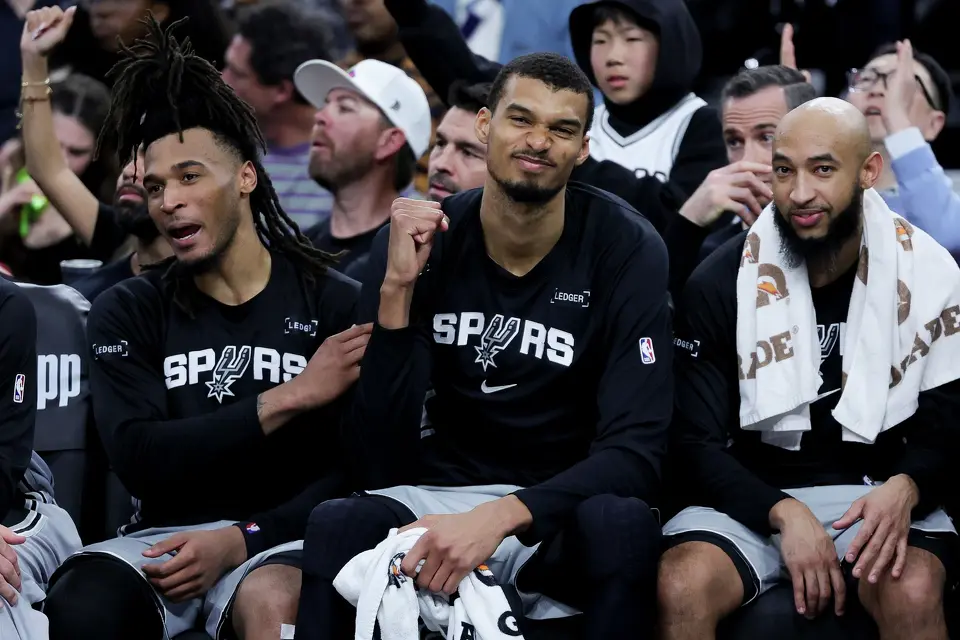
圣安东尼奥马刺队前锋维克托·文班亚马 (Victor Wembanyama)(中)在2026年3月16日星期一于加利福尼亚州英格尔伍德举行的NBA比赛下半场,与后卫斯蒂芬·卡斯尔 (Stephon Castle)(左)及后卫乔丹·麦克劳克林 (Jordan McLaughlin) 互动。(AP Photo/Ryan Sun)
当NBA在几年后重返西雅图时,至少有两个错误将得到纠正。
首先,绝不应该允许一名俄克拉荷马商人掠夺这座伟大的篮球之城。
其次,这位身高7英尺4英寸的“外星人”不应是联盟中唯一的“太空针塔”。
如果一切按计划进行,到本十年末,维克托·文班亚马 (Victor Wembanyama) 不仅将在他那“孪生地标”的阴影下打球,还将重返他曾称之为地球上“最接近反乌托邦”的地方。正如ESPN周一报道的那样,NBA董事会预计将于下周采取下一步行动,推动在2028年向西雅图和拉斯维加斯扩军。
这引发了一些显而易见的担忧(一个本就充斥着无耻摆烂行为的联盟,真的还需要两支烂队吗?假设大联盟棒球最终也入驻内华达州,NBA真的有必要成为这个过度饱和的中型市场中的第五个职业大联盟吗?)。但如果总裁亚当·萧华 (Adam Silver) 能够处理好这个棘手的难题,这或许也是一个契机。
现在难道不是修复赛程的最佳时机吗?
常规赛场次太多了。任何对联盟稍有关注的人都明白这一点,即使并非所有人都愿意承认。随着现代比赛节奏达到至少自20世纪80年代以来的最快水平,难怪几乎没有人能在82场比赛的损耗下坚持住。根据ESPN的研究,球员场均跑动距离总计达34.3英里,平均时速为4.43英里,这些都是有数据追踪以来的最高纪录。
结果如何?球星受伤,或者为了预防伤病而被迫轮休。随后,那些花大价钱买票的球迷感到愤怒,这完全可以理解。
这对比赛不利,对任何人都没有好处。
“我知道这个观点在联盟办公室不会受欢迎,但我会继续说下去,因为显而易见我们需要减少比赛场次——我们需要从赛程中减掉10场比赛,”金州勇士队主教练史蒂夫·科尔 (Steve Kerr) 本月早些时候告诉记者,“我认为如果我们减少比赛场次,联盟会更具竞争性,也更健康。”
如果科尔所说的是显而易见的,那么联盟为何不急于采纳他的建议也同样显而易见。赛程中每减少一场比赛,就意味着门票、特许经营收入和广告时段的减少。想必,这意味着老板们装进兜里的钱变少了,能花在球员薪水上的钱也变少了。
但如果有机会减轻这种集体钱包缩水的冲击呢?自2004年夏洛特重新加入联盟以来,NBA已有二十多年没有增加新球队了,这是历史上最长的无扩军时期。如果西雅图和拉斯维加斯在未来加入,将为现有的30支球队及其老板带来一笔巨大的意外之财。
据多方报道,新老板的加盟费预计在每支球队50亿至100亿美元之间。如果西雅图和拉斯维加斯合计贡献150亿美元,这意味着联盟中的每个老板都能立即获得5亿美元的注资,而这在昨天还是没有的。
当然,硬币的另一面是,从长远来看,每支球队将获得联盟共享转播收入的1/32,而不是1/30。但如果联盟没有理由相信西雅图和拉斯维加斯能把蛋糕做大,他们就不会这样做。
现在,顺着这个思路,让我们再多想想这块大蛋糕。在现行制度下,30支球队每赛季打82场常规赛,总计1230场比赛。如果有32支球队,假设每赛季打76场常规赛,仍然有总计1216场比赛可供出售和转播。尽管每支球队分到的蛋糕份额会略小一些,但那5亿美元的扩军支票难道不能弥补其中的差额吗?
诚然,这种论点可能极其天真。也许老板们永远不会同意从赛程中删掉哪怕一个赚钱的日子。
但举例来说,如果马刺队本赛季的赛程是76场而非82场,他们将只有5次背靠背,而不是11次。文班亚马到目前为止已经缺席了15场比赛。难道在76场的赛程中,他缺席的场次不会减少吗?或许最终打的场次反而一样多?
至少,这值得考虑。就目前而言,NBA的赛程安排不仅在挑战人类身体的极限,也在挑战“外星人”的极限。
所以,如果联盟能利用扩军作为一个契机呢?也许文班亚马在参观完太空针塔后,能获得额外的福利。
一个轮休之夜。
由生成式人工智能翻译,译文内容可能不准确或不完整,以原文为准。
点击查看原文:NBA expanding to Las Vegas and Seattle, time to fix broken schedule
NBA expanding to Las Vegas and Seattle, time to fix broken schedule
San Antonio Spurs forward Victor Wembanyama, center, reacts with guard Stephon Castle, left, and guard Jordan McLaughlin during the second half of an NBA basketball game against the Los Angeles Clippers Monday, March 16, 2026, in Inglewood, Calif. (AP Photo/Ryan Sun)
When the NBA returns to Seattle in a couple of years, at least two wrongs will be righted.
The first is that an Oklahoma businessman never should have been allowed to loot one of basketball’s great cities.
The second is that a 7-foot-4 alien shouldn’t be the league’s only Space Needle.
If all goes according to plan, Victor Wembanyama not only will play in the shadow of his doppelganger landmark by the end of the decade, he’ll also make a return to what he once called “the closest thing to a dystopia” on earth. As ESPN reported on Monday, the NBA’s board of governors is expected next week to take the next step toward expanding to Seattle and Las Vegas in 2028.
This brings up some obvious concerns (Does a league already rife with shameless tanking really need two more bad teams? Does the NBA really need to become the fifth major sports league in an oversaturated mid-sized market, assuming Major League Baseball ever gets to Nevada, too?). But if commissioner Adam Silver can thread a tricky needle, it also might present an opportunity.
Isn’t now the perfect time to fix the schedule?
There are too many games in the regular season. Everyone who is even halfway paying attention to the league understands this, even if not everyone wants to admit it. With the modern pace of play, which is as fast as it’s been since at least the 1980s, it’s no wonder almost nobody can hold up under the wear and tear of an 82-game schedule. Per ESPN research, players combine to travel 34.3 miles per game at an average speed of 4.43 miles per hour, which are record numbers since data has been tracked.
So what happens? Stars get hurt, or they get held out of games to prevent injuries. Then fans who shelled out big bucks for tickets get angry, understandably.
It’s not good for the game. It’s not good for anybody.
“I know this will not be a popular opinion in the league office, but I will continue to say it because it’s obvious we need to play fewer games — we need to take 10 games off the schedule,” Golden State coach Steve Kerr told reporters earlier this month. “I think it would be a more competitive and healthier league if we played fewer games.”
If what Kerr said is obvious, it’s just as obvious why the league isn’t in any hurry to follow his recommendation. Every game that gets removed from the schedule means fewer tickets and concessions and commercial breaks to sell. And that, conceivably, means less money for owners to put in their pockets, and to spend on player salaries.
But what if there were a chance to mitigate that collective hit to the wallet? The NBA, which hasn’t added a team since Charlotte re-entered the league in 2004, is more than two decades into its longest expansion-less era in history. If and when Seattle and Las Vegas join the fall, it will provide a huge windfall to the 30 existing franchises and their owners.
Per multiple reports, expansion fees for the new prospective owners are expected to range from $5-10 billion per franchise. If Seattle and Las Vegas combine for $15 billion, that means every ownership group in the league gets an immediate infusion of $500 million they didn’t have yesterday.
The flip side of this, of course, is that moving forward, each team will receive 1/32nd of the league’s shared broadcast revenue, instead of 1/30th. But the league wouldn’t be doing this if it didn’t have reason to believe Seattle and Las Vegas will make the total pie bigger.
Now, along those lines, let’s think a little more about the total pie. Under the current system, 30 teams play 82 times per regular season, for a total of 1,230 games. If 32 teams played, say, 76 times per regular season, there still would be a total of 1,216 games to sell and broadcast. And even though each franchise would receive a slightly smaller piece of that pie, wouldn’t those $500 million expansion checks help make up for the difference?
Granted, this argument might be hopelessly naïve. Maybe there’s no chance owners ever agree to drop a single money-making date from the schedule.
But if the Spurs, for instance, had 76 games on their schedule this season instead of 82, they would have had five back-to-backs instead of 11. Wembanyama has missed 15 games so far. Doesn’t it stand to reason that during a 76-date schedule he might have missed fewer games? And perhaps wound up playing just as many?
At the very least, it’s worth considering. As it is, the NBA’s scheduling format is testing the limits of not only the human body, but the limits of extraterrestrials, too.
So if the league can use expansion as an opportunity? Maybe Wembanyama can get an extra benefit after he visits the Space Needle.
A night off.
By Mike Finger, via San Antonio Express-News