点击查看原文:2026 NBA mock draft: New prospects among first-round picks
2026 NBA mock draft: New prospects among first-round picks
With college basketball entering the thick of conference play and the NBA standings taking shape at midseason, it’s a good juncture for a mock draft update.
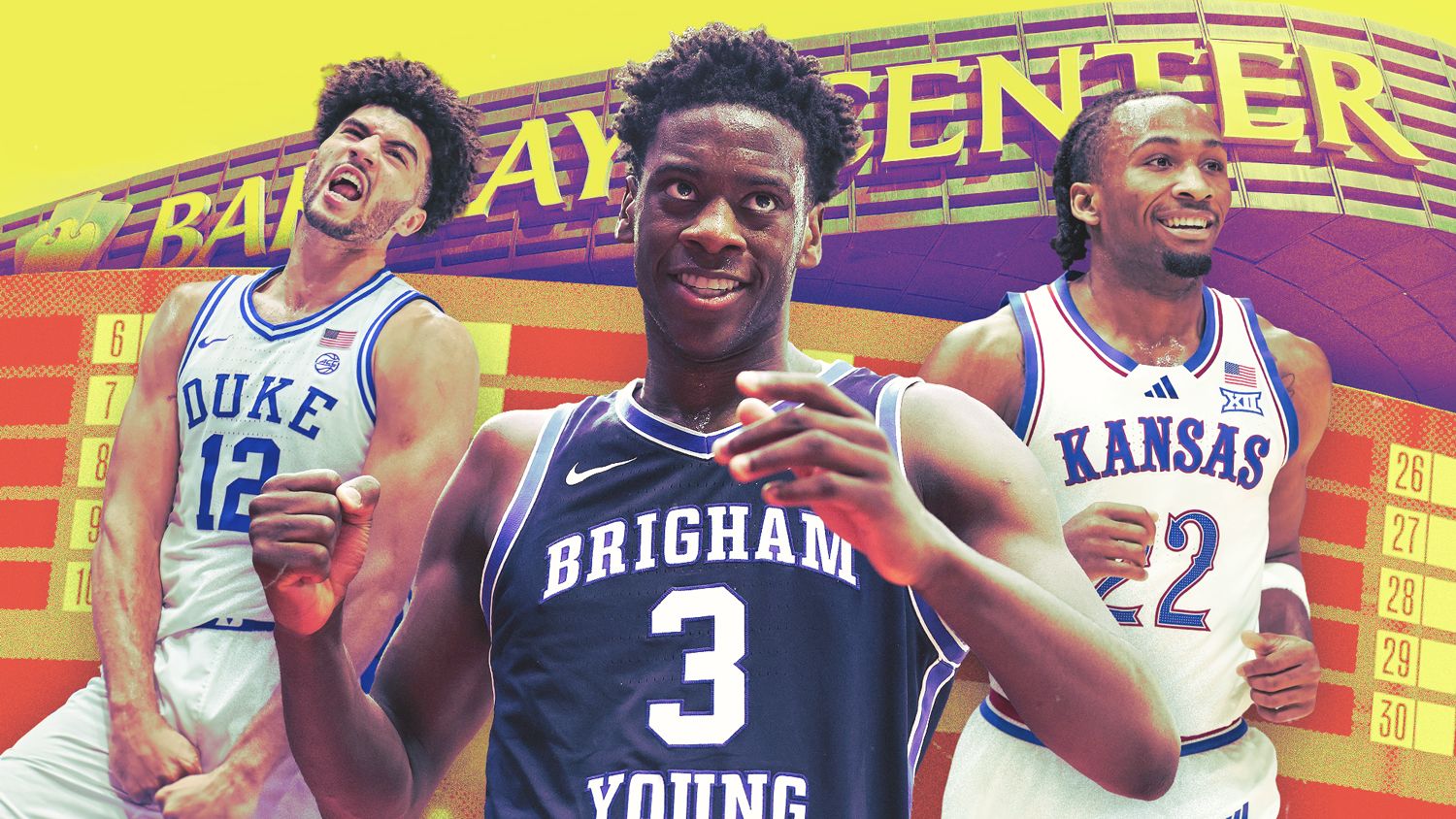
The 2026 draft lottery is still five months out, but it will bring with it seismic consequences for the landscape of the league, with three strong No. 1 pick contenders – Darryn Peterson, AJ Dybantsa and Cam Boozer – all performing at impressively high levels in college, fueling closed-door conversations as teams continue putting together their boards.
Caleb Wilson and Kingston Flemings have joined that trio to form what has become a soft consensus top five at this stage, but things are much harder to project from there. There’s a real difference of opinion around the NBA surrounding the depth and quality of the draft at this point in the process, beginning in the middle part of the lottery and on. Considering the availability of major NIL money, coupled with what NBA teams view as a wide-open 2027 draft class, the expectation remains that a significant number of prospects will ultimately remain in college to improve their stock if they are not entrenched in the first round. Those financial incentives probably will thin out the 20-40 range quite a bit, leaving significant room for prospects to play their way into the first round over the next few months.
This mock serves to project what things might look like if NBA teams drafted today. These projections are not a ranking of the top prospects – for that, consult ESPN’s Top 100. They are informed by ongoing conversations with NBA executives and scouts, as well as my own evaluation process from time spent on the road at games and watching film.
The draft order was formulated using ESPN’s BPI projections as of Jan. 9.
More NBA draft coverage:
Top 100 rankings of the 2026 prospects | More
Round 1 picks
1. Indiana Pacers
Darryn Peterson, PG/SG, Kansas
Freshman
2025-26 stats: 22.6 points, 4.7 rebounds, 2.1 assists in seven games
Peterson’s spotty health at Kansas has defined his season, but his availability to begin Big 12 play and efforts to push through in-game cramping have NBA teams hoping he is trending in the right direction. He has largely been stellar when on the court, totaling 158 points in 190 minutes on 63.2% true shooting. He plays with a special degree of poise creating shots, and has been highly effective even without displaying his typical explosiveness. The game comes easily to him, and he continues to hold down the top spot on ESPN’s Top 100.
It’s hard to be declarative on how Peterson’s health will impact things until teams receive his medical in the spring, but his stock as a top pick candidate has held firm. Continuing to play should help assuage lingering concerns. There is still time for consensus to solidify, but with all three of Peterson, AJ Dybantsa and Cam Boozer playing at a very high level, this will likely come down to which team is picking No. 1 after the draft lottery in May.
Reacquiring this pick from the Pelicans shortly before Tyrese Haliburton tore his Achilles in Game 7 of the Finals turned out to be a karmic stroke for the Pacers, who have spent this season in free fall at the bottom of the league. Pairing a healthy Haliburton with Peterson, however, could create one of the NBA’s top backcourts in short order.
2. Sacramento Kings
AJ Dybantsa, SF, BYU
Freshman
2025-26 stats: 22.9 points, 7.1 rebounds, 3.9 assists in 16 games
There’s no hotter player in college basketball than Dybantsa, who has scored 20-plus points on 50-plus percent shooting in nine straight games – the first D-I freshman in the past 30 years to do so – and has done his part to force the issue atop the draft. Scouts wanted to see him play more aggressively, and he answered the call. No prospect in this class is more physically gifted, and his ability to punish defenses downhill and get into the paint at his size makes him a special player. His ball-dominant tendencies and streaky three-point shooting (32.6%) are factors for scouts as they split hairs between the top trio, but Dybantsa’s upside is as high as anyone in the draft.
While Dybantsa’s streak has largely come against inferior competition, BYU has plenty of significant tests ahead, including games against Arizona, Houston, Iowa State, and this season’s marquee scouting game at Allen Fieldhouse against Darryn Peterson and Kansas on Jan. 31.
Injuries to Domantas Sabonis and Keegan Murray have contributed to Sacramento’s backslide in general manager Scott Perry’s first season leading the front office. With the Kings holding all of their own first-round picks, striking lottery luck would allow them to recenter the roster on a young star. How they approach the Feb. 5 trade deadline will be telling.
3. Atlanta Hawks (via New Orleans)
Cameron Boozer, PF/C, Duke
Freshman
2025-26 stats: 22.9 points, 9.5 rebounds, 4.2 assists in 16 games
Boozer continues to do what he does best, driving Duke’s wins while leading a team largely composed of underclassmen. His all-around production, unflappable competitive nature and feel for team basketball make him a malleable offensive player who will immediately boost whatever team he joins. While there is some negative aesthetic bias among evaluators regarding his lack of vertical explosiveness, those concerns appear more pertinent on the defensive end: he’s made 66% of two-point attempts, but has recorded just 11 blocks in 16 games. Boozer is a strong team defender, but limited as a rim protector, which his next team will have to account for.
Where Boozer ultimately falls among the top three picks will likely depend on fit – a team with established perimeter talent could certainly justify him ahead of the other two. But at this point, it’s difficult to see another player making a strong enough case to crack this tier, considering how historically prolific the trio has been.
The Hawks moved on from Trae Young with the knowledge that they’ll have a chance to add a star talent with this draft pick, as the Pelicans remain at the bottom of the Western Conference. While Boozer’s fit with Jalen Johnson might be imperfect, this would be a best-available decision.
4. Washington Wizards
Caleb Wilson, PF/C, North Carolina
Freshman
2025-26 stats: 19.5 points, 11.0 rebounds, 2.7 assists in 16 games
Wilson has remained productive for North Carolina, and his mix of vertical explosiveness, defensive playmaking and room to grow offensively has solidified him as a likely top-five selection. While there will be important tests ahead for him in conference play, particularly a pair of head-to-head games against Cam Boozer and Duke, Wilson’s energy and winning impact, even with an unpolished offensive game, have been endearing. Teams have questions about his perimeter shooting, something he’ll have a better chance of answering in predraft workouts, but he has created some separation in this next tier of the draft as a potentially versatile frontcourt standout.
After acquiring Trae Young, the Wizards are still building with a clean slate, although that move could preclude them from targeting a point guard depending on where this pick falls. Wilson could fit nicely alongside the improving Alex Sarr up front, creating a team capable of playing fast while also keeping size on the court.
5. Utah Jazz
Kingston Flemings, PG, Houston
Freshman
2025-26 stats: 15.7 points, 3.3 rebounds, 5.1 assists in 16 games
Flemings has drawn near-universal approval from NBA evaluators this season, giving him the inside track to be the first true point guard off the board. He’s a blur with the ball in his hands, likes playing through contact and can distribute accurate passes off the bounce, bringing dynamic energy as a creator for Houston. Although his mechanics aren’t textbook, Flemings appears to be making a significant leap with his jump shot, which held him back before this season. It’s an area scouts continue to assess when projecting his long-term impact. He has room to improve defensively, but his growth trajectory and blossoming star power have been a major springboard that could well land him in the top five.
The emergence of Keyonte George as a most improved contender (and the presence of other young guards on the roster) shouldn’t preclude the Jazz from taking a long look at a true point guard in this scenario. Flemings’ ability to play with pace and elevate the talent around him should supersede the other roster-building factors if he stays on his current track.
6. Brooklyn Nets
Mikel Brown Jr., PG, Louisville
Freshman
2025-26 stats: 16.6 points, 3.0 rebounds, 5.1 assists in 10 games
It’s still early in this process, but the sense I’ve gotten from a wide range of team sources is that this draft opens up in a major way after the first five picks. Though there is plenty of talent left on the board, there is less separating the next group of prospects, and more variance in the confidence levels of scouts projecting long term for these players. There is still time for this to change, but the rest of the lottery is wide open going into the second half of the season.
That brings us to Brown, who has not played since Dec. 13 because of a back injury and remains out indefinitely. He showed strong flashes of talent, including 29 points against Kentucky in November, but his top-five momentum has stalled because of his absence, leaving the door open for Kingston Flemings and potentially Darius Acuff to leap him in the point-guard hierarchy. Brown’s upside as a tough perimeter shotmaker and playmaker with plus positional size will keep him in the lottery mix, but his defensive play and streaky shooting (26.8% from 3) have created some lingering questions for him to answer, pending his return.
The Nets are hoping for better lottery luck this year but could find themselves in a tricky position if their pick doesn’t move into the top four. Brown’s upside would put him in consideration here, irrespective of fit.
7. Charlotte Hornets
Nate Ament, SF/PF, Tennessee
Freshman
2025-26 stats: 14.9 points, 6.4 rebounds, 2.5 assists in 16 games
Ament is one of the most difficult prospects to peg, with NBA scouts exhibiting varying degrees of patience surrounding the first half of his season. He has struggled to score efficiently (52.9% TS) and adjust physically to the college game. Perhaps more concerning than his shotmaking struggles (28.8% from 3) is the fact that he hasn’t looked especially athletic, making it hard for him to create advantages as a perimeter scorer or consistently affect play away from the ball. He might wind up best suited at power forward, rather than on the wing.
NBA teams will watch closely to see if Ament can break out of his slump during the second half of the season. Most around the league find it difficult to see Ament falling out of the lottery entirely, as players of his size (6-foot-10) with perimeter skills are simply hard to find, and his upside as a stretch-four remains intriguing. But whichever team selects him will do so with the understanding that he could take multiple years to blossom into an impactful player. His range is much wider than expected a few months ago, particularly if he’s unable to turn things around.
The Hornets have enjoyed early returns from their 2025 draftees, headlined by Kon Knueppel, and could view Ament as a potential long-term fit with their young core as they move closer to playoff contention.
8. Chicago Bulls
Jayden Quaintance, C, Kentucky
Sophomore
2025-26 stats: 5.0 points, 5.0 rebounds, 0.8 blocks in four games
Quaintance sat out Kentucky’s game over the weekend with what was described by coach Mark Pope as knee swelling, a situation NBA teams will hope doesn’t turn into a prolonged absence coming off of his ACL surgery last March. Results have been uneven in his four games back, with a strong game against St. John’s his only notable showing, in which his physicality and defensive play impressed. Opinions on Quaintance are more mixed than this placement might indicate, as scouts have questions about his offensive limitations as a smaller center who probably won’t space the court or warrant focused touches. But the dearth of top-end center prospects in this class and Quaintance’s strong defensive potential should keep him in the conversation for teams targeting frontcourt help.
As it stands, Chicago should be thinking about how to address the position long term, with Nikola Vucevic now 35 and in the final year of his contract. Pairing Quaintance, a lob threat and potential defensive floor-raiser, with Josh Giddey could be a viable fit.
9. Dallas Mavericks
Darius Acuff Jr., PG, Arkansas
Freshman
2025-26 stats: 19.9 points, 2.8 rebounds, 5.9 assists in 16 games
Acuff has flourished under coach John Calipari, showing he can drive winning with heavy responsibility and has established himself as a lottery contender. His strength, skill level and ability to change speeds getting into the paint have made him a challenging cover, and he has shown critical growth as a decision-maker and shooter (42.5% from 3) and a willingness to make the right play. He can be polarizing with scouts because of concerns about his limited defensive impact and how his ball dominance will translate, but it’s hard not to be impressed with the season he has put together. Considering the growing perception that this lottery flattens out beyond the top five, Acuff seems likely to draw early consideration from guard-needy teams.
After this draft, the Mavericks won’t have control of their own first-round picks until 2031, making this a pivotal opportunity to add a younger running mate for Cooper Flagg. With Kyrie Irving still injured and on the back half of his career, Acuff could offer long-term stability at the position on a team in which he wouldn’t have to shoulder the full offensive load.
10. Milwaukee Bucks
Thomas Haugh, SF/PF, Florida
Junior
2025-26 stats: 17.2 points, 6.6 rebounds, 2.3 assists in 16 games
Haugh continues to put together a terrific season at Florida, where he has carried a significant load and improved as a scorer. He profiles as a versatile plug-and-play option, with positional size (6-foot-9) and ball-moving instincts that should enhance whatever type of NBA lineups he is dropped into. As a 22-year-old prospect with an average shooting profile (32.9% from 3) who does not create a ton of his own offense, Haugh will be a better fit for teams looking to pivot into playoff contention. But as the lottery starts to thin out, he’s appealing as a reliable contributor who should provide rotation value on his rookie contract.
Depending on how Giannis Antetokounmpo’s situation evolves, the Bucks should be among the teams thinking hard about Haugh as an upgrade on their limited options at forward – if they intend to keep Antetokounmpo. Milwaukee owns the worst of its own pick and Atlanta’s, giving the franchise a safety net if it misses the playoffs.
11. Portland Trail Blazers
Yaxel Lendeborg, PF/C, Michigan
Senior
2025-26 stats: 14.7 points, 6.9 rebounds, 1.4 blocks in 15 games
Lendeborg has been a terrific fit at Michigan, where he has inhabited a valuable role that mirrors how he is likely to be deployed in the NBA. His ability to handle both forward positions – as well as potentially play some small-ball five while providing plus physical tools and an above-average skill level – gives him intrinsic malleability that should boost him into the lottery despite his age. Though there is not a ton of perceived developmental upside with him – he’s already 23 years old – Lendeborg has proved he can drive winning with steady play and has helped his profile quite a bit by staying in college.
The Blazers could use a player in Lendeborg’s mold to space the court and provide lineup versatility – ostensibly a less expensive way to address Jerami Grant’s current role. Portland will convey its pick to Chicago only if it makes the playoffs.
12. Oklahoma City Thunder (via LA Clippers)
Braylon Mullins, SG, UConn
Freshman
2025-26 stats: 11.7 points, 3.7 rebounds, 1.5 assists in 11 games
An impressive 24-point showing (6-of-10 from 3) against Providence highlighted Mullins’ upside as a perimeter scorer, and he continues to look more comfortable after an ankle injury delayed the start of his season. There are still some holes in his profile – he has taken only 10 free throws in 11 games and doesn’t put much pressure on the rim downhill, some of which is a product of UConn’s deliberate system. But it also points to Mullins’ limited explosiveness and need to gain strength. He is wired to score and has plenty of runway to show consistency and growth as the season progresses, with a wide draft range depending on how teams come to weigh his deficiencies against his potentially elite-level shooting.
Rival teams are quietly hoping the Clippers (10-2 in their past 12 games) will continue to turn things around and reduce the chances the Thunder will end up with another high-leverage selection. Oklahoma City has three first-round picks in this draft and probably will have limited roster spots rolling over to next season, creating an incentive to eventually consolidate and move around in the draft. Whomever the Thunder add probably will be a luxury considering the youth and depth they’ve already assembled.
13. Memphis Grizzlies
Bennett Stirtz, PG, Iowa
Senior
2025-26 stats: 17.6 points, 2.4 rebounds, 5.1 assists in 16 games
Stirtz is putting together a strong season as the focal point of Iowa’s system, and displays trustworthy playmaking acumen and excellent perimeter shooting (39.4% from 3). How he navigates the bulk of the Big Ten schedule will be telling, as opponents throw the kitchen sink at him defensively, and with no other Hawkeyes averaging double figures. His skill as a ball-screen navigator and ability to stretch the court should make him a positive offensive player, but he will be tested defensively because he is not especially quick. Whether he ultimately winds up in the lottery as an older guard might hinge on a team’s needs, as the draft thins out and he becomes a reasonable bet.
Shams Charania reported last week that the Grizzlies are open to moving Ja Morant, which would change the structure of the team and point to a longer competitive timeline, in step with their decision to deal Desmond Bane last offseason. With Memphis holding all of its own first-round picks and having multiple picks in this draft, continuing to build a younger roster will be imperative. If Morant is traded, addressing the backcourt with this pick would be a viable route.
14. San Antonio Spurs (via Atlanta)
Koa Peat, PF/C, Arizona
Freshman
2025-26 stats: 14.8 points, 5.8 rebounds, 0.7 blocks in 16 games
Peat has become one of the more polarizing potential lottery names, with teams simultaneously drawn to his rebounding, toughness and intangibles but concerned about his lack of positional size, limited rim protection and subpar shooting profile (23.1% from 3, 63.2% from the free throw line). He has been a driver of winning at Arizona, but his combination of weaknesses makes for a difficult projection, considering the NBA’s emphasis on creating and taking away space. The specificity of his fit points to what could be a wide draft range.
San Antonio can swap its pick with Atlanta’s, giving it a potential pathway into the late lottery and another chance to bolster a solid supporting cast around Victor Wembanyama. The Spurs are deep at guard and will presumably look hard at frontcourt help, with Peat holding a best-available case at this point in the draft.
15. Golden State Warriors
Labaron Philon Jr., PG/SG, Alabama
Sophomore
2025-26 stats: 21.3 points, 3.3 rebounds, 5.1 assists in 15 games
Philon’s decision to return to Alabama has been beneficial, as he has put together an excellent season, showing all-around growth as a scorer and taking on more responsibility. His ability to shift gears off the dribble in lieu of top-end explosiveness, coupled with his team’s uptempo style, has led to his emergence as one of the best guards in college basketball. Scouts still have questions about whether he can run a winning NBA team as a full-time starter or if he projects better as a bench scorer, with his scoring tendencies tilting more toward the latter and his defensive impact inconsistent.
Golden State continues to try to compete as Stephen Curry approaches the end of his career, making the Warriors an interesting team going into the trade deadline, particularly with Jonathan Kuminga still on the roster. They can trade this pick, something that could create savings for a team that has been in the luxury tax for six straight seasons. Philon would supply added backcourt depth and shot creation.
16. Memphis Grizzlies (via Phoenix)
Chris Cenac Jr., PF/C, Houston
Freshman
2025-26 stats: 9.3 points, 7.4 rebounds, 0.5 blocks in 16 games
It has been a slow adjustment to college basketball for Cenac, who has held down his starting spot at Houston while learning on the fly amid freshman growing pains. His flashes of perimeter shooting touch (40% from 3) and long-term developmental upside give him a pathway to success as a stretch big, but his inconsistent production has kept scouts in wait-and-see mode. He is all over the board for evaluators, who are hoping to see more tangible growth in the second half of the season.
Memphis will receive the better of Phoenix’s and Orlando’s picks, potentially giving it a second selection inside the top 20.
17. Toronto Raptors
Patrick Ngongba II, C, Duke
Sophomore
2025-26 stats: 10.9 points, 6.4 rebounds, 1.4 blocks in 16 games
Though his past month has been a mixed bag, Ngongba has helped himself this season, standing out as a long-term bet on instincts and playmaking at his size in what has become a thin class of centers. Ngongba’s plus passing enables Duke to play through him and gives him some feasible perimeter functionality if he can develop a reliable jumper. Though his conditioning has improved, his lack of vertical lift around the basket as a finisher has been a point of concern. He is well-rounded enough to become an eventual NBA contributor, but that requires optimistic projection from a physical standpoint.
Toronto sits in a playoff position and could be in a spot to add at the deadline. The Raptors’ limited depth at center could be an area to address through the draft.
18. Miami Heat
Keaton Wagler, PG/SG, Illinois
Freshman
2025-26 stats: 15.7 points, 5.2 rebounds, 3.8 assists in 16 games
Wagler has been an irreplaceable player on a quality Illinois team, having a winning impact with limited high-level experience and putting himself on the map as a prospect. While still developing as an on-ball playmaker, his connective play and perimeter shotmaking (41.2% from 3), coupled with plus positional size, have put him in the first-round conversation. As a late-blooming prospect with obvious NBA appeal, the question revolves more around whether he is better off turning pro this year or returning to school and polishing his skills as a ball handler.
The Heat have been operating without a traditional lead playmaker and could benefit from adding a younger player to their backcourt with their selection.
19. Oklahoma City Thunder (via Philadelphia)
Hannes Steinbach, PF/C, Washington
Freshman
2025-26 stats: 18.4 points, 11.0 rebounds, 0.8 blocks in 13 games
Steinbach has been one of the most productive players in college basketball, but scouts have been mixed on him, with his defensive limitations on display in Washington’s recent losses. He’s not a high-level shot blocker (10 in 13 games) and struggles to move his feet in space, two areas of concern coupled with the fact that he is undersized (6-11) for a center. His steady offensive contributions and touch around the basket will continue to draw looks from scouts, but the long-term upside limitations make him a more reasonable bet in the back half of the first round.
This is the second of OKC’s three first-round selections, which the Thunder seem likely to eventually consolidate in some fashion.
20. Charlotte Hornets (via Orlando)
Karim Lopez, SF/PF, New Zealand Breakers
2025-26 stats: 10.6 points, 5.6 rebounds, 1.9 assists
Amid a productive season in the NBL, Lopez has drawn mixed reviews from a steady stream of scouts making the trek to Australia. He has been mostly efficient and productive, but the overarching concerns around his defense, athleticism and average shooting (32.5% from 3) have made him divisive. Optimism around his feel, toughness and ball skills will give him a chance to stick in the NBA, but for now, he appears to be trending toward this part of the draft. He remains the headliner of what has been viewed as a weak international-based class.
Charlotte will receive the least favorable of Washington’s (if 1-8), Phoenix’s, Orlando’s and Memphis’ picks.
21. Atlanta Hawks (via Boston)
Cameron Carr, SG, Baylor
Sophomore
2025-26 stats: 20.5 points, 5.3 rebounds, 2.0 assists in 15 games
Carr continues to put together a breakout season and has established himself as an intriguing first-round swing, as an explosive athlete who continues to knock down perimeter shots at a good clip (40.3% from 3). There’s still a degree of skepticism around his difficult shot selection, limited playmaking ability and inconsistent defense, and he’ll continue to be tested with Baylor off to a tough start in a difficult Big 12. If he can keep it up, Carr will present an intriguing bet on tools and shooting, even if he is not as polished as the typical 21-year-old first-round prospect.
The Hawks can swap the worse of their own pick and the Spurs’ pick with the Cavs’ first-round selection.
22. Los Angeles Lakers
Tounde Yessoufou, SF, Baylor
Freshman
2025-26 stats: 17.5 points, 6.0 rebounds, 2.0 assists in 15 games
Yessoufou’s one-and-done case hasn’t been as clear-cut as some expected a couple of months ago, with his iffy shooting (31% from 3) and struggles getting to the rim remaining areas for improvement. Baylor’s lack of dynamic guard play hasn’t made his life easier. His excellent frame and room to grow defensively present upside, but his below-average ball skills make it hard to see him consistently creating efficient offense for himself in the near future. He’ll need a strong second half of the season to solidify his spot in this range, but he remains an interesting bet as the draft thins out in the 20s.
23. Minnesota Timberwolves
Christian Anderson, PG, Texas Tech
Sophomore
2025-26 stats: 19.3 points, 3.6 rebounds, 7.2 assists in 16 games
Anderson has stepped up as a quality floor leader for Texas Tech after spending last season largely away from the ball. He projects as an effective game manager at the NBA level, as a good decision-maker with decent size who takes care of the ball and can knock down shots from long range (42% from 3). While not flashy, he has made a nice leap this season and is building a case to turn pro – but he is also the type of player who probably will command great money to stay in college another year. Point guard depth profiles as one of the stronger areas of this class, and he has begun to play his way into the mix in the 20s.
24. Boston Celtics
Isaiah Evans, SG, Duke
Sophomore
2025-26 stats: 14.4 points, 3.5 rebounds, 1.4 assists in 16 games
Evans has strung together three straight big performances for Duke, which has relied on him to manufacture offense and space the court around Cam Boozer. His fluid, dynamic movement shooting and solid positional size are nice calling cards, but the rest of his game is a work in progress, and he needs to add significant strength to his slender frame. There is an obvious use for him in the NBA, but he remains far from holding his own at that level, placing him in this large group of potential late first-rounders jockeying for position.
25. Denver Nuggets
Neoklis Avdalas, SF, Virginia Tech
Freshman
2025-26 stats: 14.5 points, 3.4 rebounds, 5.0 assists in 16 games
It has been an inconsistent season for Avdalas, who has shown some loud flashes of talent but also has been held back by his average shooting (32.9% from 3 and 67.6% from the line) and lack of explosiveness. His size, vision and skill level will keep him on the NBA radar, but he could also end up needing more time to develop in college. His archetype as a big playmaker could make him a valid gamble in this range.
26. Cleveland Cavaliers (via San Antonio)
Henri Veesaar, C, North Carolina
Junior
2025-26 stats: 16.9 points, 9.2 rebounds, 1.1 blocks in 16 games
In his first season as a starter after transferring from Arizona, Veesaar has been quite valuable at North Carolina, making a consistent impact on the glass with legit 7-foot size, finishing well around the rim, flashing passing skills and making 51% of his 3s. It’s a good mix of strengths for a rotational big man, although he’s not a highly mobile defender and probably will need to play in drop coverage. He has been an excellent partner for Caleb Wilson in a role that somewhat mirrors how an NBA team might want to deploy him.
The Cavs will wind up with the worse of San Antonio’s and Atlanta’s picks and their own.
27. New York Knicks
Alex Karaban, SF/PF, UConn
Senior
2025-26 stats: 14.0 points, 5.3 rebounds, 2.1 assists in 17 games
One of the winningest college players of this era, Karaban will be a player who draws looks from playoff teams beginning at the end of the first round, offering immediate depth at forward, if not significant long-term upside at his age. Though he won’t create much of his own offense and is limited athletically, his ability to knock down shots, move the ball and overall competitive toughness could be additive in a bench context. As players with remaining eligibility begin to withdraw from the draft, Karaban should wind up with a case in this part of the draft or in the early second round.
28. Oklahoma City Thunder (via Houston)
Tyler Tanner, PG/SG, Vanderbilt
Sophomore
2025-26 stats: 17.3 points, 3.6 rebounds, 5.4 assists in 16 games
Tanner, a revelation for undefeated Vanderbilt, is forcing NBA teams to take a harder look, producing some electric moments as a scorer and playmaker despite suboptimal height. He has terrific instincts moving the ball and has been remarkably efficient, particularly for a 6-foot guard. Tanner knows how to operate creatively around the rim, but it’s rare for players his size to be additive on defense in the NBA, and he’ll need to keep proving himself as a three-point shooter, now up to 38.8% after making just 26% last season.
The bar is quite high for players Tanner’s size to ultimately stick in the NBA – he would be the first 6-foot guard selected in the first round since Aaron Holiday in 2018 – but scouts are curious to learn more about him in the coming months.
29. Detroit Pistons
Aday Mara, C, Michigan
Sophomore
2025-26 stats: 10.1 points, 7.9 rebounds, 2.5 blocks in 15 games
Michigan has helped optimize Mara’s unique mix of enormous size (7-3, 255) and creative passing ability, making him a fit-specific but situationally intriguing player as NBA teams have shifted toward having size on the court. His poor free throw shooting (41.9%) makes it seem unlikely he’ll become much of a jump shooter, but his ability to eat up space in drop coverage and help facilitate ball movement should give him a place in the league, with NBA teams again putting a premium on size up front.
30. Washington Wizards (via Oklahoma City)
Brayden Burries, SG, Arizona
Freshman
2025-26 stats: 14.6 points, 4.3 rebounds, 2.6 assists in 16 games
After a slow start to the season, Burries has started to turn it on for undefeated Arizona, showing his solid scoring instincts, skill level and doing a better job of getting to his spots. His 28 points against Kansas State last week was the high mark, and his prominent role on a good team is a solid platform to continue changing people’s minds. His below-average size and athleticism for an off guard have held him back from being a sure one-and-done candidate, but continuing to produce at a high level will make him a more interesting and immediate option for NBA teams to consider. The growth Burries has shown this season has been encouraging, although he could wind up as a better candidate to return to school.
Round 2 picks
31. Memphis Grizzlies (via Indiana): Dash Daniels, PG/SG. Melbourne United (Australia)
32. Sacramento Kings: Sergio de Larrea, PG/SG, Valencia (Spain)
33. Boston Celtics (via New Orleans): Meleek Thomas, PG/SG, Arkansas, Freshman
34. New York Knicks (via Washington): Ryan Conwell. SG, Louisville, Senior
35. San Antonio Spurs (via Utah): Braden Smith, PG, Purdue, Senior
36. Brooklyn Nets: Dame Sarr, SG/SF, Duke, Freshman
37. Sacramento Kings (via Charlotte): Matt Able, SF, NC State, Freshman
38. Houston Rockets (via Chicago): Joshua Jefferson, SF/PF, Iowa State, Senior
39. Oklahoma City Thunder (via Dallas): Paul McNeil Jr., SG, NC State, Sophomore
40. Boston Celtics (via Milwaukee): Zuby Ejiofor, PF/C, St. John’s, Senior
41. San Antonio Spurs (via Portland): Juke Harris, SG, Wake Forest, Sophomore
42. Brooklyn Nets (via LA Clippers): Alex Condon, C, Florida, Junior
43. LA Clippers (via Memphis): Morez Johnson Jr., PF/C, Michigan, Sophomore
44. Brooklyn Nets (via Atlanta): Miles Byrd, SG/SF, San Diego State, Junior
45. Charlotte Hornets (via Golden State): Tahaad Pettiford, PG, Auburn, Sophomore
46. Washington Wizards (via Phoenix): JT Toppin, PF/C, Texas Tech, Senior
47. Toronto Raptors: Dailyn Swain, SG/SF, Texas, Junior
48. San Antonio Spurs (via Miami): Joseph Tugler, PF/C, Houston, Junior
49. Phoenix Suns (via Philadelphia): Milos Uzan, PG, Houston, Senior
50. Orlando Magic: Darrion Williams, SF, NC State, Senior
51. Cleveland Cavaliers: Richie Saunders, SG/SF, BYU, Senior
52. Toronto Raptors (via Los Angeles Lakers): Motiejus Krivas, C, Arizona, Junior
53. Washington Wizards (via Minnesota): Solo Ball, SG, UConn, Junior
54. Atlanta Hawks (via Boston): Magoon Gwath, C, San Diego State, Sophomore
55. Minnesota Timberwolves (via Denver): Karter Knox, SG/SF, Arkansas, Sophomore
56. Minnesota Timberwolves (via San Antonio): Tomislav Ivisic, C, Illinois, Junior
57. New York Knicks: Johann Grunloh, PF/C, Virginia, Freshman
58. Houston Rockets: Tucker DeVries, SG/SF, Indiana, Senior
59. New York Knicks (via Detroit): Flory Bidunga, C, Kansas, Sophomore
60. Washington Wizards (via Oklahoma City): Tarris Reed Jr., PF/C, UConn, Senior