By NBA insiders | ESPN, 2025-12-11 20:00:00
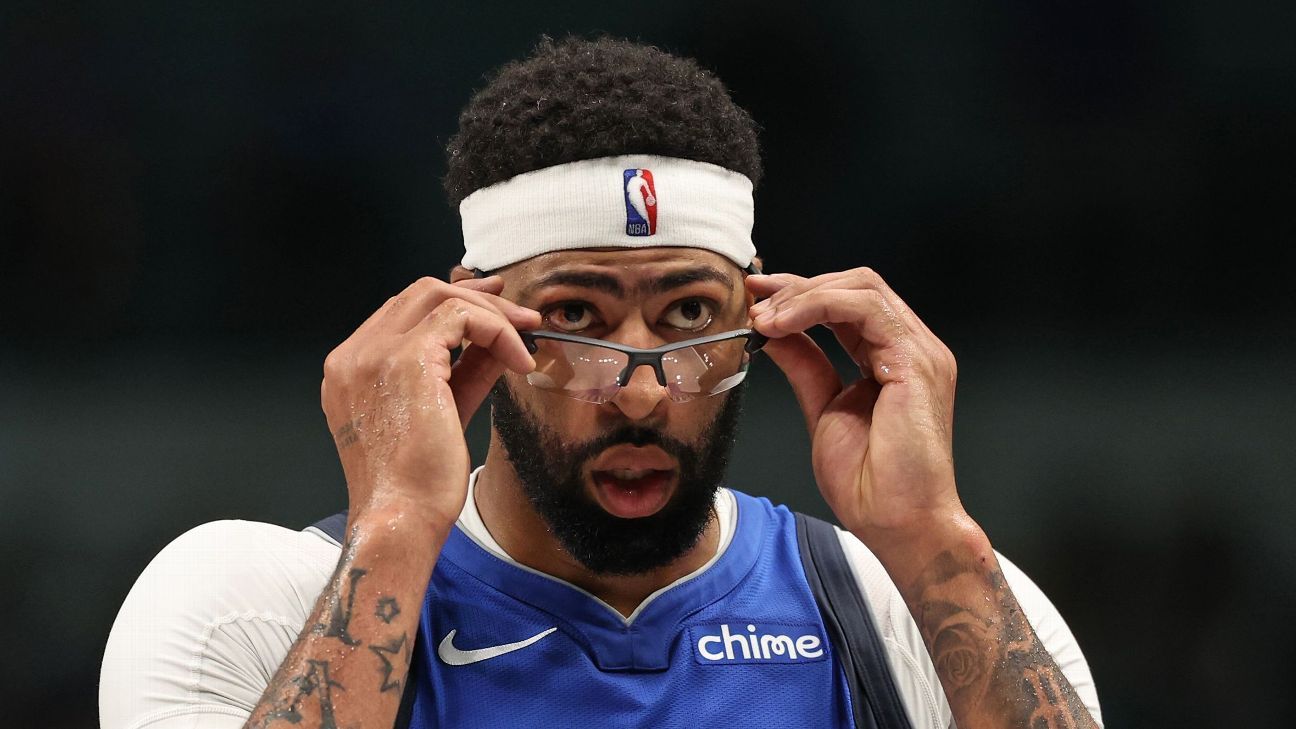
安东尼·戴维斯的交易风波已进入下一阶段。
正值NBA交易季非正式开启之际——休赛期签约的球员将于周一开始具备被交易资格——达拉斯独行侠队这位10届全明星前锋的追求者们正开始浮出水面。据联盟消息人士周二向ESPN的沙姆斯·查拉尼亚 (Shams Charania) 透露,亚特兰大老鹰队、多伦多猛龙队以及东部领头羊底特律活塞队预计都将加入争夺。
在独行侠探索各种可能性的同时(其中仍包括在休赛期与戴维斯续约的选项),任何有意向的球队也必须权衡其中的风险。这些风险包括戴维斯的年龄——他将在明年三月年满33岁——他的伤病史以及合同状况。
而回报则是:当保持健康时,戴维斯能将一支球队提升到真正的争冠级别,正如他在2019-20赛季加盟洛杉矶湖人队并最终赢得个人首个NBA总冠军时所证明的那样。
正当联盟各队思索着可能为戴维斯提出的报价时,我们的NBA专家正在全方位解析达拉斯及其明星大个子所面临的局势,包括独行侠重组后的管理层将以多快的速度采取行动,以及球队可能考虑的五种交易方案——其中一些比其他的更为大胆。
跳转至章节:
戴维斯与独行侠如何走到这一步
为何这笔交易充满巨大风险
内部消息:达拉斯会多快出手?
戴维斯去向:活塞 | 老鹰 | 猛龙 | 勇士 | 马刺
AD交易观察:我们如何走到这一步
在卢卡·东契奇 (Luka Doncic) 与安东尼·戴维斯 (Anthony Davis) 的交易所带来的震惊与愤怒情绪尚未消散之际,人们很容易忽略达拉斯独行侠前任总经理尼科·哈里森 (Nico Harrison) 当初认为他得到了什么。
当时,戴维斯正在为洛杉矶湖人队打出一个强劲的2024-25赛季,场均贡献近26分、12个篮板和4次助攻,投篮命中率高达53%。戴维斯当时可以说正迈向他在洛杉矶的最佳赛季,数据趋势甚至优于他2019-20赛季的表现,那正是他在湖人夺冠征程中的巅峰时期。当然,他早已证明自己是联盟顶级的内线防守者。
或许最重要的是,在经历了他职业生涯出场次数最多的76场比赛的上个赛季后,戴维斯在当时湖人队的46场比赛中仅缺席了4场。即便是在出任他公开表示不喜欢的(非优选的)中锋位置时,他依然保持了这种稳定性。
在32岁的年纪,戴维斯仍可被视作处于巅峰期,并且打得既稳定又出色。简而言之,他是一位瑰宝级的球员,其价值之高,至少在一位有影响力的人物看来,足以让湖人队得到东契奇。此外,哈里森打算让戴维斯出任大前锋,理论上,独行侠或许能从这位10届全明星球员身上挖掘出更多的能量。
然而,不到一年后,当你咨询联盟高管时,戴维斯的理论交易价值已经发生了实质性变化。他来到达拉斯后立即受伤,交易后仅出战9场比赛。戴维斯需要接受眼部手术,这限制了他的休赛期训练,导致他以非最佳状态进入新赛季。他很快再次受伤,本赛季25场比赛中已缺席15场。
戴维斯本赛季的出战场次预计将少于52场,这实际上是他自2020-21赛季以来的年均出场数。他的数据依然强劲——在这方面,他是一位可靠的场均20分10篮板球员——但有一个数字可能会让有意向的球队犹豫:他在未来两个赛季的薪水总额高达1.2亿美元,并将在明年夏天有资格续签一份新合同。
对于他这个年龄和伤病史的球员来说,如此高昂的薪资,加上NBA新劳资协议下的奢侈税帽沿时代所带来的严苛建队限制,已使戴维斯成为本交易季最具争议性的球员之一。——布莱恩·温德霍斯特 (Brian Windhorst)
为何交易戴维斯对达拉斯很难——对追求者也充满风险
不可否认,戴维斯能够影响比赛的胜负。他在2020年随湖人队夺得总冠军,以及职业生涯共计10次入选最佳阵容和最佳防守阵容的荣誉就是证明。在被交易至独行侠之前,他在41场比赛中场均能得到25.7分和11.9个篮板。
但伴随这些荣誉而来的,是任何有意向的球队都必须面对的诸多担忧。
戴维斯在达拉斯的短暂时光饱受伤病困扰,他有资格在8月6日签下一份为期四年、总值2.75亿美元的续约合同,这份合同将在他37岁时支付给他7600万美元。如果不续约,戴维斯可能在2027年夏天拒绝执行他价值6280万美元的球员选项,并成为完全自由球员。
如果独行侠不愿与戴维斯续约,那么是在交易截止日前将他送走,还是等到休赛期他价值可能回升时再交易,才是最佳选择?虽然等到夏天可能会吸引更多兴趣,但也存在巨大风险——如果戴维斯再次受伤,他的交易价值将会降低。
当戴维斯在场时,达拉斯通常表现得像一支季后赛球队,这一点在近期战胜丹佛掘金、迈阿密热火和休斯顿火箭的三场胜利中表现得淋漓尽致,期间他场均贡献26.0分和12.6个篮板。(但在这些比赛之间,他在一场惨败给俄克拉荷马城雷霆的比赛中9投1中仅得2分,这是他在出场至少20分钟的比赛中的最低得分记录。)——鲍比·马克斯 (Bobby Marks)
独行侠的下一步,以及他们可能多快达成交易
在戴维斯的交易于本赛季截止日前成为现实之前,必须遵循一个多步骤流程。
第一步是确保戴维斯完全健康,这也是为何在戴维斯从小腿拉伤中恢复时,独行侠老板帕特里克·杜蒙特 (Patrick Dumont) 要求球队采取极其谨慎的态度。这导致他的复出时间比原定的11月8日目标日期推迟了近三周。只有在杜蒙特获得了明确表明戴维斯没有加重小腿拉伤或遭受相关灾难性伤病风险的医疗数据后,他才被允许复出。
第二步是一个展示期,让戴维斯展示他所能带来的影响力。除了在输给卫冕冠军的比赛中那场2分的低迷表现外,戴维斯自复出以来表现良好。即便有对阵雷霆那场比赛拖累数据,他在五场比赛中场均仍能贡献18.4分、10.2个篮板、4.2次助攻和2.0次盖帽,投篮命中率为52.6%。戴维斯需要保持或超越这一水平,才能说服潜在的追求者,让他们相信尽管存在薪资和耐用性的担忧,他的影响力仍然足以让他们提出有竞争力的报价。
独行侠还必须明确如何处理交易讨论。据球队消息人士透露,目前预计杜蒙特要到休赛期才会决定篮球运营总裁的正式人选。这意味着临时联合总经理马特·里卡尔迪 (Matt Riccardi) 和迈克尔·芬利 (Michael Finley) 将成为交易谈判中的主要负责人,而主教练杰森·基德 (Jason Kidd) 在最终由杜蒙特做出的决定中,其影响力将不亚于任何人。
预计独行侠管理层将与戴维斯的经纪人、Klutch Sports首席执行官里奇·保罗 (Rich Paul) 协同工作。戴维斯今年夏天有资格续约的事实,使他潜在的交易市场进一步复杂化。——蒂姆·麦克马洪 (Tim MacMahon)
五个关于AD的交易方案
正如查拉尼亚周二报道的那样,戴维斯预计将成为几支东部竞争者的目标,包括底特律活塞、亚特兰大老鹰和多伦多猛龙。
我们的方案就从这里开始,随后是两个让戴维斯留在西部的交易——分别去往圣安东尼奥马刺和金州勇士。
活塞得到:
安东尼·戴维斯
独行侠得到:
托拜厄斯·哈里斯 (Tobias Harris)
杰登·艾维 (Jaden Ivey)
罗纳德·霍兰二世 (Ronald Holland II)
活塞是本交易季最引人关注的球队之一,作为出人意料的东部领头羊,他们必须决定是抓住机会冲击总决赛,还是对他们的年轻核心保持耐心。如果他们倾向于前者,戴维斯将是一位极具价值的老将补充,为年轻的阵容注入冠军经验,并支撑起联盟最佳防守之一。
哈里斯在他第二次效力底特律期间一直是一位稳定的贡献者,但由于他是活塞队中仅有的两位本赛季薪水超过1680万美元的球员之一——另一位是凯德·坎宁安 (Cade Cunningham)——哈里斯在任何涉及明星球员的交易中基本上都必须被送走。与此同时,这笔交易中包含的另外两名球员,对活塞队登顶东部榜首的贡献并不大,因此底特律在增加一名10届全明星球员的同时,并不会损失太多即战力。艾维缺席了前15场比赛,复出后表现不稳,场均13.9分钟内仅得到7.6分。而在本赛季至少出手150次的172名球员中,霍兰的有效命中率排在第168位。
从达拉斯的角度来看,23岁的艾维和20岁的霍兰仍有相当大的潜力,并且与18岁的库珀·弗拉格 (Cooper Flagg) 的发展路线更为契合。如果能换来两位近年的前五顺位新秀,独行侠是否愿意在不得到任何一个选秀权的情况下交易戴维斯?——扎克·克拉姆 (Zach Kram)
马克斯的分析: 这笔交易引人注目,因为它包含了两位前乐透秀:艾维和霍兰。但艾维自1月1日以来经历了两次手术(左腓骨和右膝骨折),目前仍在恢复中,并可能在2028年休赛期成为受限制自由球员。霍兰年仅20岁,他将为达拉斯的阵容增添一名高大侧翼。这笔交易的负面因素在于,尽管活塞拥有多达四个首轮签、每个赛季的选秀权互换权以及14个次轮签可用于交易,但这笔方案中却一个都未包含。
老鹰得到:
安东尼·戴维斯
乔纳森·库明加 (Jonathan Kuminga)
巴迪·希尔德 (Buddy Hield)
德文·卡特 (Devin Carter)
独行侠得到:
扎克·拉文 (Zach LaVine)
2026年首轮签(来自勇士,前14顺位保护,否则转为2032年第31至50顺位的次轮签)
2027年首轮签(来自雄鹿和鹈鹕中顺位更差的那个,前4顺位保护)
国王得到:
特雷·杨 (Trae Young)
卢克·肯纳德 (Luke Kennard)
勇士得到:
克里斯塔普斯·波尔津吉斯 (Kristaps Porzingis)
活塞得到:
道格·麦克德莫特 (Doug McDermott)
现金补偿
老鹰交易戴维斯的挑战在于,杨几乎必须被纳入交易,才能避免亚特兰大的薪资总额在2026-27赛季急剧膨胀。但将杨带到达拉斯并没有太大意义,除非凯里·欧文 (Kyrie Irving) 也在这笔交易中。
为了解决这个问题,这笔交易涉及五支球队和九名球员。交易中,独行侠用杨换来了拉文,后者可以在未来两个赛季帮助球队保持竞争力,同时薪水远低于戴维斯。他们还得到了两个首轮签,其中包括一个很有可能落在乐透区的2027年首轮签——但不是老鹰通过新奥尔良鹈鹕获得的那个更有价值的2026年无保护首轮签。
对亚特兰大而言,这笔交易在没有动用他们最佳交易筹码——2026年鹈鹕签和前状元秀扎卡里·里萨谢 (Zaccharie Risacher)——的情况下得到了戴维斯。因此,老鹰可以利用那个在杨缺阵期间让他们保持竞争力的模式立即争夺总冠军,同时还能为后戴维斯时代的未来保留后手。
萨克拉门托国王队则将拉文换成了更年轻的控卫解决方案,且无需放弃任何选秀权。而金州勇士队终于送走了库明加,得到了球队长期寻求的那种空间型五号位,让波尔津吉斯与前凯尔特人队友艾尔·霍福德 (Al Horford) 重聚,代价是一个如果勇士错失季后赛就会作废的选秀权。——凯文·佩尔顿 (Kevin Pelton)
马克斯的分析: 如果要根据创意颁奖,这笔五队大交易无疑是赢家。从篮球、财务和选秀权积累的角度来看,这笔交易不仅帮助了达拉斯,也帮助了亚特兰大、金州和萨克拉门托。对于独行侠来说,拉文为他们提供了与凯里·欧文短期搭档的人选,并将他们可交易的首轮签从两个增加到四个。不利之处在于,拉文很可能会执行他下赛季4900万美元的合同,这将使达拉斯陷入奢侈税并超过第一奢侈税线。
猛龙得到:
安东尼·戴维斯
托尼·布拉德利 (Tony Bradley)
独行侠得到:
RJ·巴雷特 (RJ Barrett)
雅各布·珀尔特尔 (Jakob Poeltl)
贾雷斯·沃克 (Jarace Walker)
奥侪·阿巴基 (Ochai Agbaji)
2026年首轮签(来自猛龙)
2027年首轮签(来自步行者,前14顺位保护)
步行者得到:
丹尼尔·加福德 (Daniel Gafford)
多伦多在过去四个交易截止日都表现得极其激进,先后送出首轮签换来了萨迪斯·杨 (Thaddeus Young)、珀尔特尔、凯利·奥利尼克 (Kelly Olynyk) 和布兰登·英格拉姆 (Brandon Ingram)——那么为何不为一位真正的明星球员做同样的事呢?新任总经理鲍比·韦伯斯特 (Bobby Webster) 是否会像已离任的马赛·乌杰里 (Masai Ujiri) 那样迅速行动还有待观察,但多伦多对戴维斯已报道的兴趣表明这样的交易是可能的。
对猛龙来说,匹配戴维斯薪资最直接的方式是打包巴雷特和珀尔特尔,这样虽然在侧翼位置上有所损失,但在中锋位置上得到了提升。从达拉斯的角度看,前者年仅25岁,可以作为弗拉格身边一个不错的长期搭档,而后者则是一个有价值但昂贵的内线,他将为达拉斯在中锋位置上提供德雷克·莱夫利二世 (Dereck Lively II) 之外的另一个选择。
因此,印第安纳步行者队——据查拉尼亚报道,他们在自由球员市场失去迈尔斯·特纳 (Myles Turner) 后“正在联盟中积极进行交易谈判,以寻找未来的中锋”——也加入了这笔交易,用一个乐透保护的选秀权换来了加福德。擅长顺下攻筐的加福德可以与空间型大个子杰伊·赫夫 (Jay Huff) 在印第安纳组成一个多功能的中锋轮换阵容。
最后,独行侠将获得本赛季剩余的时间来评估两位近期表现有所退步的乐透秀——沃克和阿巴基。更换环境或许能重振他们的职业生涯,而达拉斯正需要年轻的攻防兼备的侧翼球员。——克拉姆
马克斯的分析: 或许最好从反向来看待这笔交易。那个无保护的首轮签很有价值,因为即使戴维斯在阵中,也无法保证多伦多能成为东部前六的球队。或许换个环境能帮助沃克,但本赛季他在印第安纳并未抓住增加上场时间的机会,而巴雷特则为独行侠提供了一个可以与库珀·弗拉格搭档的年轻侧翼。珀尔特尔的合同令人担忧,考虑到他还有五年合同,其中最后三个赛季的薪水分别为2730万、2950万和2730万美元。
勇士得到:
安东尼·戴维斯
梅森·普拉姆利 (Mason Plumlee)
独行侠得到:
德雷蒙德·格林 (Draymond Green)
乔纳森·库明加
2026年首轮签(来自勇士)
湖人得到:
巴迪·希尔德
黄蜂得到:
马克西·克勒贝尔 (Maxi Kleber)
道尔顿·克内克特 (Dalton Knecht)
现金补偿(来自湖人)
勇士队是否应该为了得到戴维斯而拆散格林与斯蒂芬·库里 (Stephen Curry) 的组合?或许不应该,但如果他们在健康时仍无法找到更稳定的状态,这个方案就值得考虑,因为戴维斯将带来巨大的进攻升级。
尽管格林在场时金州勇士队仍能打出高水平,但他本赛季的投篮命中率只有38%,是他新秀赛季以来的最低值——甚至比2019-20赛季还要差,那年库里在一个 фактически过渡年中只打了五场比赛。
戴维斯将成为勇士队长期寻求的、作为掩护顺下人的篮下威胁。他们还可以通过将这笔交易构建为多方交易,把希尔德送到第三方球队,从而在本赛季节省开支。在这个方案中,他去了宿敌湖人队,为他们提供急需的投射威胁。
与此同时,夏洛特黄蜂队介入,接手克勒贝尔1100万美元的到期合同,以得到克内克特——此前他们曾试图在一次被撤销的交易截止日交易中用马克·威廉姆斯 (Mark Williams) 换取他但未成功。
对于达拉斯来说,做这笔交易基本上是在赌金州勇士在常规赛期间无法找回健康和化学反应,从而使那个2026年的首轮签变得极具价值。独行侠还将通过库明加2026-27赛季的球队选项获得薪金灵活性。——佩尔顿
马克斯的分析: 这笔换来格林和库明加的交易让达拉斯在保持西部竞争力的同时,也获得了近期的薪金灵活性。但考虑到2026年是独行侠在2031年之前唯一能控制自己首轮签的年份,追逐一个附加赛席位真的值得吗?而且,戴维斯加入库里和吉米·巴特勒三世 (Jimmy Butler III) 的核心阵容很可能奏效,帮助勇士队爬出西部下半区,从而降低那个2026年选秀权的价值。
马刺得到:
安东尼·戴维斯
独行侠得到:
哈里森·巴恩斯 (Harrison Barnes)
凯尔登·约翰逊 (Keldon Johnson)
卢克·科内特 (Luke Kornet)
2026年次轮签(来自爵士)
2028和2029年次轮签(来自公牛)
注销2030年首轮签互换权
公牛得到:
纳吉·马绍尔 (Naji Marshall)
考虑到马刺曾与凯文·杜兰特 (Kevin Durant) 和扬尼斯·阿德托昆博 (Giannis Antetokounmpo) 的交易传闻联系在一起,从某些方面来说,戴维斯更容易与德阿隆·福克斯 (De’Aaron Fox) 和维克托·文班亚马 (Victor Wembanyama) 搭档,因为他不需要持球进攻。
一笔与圣安东尼奥的交易将为独行侠带来最大的财务收益。马刺无需送回与戴维斯薪水等额的合同,因为他们有低于奢侈税线的空间,而他们为达拉斯提供的深度则促成了将马绍尔送到芝加哥的交易次要部分——在那里他或许能担任首发小前锋——以换取次轮签。
最终结果是达拉斯节省了3000万美元的奢侈税,并且能轻松地完全避免缴税。但对独行侠来说,真正的收获是注销了在那笔不堪回首的格兰特·威廉姆斯 (Grant Williams) 先签后换交易中送往圣安东尼奥的2030年选秀权互换权。
对于马刺而言,戴维斯基本上将扮演科内特一直在扮演的角色,在文班亚马不在场时担任中锋,并在场上与他搭档组成巨型阵容。如何防守由戴维斯为文班亚马设置的挡拆——或者由他们两人和福克斯或榜眼秀迪伦·哈珀 (Dylan Harper) 参与的交错掩护——将是对手面临的一大挑战。——佩尔顿
马克斯的分析: 对独行侠来说,迪伦·哈珀、斯蒂芬·卡斯尔 (Stephon Castle) 或德文·瓦塞尔 (Devin Vassell) 未被包含在内会是一个负面因素。然而,注销2030年的首轮互换权(来自格兰特·威廉姆斯的交易)以及当前和未来的财务减负则是一个积极因素。但除非还有后续操作,否则在丹尼尔·加福德和德雷克·莱夫利二世的基础上再增加第三名中锋卢克·科内特是适得其反的,即便在莱夫利因足以赛季报销的脚伤倒下后,科内特能帮助达拉斯维持运转。
终极定论:让我们大胆畅想一番
独行侠永远无法得到与湖人队在二月份用戴维斯、马克斯·克里斯蒂 (Max Christie) 和一个2029年无保护首轮签换来东契奇时相同的回报。
实际上,上述提到的交易方案表明,达拉斯在一笔戴维斯的交易中得到的回报可能主要是以到期合同、薪金填充合同和选秀权形式体现的财务减负。
评估最佳方案归结于独行侠当前看重什么:一个来自多伦多的2026年无保护首轮签,还是亚特兰大送出的2027年来自密尔沃基或新奥尔良的顺位更差且前四保护的首轮签。
考虑到扬尼斯·阿德托昆博在密尔沃基未来的不确定性,新奥尔良再次处于联盟下游,以及独行侠在2027-28赛季后没有任何薪金承诺,那笔与亚特兰大、底特律、金州和萨克拉门托的五队大型交易是达拉斯最应该考虑的方案。——马克斯
由生成式人工智能翻译,译文内容可能不准确或不完整,以原文为准。
点击查看原文:Anthony Davis trade guide: Risks, Mavs' timeline, five proposals
Anthony Davis trade guide: Risks, Mavs’ timeline, five proposals
The Anthony Davis saga has taken its next step.
Just in time for the unofficial start of NBA trade season – players signed in the offseason become eligible to be moved Monday – suitors for the Dallas Mavericks’ 10-time All-Star forward are beginning to emerge. League sources told ESPN’s Shams Charania on Tuesday that the Atlanta Hawks, Toronto Raptors and the Eastern Conference-leading Detroit Pistons are expected to be in that group.
While the Mavericks explore options, which still include signing Davis to an extension this offseason, any interested teams must also weigh the risks. Those include Davis’ age – he’ll turn 33 in March – his injury history and contract status.
The reward: When healthy, Davis can elevate a team to true contender status, as seen when he joined the Los Angeles Lakers in 2019-20 en route to his first NBA title.
As teams around the league ponder potential offers for Davis, our NBA experts are breaking down every angle of the situation facing Dallas and its star big man, including how quickly the Mavs’ remade front office will move and five trade proposals the franchise could consider – some wilder than others.
Jump to a section:
How Davis and the Mavs got here
Why a trade features massive risks
Intel: How quickly will Dallas move?
Davis to: DET | ATL | TOR | GS | SA
AD trade watch: How we got here
In the fog of shock and anger that trailed the Luka Doncic-Anthony Davis trade, it can be easy to overlook what former Dallas Mavericks general manager Nico Harrison thought he was getting.
Davis was in the midst of a strong 2024-25 season for the Los Angeles Lakers, averaging just under 26 points on 53% shooting, 12 rebounds and 4 assists. Davis was arguably on the way to his best season in L.A., statistically trending even better than his 2019-20 campaign, when he was at his peak in the Lakers’ title run. And, of course, he had long established himself as a premier big man defender.
Perhaps most important, Davis had missed only four of 46 Laker games on the heels of playing 76 contests, the most of his career, the season before. That consistency came even as he was playing out of his preferred position at center, which he openly disliked.
At age 32, Davis could still be viewed as in his prime and playing regularly and brilliantly. In short, he was a gem of a player who was valuable enough, at least to one influential person, to allow the Lakers to get Doncic. Plus, Harrison was going to put Davis at power forward where, in theory, the Mavs might have been able to get even more production from the 10-time All-Star.
Less than a year later, Davis’ theoretical trade value has changed materially when you consult league executives. He immediately got hurt in Dallas and played only nine games after the trade. Davis needed eye surgery that limited his offseason work, and he came into the season at less than top form. He was quickly injured again and has missed 15 of 25 games this season.
Davis is on pace for fewer than 52 games, which is actually his per-year average dating to 2020-21. His statistics remain strong – he’s a reliable 20-point, 10-rebound player in that regard – but one number could give interested teams pause: He is owed $120 million over the next two seasons and will be extension-eligible next summer.
That kind of money for a player of his age and injury history, plus the harsh team-building restrictions of the NBA’s apron era, has turned Davis into one of this trade season’s most polarizing players. – Brian Windhorst
Why a Davis trade is difficult for Dallas – and risky for suitors
There is no denying that Davis impacts winning. The proof lies in the championship he won with the Lakers in 2020 and with his combined 10 All-NBA and All-Defensive honors throughout his career. He was averaging 25.7 points and 11.9 rebounds in 41 games prior to joining the Mavericks in the Doncic trade.
With those accolades comes plenty of concern for any interested teams.
Davis, whose short stay in Dallas has been filled with injuries, is eligible to sign a four-year, $275 million extension on Aug. 6 that would pay him $76 million at age 37. Without an extension, Davis could decline his $62.8 million player option and hit unrestricted free agency in summer 2027.
If the Mavericks are not open to extending Davis, is it best to trade him before the deadline or wait until this offseason when his value could increase? While waiting until the summer could create more interest, there is the massive risk of Davis lowering his trade value if another injury happens.
When Davis is on the court, Dallas often resembles a playoff team, evident by the 26.0 points and 12.6 rebounds across three recent wins over the Denver Nuggets, Miami Heat and Houston Rockets. (In between those games was a two-point, 1-for-9 showing in a blowout loss to the Oklahoma City Thunder, Davis’ lowest point total in a game when playing at least 20 minutes.) – Bobby Marks
Mavs’ next steps, and how quickly they could move on a deal
A multistep process must be followed for a Davis trade to become a reality before this season’s deadline.
The first step was making sure Davis was fully healthy, which is why Mavs governor Patrick Dumont demanded erring on the side of caution as Davis was coming back from a calf strain. That resulted in his return being put on hold for almost three weeks after the original target date of Nov. 8. He was cleared only after Dumont was provided with medical data that clearly indicated Davis wasn’t at risk of aggravating a calf strain or suffering a related catastrophic injury.
The second step is a showcase period, where Davis displays the sort of impact he’s capable of making. With the exception of that two-point dud in a loss to the defending champs, Davis has performed well since his return. He has averaged 18.4 points, 10.2 rebounds, 4.2 assists and 2.0 blocks while shooting 52.6% from the floor in five games, even with the OKC outing dragging down the numbers. Davis will need to keep playing at that level or higher to persuade potential suitors that his impact is great enough to make competitive bids despite concerns about dollars and durability.
The Mavs must also figure out how they’re going to handle trade discussions. As of now, team sources anticipate that Dumont will not decide on a permanent head of basketball operations until the offseason. That would mean that interim co-general managers Matt Riccardi and Michael Finley will be the point men in trade talks, while coach Jason Kidd would have as much influence as anyone in decisions that will ultimately be made by Dumont.
The Mavs’ front office is expected to work in conjunction with Klutch Sports CEO Rich Paul, who represents Davis. The fact that Davis is eligible for a contract extension this summer further complicates the potential trade market for him. – Tim MacMahon
Five trade proposals for AD
As Charania reported Tuesday, Davis is expected to be a target of several Eastern Conference contenders, including the Detroit Pistons, Atlanta Hawks and Toronto Raptors.
Our proposals start there, followed by two deals that keep Davis in the Western Conference – to the San Antonio Spurs and to the Golden State Warriors.
Pistons get:
Anthony Davis
Mavericks get:
Tobias Harris
Jaden Ivey
Ronald Holland II
The Pistons are among the most interesting teams this trade season, as the surprise Eastern Conference leaders must decide whether to take advantage of their opportunity to reach the Finals or remain patient with their young core. If they lean in the former direction, Davis would be a worthy veteran addition, infusing championship experience with a young roster and supporting one of the league’s best defenses.
Harris has been a solid contributor throughout his second stint in Detroit, but because he’s one of only two Pistons making more than $16.8 million this season – the other is Cade Cunningham – Harris essentially has to leave in any trade for a star. The other two players included in this deal, meanwhile, haven’t been major contributors to the Pistons’ rise to the top of the standings, so Detroit wouldn’t lose much production to add a 10-time All-Star. Ivey missed the first 15 games and has been inconsistent since his return, averaging only 7.6 points in 13.9 minutes. And out of 172 players with at least 150 shot attempts this season, Holland ranks 168th in effective field goal percentage.
From Dallas’ perspective, the 23-year-old Ivey and 20-year-old Holland still have considerable potential and align much more clearly with 18-year-old Cooper Flagg than Davis. Would the Mavericks be willing to trade Davis without a single draft pick in return, if they receive two recent top-five picks instead? – Zach Kram
Marks’ analysis: This trade is intriguing because of the two former lottery picks included: Ivey and Holland. But Ivey is still working his way back from two surgeries (broken left fibula and right knee) since Jan. 1 and can become a restricted free agent in the 2028 offseason. Holland is only 20 and would give Dallas another big wing on their roster. The negative of this trade is that, despite the Pistons having up to four first-round picks, swaps in every season and 14 second-rounders available to use in trades, none are included.
Hawks get:
Anthony Davis
Jonathan Kuminga
Buddy Hield
Devin Carter
Mavericks get:
Zach LaVine
2026 first-round pick (via Warriors, top-14 protected, otherwise 2032 second-round pick 31 to 50)
2027 first-round pick (via worse of Bucks and Pelicans, top-4 protected)
Kings get:
Trae Young
Luke Kennard
Warriors get:
Kristaps Porzingis
Pistons get:
Doug McDermott
Cash considerations
The challenge of the Hawks trading for Davis is that Young almost needs to be included in order for Atlanta’s payroll to avoid skyrocketing in 2026-27. But bringing Young to Dallas doesn’t make much sense unless Kyrie Irving is in the trade, too.
To get around that, this trade involves five teams and nine players. In the deal, the Mavericks flip Young for LaVine, who could help the team stay competitive over the next two seasons while making considerably less than Davis. They also get a pair of first-round picks, including a 2027 first-rounder with a good chance at landing in the lottery – but not the Hawks’ more valuable unprotected 2026 first-round pick via New Orleans.
For Atlanta, this deal nets Davis without dipping into its best trade options, the 2026 Pelicans pick and former No. 1 pick Zaccharie Risacher. So the Hawks could contend for a title now using the formula that has kept them afloat with Young sidelined while still keeping an eye on a post-Davis future.
Sacramento turns LaVine into a younger solution at point guard without having to give up any draft picks. And Golden State finally moves on from Kuminga to get the kind of stretch 5 option the team has long sought, repairing Porzingis with former Celtics teammate Al Horford at the cost of a pick that extinguishes if the Warriors miss the playoffs. – Kevin Pelton
Marks’ analysis: If we are giving out awards based on creativity, this five-team deal is hands down the winner. From a basketball, financial and draft accumulation perspective, this trade helps Dallas but also Atlanta, Golden State and Sacramento. As for the Mavericks, LaVine gives them a short-term fit alongside Kyrie Irving and increases their tradeable first-round picks from two to four. The downside is LaVine will likely opt in to his $49 million contract for next season, pushing Dallas into the luxury tax and above the first apron.
Raptors get:
Anthony Davis
Tony Bradley
Mavericks get:
RJ Barrett
Jakob Poeltl
Jarace Walker
Ochai Agbaji
2026 first-round pick (via Raptors)
2027 first-round pick (via Pacers, top-14 protected)
Pacers get:
Daniel Gafford
Toronto has been extremely aggressive over the past four trade deadlines, sending out first-round picks for Thaddeus Young, Poeltl, Kelly Olynyk and Brandon Ingram – so why not do the same for a true star? It remains to be seen if new GM Bobby Webster will act with the same speed as the departed Masai Ujiri, but Toronto’s reported interest in Davis suggests such a deal is possible.
The cleanest way for the Raptors to match Davis’ salary is to package Barrett and Poeltl, thereby taking a hit on the wing while improving at the center position. From Dallas’ perspective, the former is still just 25 years old and could fit as a nice long-term performer next to Flagg, while the latter is a valuable if expensive big man who would give Dallas another option at center with Dereck Lively II.
Thus the Pacers – who are “in active trade talks around the league to find a center of the future after losing Myles Turner in free agency,” according to Charania – join the party, swapping a lottery-protected pick for Gafford. The rim-running Gafford could team up with stretch big Jay Huff in a versatile center rotation in Indiana.
Finally, the Mavericks would get the rest of the season to evaluate two recent lottery picks who have taken steps back this season in Walker and Agbaji. It’s possible a change of scenery could rejuvenate their careers, and Dallas needs young two-way wings. – Kram
Marks’ analysis: It is probably best to look at this trade in reverse. The unprotected first-round pick is valuable because, even with Davis on the roster, there is no guarantee that Toronto is a top-six seed in the East. Maybe a change of scenery helps Walker, but he has not taken advantage of increased playing time in Indiana this season, while Barrett gives the Mavericks a young wing to play alongside Cooper Flagg. Poeltl’s contract is of concern, considering he has five years left, including $27.3, $29.5 and $27.3 million owed over the deal’s final three seasons.
Warriors get:
Anthony Davis
Mason Plumlee
Mavericks get:
Draymond Green
Jonathan Kuminga
2026 first-round pick (via Warriors)
Lakers get:
Buddy Hield
Hornets get:
Maxi Kleber
Dalton Knecht
Cash considerations (via Lakers)
Should the Warriors break up the Green-Stephen Curry pairing for a shot at Davis? Probably not, but if they can’t figure out more consistency when healthy, it’s worth considering because of the massive offensive upgrade Davis would provide.
Although Golden State continues to play at a high level with Green on the court, he’s shooting 38% from the field, his lowest mark since his rookie season – worse even than 2019-20, when Curry played just five games during what became a gap year.
Davis would be the rim threat as a roll man the Warriors have long sought. They could also save money this season by structuring this as a multiteam deal, sending Hield to a third team. In this case, he goes to the rival Lakers to supply the shooting threat they need.
Meanwhile, Charlotte steps in to take on Kleber’s $11 million expiring contract in order to get Knecht after unsuccessfully attempting to acquire him in a rescinded deadline deal for Mark Williams.
For Dallas, making this deal would essentially be a bet against Golden State finding health and chemistry during the regular season, making the 2026 first-rounder a valuable pick to have. The Mavericks would also create financial flexibility via Kuminga’s team option for the 2026-27 season. – Pelton
Marks’ analysis: The trade to acquire Green and Kuminga allows Dallas to remain competitive in the West while giving it financial flexibility in the near future. But considering 2026 is the only year the Mavericks control their first-round pick until 2031, is chasing a play-in spot worth it? And the addition of Davis to a core of Curry and Jimmy Butler III could easily work, helping the Warriors climb out the West’s bottom half and lessen the value of that 2026 pick.
Spurs get:
Anthony Davis
Mavericks get:
Harrison Barnes
Keldon Johnson
Luke Kornet
2026 second-round pick (via Jazz)
2028 and 2029 second-round picks (via Bulls)
Extinguish 2030 first-round swap rights
Bulls get:
Naji Marshall
Given the Spurs have been linked to Kevin Durant and Giannis Antetokounmpo trade discussions, in some ways Davis is an easier fit alongside De’Aaron Fox and Victor Wembanyama because he doesn’t need to play with the ball in his hands.
A San Antonio deal would provide the Mavericks the most financial benefit. The Spurs don’t have to send back as much salary as Davis makes because they have room below the luxury tax, and the depth they would provide Dallas allows the undercard sending Marshall to Chicago – where he might start at small forward – for second-round picks.
The net result is Dallas saving $30 million in luxury taxes with an easy path to avoiding the tax altogether. But the real prize for the Mavericks is extinguishing the 2030 swap rights sent to San Antonio in the forgettable Grant Williams sign-and-trade.
For the Spurs, Davis essentially steps into the role Kornet has been playing, filling center when Wembanyama is not on the court and playing alongside him in giant lineups. Figuring out how to defend pick-and-rolls with Davis screening for Wembanyama – or stagger screens involving both of them and Fox or No. 2 pick Dylan Harper – would be a challenge for opponents. – Pelton
Marks’ analysis: For the Mavs, Dylan Harper, Stephon Castle or Devin Vassell not being included would be a negative. Extinguishing the right to swap firsts in 2030 (from the Grant Williams trade) and financial relief now and in the future, however, is a positive. But unless there is another move, adding a third center in Luke Kornet to Daniel Gafford and Dereck Lively II is counterproductive, even if Kornet helps Dallas stay afloat after Lively’s season-ending foot injury.
The verdict: Let’s get wacky
The Mavericks will never get the same return the Lakers did when Davis, Max Christie and a 2029 unprotected first-round pick were swapped for Doncic in February.
In reality, the trades mentioned above show that Dallas’ return in a Davis trade could be mainly financial relief in expiring contracts, salary cap filler and draft picks.
Evaluating the best deal comes down to what the Mavs currently value: an unprotected 2026 first-rounder from Toronto, or Atlanta sending the 2027 top-four protected least favorable first-rounder from Milwaukee or New Orleans.
Considering the uncertain future of Giannis Antetokounmpo in Milwaukee, New Orleans once again sitting in the bottom of the standings and no financial commitment headed the Mavericks way beyond the 2027-28 season, the five-team megatrade with Atlanta, Detroit, Golden State and Sacramento is the deal Dallas should most consider. – Marks
By NBA insiders | ESPN, via ESPN