By Mike Finger, Columnist | San Antonio Express-News (SAEN), 2025-11-20 15:11:25
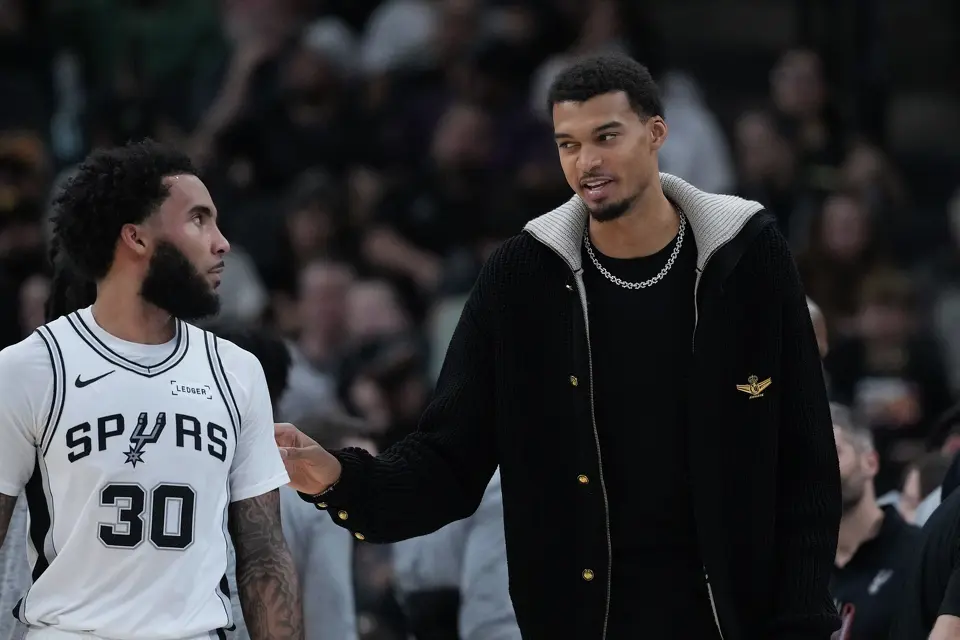
维克托·文班亚马因伤缺席了周日马刺战胜国王的比赛,这次伤病可能导致这位球星在周二的比赛中继续作壁上观。
时值三月中旬,一位超级巨星认为自己已经准备好了。他已经休战够久了。他的小腿感觉良好,队友们也需要他。
他想上场比赛。
然而,球队的医生们却不那么确定。他们深知从这类伤病中复出的风险,哪怕是提早一天。他们有充分的理由担心,在小腿尚未完全愈合的情况下打球,可能会导致跟腱撕裂。
因此,为了季后赛,也为了球员本人着想,球队希望他再等等。
但问题来了:尽管这位超级巨星本赛季的表现堪称惊艳,但他已经被迫缺席了17场比赛。只要再缺席一场,他将失去联盟最有价值球员奖的评选资格。他将无缘年度最佳防守球员。他也将无缘NBA最佳阵容。
那么,如果医生那天不批准他复出呢?他的球队将在他的下一份合同中为自己省下高达5500万美元的巨款。
需要澄清的是,这只是一个虚构的情景,但它绝非不可能发生。类似的事情迟早会发生,即使这事不会发生在维克托·文班亚马 (Victor Wembanyama) 和马刺队身上,也迟早会发生在其他某位超级巨星和他的球队身上。
当这一切发生时,势必会播下不必要的紧张和不信任的种子,而这一切的根源,都来自一条可能需要被废除的、本意良好的规则。
从两年前开始,NBA劳资协议中的一项条款规定,球员必须至少出战65场常规赛(或在遭遇赛季报销伤病前至少出战62场),才有资格获得联盟的主要个人奖项。
这项规则的出台,很大程度上是为了回应一种普遍看法,即一些联盟中最具票房号召力的球星因轮休或“负荷管理”而缺席了太多比赛。
理论上说,如果一位MVP候选人有更强的动力去披挂上阵,那么当他的一位忠实球迷花费数百美元,只为观看这位球星全年唯一一次做客夏洛特时,他或许就不太可能缺席那场周二的比赛了。
理论上,这个想法并不算糟糕。但在执行层面,它却充满了问题。其中最大的问题之一,就是这些个人奖项会影响到球员在续约合同中能挣多少钱。
而文班亚马恰好可以作为一个绝佳的例子,来说明这项规则为何存在缺陷。明年夏天,在他新秀合同的第四个也是最后一个赛季开始前,马刺队将为他提供一份为期五年、总价值约2.71亿美元的续约合同。这将是球队所能开出的最大报价,并且远超文班亚马在新秀合同到期后所能挣到的钱,所以他会签下这份合同。
每一位在第三个赛季后获得顶薪续约报价的明星球员都会签字。这只不过是例行公事。
但根据一项被称为“德里克·罗斯条款”的规定,文班亚马本可以挣得更多。如果他在第四个赛季入选NBA最佳阵容(或在此之前入选两次),或者在下个赛季当选年度最佳防守球员(或在此之前当选两次),又或者在今年或明年当选最有价值球员,那么在同样的五年续约期内,他将有资格赚取约3.26亿美元。
这意味着合同金额将从占球队工资帽的25%提升至30%,这中间相差了5500万美元。即便这笔额外的钱不太可能改变文班亚马的生活质量——甚至是他曾孙辈的生活质量——但如果他认为这是自己应得的,他大概也不会拒绝。
NBA的65场规则问题就出在这里。上个赛季,文班亚马在防守端展现了惊人的统治力,尽管因二月份的血栓诊断导致他仅出战46场比赛,但他的总盖帽数依然领跑全联盟。如果他当时有资格参选,投票者们会把他选为年度最佳防守球员吗?或许会,或许不会,但结果肯定会非常接近。
本赛季,他再次成为该奖项的热门人选,而且遥遥领先,但他的左小腿拉伤将导致他在12月中旬前至少缺席10场比赛,甚至可能更多。如果他再次未能达到65场的出场门槛,这将是他连续两年因该规则而无缘他理应赢得的奖项。如果将这两个奖项都收入囊中,他就有资格在续约前获得那份更大的合同。
那么,这是否意味着文班亚马和马刺队会因为他的伤病状况而爆发正面冲突?当然不会。在圣安东尼奥的第三个赛季里,他从未表露出在任何计划(无论大小)上与马刺队存在分歧的迹象。
但放眼全联盟,随着比赛节奏比以往任何时候都快,即便是像文班亚马这样的大个子球员也需要在攻防两端不停地奔跑,到处都有达到NBA最佳阵容水准的球员在与软组织伤病作斗争。认为他们中至少会有一两个人仅仅因为比那个武断的门槛少打一两场比赛而错失奖项,这种想法绝非天方夜谭。
诚然,将合同金额与奖项评选挂钩并非一个完美的体系。但既然你选择相信投票者们能够选出最优秀的球员,那就不妨也相信他们有能力判断何为一个值得获奖的赛季。
否则,如果65场规则不被修改,总有一天,一位球队医生会建议一位超级巨星再多休战一晚。
而那位超级巨星,将有理由去质疑这背后的动机。
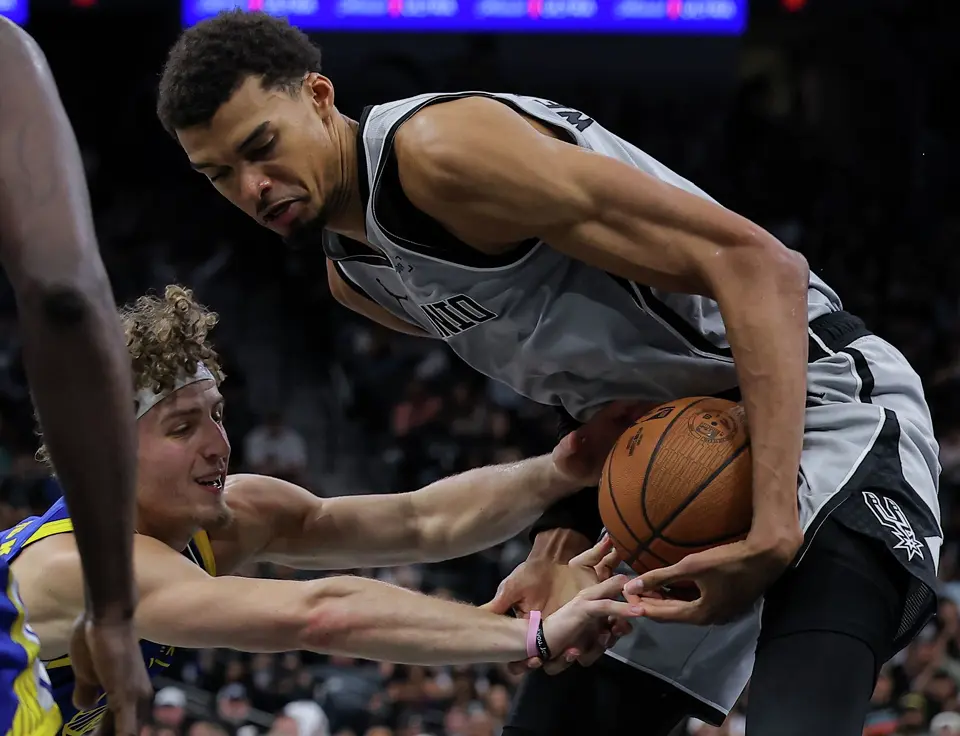
Golden State Warriors guard Brandin Podziemski (2) and San Antonio Spurs forward Victor Wembanyama (1) fight for the ball during an NBA Cup game at Frost Bank Center in San Antonio, Friday, Nov. 14, 2025. The Spurs fell to the Warriors 109-108.
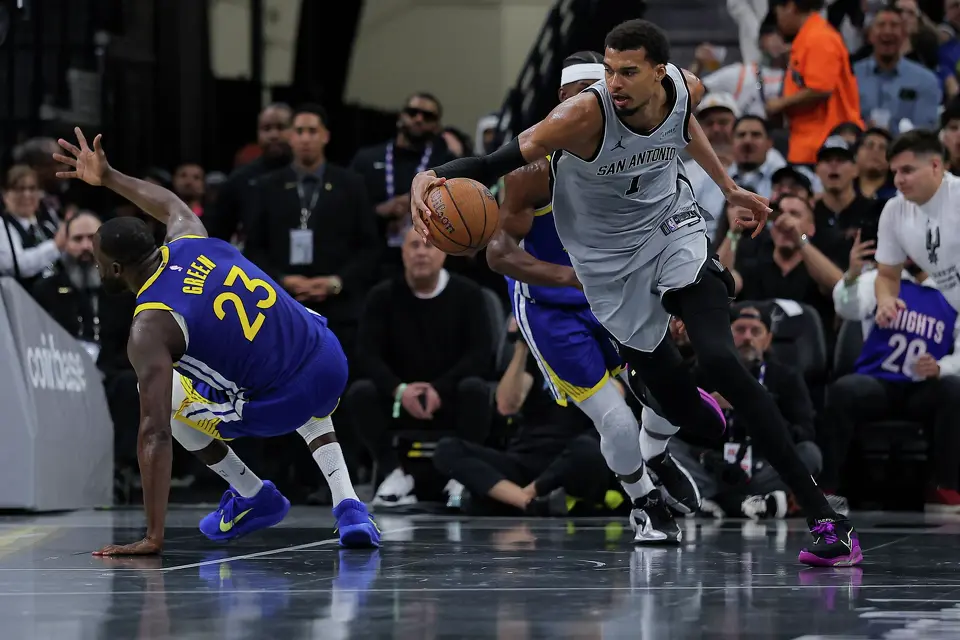
San Antonio Spurs forward Victor Wembanyama (1) drives around Golden State Warriors forward Draymond Green (23) after blocking Green’s shot during an NBA Cup game at Frost Bank Center in San Antonio, Friday, Nov. 14, 2025. The Spurs fell to the Warriors 109-108.
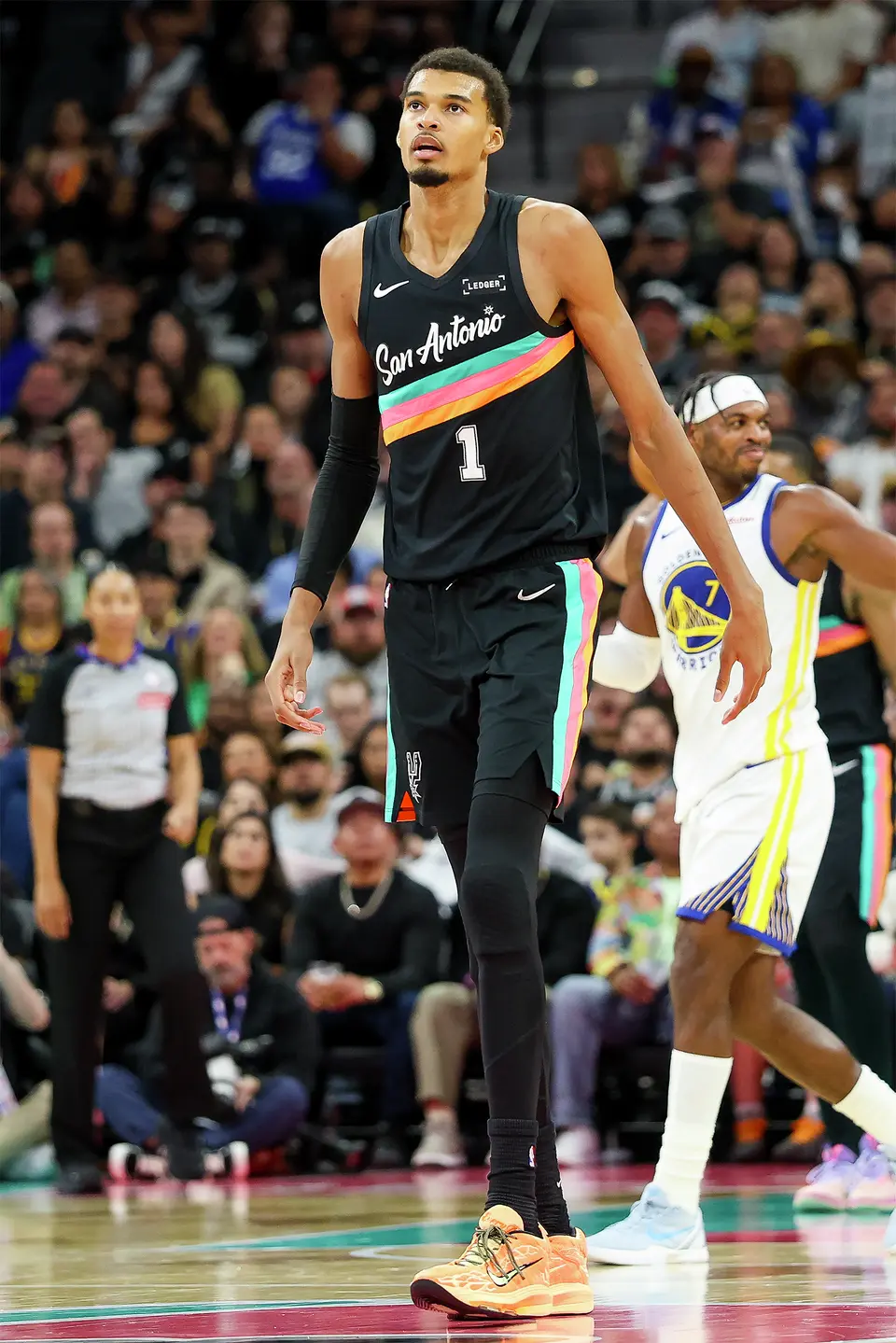
San Antonio Spurs forward Victor Wembanyama (1) leaves the court at the end of the third quarter of an NBA game with the Golden State Warriors in San Antonio, Wednesday, Nov. 12, 2025. Golden State beat San Antonio 123-120.
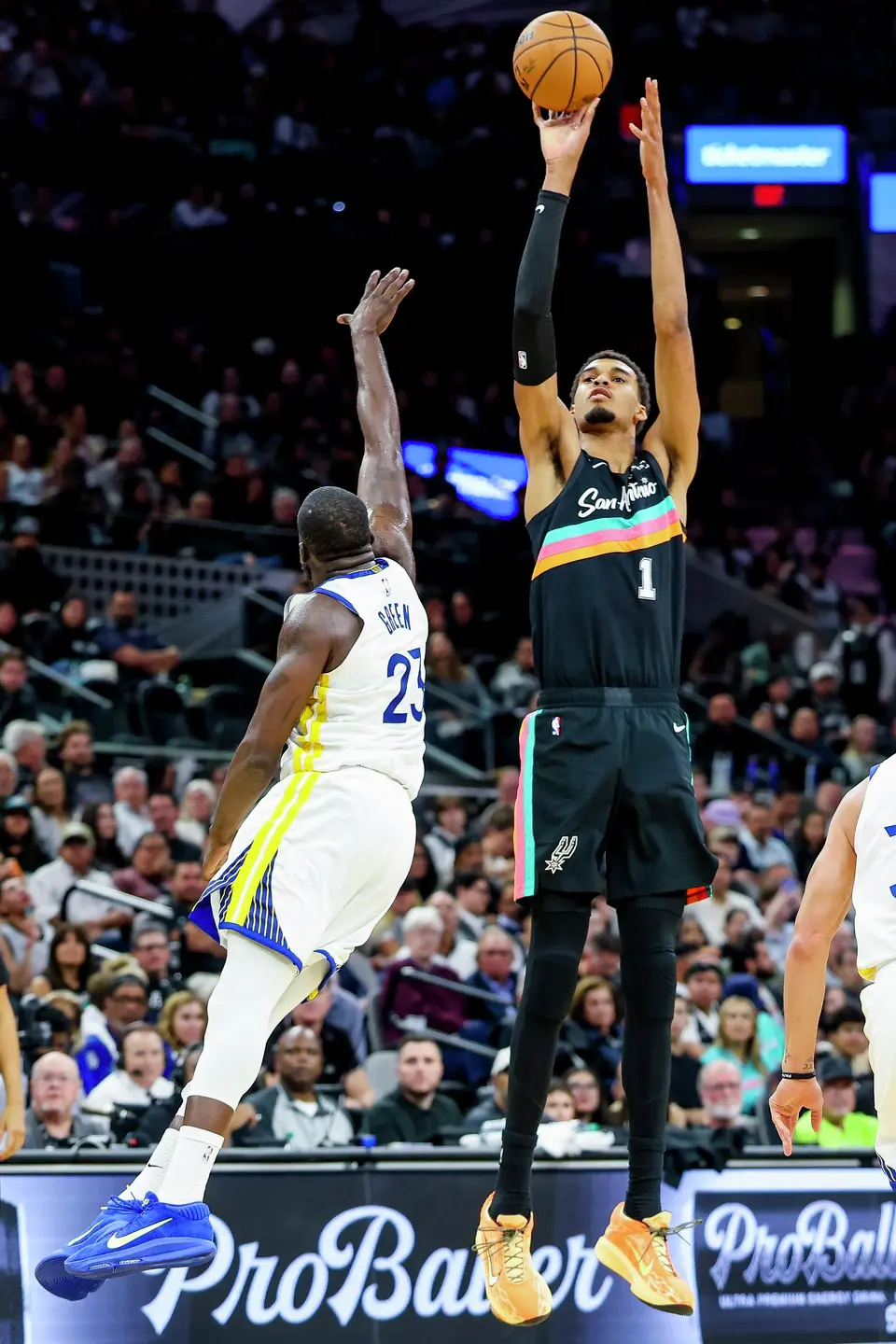
San Antonio Spurs forward Victor Wembanyama (1) shoots over Golden State Warriors forward Draymond Green (23) during the second half of an NBA game in San Antonio, Wednesday, Nov. 12, 2025. Golden State beat San Antonio 123-120.
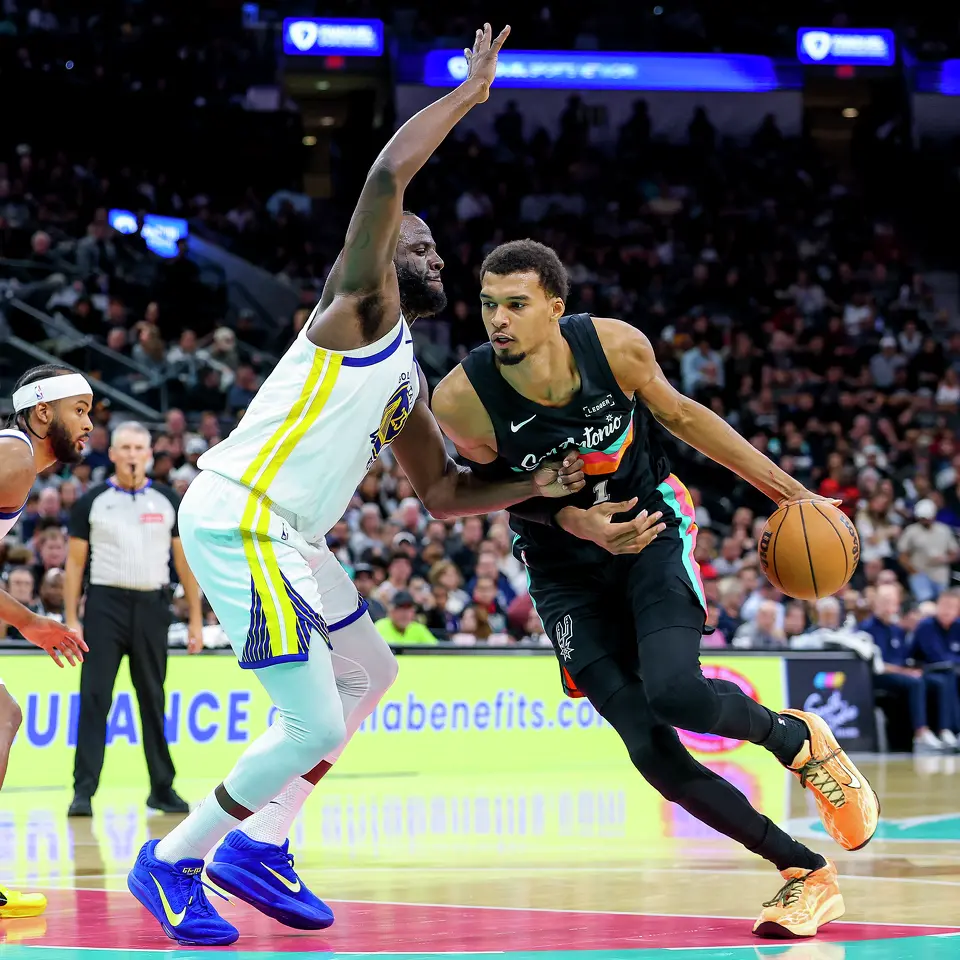
San Antonio Spurs forward Victor Wembanyama (1) drives into the lane on Golden State Warriors forward Draymond Green (23)during the second half of an NBA game in San Antonio, Wednesday, Nov. 12, 2025. Golden State beat San Antonio 123-120.
由生成式人工智能翻译,译文内容可能不准确或不完整,以原文为准。
点击查看原文:Why Victor Wembanyama’s upcoming extension exposes flaw in NBA rule
Why Victor Wembanyama’s upcoming extension exposes flaw in NBA rule
Victor Wembanyama missed the Spurs’ win over the Kings on Sunday with a injury that may keep the star on the bench for Tuesday’s game.
It’s the middle of March, and the superstar thinks he’s ready. He’s been sitting long enough. His calf feels fine, and his teammates need him.
He wants to play.
The team doctors, though, aren’t so sure. They know the risks of returning from an injury like this, even a day too soon. They’re rightfully worried that playing on a calf that hasn’t completely healed might lead to a torn Achilles tendon.
So for the sake of the playoffs, and for the sake of the player himself, the team wants him to wait.
Here’s the catch, though: As spectacular as this particular superstar has been this season, he’s already been forced to sit out 17 games. If he misses just one more, he will be ineligible for the league’s Most Valuable Player award. He’ll be ineligible for Defensive Player of the Year. He’ll be ineligible for the All-NBA team.
So if the doctors don’t clear him that day? His team stands to save a staggering $55 million on his next contract.
To be clear, this is an imaginary situation, but it’s not an unlikely one. Something like this is going to happen, if not to Victor Wembanyama and the Spurs, then to some other superstar with some other franchise.
When it does, it’s bound to sow unnecessary tension and unnecessary distrust, all stemming from a well-intentioned rule that probably needs to go away.
Starting two years ago, a provision in the NBA’s collective bargaining agreement stipulates that a player must play at least 65 regular-season games (or play at least 62 before suffering a season-ending injury) to be eligible for the league’s major individual awards.
This rule was instituted in large part as a response to the perception that some of the biggest draws in the sport were missing too many games due to rest or “load management.”
If an MVP candidate had more of an incentive to suit up, the theory went, he might be less likely to skip that Tuesday game when one of his most devoted fans paid hundreds of dollars for the star’s only trip of the year to Charlotte.
In theory, the idea wasn’t terrible. In execution, though, it’s fraught with problems. One of the biggest is that those individual awards impact how much money players can earn on contract extensions.
Here’s where Wembanyama can serve as a prime example of why it’s is flawed. Next summer, before he begins the fourth and final season of his rookie deal, the Spurs will present him with a five-year extension that will pay him about $271 million. It will be the largest offer they’re allowed to make, and it will be way more than Wembanyama could earn if he let his rookie deal lapse, so he will sign it.
Every star player presented a max extension after his third season signs it. It’s a mere formality.
But under a provision known as the “Derrick Rose rule,” Wembanyama could stand to earn more than that. If he makes an All-NBA team in his fourth season (or twice before that), or is named Defensive Player of the Year next season (or twice before that), or is named Most Valuable Player this year or next, he’d be allowed to earn about $326 million over the course of that same five-year extension.
That’s 30% of a team’s salary cap instead of 25%, which is a $55 million difference. And even if that extra money isn’t likely to change Wembanyama’s quality of life — or that of his great grandchildren — he probably wouldn’t turn it down if he thought he earned it.
Therein lies the problem with the NBA’s 65-game rule. Last season, Wembanyama was so dominant on defense that he led the league in total blocks even while being limited to 46 games due to his February blood-clot diagnosis. Would voters have made him Defensive Player of the Year if he was on the ballot? Maybe or maybe not, but it would have been close.
This season, he’s the runaway favorite for the award again, but his left calf strain will cause him to miss at least 10 games before mid-December, and maybe more. If he falls short of 65 games again, that will mark two years in a row the rule kept him from awards he conceivably deserved to win. With both of them on his shelf, he’d be eligible for the larger extension before he signs it.
Now, does this mean there’s going to be a showdown between Wembanyama and the Spurs over his injury status? Of course not. Well into his third season in San Antonio, he’s never given a single indication that he doesn’t see eye-to-eye with the Spurs on any piece of their plan – big-picture or small.
But look around the league. With the pace of play faster than ever before, and with even big men like Wembanyama moving non-stop at both ends of the court, there are All-NBA-caliber players dealing with soft-tissue injuries all over the place. It’s far from crazy to think that at least one or two of them will miss out on an award, for no other reason than they fall a game or two short of an arbitrary threshold.
Granted, tying contract dollars to awards voting isn’t a great system. But if you’re going to trust the voters to pick the best players, you might as well trust their judgment as to what constitutes an award-worthy season.
Otherwise, if the 65-game rule isn’t changed, someday a team doctor will advise a superstar to sit out one more night.
And the superstar will have reason to wonder why.
By Mike Finger, Columnist, via San Antonio Express-News